

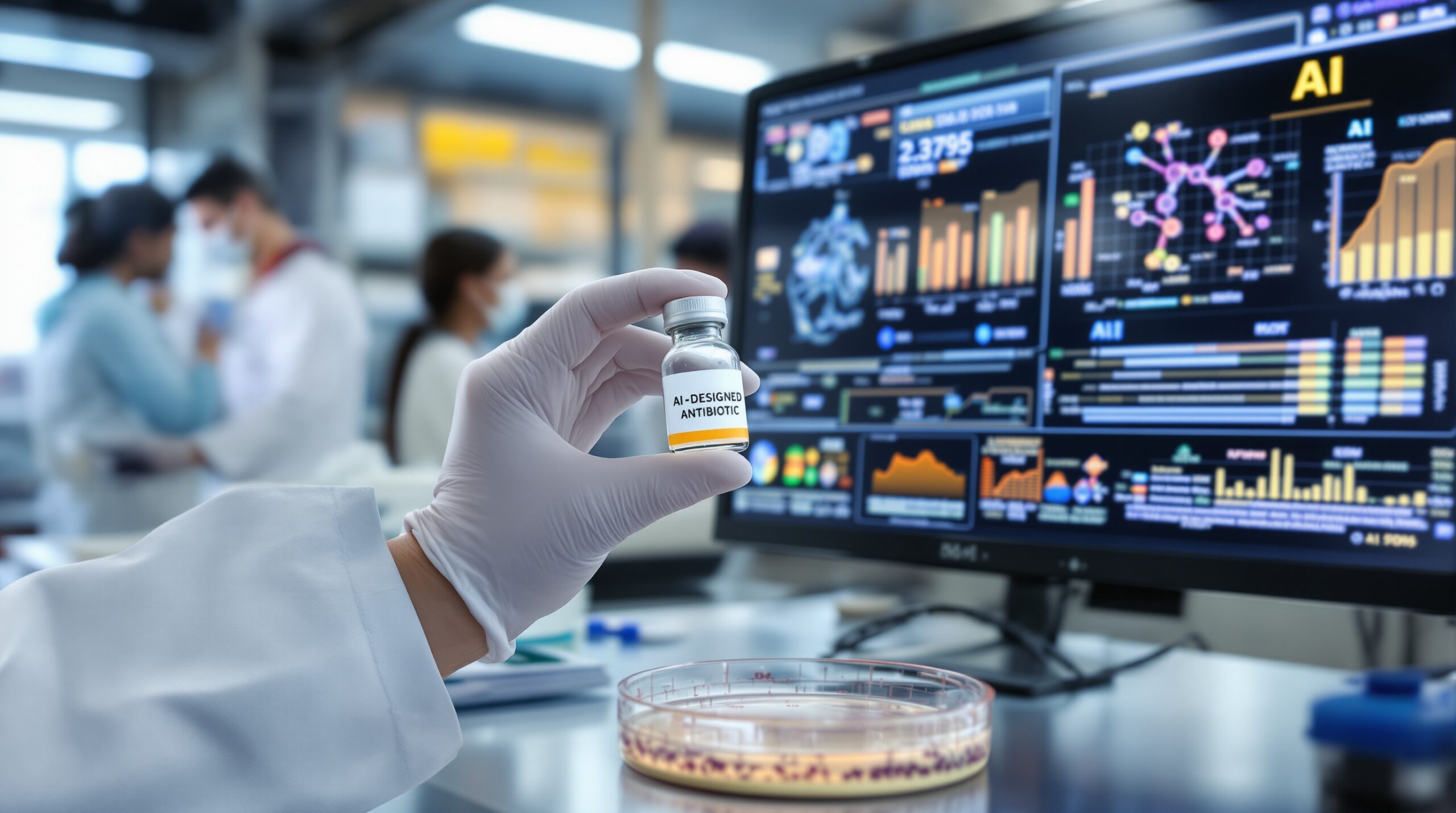
Drug-resistant infections threaten modern medicine and patient safety worldwide. Hospitals battle pathogens that outpace traditional antibiotic discovery. Researchers increasingly turn to artificial intelligence for help. Their work now delivers antibiotic candidates with striking potency against stubborn superbugs.
These advances do more than speed screening. AI models can propose molecules with novel structures and mechanisms. That capability matters because many pathogens resist existing drug classes. New chemical space offers fresh ways to kill dangerous bacteria.
Evidence from laboratory and animal studies supports this promise. Several AI-guided candidates show strong activity against resistant strains. Some demonstrate efficacy in infection models while sparing beneficial microbes. The pipeline is advancing toward clinical testing.
The Escalating Challenge of Antimicrobial Resistance
Antimicrobial resistance undermines treatments for pneumonia, sepsis, and surgery. Common pathogens increasingly withstand last-line drugs. Carbapenem-resistant Acinetobacter and Enterobacterales cause difficult outbreaks. Methicillin-resistant Staphylococcus aureus remains a major killer.
The economic burden also grows. Patients need longer hospital stays and costly isolation measures. Standard procedures carry higher infection risks. Health systems struggle as options dwindle.
Meanwhile, traditional discovery pipelines slowed. High-throughput screens often rediscover known scaffolds. Medicinal chemistry campaigns face attrition and resistance emergence. Therefore, new strategies are urgently needed.
How AI Accelerates Antibiotic Discovery and Design
AI models can learn relationships between molecular structure and antibacterial activity. Supervised learning predicts whether compounds inhibit growth. Graph neural networks often analyze chemical graphs directly. These models scale across vast libraries efficiently.
Generative models extend this approach further. They propose new molecules that fit learned activity patterns. Reinforcement learning can balance potency and safety constraints. Researchers guide algorithms with pharmacokinetic and toxicity objectives.
Crucially, AI enables target-specific training. Teams train models on data from individual pathogens. That focus can yield narrow-spectrum antibiotics. Narrow activity helps protect the microbiome and slow resistance.
The AI-Enabled Discovery Pipeline
The process usually starts with curated training data. Researchers gather assay results for diverse molecules. They include inactive and active examples across concentrations. Models learn patterns distinguishing effective compounds from ineffective ones.
Next, models screen massive chemical libraries. Virtual screening can cover millions of molecules quickly. Algorithms rank candidates by predicted antibacterial activity. Medicinal chemists then review top scores for synthesis feasibility.
Experimental validation follows computational screening. Teams test candidates against clinical isolates in vitro. Time-kill assays measure bactericidal performance. Cytotoxicity assays assess effects on mammalian cells.
Promising hits progress to animal infection models. Researchers evaluate efficacy, dosing, and exposure. Pharmacokinetics inform formulation and delivery strategies. Safety margins guide further optimization decisions.
Potent Activity Against Priority Superbugs
Several AI-guided antibiotics exhibit strong activity against WHO priority pathogens. Results highlight both broad-spectrum and narrow-spectrum strategies. Together, they address different clinical needs. Two examples illustrate this progress well.
Broad-Spectrum Example: Halicin
Researchers at MIT and collaborators trained models on growth inhibition data. Their system scanned large compound libraries efficiently. The search identified halicin, a previously explored molecule. It displayed broad activity against diverse bacteria.
Halicin inhibited problematic pathogens, including drug-resistant strains. It showed efficacy in a mouse Acinetobacter infection model. The compound reduced bacterial load significantly in vivo. Importantly, it differed from conventional antibiotic classes mechanistically.
Mechanistic work linked halicin to disruption of bacterial energy gradients. That mode may limit cross-resistance risk. The compound also avoided rapid resistance during serial passage. These properties encouraged continued evaluation.
Narrow-Spectrum Example: Abaucin
Another team targeted Acinetobacter baumannii specifically. They trained models on pathogen-specific screening data. The approach prioritized pathogen-selective activity deliberately. Their search yielded a candidate later named abaucin.
Abaucin displayed potent, narrow-spectrum activity against A. baumannii. It showed minimal activity against many other species. This selectivity benefits the microbiome during treatment. It also reduces collateral resistance pressures.
In mouse wound models, abaucin reduced bacterial burden significantly. It retained activity against multidrug-resistant clinical isolates. Early testing suggested a distinct mechanism from current drugs. These features support a differentiated therapeutic role.
From Algorithm to Bench: Validating Potency and Safety
Potency claims require careful experimental confirmation. Researchers test minimum inhibitory concentrations across collections. They include carbapenem-resistant and colistin-resistant isolates. Replicate assays ensure robustness and reproducibility.
Time-kill studies establish bactericidal kinetics. Investigators measure concentration-dependent killing rates accurately. These profiles inform dosing frequency and targets. They also guide combination therapy exploration.
Safety remains a central consideration. Teams screen for cytotoxicity using multiple cell lines. They evaluate hemolysis and mitochondrial effects. Early flags prompt structure optimization or deselection.
Animal studies examine pharmacokinetics and tolerability. Researchers track exposure at infection sites. They assess liver and kidney markers carefully. Dose-escalation studies define safe exposure windows.
Understanding Mechanisms and Resistance Potential
Mechanism-of-action studies strengthen confidence in novelty. Chemogenomic profiling can suggest molecular targets. Resistant mutant sequencing helps map pathways. Biophysical assays then test binding hypotheses directly.
Resistance evolution studies are essential. Serial passaging estimates how quickly resistance emerges. Fitness costs help predict clinical durability. These results inform stewardship planning and surveillance.
Some AI-guided compounds attack underexploited bacterial processes. Target novelty can evade existing resistance mechanisms. However, bacteria evolve unpredictably under pressure. Continued vigilance remains necessary after approval.
Manufacturing, Formulation, and Delivery Considerations
Synthesis routes must scale reliably for clinical supply. Teams optimize steps for yield and purity. Chiral centers demand careful control. Impurity profiles also require regulatory alignment.
Formulation affects exposure at infection sites. Intravenous formulations suit severe systemic infections. Oral options support step-down therapy. Inhaled or topical forms can target localized disease effectively.
Stability and solubility influence dosing practicality. Excipients can reduce irritation and improve delivery. Developers balance shelf life with potency retention. Manufacturing partners refine processes during development.
Regulatory Pathways and Clinical Translation
Regulators evaluate antibiotics using established frameworks. Nonclinical packages include safety pharmacology and toxicology. Developers submit investigational applications for first-in-human trials. Early trials assess safety and pharmacokinetics.
Later trials test efficacy against defined infections. Endpoints often include clinical cure and microbiological response. Trials must enroll patients with resistant pathogens. Stewardship compatible labeling supports responsible use.
AI itself requires transparency. Sponsors should document model training and validation. Regulators will scrutinize data provenance carefully. Clear reporting builds trust in AI-enabled claims.
Implications for Healthcare, Stewardship, and Equity
New antibiotics can restore options for difficult infections. Clinicians could treat resistant sepsis more confidently. Narrow-spectrum agents may protect gut microbiota. That protection reduces downstream complications like C. difficile.
Stewardship frameworks remain essential after approval. Hospitals will need updated antibiograms and guidance. Diagnostic support can target therapy precisely. Surveillance can detect resistance trends early.
Global access considerations also matter greatly. Resistant infections burden low-resource settings heavily. Equitable licensing and procurement policies help. Partnerships can support availability and affordability worldwide.
Limitations, Risks, and Responsible Optimism
AI does not replace rigorous biology. Models reflect the data used for training. Bias or errors can mislead decisions. Diverse, high-quality datasets improve generalization reliability.
Off-target effects may emerge late. Animal models cannot capture human complexity fully. Careful dose escalation mitigates early risk. Pharmacovigilance then monitors safety post-approval.
Resistance will eventually develop for most agents. Sustainable use policies remain essential. Diagnostics, vaccination, and infection control complement antibiotics. Comprehensive strategies deliver lasting impact.
What Comes Next for AI-Designed Antibiotics
Future work will integrate multimodal data sources. Teams will combine chemistry, genomics, and imaging. Mechanism-aware models should improve precision. Generative systems will explore new antibacterial chemistries further.
Collaboration will accelerate translation. Public datasets can expand training diversity. Shared benchmarks will standardize comparisons across models. Open science can catalyze faster progress responsibly.
The road to clinics remains challenging but navigable. Strong preclinical packages can de-risk early trials. Thoughtful stewardship can preserve effectiveness longer. Patients stand to benefit from timely innovation.
AI-guided discovery already delivered compelling antibiotic candidates. Halicin and abaucin showcase distinct, valuable strategies. Their potency against resistant pathogens highlights real potential. Continued advances could reshape our antimicrobial arsenal meaningfully.
