
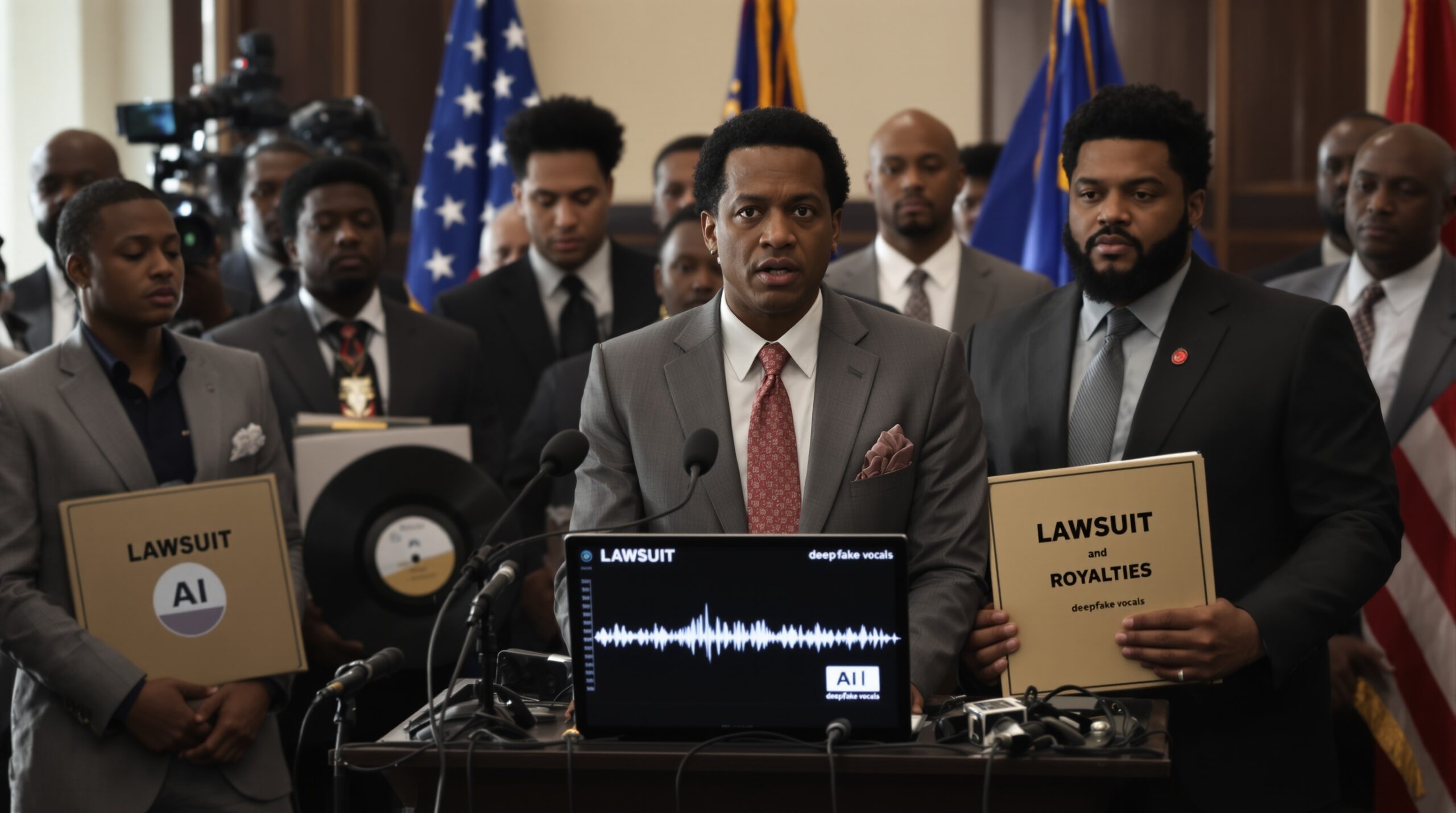
Artificial intelligence now makes convincing songs that mimic famous voices within minutes. That power has created urgent legal fights. Artists fear deepfake vocals will flood platforms and dilute their livelihoods. Meanwhile, courts face difficult questions about royalties and control.
Against this backdrop, litigation is accelerating. Music companies, artists, and startups are testing boundaries in courtrooms. The core dispute centers on consent, compensation, and attribution. Each pillar drives the emerging clash around AI-generated music.
The Lawsuit Flashpoint
Major record labels sued AI music startups Suno and Udio in 2024. The labels alleged unlawful copying of sound recordings to train models. They argued the services exploit catalog value without licenses or compensation. The companies denied infringement and defended their technology.
Those cases focus on training data, not just outputs or royalties. However, the stakes include downstream royalty obligations for AI-generated tracks. Courts will weigh how copyright applies to model training and generated music. Their decisions could reshape digital licensing across the industry.
Another pressure point involves platform takedowns of AI songs mimicking stars. Viral clones of Drake and The Weeknd triggered rapid removals. Labels demanded stronger safeguards against voice impersonations and exploitative uploads. This enforcement environment now informs the broader legal strategy.
Why Deepfake Vocals Trigger Legal Alarms
Deepfake vocals implicate the right of publicity, which protects commercial use of one’s identity. In several states, voice qualifies as a protected attribute. Courts recognized this principle in cases involving sound-alike advertisements. Those precedents guide arguments about unauthorized vocal cloning today.
Copyright also surfaces when models reproduce recognizable elements of recordings. If outputs contain copied material, infringement concerns intensify. Even without direct copying, marketing could imply endorsement. That suggestion risks liability under false endorsement and unfair competition laws.
International frameworks add more complexity. Moral rights in some countries protect performer integrity and attribution. Those rights can limit disrespectful or misleading uses of a voice. Consequently, global releases face diverse compliance requirements.
How Music Royalties Work Today
Royalties arise from two core copyrights in music. The composition covers melody and lyrics. The sound recording covers the specific recorded performance. Each right generates distinct licenses and revenue streams.
Songwriters collect mechanical royalties for reproductions and downloads. They also collect public performance royalties for broadcasts and streams. Performing rights organizations, like ASCAP and BMI, distribute performance royalties. Publishers and mechanical agencies manage mechanical licensing and settlements.
Recorded music earns neighboring rights and digital performance royalties. SoundExchange pays U.S. artists and labels for eligible noninteractive streams. Labels negotiate interactive streaming royalties with services directly. Synchronization fees arise when music appears in audiovisual works.
These frameworks evolved around human authorship and identifiable recordings. AI systems challenge identification, authorship, and consent. Therefore, royalty pipelines often break when AI voices enter. The industry now seeks fit-for-purpose solutions.
Where AI Music Fits—and Fails—Today
Generative tools sample vast datasets to learn musical patterns. Training may include copyrighted recordings and compositions. Without licenses, training can trigger infringement claims. With licenses, models face complex reporting and compensation duties.
Outputs raise separate questions about authorship and originality. Some jurisdictions require human authorship for protection. Others recognize limited protection for AI-assisted works. These differences complicate global exploitation and split revenue expectations.
Vocals raise a distinct layer of control through publicity rights. Even if music is original, cloned voices may be unlawful. The voice model might evoke a performer’s identity unmistakably. That evocation can mislead fans and harm reputations.
Proposed Protections and Emerging Laws
Policymakers are responding with targeted legislation. Tennessee passed the ELVIS Act in 2024 to protect voices explicitly. The law extends publicity rights to cover digital voice cloning. Enforcement mechanisms address unauthorized commercial exploitation.
In Congress, the NO FAKES Act remains under discussion. The proposal would create federal protections against unauthorized digital replicas. Lawmakers also introduced the No AI FRAUD Act in the House. It targets deceptive AI impersonations and abusive replicas.
Europe’s AI Act imposes transparency obligations for generative systems. Providers must disclose AI-generated content and summarize training sources. The EU’s text and data mining rules allow opt-outs for commercial training. Those opt-outs support consent-based dataset licensing.
China adopted deep synthesis rules requiring labeling and consent. Platforms must manage provenance and prevent misleading synthetic content. These regulations influence global platform policies. Companies increasingly design compliance features across markets.
Key Questions for the Courts
Do training copies infringe or qualify as fair use? How should courts assess vocal likeness harm? What remedies address mass, automated impersonations? These questions will shape future licensing norms.
Royalty Models Under Debate
Stakeholders are evaluating voice-rights licensing systems. A collective management model could streamline permissions and payments. Artists could register their voice for controlled uses. Developers would clear rights before deployment and distribution.
Dataset licensing marketplaces are another proposal. Rights holders would opt in and receive usage-based fees. Transparent records of included works would reduce disputes. Audit trails could anchor royalty calculations for training access.
Output royalties remain more controversial. Some advocate a share for artists whose voices inspired outputs. Others prefer strict bans on unauthorized vocal cloning. Hybrid approaches may combine consent, fees, and clear labeling.
Platform Policies and Technical Tools
Music platforms are tightening content policies around synthetic vocals. Many services prohibit deceptive impersonations and misleading metadata. They also expand takedown workflows for identity harms. Labels push for faster response times and repeat infringer consequences.
Content identification and provenance tools support enforcement. Audio fingerprinting flags matches to known recordings. Provenance metadata standards help trace creation and edits. Together, these tools help separate authentic and synthetic material.
YouTube launched a Music AI Incubator with industry partners. The effort explores responsible AI music frameworks with artist input. Platforms also test disclosure labels for synthetic content. These initiatives reflect shifting expectations for transparency online.
Industry groups seek interoperable identifiers for synthetic vocals. ISRC and ISWC already track recordings and compositions. New tags could identify AI voice models and consent status. Consistent tagging would streamline royalty routing and audits.
Implications for Labels, Artists, and Startups
Labels want enforceable consent and reliable attribution. They also want predictable licensing paths for innovative products. Artists demand control over their names and voices. They want fair compensation when technology leverages their identity.
Startups need legal certainty and scalable compliance. Clear rules encourage investment and responsible features. Ambiguity creates litigation risk and market hesitation. Stable frameworks would accelerate beneficial music tools.
Consumers value exciting creative possibilities. They also value authenticity and trust in music platforms. Clear labels help listeners understand what they hear. Consent-based systems can preserve that trust while enabling creativity.
Paths Toward Consent and Compensation
First, mandate explicit consent for voice cloning in commercial releases. Second, require prominent disclosure of synthetic vocals. Third, create standardized voice-rights licenses for approved uses. These steps would reduce confusion and abuse.
Fourth, expand dataset licensing with transparent inclusion records. Fifth, implement model-level audit logs for rights compliance. Sixth, adopt interoperable identifiers for AI involvement and approvals. Together, they would enable robust royalty reporting.
Seventh, establish safe harbors for compliant developers and platforms. Safe harbors should require strong identity protections and opt-outs. They should also require responsive takedown processes and recordkeeping. Incentives can promote higher standards across the ecosystem.
Eighth, fund artist education and legal support around AI tools. Artists need resources to navigate licensing and contracts. They also need tools to monitor impersonations at scale. Empowerment will balance innovation with dignity.
What Comes Next
Courts will address training claims in the label lawsuits. Legislatures will refine publicity rights for the AI era. Platforms will continue updating detection and disclosure policies. These developments will define the next chapter.
The music business thrives on partnerships and creativity. AI can expand both if consent guides design. Royalties should follow transparent usage and documented approvals. Aligned incentives can unlock sustainable innovation.
For now, vigilance remains essential. Artists must protect their identities and audiences. Developers must respect boundaries and seek licenses. Regulators must keep frameworks practical and enforceable.
The lawsuit spotlight will accelerate these conversations. With clearer rules, AI music can flourish responsibly. Without them, trust will erode and litigation will dominate. The choice will shape culture and business for years.