

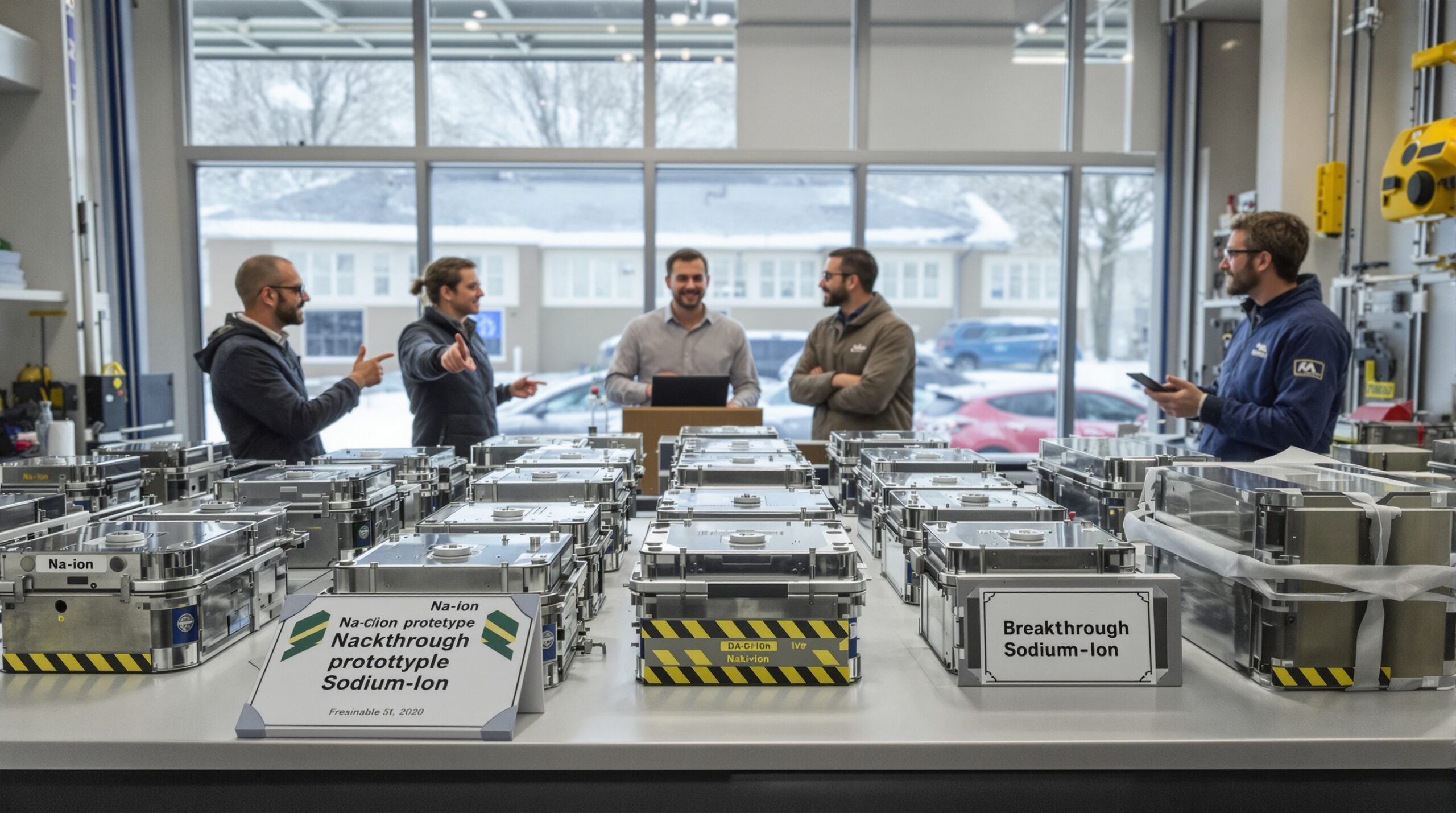
A new battery startup has unveiled sodium-ion cells designed for affordable electric vehicles and harsh winter climates. The announcement highlights lower material costs, robust cold-weather behavior, and simplified supply chains. Industry observers see meaningful potential for entry-level EVs, urban cars, and commercial fleets. The company emphasizes practical performance over headline energy density. That focus aligns with growing market demand for dependable, cost-effective electrification. As the market expands, sodium-ion momentum continues building across Asia, Europe, and North America.
What sodium-ion technology brings to electric mobility
Sodium-ion batteries store and release energy using sodium ions instead of lithium ions. The chemistry typically pairs a hard carbon anode with layered oxide or Prussian white cathode materials. Engineers can use aluminum current collectors on both electrodes, avoiding copper on the anode. Cells typically exclude nickel and cobalt, easing cost and ethical sourcing concerns. These attributes support competitive pricing and resilient supply. The technology also shows promising performance at low temperatures compared with many lithium chemistries.
Cost advantages from abundant materials and simpler supply chains
Sodium is abundant and widely available through established industrial supply chains. Producers can source sodium salts at far lower cost than battery-grade lithium compounds today. Removing nickel and cobalt further reduces exposure to volatile commodity markets. The anode’s aluminum current collector replaces copper, offering additional savings. These choices can cut bill-of-materials costs versus many lithium-ion cells. As manufacturing scales, pack-level savings may reach double digits. That difference could unlock lower sticker prices for budget EVs.
Winter performance addresses a persistent EV pain point
Cold weather often reduces lithium-ion power and range, challenging drivers in northern regions. Sodium-ion cells can maintain stronger performance at subzero temperatures. Hard carbon anodes tolerate low-temperature operation with less severe impedance rise. Several developers report high capacity retention at minus 20 degrees Celsius. The startup cites stable discharge power and predictable regeneration in deep cold. Those attributes support reliable heating, confident acceleration, and consistent braking recovery. Drivers could see reduced winter range penalty versus some lithium chemistries.
Energy density remains lower but increasingly competitive
Sodium-ion energy density trails high-nickel lithium cells used in premium vehicles. Many sodium-ion designs today target 140 to 160 watt-hours per kilogram. Second-generation designs aim for around 180 to 200 watt-hours per kilogram. That progress narrows the gap with lithium iron phosphate pack performance. For city cars, delivery vans, and ride-hailing fleets, range targets often remain modest. Those segments value cost, reliability, and fast charging more than maximum range. Sodium-ion fits that use profile well, particularly in colder climates.
Charging speed and cycle life targets look encouraging
Developers aim for rapid charging without aggressive thermal management. Many sodium-ion cells accept higher charge rates with controlled temperature rise. The chemistry reduces concerns about lithium plating on graphite anodes. That advantage simplifies fast charging in winter conditions. Reported cycle life generally spans 2,000 to 4,000 full cycles for energy cells. Power-focused designs can exceed that figure with lower energy density. The startup targets competitive warranty lifetimes aligned with mainstream EV expectations. Fleet duty cycles appear promising for total cost of ownership.
Safety profile supports simpler pack engineering
Sodium-ion cells typically show robust thermal stability under abuse testing. The chemistry avoids oxygen-rich nickel cathodes that accelerate thermal runaway. Many formulations use safer electrolytes with additives optimizing low-temperature performance. Engineers can design packs with reduced reliance on heavy burn-through barriers. That approach improves volumetric efficiency while controlling costs. The startup emphasizes intrinsic cell stability and straightforward thermal management. These attributes help manufacturers meet safety regulations without exotic solutions. Consumers benefit from dependable operation across seasons and duty cycles.
Manufacturing considerations and near-term scaling
Sodium-ion cells can leverage much of the lithium-ion manufacturing toolkit. Coating, calendaring, stacking, and formation processes look broadly compatible. Suppliers can adapt lines with targeted changes to materials handling. That compatibility reduces capital expense and accelerates production ramps. Established firms already run pilot and early commercial lines in Asia and Europe. The startup plans staged capacity with customer sampling underway. Automakers will pilot packs in test fleets before broader adoption. Supply agreements typically follow validation milestones and sustained quality performance.
EV segments likely to adopt first
Entry-level hatchbacks and compact crossovers appear strong candidates for sodium-ion packs. Urban delivery vans value predictable winter performance and low costs. Ride-share fleets prioritize uptime and fast charging across varied climates. Battery swapping scooters and microcars benefit from lower material costs. Some automakers could use sodium packs for standard-range trims. Long-range versions may retain lithium chemistries for now. This dual-chemistry strategy optimizes cost and performance across lineups. Consumers gain more choice without sacrificing reliability or safety.
Global landscape and competitors provide useful context
Multiple companies have demonstrated sodium-ion cells and packs since 2021. Chinese manufacturers have shipped early vehicles with sodium-ion batteries. European firms announced Prussian white based designs targeting stationary and mobility. North American developers target high-power markets like data centers and logistics. These efforts validate manufacturability across chemistries and formats. The new startup enters a dynamic field with growing customer interest. Competition should accelerate improvements in energy density, cost, and charging. That innovation cycle benefits consumers and fleet operators alike.
Independent validation remains essential
Announced specifications require third-party verification under standardized tests. Automakers will evaluate performance under automotive-grade protocols and quality audits. Cold-cranking power, calendar life, and safety tests will shape deployment plans. Pack integrators will assess thermal behavior across real drive cycles. Independent labs can compare cells across temperatures and charge rates. Those benchmarks help translate claims into practical vehicle performance. The startup indicates ongoing validation with prospective customers. That process typically precedes commercial programs by several quarters.
Environmental footprint and end-of-life considerations
Sodium-ion chemistry avoids cobalt and nickel mining impacts. Using abundant materials can reduce upstream ecological pressures. Life cycle analyses suggest lower embedded emissions for some designs. Recycling streams are emerging, with processes tailored to cathode materials. Hard carbon anodes and aluminum collectors simplify certain recovery steps. Stationary storage offers strong second-life opportunities for retired packs. Grid services benefit from durable, cost-effective energy storage. Aligning design with circularity supports regulatory compliance and brand goals.
Synergies with the grid and renewable energy
Sodium-ion batteries also suit stationary storage for renewables integration. Their cost structure favors large-scale energy shifting and peak shaving. Cold-weather resilience extends value in northern grids and remote sites. Automakers may align vehicle and stationary programs around shared cells. That strategy improves factory utilization and purchasing leverage. It also accelerates learning across applications and climates. The startup notes interest from utility partners and microgrid developers. Complementary markets can stabilize demand during vehicle ramp phases.
Technical challenges that still need attention
Raising energy density without sacrificing cycle life remains a key challenge. Electrolyte optimization for fast cold charging requires careful formulation. Anode hard carbon structure influences first-cycle losses and efficiency. Cathode stability at high states of charge demands continued research. Manufacturers must maintain tight quality control during rapid scaling. Supply chains for specialized precursors need maturation. Meanwhile, customer education should address misconceptions about sodium-ion ranges. Transparent data will build confidence among buyers and regulators.
Milestones to watch over the next 18 months
Look for automotive qualification results from early pilot programs. Watch for pack integrations in compact vehicles and delivery fleets. Track announcements on energy density crossing 180 watt-hours per kilogram. Monitor cold-weather performance data from winter testing campaigns. Expect factory expansions as orders firm up with fleet customers. Observe cost trajectories as material contracts scale. Anticipate growing stationary deployments using similar cells. These signals will indicate readiness for broad market adoption.
Implications for consumers and policy makers
Sodium-ion options could lower EV entry prices and expand consumer choice. Affordable models help meet emissions targets without heavy subsidies. Winter resilience addresses a frequent barrier in cold regions. Fleets benefit from predictable performance and lower total costs. Policymakers can support production with incentives tied to local content. Standards that recognize chemistry differences will streamline certifications. Public charging plans should consider fast-charging capabilities across chemistries. These steps can speed equitable electrification across communities and climates.
Outlook: Practical innovation over flashy specs
The startup’s sodium-ion debut reflects a pragmatic shift in EV batteries. Many buyers prioritize affordability, reliability, and cold-weather confidence. Sodium-ion technology addresses those needs with credible, verifiable attributes. Energy density will continue improving alongside manufacturing maturity. Competitive pressure should drive rapid innovation across the field. As validation progresses, market segments will align with each chemistry’s strengths. The result could be more resilient, accessible electrification worldwide. That future now feels closer, and the road looks increasingly clear.
