

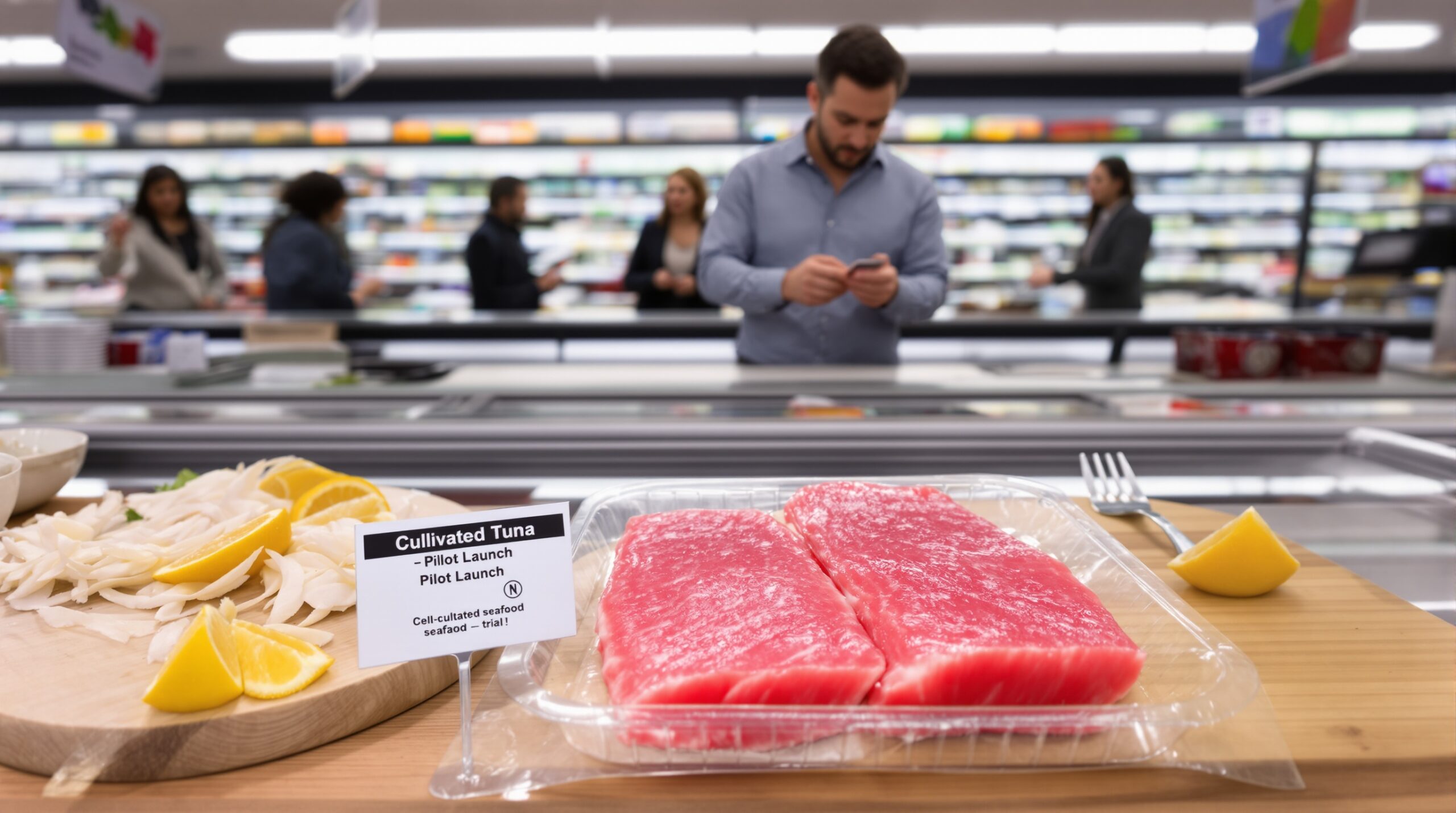
Retail shelves are starting to test cultivated tuna fillets in limited pilot programs. Retailers and producers aim to learn how shoppers respond to cell-cultured seafood. The trials focus on taste, cooking performance, and clear labeling at the point of sale. Early findings will guide scale-up decisions and broader distribution strategies.
This pilot marks a cautious step from tasting rooms to grocery aisles. Companies are coordinating with regulators and independent food safety experts. Participating stores emphasize transparency and handling standards. The lessons gathered will shape future launches across more cities and formats.
What cultivated tuna fillets are, and how they are produced
Cultivated tuna fillets grow from real fish cells, not whole fish. Producers collect a small cell sample from a live or harvested fish. They expand those cells in controlled bioreactors using food-safe nutrients. The process aims to form structured muscle tissue that cooks like conventional tuna.
Developers use edible scaffolds to guide texture and density. They may target specific fat levels to replicate prized cuts. The approach differs from plant-based analogs that mimic fish using plants. It instead develops genuine fish tissue outside the animal.
Why retailers are testing cultivated seafood now
Retailers face volatile wild catch supplies, changing consumer preferences, and sustainability pressures. Tuna stocks face heavy demand, complex management, and sensitive ecosystems. Cultivated options promise year-round supply and precise quality control. These advantages motivate cautious in-store trials.
Shoppers increasingly ask about mercury, microplastics, and traceability. Cultivated tuna can address several of those concerns. Retailers also seek innovative products that align with climate and ocean stewardship goals. Pilot programs provide real-world feedback before broader commitments.
How the retail pilot is designed
The pilot proceeds in select stores and limited regions. Quantities remain small due to early production constraints. Packages highlight preparation guidance and sourcing information. Staff receive training on handling, display, and customer questions.
In-store experience and education
Shoppers find cultivated tuna in the seafood case or a designated innovation section. Labels use clear terms like cultivated or cell-cultured tuna fillets. QR codes link to production details and third-party statements. Sampling events encourage trial and gather immediate feedback.
Data collection and performance metrics
Retailers track trial rates, repeat purchases, and preparation questions. They monitor price sensitivity and promotional effectiveness. Producers analyze cooking outcomes and flavor feedback by cut and thickness. These insights will inform packaging, messaging, and product refinement.
Regulatory and labeling considerations
Regulatory frameworks for cultivated seafood continue to evolve. In the United States, seafood falls under FDA oversight. Companies complete premarket consultations addressing safety, process controls, and labeling. Some jurisdictions allow limited sales once authorities finish premarket reviews.
Labeling aims to avoid consumer confusion and ensure allergen clarity. Fillets carry fish allergen statements and storage instructions. Producers use descriptors such as cultivated or cell-cultured, consistent with current guidance. Retail signage reinforces that the product is real fish grown from cells.
Consumer response and early pricing dynamics
Consumer research shows curiosity, caution, and strong interest in sampling. Early adopters seek sustainability and novelty, while others prioritize taste and value. In-store conversations help address questions about safety and production. Clear cooking guidance improves confidence at home.
Prices launch at a premium due to limited scale and high input costs. Promotions narrow the gap to encourage trial. Over time, efficiencies and larger batches can reduce costs. Retailers will watch for a path toward price parity with premium tuna.
Nutrition, safety, and verifiable claims
Developers aim to match the protein content and sensory profile of conventional tuna. They can tune fatty acid profiles through feed formulations. Producers highlight consistent quality and absence of environmental contaminants by design. Independent testing supports nutrition panels and safety statements.
Any comparative claims require careful substantiation. Life cycle assessments vary by facility design and energy sources. Companies disclose assumptions and seek third-party reviews where possible. Retailers prefer conservative claims that stand up to scrutiny.
Sustainability signals and carbon considerations
Cultivated seafood aims to reduce pressure on wild tuna stocks. It may also improve traceability and land use efficiency. Energy demand can be significant during early operations. Switching to renewable power and heat can lower carbon intensity.
Water use and effluent controls remain important design factors. Facilities recover and treat process water to reduce waste. Ingredient sourcing for media also influences footprints. Transparent reporting helps stakeholders evaluate environmental performance credibly.
Supply chain, cold chain, and merchandising
Cold chain management mirrors high-end seafood handling. Fillets ship under refrigeration or deep-freeze, depending on format. Modified atmosphere packaging can extend shelf life for fresh displays. Clear date codes and storage instructions support safety and quality.
Retailers test both prepacked fillets and counter service options. Chefs at in-store counters demonstrate searing and sashimi-adjacent applications. Cooking cards and videos simplify home preparation. Merchandising focuses on freshness cues, provenance, and ease of use.
Key challenges that still need solving
Scaling bioreactor capacity remains a central bottleneck. Growth media costs and supply security affect unit economics significantly. Texture development for thicker fillets requires advanced scaffolds and processes. Consistent yields must hold across longer production runs.
Public perception will evolve with experience and trusted communication. Retail staff training and transparent labeling support understanding. Policymakers continue to refine labeling and inspection frameworks. Competitors in wild and farmed tuna will respond on quality and price.
What retail success would look like
Success means repeat purchases, favorable taste ratings, and predictable production schedules. Price gaps narrow without heavy promotions. Retailers expand placements from pilot stores to additional locations. The category broadens to other species and formats as confidence grows.
The road ahead for cultivated seafood
The pilot introduces cultivated tuna to mainstream shoppers with guardrails and measurement. Producers will refine products, packaging, and processes based on real data. Regulators and standards bodies will clarify rules as evidence accumulates. Step by step, cultivated seafood can earn its place alongside traditional choices.
