

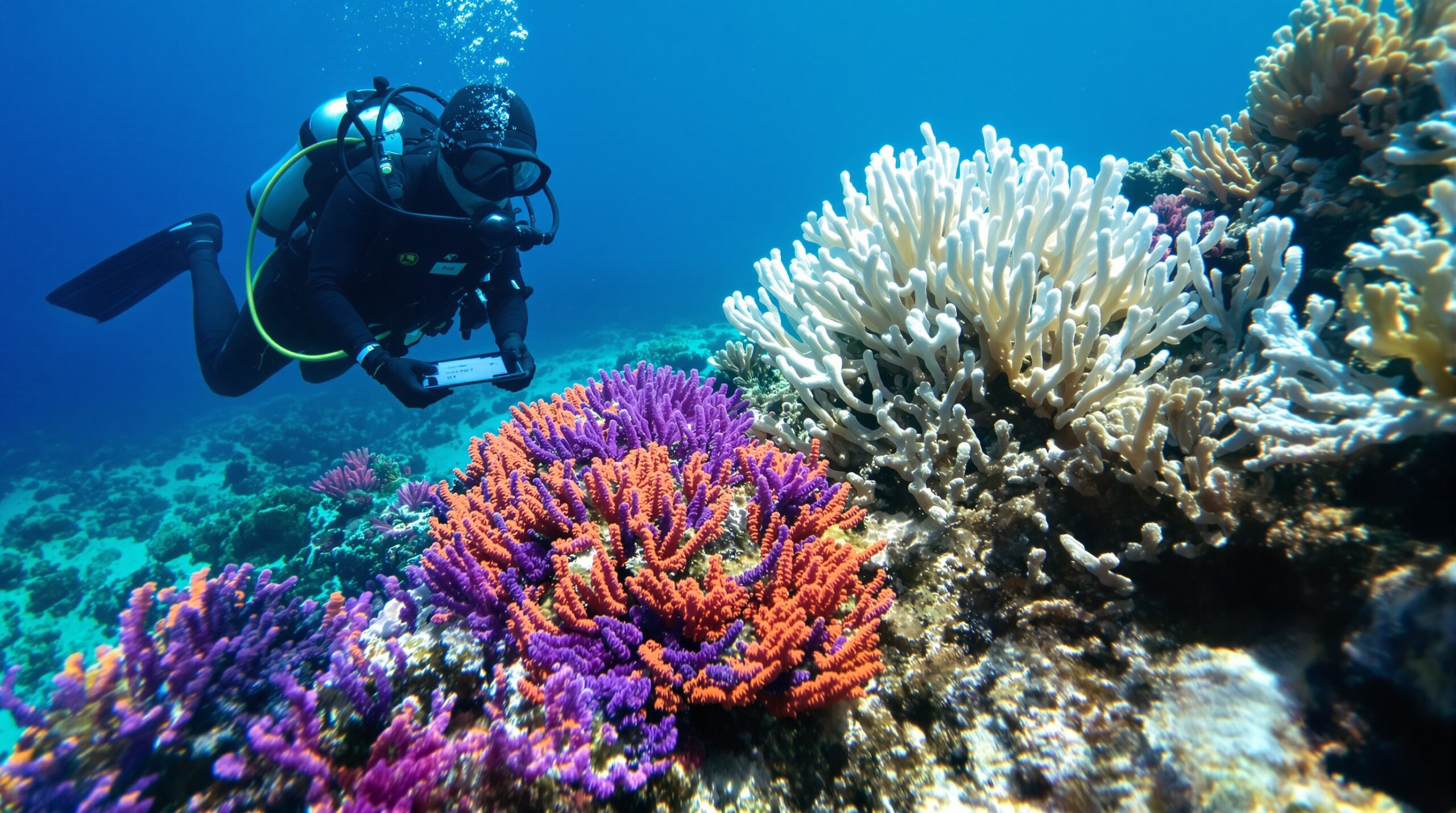
Coral reefs face mounting heat stress and frequent bleaching. Researchers are testing gene editing as a tool to help corals cope. The approach aims to strengthen coral resilience during marine heatwaves. Early findings point to promising, though cautious, optimism.
Why Heat Threatens Coral Reefs
Coral animals host photosynthetic algae that supply most of their energy. Elevated temperatures disrupt this symbiosis, causing corals to expel their algae. The result is bleaching, which leaves corals starved and vulnerable. Repeated or prolonged heat events often lead to widespread coral mortality.
Bleaching severity depends on peak temperatures and exposure duration. Local stressors like pollution can amplify heat impacts. Strong currents and shading sometimes buffer heat stress locally. Even these defenses often fail during severe marine heatwaves.
What Gene Editing Brings to Coral Science
Gene editing allows precise changes to coral DNA or their symbiotic partners. Researchers use tools like CRISPR to target specific genetic pathways. These pathways include stress response, photosynthetic regulation, and antioxidant defenses. Editing can reveal causal links between genes and heat tolerance.
Traditional breeding remains valuable but proceeds slowly in corals. Gene editing can accelerate discovery and trait development. It can also complement selective breeding and assisted gene flow. Combining approaches may offer the best resilience gains.
How Scientists Test Heat Tolerance
Laboratory experiments expose coral larvae, recruits, or fragments to elevated temperatures. Researchers track bleaching indicators, survival, and growth. They measure photosynthetic efficiency and oxidative stress markers. These metrics help determine whether edited corals tolerate heat better than controls.
Experiments often run across temperature ramps and recovery periods. Scientists compare performance at both stressful and benign temperatures. They also examine symbiont density and pigmentation changes. Rigorous replication and controls strengthen the conclusions.
Early Evidence of Increased Heat Tolerance
Early laboratory studies suggest certain edits improve heat tolerance traits. Some edited corals maintain higher symbiont densities during heat exposure. Others show less oxidative damage under thermal stress. These observations indicate meaningful physiological differences.
Benefits often depend on the targeted gene and coral life stage. Larval stages may respond differently than mature colonies. Environmental context further shapes outcomes across tests. Continued replication will refine confidence in these findings.
Potential Genetic Targets and Mechanisms
Scientists examine heat-shock proteins that stabilize cellular machinery under stress. Antioxidant enzymes can mitigate reactive oxygen buildup. DNA repair pathways help cells recover from thermal damage. Membrane composition genes may influence thermal stability and fluidity.
Researchers also target interactions between coral hosts and their algae. Gene edits could support better nutrient exchange during heat. Edits might reduce self-damaging immune responses under stress. Combined mechanisms can yield robust thermal performance.
Working With Symbiotic Algae and Microbiomes
Coral tolerance involves their algae and associated bacteria. Some projects explore editing or selecting symbionts with higher heat resistance. These symbionts may maintain photosynthesis under warmer conditions. Stable partnerships could reduce bleaching risk.
Microbiome management adds another layer of resilience. Probiotics can bolster immune responses and stress tolerance. Editing host genes might promote beneficial microbial communities. Integrated strategies can provide complementary safeguards.
Why This Approach Could Help Reefs
Heat-resilient corals could survive marine heatwaves that currently devastate reefs. Surviving colonies maintain habitat for fish and invertebrates. They also preserve coastal protection and tourism benefits. Every surviving coral enhances natural recovery potential.
Gene-edited corals might seed damaged areas after severe events. Enhanced tolerance could buy time for emissions reductions. Time matters because reefs recover slowly after major disturbances. Strategic deployments could maximize ecological gains.
Important Caveats and Uncertainties
Laboratory performance may not predict field success. Natural reefs face predators, storms, and variable chemistry. Edited traits might carry trade-offs under complex conditions. Long-term fitness effects require multi-year monitoring.
Heat tolerance may differ across species and locations. A successful trait in one reef might falter elsewhere. Local adaptation shapes coral performance over generations. Broad testing can identify context-specific strategies.
Ecological Risks and Safeguards
Unintended ecological impacts must be considered carefully. Edited corals could outcompete native genotypes under some conditions. Genetic changes might spread beyond intended areas. Researchers need safeguards to manage these possibilities.
Containment strategies include sterile lines or limited gene flow. Stepwise trials can begin in controlled field nurseries. Transparent reporting helps detect early concerns quickly. Independent oversight builds trust and accountability.
Ethical, Cultural, and Social Dimensions
Many communities hold deep cultural connections to reefs. Gene editing raises questions about altering shared natural heritage. Inclusive engagement ensures diverse voices shape decisions. Respectful dialogue improves both design and acceptance.
Benefit sharing should include local livelihoods and knowledge. Community monitoring programs can support stewardship. Co-designed projects reflect local priorities and values. Genuine partnership strengthens long-term outcomes.
Regulatory and Governance Pathways
Gene-edited organisms fall under evolving biosafety frameworks. Marine applications face national and international jurisdictional layers. Clear guidelines can structure responsible testing and deployment. Risk assessment should guide each development stage.
Adaptive governance can respond to new evidence. Post-release monitoring should inform ongoing authorizations. Transparent data sharing supports regional coordination. Shared standards improve cross-border reef protection.
Combining With Other Reef Interventions
Gene editing complements selective breeding and assisted gene flow. It also pairs with larval enhancement and nursery propagation. Local stress reduction remains essential for success. Water quality improvements can magnify resilience gains.
Shading, cooling, and early warning systems reduce acute stress. Protected areas can shelter source populations for recolonization. Fisheries management sustains ecological balance and reef function. Coordinated actions yield synergistic benefits.
Measuring Success and Monitoring Impacts
Success metrics should extend beyond short-term survival. Measures include growth, reproduction, and recruitment over seasons. Symbiont stability and photosynthetic performance matter. Genetic tracking can monitor trait spread and persistence.
Environmental DNA can help detect edited lineages. Remote sensing can assess bleaching across large areas. Standardized protocols enable comparisons across projects. Shared data platforms accelerate learning and adaptation.
Scaling, Logistics, and Cost Considerations
Scaling requires hatcheries, nurseries, and deployment infrastructure. Reliable supply chains for materials are also necessary. Training local practitioners builds capacity and resilience. Costs should align with measurable ecological outcomes.
Site selection influences deployment efficiency and survival. Microhabitat factors can improve establishment success. Phased rollouts allow adjustments based on feedback. Financial planning should include long-term monitoring commitments.
Climate Mitigation Still Sets the Context
Gene editing cannot replace emissions reductions. Reefs need lower global temperatures to thrive long term. Heat tolerance buys time, not a final solution. Climate action remains the decisive factor for reef futures.
Adaptation tools and mitigation work best together. Strong climate policy improves success odds for all interventions. Every fraction of warming avoided protects coral habitat. Coordinated strategies yield durable benefits.
Priorities for Future Research
Researchers need multi-year, multi-site field trials. Studies should compare edited lines against local wild controls. Work should track fitness across life stages. Attention to genetic diversity will maintain adaptive potential.
Mechanistic studies can pinpoint the most effective targets. Cross-species analyses may reveal conserved resilience pathways. Integration with microbiome research could unlock combined benefits. Open data will speed scientific progress.
Practical Steps for Responsible Deployment
Start with small, transparent pilot projects. Engage regulators, communities, and reef managers early. Define clear success thresholds and stop criteria. Build independent oversight into project governance.
Document methods, outcomes, and uncertainties thoroughly. Share protocols to enable replication and improvements. Align deployments with broader reef management plans. Continuous evaluation should guide scaling decisions.
Conclusion: A Promising Tool Within a Larger Toolbox
Gene-edited corals show encouraging heat tolerance in early studies. The approach offers a potential lifeline during escalating heatwaves. Responsible research and governance can manage risks and uncertainties. Careful integration with other strategies will enhance outcomes.
Reefs still depend on decisive climate mitigation for long-term survival. Even so, every credible tool deserves rigorous testing now. Thoughtful experimentation can preserve options for future restoration. Corals need both innovation and global climate action.
