

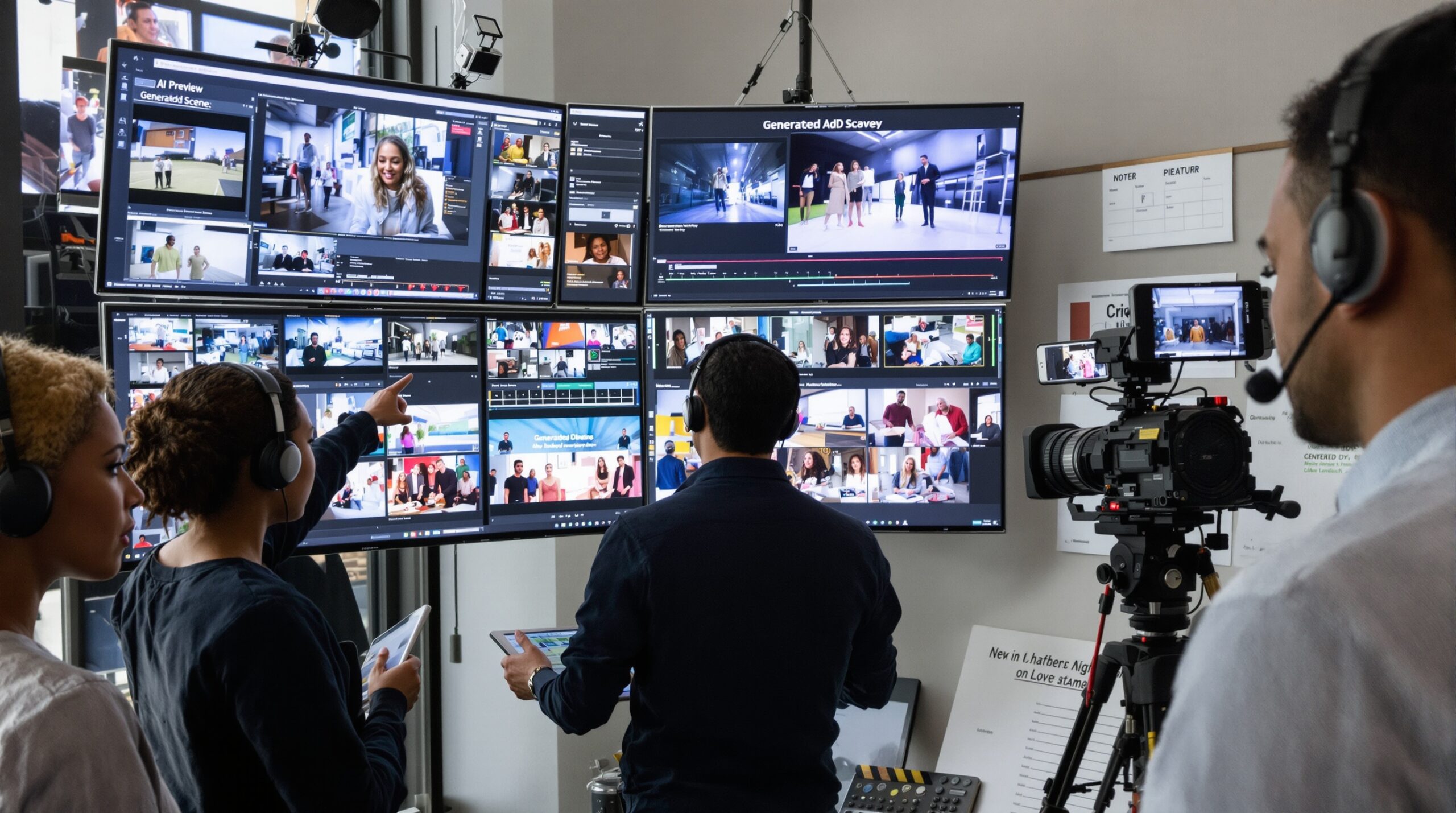
Generative AI video systems exited the lab and entered production floors. Filmmakers and advertisers now prototype moving images in hours, not weeks. The shift compresses timelines, reallocates budgets, and reshapes creative roles. As adoption grows, standards and safeguards race to keep pace. The result is a new baseline for creative speed and experimentation.
Why This Moment Arrived
Multiple forces converged to push generative video into daily use. Diffusion models improved fidelity, motion coherence, and temporal consistency. Transformer advances boosted long-range structure and scene continuity. Cloud GPUs lowered access barriers for small teams and agencies. Tool interfaces also simplified complex controls into accessible panels and sliders.
Open models and research increased literacy across creative departments. Vendor competition widened feature sets and reduced per-asset costs. Education moved quickly through tutorials, workshops, and community templates. These dynamics made early experiments viable for client pitches and internal reviews. Momentum then encouraged deeper integrations and training.
Film Previsualization Reimagined
Previsualization teams now generate animatics directly from scripts and reference boards. Text prompts create shot options with camera moves and lighting cues. Image-to-video pipelines transform concept frames into motion studies. Depth and pose guidance stabilize characters and maintain framing across cuts. Directors preview tone, pacing, and coverage before booking locations.
Common tools include Runway, Pika, and Luma’s Dream Machine. Studios also test models like Sora and Google Veo under limited access. Stability’s models and research tools support custom workflows. Unreal Engine bridges AI previz with virtual production stages. These stacks integrate into editorial timelines with proxies and LUTs.
The biggest change is iteration speed. Teams try more lenses, blocking, and transitions within a single afternoon. Producers compare visual directions without full crew mobilization. Cinematographers validate lighting philosophies using simulated setups before rental commitments. VFX supervisors flag risk shots earlier, reducing downstream surprises. Collaboration expands while costs remain manageable.
From Storyboard to Techviz
Workflows start with a script breakdown and style bible. Prompts reference genre, camera language, and production design cues. Control tools guide depth, edges, and motion paths for consistent characters. Reference faces and wardrobe sustain continuity across sequences. Editors string outputs into timed assemblies for director feedback.
Teams then convert creative previz into technical visualizations. Layout artists annotate camera heights, focal lengths, and desired shutter angles. Shot plans move into Unreal for volumetric checks and set walk-throughs. Stunt coordinators assess feasibility using quick motion studies. Departments align on safety, timing, and clearance needs before principal photography.
Editorial and VFX Collaboration
Editors assemble AI shots in Premiere or Avid using standard proxies. Timelines carry markers for later replacement with plates. VFX teams tag shots requiring simulations, tracking, or CG extensions. Producers forecast complexity from the annotated cut. Everyone treats AI clips as living placeholders, not final frames.
This approach tightens communication. Vendors receive clearer briefs with visual intent already demonstrated. Schedules firm up because creative exploration happens earlier. Postvis becomes less reactive and more strategic. Fewer surprises appear during conform and final delivery windows.
Advertising Workflows Accelerate
Agencies deploy generative video throughout the pitch and production cycle. Creative teams draft mood films directly from the strategy deck. AI animatics test voiceover timing and narrative beats. Clients approve directions after seeing multiple style paths quickly. Production then focuses resources on the most convincing option.
During production, AI assists versioning, localization, and platform adaptations. Social cutdowns gain tailored scenes for audience segments. Product shots receive AI-guided relighting and background variants. Legal notes update packaging visuals without full reshoots. Turnaround shortens while brand cohesion improves.
Personalization at Scale
Marketers increasingly personalize video with dynamic elements. Voice models render multilingual reads with consistent tone. Lipsync tools match new languages to on-camera talent. Avatars present offers without booking additional talent days. Data-driven templates swap backgrounds, copy, and product configurations automatically.
Platforms encourage this flexibility. TikTok’s creative tools support AI-assisted ideation and content variations. Retailers request more formats for marketplace pages and email placements. CTV platforms open programmatic pipelines for customized creatives. Each channel benefits from faster testing and optimization cycles.
Tool Landscape and Capabilities
Modern tools cover text-to-video, image-to-video, and video-to-video. Motion brushes apply selective movement to key regions. Camera control panels simulate dollies, cranes, and handheld sway. Depth maps, poses, and masks enable structured guidance. Reference upload features preserve character identity across multiple scenes.
Audio integrations round out the pipeline. Speech synthesis tools supply scratch reads and final voiceovers. Music generators produce stems aligned to beat markers. Sound effects libraries auto-place transitional cues during edits. Editors refine mixes within familiar timelines. Delivery formats conform to broadcast and social specifications.
Cost, Talent, and Workflow Implications
Budgets shift from traditional line items toward compute and tool seats. Producers track generation costs alongside render times. Creative directors spend more hours on prompt design and curation. Previz artists evolve into AI supervisors and look developers. Assistant editors manage model outputs and metadata with new discipline.
Unions and guilds monitor role changes carefully. The WGA and SAG-AFTRA agreements include AI usage and consent provisions. Supervisors document how generative assets inform final work. Credits reflect contributions from both human and machine processes. Transparency supports fair recognition and negotiation.
Risks, Rights, and Governance
Copyright and likeness rights remain central considerations. Teams must confirm training data policies and available indemnities. Some vendors license datasets and offer enterprise protections. Others require careful risk assessments and restricted uses. Legal review now joins creative review in early milestones.
Disclosure requirements also expand. The EU AI Act advances transparency duties for deepfakes and synthetic media. Regulators emphasize consent and labeling around realistic personas. Brands establish internal guidelines for audience clarity. Contracts address ownership, reuse, and audit access for generated assets.
Provenance technologies help anchor trust. C2PA standards attach cryptographic content credentials to media. Adobe’s Content Credentials framework supports cross-tool verification. Newsrooms and agencies experiment with automated attestation in pipelines. Viewers and partners gain context about how assets were made.
Practical Implementation Playbook
Start with a clearly defined pilot. Select a project with constrained scope and measurable outcomes. Document prompts, settings, and feedback structures. Capture timing and cost data alongside creative results. Share lessons across departments to build confidence.
Create a style bible for generative outputs. Include references, palettes, lens choices, and motion vocabulary. Build a prompt library that maps to brand scenarios. Standardize file naming and metadata fields for traceability. Store inputs, outputs, and approvals for audit needs.
Integrate quality control early. Set acceptance thresholds for motion coherence, hands, faces, and typography. Plan human review for sensitive scenes or claims. Add watermarking or credentials for high-stakes releases. Train teams on disclosure and consent practices.
Prepare for handoff into traditional pipelines. Maintain edit-ready proxies and EDLs for conform. Include notes on intended lensing and blocking. Provide VFX pulls with clear masks and depth guides. Track every shot’s provenance through to final export.
What Comes Next
Model quality continues to rise across resolution, duration, and physical consistency. Camera control will improve through explicit rigs and path editing. Character consistency will stabilize through better identity conditioning. Multimodal models will align script, music, and edit rhythm. On-device generation will support private and low-latency use cases.
Expect deeper integrations with industry software. NLEs will host native generation and enhancement panels. Asset managers will track provenance and rights automatically. Real-time engines will blend AI clips with live cameras on set. Broadcasters will adopt policy dashboards for synthetic disclosures.
Conclusion: A New Creative Baseline
Generative AI video now shapes how stories and campaigns begin. Previsualization evolves from static boards to moving intent. Advertising shifts from rigid masters to adaptive systems. Teams deliver more choices with fewer delays and overruns. Governance frameworks grow alongside capability, supporting trust at scale.
The mainstream moment brings responsibility as well as speed. Clear labeling, consent, and provenance reduce confusion and risk. Collaboration between creatives, technologists, and lawyers strengthens outcomes. Audiences reward transparency and craft, regardless of tools. The industry now builds on this foundation toward richer, safer storytelling.
