

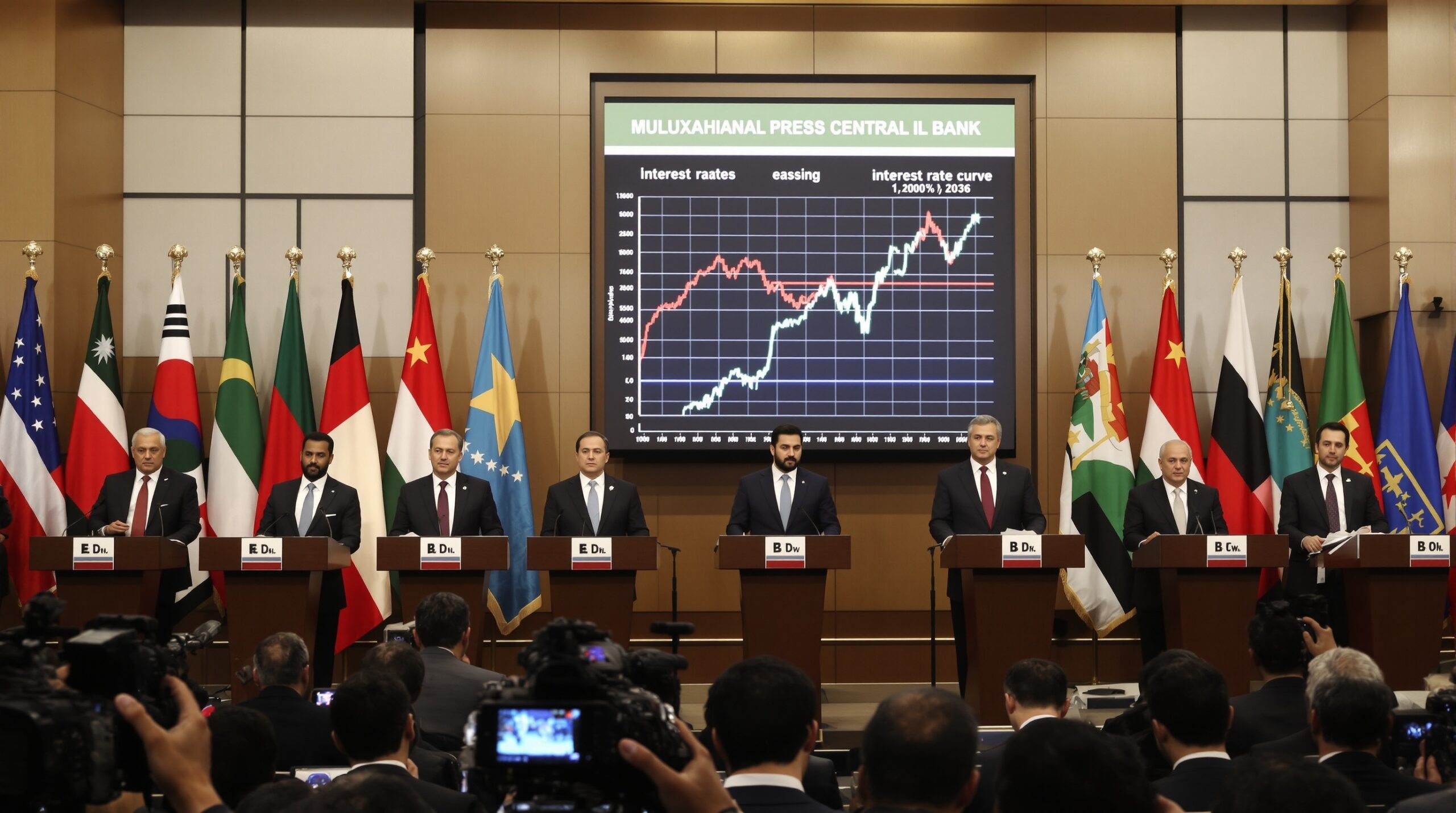
Global inflation has cooled markedly from the surge that followed the pandemic and energy shock. As price pressures retreat, central banks are signaling an emerging shift toward rate cuts. Policymakers emphasize caution, yet their messaging increasingly points to a gradual easing cycle.
This shift does not reflect formal coordination, but it does show synchronized dynamics. Shared economic forces have pushed inflation lower and tightened financial conditions. Those common drivers are now producing similar policy signals across many jurisdictions.
Why inflation is cooling across major economies
Three forces have helped inflation turn down. First, supply chains have healed, restoring inventories and reducing bottleneck costs. Second, energy prices retreated from 2022 peaks, easing headline inflation and transportation costs.
Third, prior rate hikes have cooled demand with long and variable lags. Tighter credit, higher mortgage costs, and stronger currencies have restrained spending. These forces have slowed goods inflation and are gradually affecting services.
Goods prices have softened as shipping lines normalized routes and delivery times. Retailers rebuilt stock, negotiated lower input costs, and discounted overhangs. Meanwhile, used car and electronics prices reversed prior surges.
Services inflation remains stickier, but momentum has eased. Wage growth has moderated as labor markets rebalance. Immigration and increased participation have expanded labor supply in several economies.
With inflation closer to targets, real policy rates have become more restrictive. That development reduces the need for further tightening. It also supports discussions about a controlled pivot toward easing.
Signals and actions from major central banks
Central banks have moved at different speeds, but the direction is converging. Communication increasingly highlights data dependence and the risk of overtightening. Several advanced economies have already initiated measured cuts.
United States and Canada
The Federal Reserve stresses a meeting-by-meeting approach. Officials cite cooling inflation and tighter credit as supportive of eventual easing. They also highlight persistent services inflation and resilient demand as reasons for patience.
Market pricing has anticipated a glide path toward modest cuts. The Fed continues quantitative tightening while assessing balance sheet runoff conditions. It aims to maintain financial stability as policy normalizes.
The Bank of Canada moved earlier as domestic disinflation progressed. Officials have signaled room for gradual cuts while monitoring shelter costs. They continue to weigh household debt sensitivity and mortgage renewals.
Euro area and the United Kingdom
The European Central Bank began a cautious easing cycle as inflation moderated. Officials emphasize that policy must remain restrictive for some time. They balance risks of overtightening with the need to secure price stability.
The Bank of England has shifted toward an easing bias as conditions softened. Wage growth and services prices still command close attention. The bank seeks evidence of durable progress before quickening the pace.
Other European central banks have moved ahead as well. The Swiss National Bank delivered an early cut as inflation undershot. Sweden’s Riksbank reduced rates as domestic inflation retreated and growth slowed.
Asia-Pacific dynamics
Asia presents a more varied picture. The Bank of Japan remains an outlier after exiting negative rates cautiously. Its focus rests on sustaining wage gains and anchoring inflation near target.
The Reserve Bank of Australia has maintained a cautious stance. Services inflation and housing costs demanded vigilance through the disinflation phase. A turn toward easing would likely remain gradual and data driven.
The Reserve Bank of New Zealand prioritized stability amid persistent domestic pressures. Officials have signaled patience until inflation settles convincingly. A slower easing cadence remains likely given earlier housing exuberance.
Elsewhere, the Bank of Korea has balanced growth concerns with inflation risks. Discussions around eventual easing have intensified as inflation cooled. Authorities continue monitoring household debt and currency dynamics carefully.
Emerging markets shift earlier
Several emerging markets began cutting earlier after front-loading hikes. Brazil, Chile, and parts of Central Europe initiated substantial easing in 2023. Their inflation fell faster after aggressive tightening during the pandemic surge.
Mexico started cautiously reducing rates as core inflation declined. Colombia and Peru also progressed with measured cuts. Turkey remained an exception due to earlier policy distortions and elevated inflation.
These moves reflected improved inflation outlooks and stronger real rates. They also responded to cooling growth and improving fiscal anchors. Currency stability and external financing conditions shaped the easing pace.
Coordination versus synchronization
Central banks do not coordinate rate decisions across borders. Each authority pursues its domestic mandate independently and transparently. Yet cycles often synchronize because shocks and disinflation forces are global.
Communication frameworks have improved predictability and reduced spillover risks. Swap lines and liquidity tools reinforce financial stability during stress. These arrangements support orderly markets without directing policy choices.
As a result, policy shifts appear coordinated even when they are not. Shared narratives and similar data produce parallel decisions. Transparency further amplifies this sense of alignment.
Market reaction to the easing pivot
Bond markets have priced a lower policy path as inflation cools. Long-term yields declined from cycle highs, reducing financing costs. Yield curves began steepening as near-term policy rates fell.
Equities responded to improved discount rates and resilient earnings. Rate-sensitive sectors, including housing and small caps, showed renewed interest. Credit spreads tightened alongside improved risk sentiment and lower volatility.
Currencies reflected relative policy divergence and growth prospects. Early cutters saw some depreciation against slower movers. Commodity exporters tracked both rate expectations and global demand signals.
Financial conditions indices eased as markets anticipated continued disinflation. Policymakers monitored whether looser conditions risked undermining progress. Guidance sought to preserve restrictive stances while allowing gradual normalization.
Economic implications of rate cuts
Lower policy rates reduce borrowing costs for households and businesses. Mortgage resets become less painful as renewal rates decline. Corporate debt issuance becomes cheaper, supporting investment and refinancing.
Housing markets can thaw as financing improves, though affordability challenges persist. Construction activity may stabilize as rate uncertainty fades. Rental inflation could moderate if supply increases and demand rebalances.
Labor markets may cool more gently under a controlled easing path. Firms can maintain headcount while adjusting wage growth gradually. Productivity improvements and automation remain important for sustaining disinflation.
Global trade could benefit from stronger final demand. Easing financial conditions support cross-border investment and inventories. However, geopolitical tensions and shipping disruptions still threaten logistics.
Fiscal dynamics interact with monetary easing in complex ways. Lower yields reduce debt service burdens for governments. Yet structural deficits and aging populations challenge long-term sustainability.
Risks and constraints to a smooth easing cycle
Services inflation could prove stubborn if wage growth reaccelerates. Shelter costs and insurance premiums have shown stickiness in several markets. Healthcare and education fees also require monitoring.
Energy shocks remain a key upside risk. Geopolitical tensions could disrupt supply and elevate prices quickly. Shipping reroutes can raise freight costs and revive goods inflation.
Financial stability must also guide the pace of cuts. Rapid easing could reignite excess risk-taking or asset froth. Conversely, delayed easing could tighten conditions unnecessarily.
Exchange rate dynamics pose challenges, particularly for emerging markets. Sharp currency swings can import inflation or stress balance sheets. Coordinated communication can mitigate disorderly moves without dictating policy.
Finally, neutral rates may have shifted higher post-pandemic. Demographics, investment needs, and deficits can raise equilibrium rates. That possibility argues for caution when calibrating the destination.
What to watch as easing unfolds
Focus on core inflation, services momentum, and wage measures. Unit labor costs and productivity will shape inflation’s persistence. Shelter disinflation timing remains crucial for headline paths.
Track labor market slack indicators beyond unemployment rates. Participation, hours worked, and vacancy ratios offer early signals. Business surveys can flag turning points ahead of hard data.
Monitor credit conditions and bank lending surveys for transmission. Spreads, delinquencies, and lending standards reveal policy traction. Small business surveys capture financing stress and demand shifts.
Watch central bank balance sheet plans and liquidity tools. Quantitative tightening paths affect term premia and funding costs. Ample reserves frameworks can cushion market volatility during transitions.
Finally, listen closely to forward guidance language. Shifts in risk balance and reaction functions matter significantly. Data-dependent frameworks will condition the pace and magnitude of cuts.
Bottom line
Global central banks are pivoting cautiously as inflation cools toward targets. The shift looks synchronized rather than coordinated by design. Common shocks and improved transparency are producing parallel decisions.
Policymakers aim to preserve hard-won disinflation while supporting growth. They will likely deliver gradual cuts and avoid abrupt moves. Data will determine how far and how fast easing proceeds.
For households and firms, the path promises modest relief ahead. Cheaper credit and steadier markets can restore planning confidence. Patience remains essential as risks and lags still complicate navigation.
The next phase rewards discipline and clear communication. Central banks will balance resilience with flexibility as conditions evolve. A soft landing remains achievable with careful policy execution.
