

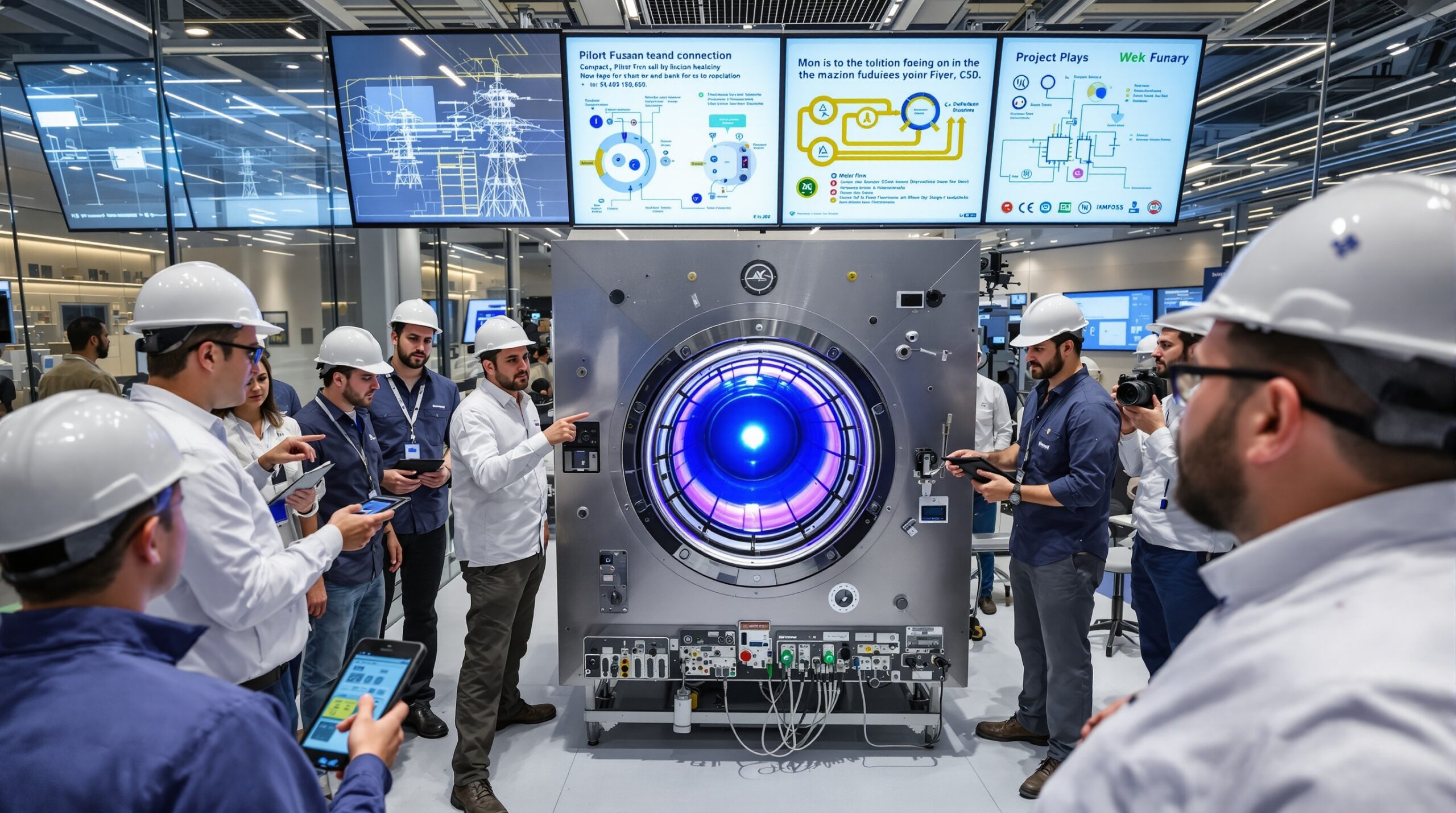
Fusion energy has moved from distant promise to near‑term industrial challenge. Venture‑backed startups and public programs now target pilot plants. Their shared goal is electricity delivery to the grid within the next decade. That ambition has galvanized regulators, investors, and supply chains worldwide. Momentum today reflects technology breakthroughs, policy shifts, and rising demand for clean firm power. The race is on, and timelines are tightening.
Why Fusion’s Commercial Moment Arrived
Global electricity systems need reliable, carbon‑free capacity as coal and gas retire. Wind and solar costs fell, but variability remains a system constraint. Storage helps, yet seasonal and multi‑day needs still challenge batteries. Fusion promises abundant fuel, zero combustion emissions, and high‑capacity factors. Those attributes position fusion as a complement to renewables. Consequently, governments and investors now prioritize demonstration plants over laboratory milestones.
Scientific Milestones Shift Expectations
Several achievements reshaped perceptions of fusion’s feasibility. The National Ignition Facility reported ignition in 2022 and repeat shots in 2023. Those results validated fusion physics at scale, though not power plant economics. High‑temperature superconducting magnets also marked a turning point. Teams demonstrated record magnetic fields using REBCO tapes in compact coils. These magnets enable smaller, more powerful tokamaks, tightening development cycles. The combination fueled credible pilot plant roadmaps.
Startups Define Distinct Technical Paths
Competing fusion approaches share the same market goal but diverge in methodology. Tokamak and stellarator concepts focus on steady‑state magnetic confinement. Inertial and magnetized target concepts compress fuel in rapid pulses. Alternative concepts pursue sheared‑flow pinches or field‑reversed configurations. Each approach trades maturity, component stress, and engineering integration differently. Diversity increases overall chances that at least one path reaches the grid.
Examples of Prominent Startup Programs
Commonwealth Fusion Systems advances compact tokamaks using high‑temperature superconducting magnets. Its SPARC device targets net fusion energy, followed by the ARC plant. Helion Energy pursues pulsed magneto‑inertial fusion with direct electricity conversion. It signed a power purchase agreement targeting delivery by 2028. Tokamak Energy develops spherical tokamaks and high‑field magnet technology for future plants. Zap Energy advances a sheared‑flow Z‑pinch aiming at compact, modular systems. General Fusion develops magnetized target fusion with a compressible liquid metal liner. TAE Technologies pursues hydrogen‑boron concepts using beam‑driven field‑reversed configurations.
These firms publish staged milestones and technical key performance indicators. Roadmaps emphasize component validation ahead of integrated pilot plants. That sequencing reflects lessons from past large scientific projects. It also attracts investors seeking measurable risk retirement. As programs mature, third‑party testing and data transparency grow more important. Independent evidence will anchor partnerships with utilities and grid operators.
Government Programs Catalyze Private Investment
Public agencies now support industry‑led pilot plant development. The United States launched a milestone‑based cost‑share program with multiple awardees. That program funds private efforts toward grid‑ready demonstrations this decade. ARPA‑E and other offices also support enabling technologies and materials. The United Kingdom set a 2040 prototype target under its STEP program. Europe continues DEMO design work under EUROfusion for post‑demonstration plants. National programs complement startup plans and de‑risk supply chains.
Regulators Prepare for Fusion Licensing
Regulatory frameworks now reflect fusion’s distinct risk profile. The U.S. Nuclear Regulatory Commission classified fusion under byproduct material rules. That decision enables a more proportionate licensing pathway than fission reactors. The United Kingdom plans to regulate fusion outside nuclear site licensing. Other jurisdictions evaluate similar approaches with appropriate safety oversight. Clear frameworks reduce uncertainty for siting, financing, and community engagement. Regulatory certainty directly accelerates pilot plant schedules.
Grid‑Ready Means More Than Net Plasma Energy
Pilot plants must integrate full power‑plant subsystems, not just fusion cores. Teams must convert heat to electricity with reliable turbines or alternatives. They must handle tritium fuel securely and recycle it efficiently. They must manage neutron damage and maintain components remotely. Plants must meet availability, maintainability, and safety performance targets. Utilities also require grid interconnection, market participation, and dispatchability evidence. Integration moves fusion from physics to energy product.
Key Engineering Hurdles Still Dominate
Materials must withstand intense neutron flux and thermal loads. Advanced steels, tungsten, and composites sit under active development. Superconducting magnet systems require robust cryogenics and quench protection. First wall and blanket designs must capture heat and breed tritium. High‑repetition pulsed systems must demonstrate component lifetime and cost control. Remote handling must enable rapid replacement of activated parts. Each challenge demands parallel progress to keep timelines credible.
Tritium Supply and Breeding Are Central
Deuterium‑tritium fuel requires a sustainable tritium source for scale. Today’s global tritium inventory remains limited and declining. Pilot plants must close the fuel cycle through breeding blankets. Lithium‑based materials generate tritium when hit by fusion neutrons. Efficient extraction and processing systems must operate safely and continuously. Successful breeding performance will decide commercial plant feasibility. Early demonstrations will guide blanket designs for future fleets.
Economics Shape Plant Designs and Schedules
Cost targets define whether pilot plants lead to viable products. Capital intensity must support competitive levelized electricity costs. Balance‑of‑plant equipment often dominates costs, not only fusion cores. Standard steam cycles may lower risk and speed deployment. Direct conversion concepts could improve efficiency for certain fuel cycles. Supply chain readiness also determines cost and schedule certainty. Vendors need forecastable demand to invest in production capacity.
Financing Models Evolve with Milestones
Investors now expect structured milestones and credible delivery plans. Equity capital anchors R&D and first‑of‑a‑kind construction. Project finance may follow once technology and revenue risks decline. Long‑term offtake contracts can underwrite debt for subsequent units. Corporate partnerships provide manufacturing, siting, and operational expertise. Public‑private cost sharing reduces early stage risk for taxpayers and investors. Each financing layer depends on verified technical progress.
Siting, Workforce, and Community Engagement Matter
Pilot plants require suitable industrial sites and skilled labor. Access to grid capacity, water, and transport infrastructure helps. Communities expect transparent safety plans and local economic benefits. Early engagement builds trust and smooths permitting timelines. Workforce pipelines must train operators, engineers, and technicians. Partnerships with universities and trade schools can accelerate training programs. Successful sites will showcase replicable models for future plants.
Public Facilities Continue to Advance the Field
International facilities deliver crucial data for all approaches. Europe’s JT‑60SA and other machines explore advanced plasma scenarios. Long‑pulse experiments inform stability and control strategies. Materials test facilities characterize damage mechanisms and lifetime performance. Diagnostic advances improve modeling and predictive control of plasmas. Those public results feed directly into private plant designs. Collaboration reduces duplication and accelerates shared learning.
What to Watch Through the Late 2020s
Several milestones will indicate real progress toward the grid. Look for sustained, repeatable fusion gains in integrated devices. Watch component lifetimes under realistic thermal and neutron loads. Track breeding blanket experiments and tritium processing results. Follow regulatory approvals for pilot plant sites and designs. Monitor supply agreements for magnets, lithium, and specialized materials. Evaluate third‑party test reports and utility partnerships. Transparent data will separate hype from readiness.
Implications for Power Markets and Climate Goals
If pilot plants deliver, fusion could supply clean firm power at scale. Grids would gain flexible capacity that complements renewables and storage. That combination could reduce reliance on unabated gas peakers. Regions with limited renewable resources would gain new decarbonization options. Industrial heat applications may also benefit from high‑temperature fusion plants. Success would reshape long‑term resource planning and investment decisions. Markets will respond quickly to proven, dispatchable, clean power sources.
The Road Ahead
The fusion race now hinges on engineering delivery and integration. Startups must prove reliability, maintainability, and economics under operating conditions. Governments must sustain enabling policies and support shared infrastructure. Regulators must maintain proportionate safety frameworks as designs mature. Utilities must define interconnection and operational requirements early. Together, these actions can turn prototypes into power plants. The next few years will determine fusion’s commercial trajectory.
Commercial fusion will not follow a single path or timeline. Multiple concepts may reach the grid with different strengths. Diverse applications will reward different operating profiles and costs. Competition should drive performance improvements and cost reductions. Collaboration will still remain essential across materials, safety, and standards. With disciplined progress, pilot plants could inaugurate a new energy era. The opportunity is real, and the clock is ticking.
