

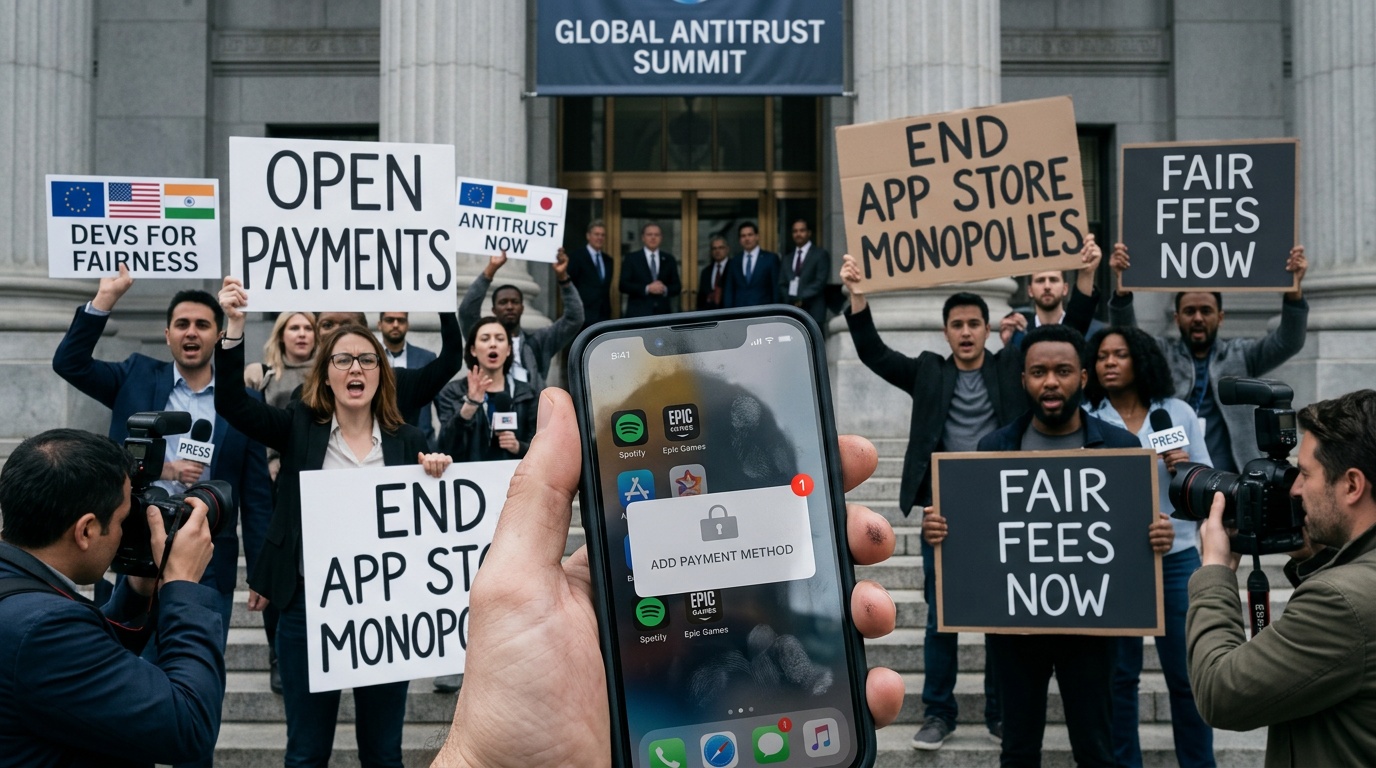
Regulators worldwide are tightening scrutiny of mobile app stores and in‑app payments. Authorities argue dominant platforms restrict competition and inflate costs. Developers, meanwhile, are organizing for open payment options and fair distribution rules. The clash now shapes pricing, innovation, and control across the mobile economy. Momentum is accelerating as new laws and court orders arrive.
Why App Store Control Faces Scrutiny
Apple and Google control the primary gateways to billions of mobile users. Their app stores set fees, rules, and technical conditions for distribution. Developers long criticized 30 percent commissions as disproportionate and harmful. They also contest anti‑steering rules that restrict links to outside payments. These concerns now drive coordinated antitrust action and legislative reforms.
Regulators focus on gatekeeper power and self‑preferencing risks. They assess whether platform rules disadvantage rivals or raise developer costs. Authorities also examine constraints on web apps, cloud gaming, and browser engines. Each constraint can limit alternatives to native in‑app purchases. These investigations now span the United States, Europe, and Asia‑Pacific.
Europe Leads With the Digital Markets Act
The European Union’s Digital Markets Act targets large “gatekeepers” with binding obligations. It requires anti‑steering, open access to alternative app stores, and interoperable services. Gatekeepers must allow third‑party billing options and promote choice screens. They also must avoid tying practices and discriminatory ranking. Violations risk fines up to 10 percent of global turnover.
The European Commission began formal non‑compliance probes in March 2024. The inquiries examine Apple’s App Store rules and Google Play’s billing practices. Investigators also scrutinize self‑preferencing and steering restrictions across core services. Preliminary findings signaled concerns with Apple’s continued steering limits. Developers criticized proposed compliance models as unworkable or punitive.
Europe also pursued legacy antitrust cases with hefty penalties. In March 2024, the Commission fined Apple over music streaming restrictions. The case centered on anti‑steering rules affecting rival services. Spotify’s complaint helped spotlight constraints on linking and pricing communications. The decision reinforced Europe’s broader DMA enforcement posture.
Developers protested Apple’s new European “Core Technology Fee” proposal. They argued it penalizes distribution outside the App Store. Critics warned it could nullify gains from alternative stores. The Commission opened deeper reviews of these design choices. Europe’s enforcement now shapes product roadmaps and commercial models.
Web app support also entered the European debate. Developers challenged changes affecting Progressive Web Apps on iOS. After backlash and regulatory questions, Apple adjusted its approach. The episode highlighted technical levers that influence competition. It also underscored regulators’ broadened focus beyond payment flows.
United States Actions Intensify
American enforcement moved on several fronts during 2024. The Department of Justice sued Apple over exclusionary iPhone practices. The case addresses App Store rules affecting super apps, cloud gaming, and browsers. It alleges conduct that undermines cross‑platform services and hardware rivals. App distribution and payments feature among the competitive concerns.
Private litigation produced major milestones against Google. A jury found Google’s Play Store practices unlawful in late 2023. In 2024, the court issued broad injunctive remedies. The order requires openness to competing billing and app stores. It also restricts deals that foreclose distribution alternatives for developers.
Google separately settled with U.S. states over Play Store claims. The settlement included monetary relief and business practice changes. Google expanded user choice billing and clarified developer steering rights. These commitments add pressure for industry‑wide payment flexibility. They also informed debates in other jurisdictions.
Epic’s case against Apple continues shaping compliance expectations. Courts preserved an injunction against anti‑steering restrictions. Ongoing disputes concern Apple’s linking rules and retained commissions. The judge has pressed for workable, good‑faith compliance. Developers argue fees still burden alternative payment adoption.
Asia‑Pacific Pushes Opening
South Korea pioneered legislation requiring alternative billing options. The amended Telecommunications Business Act bars forced proprietary billing. The Korea Communications Commission pursued enforcement against Apple and Google. Authorities levied fines for practices that undermined the law’s purpose. Compliance monitoring continues as platforms adjust policies and tooling.
Japan passed a landmark smartphone competition law in 2024. The law targets specific software ecosystems, including app stores and browsers. It mandates fair access, anti‑steering, and third‑party billing support. Significant penalties can apply for non‑compliance with designated obligations. Implementation steps begin ahead of expected enforcement in 2025.
India’s competition authority intensified scrutiny of mobile ecosystems. Orders addressed Google’s Play billing restrictions and Android licensing terms. Courts oversaw compliance disputes and interim arrangements. Developers in India received expanded user choice billing options. Regulators continue evaluating further remedies and guardrails.
Australia’s consumer regulator advanced proposals for new digital rules. The ACCC recommended binding service‑specific codes for dominant platforms. The goal includes fairer app distribution and payment choice. Consultations examined commission levels, steering, and access to APIs. Legislative action remains under consideration by policymakers.
United Kingdom Charts Its Own Path
The United Kingdom enacted the Digital Markets, Competition and Consumers Act. The law empowers the CMA to designate firms with Strategic Market Status. Designated firms can face tailored conduct requirements and penalties. Remedies may address app store access, payments, and self‑preferencing. The framework complements existing Competition Act investigations.
The CMA previously probed mobile browser and cloud gaming restrictions. Those inquiries highlighted Apple’s WebKit requirement and App Store policies. Findings informed the new regime’s priorities and potential conduct rules. The CMA can require interoperability and reduce friction for rivals. Enforcement will proceed through firm‑specific conduct investigations.
Developers Mobilize for Open Payments
Developers escalated advocacy through coordinated coalitions and filings. The Coalition for App Fairness organized companies across sectors. Spotify, Match, and Epic pressed for anti‑steering relief. Smaller developers joined consultations and parliamentary hearings globally. Their testimonies emphasized margins, customer relationships, and product flexibility.
Developers argue open payments reduce processing costs and fraud tools improve. They claim competition can lower consumer prices and expand features. Many prefer direct billing relationships for refunds and support. They also want clearer data access and flexible pricing experiments. These demands strengthened regulators’ resolve to act.
Opponents of strict fees propose graduated or capped commissions. They support optional services like discovery and refunds for a fee. Some accept platform safety checks with transparent, limited charges. Developers also favor standardized link policies across platforms. Predictability reduces integration time and legal risk.
Consumer Impact and Security Debates
Platforms defend restrictions as essential for safety and privacy. They warn alternative billing can heighten fraud and confusion. Regulators respond that safeguards can accompany openness. They encourage standardized disclosures and refund guarantees. More choice need not compromise protections or device integrity.
Consumers stand to benefit from lower prices and more features. Developers can pass savings from reduced fees to users. Competing payment processors may innovate in subscriptions and bundles. Transparent comparisons can help users choose preferred methods. Clear messaging remains crucial to prevent deceptive offers.
Security debates increasingly focus on practical mitigations. Measures include strong authentication and consistent receipt validation. Platforms can certify payment SDKs and monitor abuse signals. Regulators expect documented risk assessments and incident reporting. These steps balance openness with resilient consumer protection.
Emerging Compliance Models
Google’s user choice billing reduces service fees in supported markets. Developers can present competing payment methods within the app. They must satisfy disclosure and customer support requirements. Early adopters reported workable integrations with manageable changes. Courts and regulators continue reviewing fee levels and terms.
Apple enabled external link entitlements under court supervision. The rules preserve commissions on off‑platform transactions from app referrals. Developers argue the retained fees remain too high. Regulators question whether such terms undermine anti‑steering goals. Negotiations and litigation will likely refine acceptable models.
The Netherlands tested focused remedies for dating apps. Apple allowed alternative payment options under regulator oversight. Fines accompanied delays and disputed conditions. The experience informed broader European enforcement thinking. It showed targeted remedies can face protracted implementation issues.
What to Watch Next
European DMA cases will define acceptable app store designs. The Commission can impose structural or behavioral remedies if needed. Apple and Google must align technical enforcement with legal obligations. Developers will evaluate new distribution channels and risk models. Early adoption patterns will inform future rulemaking and guidance.
U.S. litigation will shape long‑term remedies and compliance costs. The DOJ’s Apple case may reach pivotal pretrial rulings. Epic’s enforcement disputes could further adjust linking policies. Google’s injunction will test practical competition in Android distribution. Industry changes may ripple across advertising and analytics.
Asia‑Pacific laws will activate new compliance deadlines. Japan’s framework will pressure global alignment on payment choice. Korea’s regulators will audit ongoing adherence and interfaces. India’s courts will influence billing flexibility and market conduct. Australia’s policy debate could add another binding regime.
Developers will continue rallying for standardized, open payment options. They will seek transparent fees and consistent steering rules. The next year promises material shifts in mobile monetization. Regulatory outcomes will guide product, pricing, and platform strategies. Stakeholders should prepare for iterative changes and ongoing oversight.
Key Takeaways
- Regulators are escalating antitrust and digital market actions against dominant app stores.
- Europe’s DMA sets strict obligations on steering, billing, and distribution access.
- U.S. litigation delivers remedies requiring openness, especially on Android.
- Asia‑Pacific adopts laws mandating third‑party billing and broader competition.
- Developers organize for open payments, lower fees, and predictable rules.
- Security concerns drive requirements for standardized safeguards and disclosures.
- Compliance models remain fluid as courts and regulators refine acceptable terms.
