
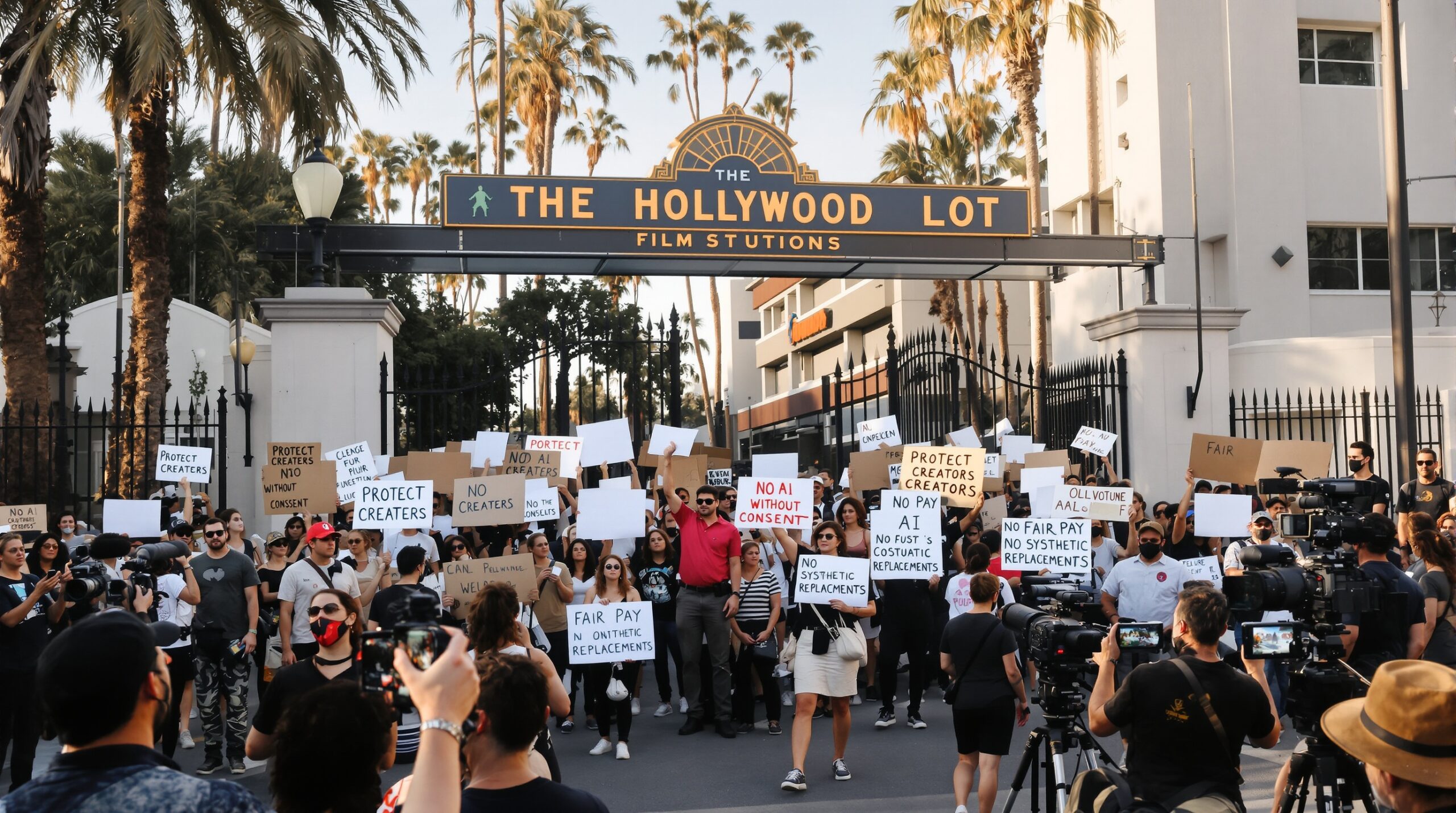
Hollywood is accelerating its use of synthetic media, while unions push for enforceable protections. The collision is reshaping film and television work. It is also reframing long-standing questions about authorship, credit, and consent. The stakes feel immediate for workers and companies alike.
Studios increasingly deploy AI for dubbing, de-aging, ADR, marketing, and quality control. Unions warn that unregulated deployment risks exploitation and job loss. Both sides now negotiate the boundaries of acceptable use. They also debate who benefits when productivity dramatically rises.
The Stakes for Creative Labor
Writers, actors, directors, and crews rely on clear rules around creative ownership. Synthetic media scrambles those assumptions. Unions emphasize informed consent, fair compensation, and control over name, image, and voice. They also seek transparency when AI touches creative workflows.
Performers fear unauthorized digital doubles and perpetual reuse. Background actors report pressure to accept broad scanning rights. Writers see risks to credit and income if studios treat AI text as source material. Craftspeople worry about automation eroding entry-level pathways.
Studios cite efficiency, localization quality, and creative experimentation. They argue AI can expand production and audience reach. They also claim modern pipelines need machine assistance at scale. This tension now sits at the center of collective bargaining.
What Unions Have Secured So Far
Writers Guild of America provisions
The WGA’s 2023 contract recognizes AI as a tool, not a writer. Studios cannot treat AI-generated text as literary or source material. Writers cannot be required to use AI software. Companies must disclose if they provide AI materials during assignments.
Credit and compensation remain tied to human authorship under the deal. The agreement establishes regular discussions on AI’s impact over time. It leaves training data questions for ongoing policy debate. The framework set a baseline for later negotiations.
SAG-AFTRA digital replica protections
SAG-AFTRA’s 2023 television and theatrical agreement added explicit digital replica safeguards. Producers must obtain informed consent to create and use a performer’s digital likeness. They must specify the intended use, scope, and duration. They must pay appropriate compensation for that use.
The agreement includes new rules for background scans. It limits reuse beyond the original project without consent and payment. The union frames these rules as baseline protections. It continues to negotiate stronger language across specialized contracts.
IATSE and Teamsters priorities
IATSE prioritized AI guardrails, training, and job security in 2024 bargaining. The union sought clarity on notice, consultation, and skill development. It also emphasized preventing technology from eroding crew headcounts. Early agreements signaled progress on structured oversight and training funds.
Teamsters and Basic Crafts have pressed similar concerns around automation. They focus on protected classifications and safety when AI supports logistics. They also highlight fair scheduling and transparency in data-driven planning. Coordinated strategies broaden labor’s bargaining leverage across departments.
How Studios Are Deploying Synthetic Media
Studios and vendors are integrating AI into postproduction, localization, and marketing. The push spans voice cloning, de-aging, cleanup, and content analysis. It also extends to script coverage, promo generation, and audience targeting. These tools promise cost savings and global reach.
Localization, dubbing, and voice cloning
Vendors now offer lip-sync correction and multilingual dubbing using machine learning. Companies like Flawless and Papercup market refined localization pipelines. Tools align lip movements to translated dialogue for natural results. Studios view this as a way to deepen international engagement.
Voice cloning technology supports ADR and accessibility features. Respeecher and similar firms provide lifelike timbres for editorial fixes. Some projects use synthetic voices for narration and archival recreation. These advances raise consent and attribution issues for performers.
Visual effects, de-aging, and cleanup
Machine learning speeds up rotoscoping, face cleanup, and crowd augmentation. It assists de-aging work seen in several high-profile releases. Examples include aging adjustments in major franchises and period films. Studios deploy generative fill to accelerate paint and compositing tasks.
Text-to-video research excites executives and artists alike. Tools promise previsualization and rapid iteration for pitch reels. Public models inspire interest, though production usage remains limited. Studio security and reliability requirements slow direct adoption for now.
Marketing and analytics pipelines
Marketing teams test AI for trailers, captions, and social assets. They analyze footage to tag scenes and performances. They generate copy variants to match platform constraints. These systems influence audience engagement strategies across campaigns and regions.
Data-driven tooling blurs creative and operational domains. Unions want clarity on how those tools affect staffing. Studios want flexibility to scale campaigns quickly. Structured protocols can reduce surprises and workplace friction.
Legal and Regulatory Landscape
Existing laws cover publicity rights, unfair competition, and deceptive practices. However, new scenarios stress those frameworks. States are updating rules on deepfakes and impersonation. Tennessee’s ELVIS Act expanded voice rights to address AI cloning.
Federal lawmakers have floated a NO FAKES framework on digital replicas. The Copyright Office is studying training data and authorship. The FTC is evaluating AI claims and deceptive uses. These processes may shape industry standards before courts rule.
Studios and unions also consider provenance technologies. Watermarking and content credentials can label synthetic elements. Chain-of-custody tools help track edits through postproduction. Adoption requires cross-industry coordination and open standards.
Key Bargaining Priorities Ahead
Unions want explicit consent for any digital replica creation. They want clear limits on scope, geography, and duration. They also want meaningful pay tied to reuse and exploitation. Enforcement mechanisms and audit rights remain central to compliance.
Writers seek guarantees that AI outputs cannot replace human material. They want disclosure when producers supply algorithmic drafts. They also want credit protections not undermined by machine assistance. Training and upskilling funds would support changing workflows.
Below-the-line crafts seek job security and safety nets. They favor notice periods before major workflow changes. They also back paid training time for new toolchains. Clear staffing minimums can protect early-career pathways.
Producers want flexibility to test tools under guardrails. They ask for carve-outs to meet tight schedules. They also want pragmatic consent processes for background work. Standardized templates could reduce confusion and disputes.
Economic Impacts and Productivity
AI can cut costs and shorten schedules across departments. It can also create new roles, such as AI wranglers and data curators. Supervisors will need certification pathways and safety standards. These roles can strengthen quality control and accountability.
Productivity gains may not automatically benefit workers. Contracts must capture value through minimums and residual structures. Shared savings models could align incentives when tools expand output. That approach could reduce adversarial dynamics over time.
Studios benefit when localization drives global revenue. Workers benefit when pay reflects that expansion. Both sides can endorse transparency around performance metrics. Data governance then becomes a labor issue and a business imperative.
Trust, Attribution, and Audience Expectations
Audiences increasingly encounter synthetic performances and voices. Clear labeling helps preserve trust without diminishing artistry. Credit screens can reference digital doubles and AI-assisted work. That practice acknowledges the people behind the pipelines.
Authenticity concerns extend beyond entertainment. Deepfake scams and election misinformation raise broader risks. Entertainment norms can influence platform policies and public expectations. The industry can lead with provenance, disclosure, and accountability.
Paths to Responsible Deployment
Companies can adopt consent-by-design frameworks for replicas. They can standardize narrow, revocable licenses with clear fee schedules. They can provide dashboards for performers to track usage. That visibility reduces disputes and strengthens relationships.
Studios can pilot tools with joint labor committees. They can publish postmortems that document outcomes and lessons. They can sponsor training tied to promotions and wage steps. Structured programs align innovation with workforce development.
Vendors can implement provenance, watermarking, and bias testing. They can support audits and red-team exercises with unions. They can provide accessible override settings for on-set supervisors. Those steps demonstrate maturity for production environments.
Outlook
Hollywood will keep expanding synthetic media across the pipeline. Unions will keep pressing for consent, compensation, and credit. Regulators will refine rules as cases and technologies evolve. Collaboration can deliver growth while protecting human creativity.
The next contract cycles will test proposed guardrails in practice. Clear enforcement will matter more than slogans or pilots. Proven standards can reduce fear and unlock responsible scale. The industry’s credibility now depends on getting this right.
Audiences care about stories and the people who make them. Trust rests on consent, fairness, and attribution. With smart governance, AI can strengthen artistry rather than eclipse it. The path forward requires shared discipline and steady transparency.