

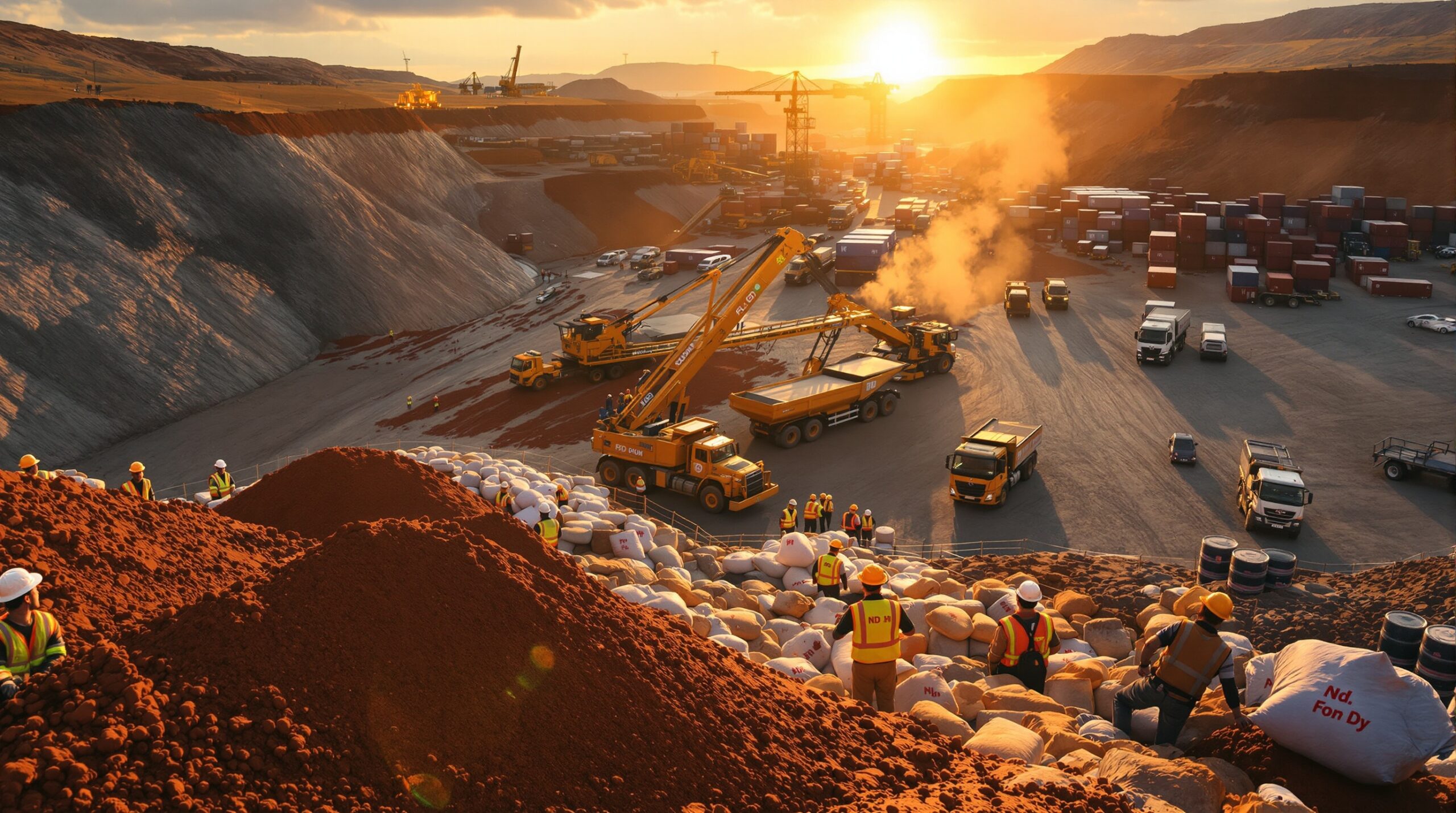
Battery chemistry is evolving fast, yet the rare earth race keeps accelerating. Automakers, miners, and governments now treat magnet metals as strategic assets. Supply concentrations, geopolitical friction, and environmental hurdles intensify the urgency. Investors track every policy move as new chemistries approach scale. The transition demands broader materials strategies than lithium alone ever required.
Why rare earths matter for electrification
Rare earth elements power the strongest permanent magnets used in many electric motors. Neodymium, praseodymium, dysprosium, and terbium anchor high‑performance magnets. These magnets deliver efficiency, compact size, and strong torque in electric drivetrains. Wind turbines also rely on permanent magnets for reliable, low‑maintenance power generation. Electrification therefore expands magnet demand, regardless of battery chemistry shifts.
Permanent magnets anchor demand
Many EVs use neodymium‑iron‑boron magnets to extend range and cut weight. Carmakers can switch chemistries, but motors still need efficient magnets. Dysprosium and terbium add high‑temperature tolerance for heavy loads. These heavy rare earths remain particularly scarce and expensive. The drivetrain keeps rare earths central as electrification scales worldwide.
Battery chemistries sometimes need rare earths
Most lithium‑ion batteries contain no rare earths today. However, some solid electrolytes use lanthanum in oxide or perovskite structures. LLZO garnet electrolytes include lanthanum alongside lithium and zirconium. Research lines also explore lanthanum‑based perovskites for ionic conduction. These pathways could influence future demand if solid‑state designs scale.
Geopolitical chokepoints shape supply
Rare earth supply chains concentrate in a few countries, especially China. China controls most processing capacity and a large share of mining. Estimates place China near 60–70% of mining and around 85–90% of processing. Policies, permits, and export rules therefore ripple through global prices. Companies now plan around policy risk, not only geology.
China’s dominant position
Beijing manages production quotas and consolidation among state‑linked producers. The country tightened broader technology export controls in 2023. China also introduced new rare earth management regulations to strengthen oversight. Supply from ion‑adsorption clays in southern regions supports heavy rare earths. Disruptions in neighboring Myanmar have tightened dysprosium and terbium flows.
Emerging producers and alliances
Australia’s Lynas expanded separation capacity outside China. The United States is rebuilding separation at Mountain Pass and adding magnet production. Japan supports long‑term offtakes and recycling through public financing tools. The European Union seeks diversified supplies through strategic partnerships. Alliances now focus on processing and magnets, not just mining.
Environmental and social costs complicate expansion
Rare earth mining and processing produce complex waste streams. Tailings often contain thorium and require careful management. Ion‑adsorption mining can leach ammonia into soils if mismanaged. Communities near legacy sites demand remediation and stronger controls. Developers must prove cleaner processes to earn permits and trust.
Lifecycle scrutiny now extends across exploration, processing, and magnets. Buyers require traceability and third‑party audits for ESG claims. Stronger standards can raise costs but improve long‑term resilience. Cleaner flowsheets can also cut waste and chemical use. Environmental performance has become a competitive differentiator for projects.
Technology pivots aim to reduce exposure
Engineers are redesigning products to ease rare earth pressure. They target magnet intensity, thermal tolerances, and motor architectures. Battery diversification also reduces concentration risks across materials. Together, these moves lower vulnerability to single‑point disruptions. The industry is hedging while scaling faster.
Motor designs without rare earths
Some automakers deploy induction or wound‑field motors that avoid permanent magnets. These motors trade efficiency for material security in some cases. Control software and copper usage compensate for magnet absence. Several brands tout rare‑earth‑free drivetrains in selected models. Design choice now reflects both cost and geopolitical risk.
Battery innovations and material thrift
Sodium‑ion batteries are moving from pilots to commercial vehicles. These cells avoid lithium, nickel, and cobalt entirely. They suit cost‑sensitive models and stationary storage, with improving performance. Solid‑state programs pursue sulfide and oxide electrolytes with varied material needs. Cathodes also reduce cobalt and increase manganese or iron content.
Such shifts do not erase magnet demand from motors and wind. They instead spread risk across a broader material set. Companies must coordinate battery roadmaps with motor strategies. Procurement teams therefore watch sodium, iron, and manganese markets closely. Rare earth exposure remains, but the mix changes meaningfully.
Recycling inches forward from promise to practice
Magnet recycling can reduce primary demand and emissions. Processes recover neodymium, praseodymium, and other elements from scrap and end‑of‑life products. European and Japanese projects demonstrate industrial‑scale demagnetization and separation. New methods target hard‑disk magnets and manufacturing scrap initially. EV motor recycling will follow as volumes grow.
Battery recycling is scaling faster, yet magnet recycling is catching up. Uniform feedstock and better collection systems remain essential. Standards for recycled content help create stable demand. Policymakers can support take‑back and logistics infrastructure. Closed‑loop systems will reduce volatility over the long term.
Industrial strategies and policy responses
Governments now treat rare earths as strategic materials. Policies mix subsidies, tax credits, and permitting support to build capacity. Defense applications add urgency and funding. Industrial policy aims to compress timelines that markets alone would stretch. The goal is resilient supply, from ore to magnets.
United States initiatives
Washington invoked the Defense Production Act for critical minerals, including rare earths. Federal grants support separation and magnet plants. Automakers sign offtakes to anchor new facilities domestically. The Inflation Reduction Act ties incentives to allied sourcing. These measures seek resilient North American magnet supply chains.
Europe and allied strategies
The EU’s Critical Raw Materials Act sets targets for domestic capacity. European programs fund processing, recycling, and substitution research. Partnerships with Australia, Canada, and Africa expand diversified sourcing. Japan continues support through JOGMEC and corporate alliances. Coordination reduces duplication and accelerates pilot‑to‑plant transitions.
Market outlook and price dynamics
NdPr prices have swung with policy shifts and demand cycles. The 2010 shock revealed extreme vulnerability to export disruptions. Prices spiked again during later supply scares and eased with new capacity. Demand from EVs and wind keeps a firm floor under magnets. Producers and buyers now prefer long contracts over spot exposure.
Heavy rare earths face tighter balances due to limited sources. Dysprosium and terbium remain sensitive to Myanmar and processing constraints. Substitution and efficiency gains can temper demand growth. However, high‑temperature motors still require some heavy rare earths today. Price relief therefore depends on technology adoption, not hope.
What companies can do now
Map every magnet and motor across product lines and platforms. Quantify dysprosium and terbium exposure under different thermal loads. Evaluate alternative motor designs and software strategies by vehicle segment. Align battery roadmaps with motor choices to balance risks. Redesign for material thrift without sacrificing performance.
Secure multi‑year offtakes with diversified producers and processors. Support recycling partners with consistent scrap streams and specifications. Build traceability with digital tags and audited supplier chains. Use scenario planning that stresses policy and logistics shocks. Prepare communication plans for customers and regulators during price swings.
The road ahead
Next‑generation batteries will not dissolve rare earth dependencies overnight. Motors and wind turbines keep magnet demand on a growth path. Some solid‑state systems may add lanthanum demand in future years. Substitution and recycling will slowly moderate intensity per product. The net effect is sustained demand with shifting composition.
Winning strategies blend chemistry innovation with motor redesigns and supply diversification. Companies that move early will capture price and resilience advantages. Policymakers can accelerate progress with clear permitting and targeted funding. Communities can benefit when projects meet high environmental standards. The scramble continues, but smarter choices can shape its outcome.
