

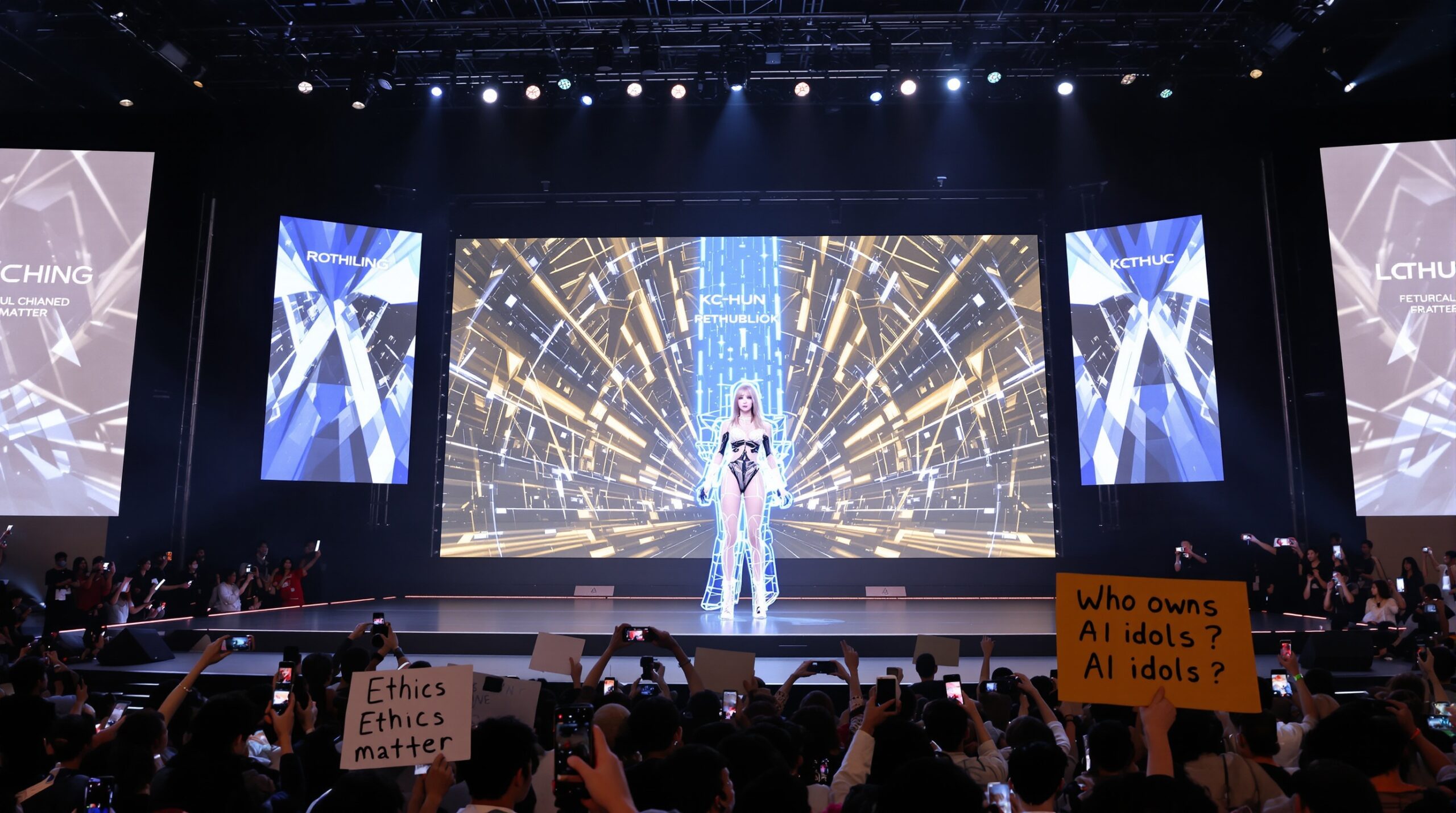
K-pop Labels Debut AI-Powered Virtual Idols, Igniting Excitement and Ethical Debate
K-pop’s innovation engine keeps spinning, and virtual idols now stand center stage. Several Korean labels and tech studios have introduced AI-powered performers that sing, dance, and engage fans online. These projects fuse motion capture, generative audio, and real-time rendering into polished, marketable stars. Fans celebrate futuristic visuals and nonstop content, while critics ask difficult questions about power, consent, and work. The conversation is shaping how music and technology converge in Korea and beyond.
The idea is not entirely new, yet its scale feels different today. Advanced voice models, real-time animation, and global platforms create new possibilities. Virtual idols can release music frequently and appear across languages with minimal delays. Labels also see IP flexibility and new revenue paths through gaming and virtual concerts. The stakes are rising as virtual idols attract mainstream attention and brand partnerships.
What Makes a Virtual Idol “AI-Powered”
“AI-powered” generally refers to systems that generate or enhance core performance elements. Voice synthesis models can sing or speak in consistent tones across many styles. Motion capture translates a human performer’s movements into responsive 3D rigs and avatars. Generative tools assist with facial animation, choreography variations, and lip-sync alignment. Large language models help craft scripts, captions, and interactive fan replies at scale.
Production pipelines merge these components into a cohesive idol persona. Teams record human vocals or train on licensed datasets to shape signature timbres. Engineers blend algorithmic layers with human direction to maintain character identity. Designers iterate costumes, hairstyles, and stage environments inside rendering engines. The result feels seamless to fans watching a music video or livestream.
The technology still has limits that shape creative decisions. AI vocals can sound metallic without careful processing and editing. Real-time animation can stutter under heavy network latency. Multilingual delivery requires supervision to avoid awkward phrasing and tone. These constraints push teams toward hybrid workflows that balance automation and human craftsmanship.
Why Fans Are Excited
Fans love the novelty and flexibility delivered by virtual performers. Virtual idols can appear worldwide without travel, time zones, or venue constraints. They can host interactive streams using in-character replies and dynamic visuals. Music videos can bend physics, enabling stunts unsafe for human bodies. This freedom fuels creative world-building that deepens fan immersion and lore.
Global reach also drives momentum across platforms. AI tools support subtitling and multilingual versions at faster speeds. Fans receive behind-the-scenes clips, rehearsal snippets, and character diaries more frequently. Virtual idols can tease concepts through augmented reality filters and mini games. The result is a constant drip of content that sustains fandom energy.
Collaborations further boost visibility for these projects. Brands experiment with digital ambassadors that never tire or age. Game studios integrate idol performances into live events and worlds. Fashion labels test virtual fittings and exclusive skins for avatars. Fans enjoy the crossover between music, gaming, and digital collectibles.
Business Strategy Behind Digital Performers
Labels view virtual idols as scalable intellectual property. Creative teams can iterate concepts quickly without extended rehearsal disruptions. A persona can be re-rendered for different stages and seasons with minimal downtime. Revenue streams extend across music, virtual concerts, merchandise, and licensing. Performance risks tied to illness or injury reduce under virtual operations.
Data also shapes strategy and development cycles. Teams analyze watch time, fan comments, and sentiment to guide releases. They can A/B test costumes, color palettes, and choreography patterns. Marketing plans adapt in near real time to fan preferences. The loop helps refine each comeback without lengthy touring schedules.
These efficiencies encourage investment in production infrastructure. Studios build reusable rigs, motion libraries, and voice models. Toolkits make future comebacks faster and cheaper than the first. Labels can diversify risk by running multiple virtual acts simultaneously. That portfolio approach mirrors strategies used in mobile gaming and animation.
Ethical Questions at the Heart of the Debate
Enthusiasm meets serious concerns about creators, workers, and audiences. Critics worry about training data sourced without clear permission. They also question whether AI systems dilute human artistry and labor value. Transparency around who sings, dances, and writes remains uneven across projects. These issues require careful governance to build trust with fans and artists.
Training Data and Consent
Voice models and facial generators learn from large datasets. Ethical practice demands licenses, consent, and documentation for all sources. Unauthorized scraping undermines creator rights and public trust. Labels must audit datasets and log provenance for accountability. Clear data policies prevent misuse and reduce legal exposure.
Credit and Compensation
Many virtual idol projects still rely on human talent behind the scenes. Vocalists, songwriters, animators, and mocap actors contribute crucial work. Fair contracts should reflect credit, residuals, and reuse terms. Compensation frameworks can mirror session work and voice acting norms. Transparent credits help fans appreciate human contributions within the pipeline.
Authenticity and Disclosure
Audiences deserve clarity about what is AI-generated and what is human. Labels can disclose vocal synthesis, editing, and performance methods. Clear labeling reduces confusion and manages parasocial expectations. Disclosure also helps critics evaluate artistry without speculation. Consistent messaging keeps marketing honest and respectful.
Deepfake Risks and Harassment
Popular virtual idols can attract malicious manipulation and harassment. Nonconsensual deepfakes harm reputations and communities. Teams should watermark assets and monitor for misuse. Platforms and labels can collaborate on takedown channels and detection tools. Strong policies protect both the virtual persona and human contributors.
Bias and Representation
AI models can replicate and amplify biases present in training data. Designers should test for stereotyping in visuals, voice, and dialogue. Inclusive datasets and review committees help reduce harm. Representation choices also influence global fan perception. Responsible design can celebrate diversity without caricature.
Governance and Accountability
Responsible projects name leaders and processes for oversight. Ethics boards can review data, scripts, and model updates. Clear escalation paths help resolve disputes and incidents. Regular transparency reports summarize progress and challenges for fans. Accountability builds durable trust within communities and partners.
How Laws and Guidelines Are Evolving
Legal frameworks around AI and content are developing quickly. South Korea recognizes portrait and publicity rights through court precedents. Korean privacy regulations restrict personal data collection and use. Copyright laws cover musical works, recordings, and derivative creations. Enforcement varies by context and contract language.
Korean authorities have also targeted harmful deepfakes. Lawmakers criminalized distribution of nonconsensual explicit deepfake content. Regulators continue exploring guidelines for AI labeling and transparency. Industry associations publish best practices for data governance and disclosure. These evolving rules inform how virtual idols operate in Korea.
Global frameworks add further considerations for multinational releases. Labels must respect regional privacy, consumer, and advertising laws. Platform policies on synthetic media affect distribution and moderation. Cross-border licensing complexities arise for training and outputs. Compliance teams therefore play a larger role in music operations.
Industry Precedents and Lessons
Virtual acts have already tested audience appetite and technical pipelines. ETERN!TY debuted in 2021 using AI-generated faces and human vocals. The group’s videos drew curiosity and debate about deepfake methods. MAVE: launched in 2023 with polished visuals and strong choreography. Their releases reached large view counts across streaming platforms.
Hybrid approaches have also gained traction with fans. Aespa blended human members with virtual counterparts and storyworld elements. PLAVE performs as virtual avatars powered by human performers and mocap. Those models highlight collaboration rather than full automation. They also demonstrate viable touring and fan engagement strategies.
Earlier global projects informed Korea’s experimentation. Riot Games introduced K/DA with animated idols voiced by human artists. Fans embraced the high-concept production and vivid storytelling. These efforts showed that virtual stars can carry distinct personalities. Labels in Korea have adapted similar tactics for K-pop audiences.
What Comes Next for Fans and Labels
The next chapter will likely blend virtual and human strengths. Labels can position virtual idols alongside human groups during festivals. Crossovers could feature duet stages, shared dance challenges, and lore events. Fans would enjoy creative pairings that reframe familiar songs. This approach preserves human artistry while expanding digital possibilities.
Technically, real-time interaction will continue improving. Latency reductions will make live streams feel more responsive. Multilingual inference will produce smoother translations and delivery. Motion systems will capture subtle face gestures with better fidelity. These upgrades will lift production quality across platforms and devices.
Community expectations will also define the market’s direction. Fans reward projects that communicate clearly and credit contributors. They value safety, consent, and fair treatment across the pipeline. Labels that embrace responsible practices can win long-term loyalty. Transparency will be as important as dazzling visuals.
Practical Steps for Responsible Rollouts
Labels can follow concrete steps when launching AI-powered idols. First, audit and document all datasets with legal review. Confirm consent, licensing terms, and usage boundaries in writing. Second, disclose AI involvement across vocals and performance. Clear disclosures educate fans and protect marketing integrity.
Third, credit all human contributors and pay fair residuals. Contracts should address reuse, training, and derivative works explicitly. Fourth, monitor for deepfake misuse and enforce takedown protocols. Technology partners can help with detection and watermarking measures. Fifth, establish an ethics board with authority and transparency mandates.
Finally, design with inclusivity and safety in mind. Test character designs and scripts for bias and stereotypes. Involve diverse reviewers during concept and production phases. Offer opt-outs for data use and feedback channels for fans. Responsible choices will support growth across the entire ecosystem.
A Future Built on Creativity and Accountability
AI-powered virtual idols present both opportunity and obligation for K-pop. Fans crave experimentation, fresh storytelling, and boundary-pushing visuals. They also expect honesty about how the magic gets made. Labels that combine innovation with ethics will shape the standard. The industry’s next era depends on both imagination and care.
As more virtual idols debut, the debate will continue evolving. Technology will improve, and norms will crystallize around consent and credit. Artists and engineers will collaborate across disciplines and borders. Fans will guide direction through support and constructive criticism. Together, they will define what digital performance can responsibly become.
