

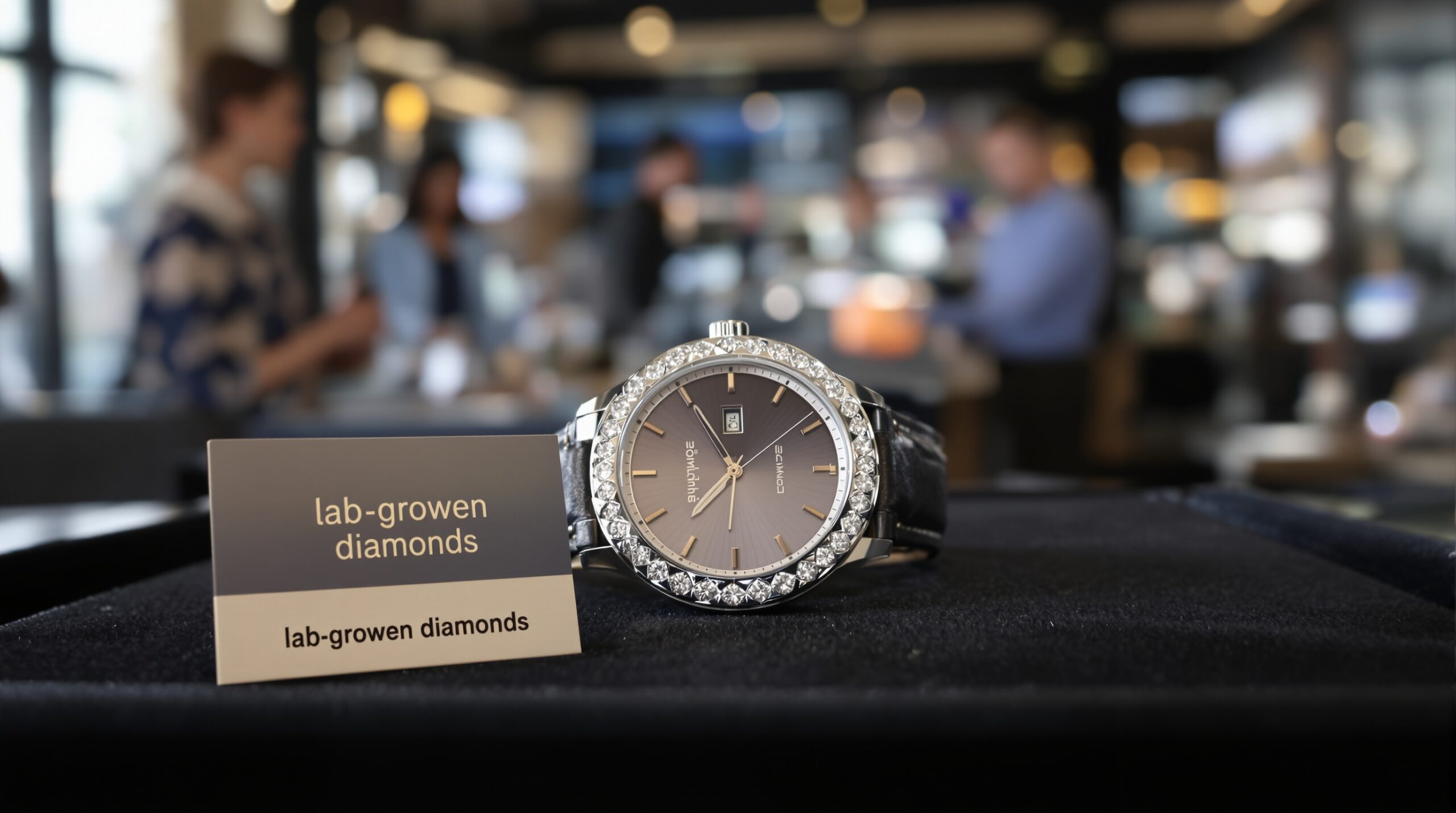
Lab-grown diamonds are transforming luxury watches faster than many expected. Advanced manufacturing now supplies stones with exceptional clarity and consistency. Designers see new creative freedoms that natural stones could not deliver reliably. Consumers, meanwhile, weigh ethics, value, and technology alongside tradition. Those forces are pushing brands to rethink materials, storytelling, and price positioning.
From Gem Labs to Watch Dials: How the Technology Works
Two industrial processes dominate lab-grown diamond production today. Chemical vapor deposition grows diamond layers from a plasma of carbon-rich gas. High-pressure, high-temperature mimics geological conditions using seeded growth chambers. Both methods now produce watch-sized stones with precise shapes and colors. That reliability lets watchmakers plan designs with tight tolerances and fewer sourcing surprises.
Advances go beyond individual stones. Producers can grow polycrystalline diamond sheets for dials or crowns. They also create matched sets with identical color and clarity. Yields continue to improve as reactors scale and software refines conditions. These improvements stabilize supply chains for watch programs with global distribution.
Design Freedom Beyond Natural Constraints
Lab-grown diamonds arrive with predictable dimensions and optical performance. Designers can specify fancy colors, unusual cuts, and thin geometries. Those options enable diamond-set bridges, pavé bezels, and full diamond dials. Lightweight settings become possible with uniform girdles and consistent depth. Such control invites bolder patterns and tighter micro-pavé spacing on cases and bracelets.
The stones also unlock fresh surface techniques. Engineers can pattern diamond with laser texturing for unique light play. Colored stones support gradient dials that shift hue across hour markers. Brands can repeat motifs across components without hunt-and-match sourcing. That repeatability strengthens visual identity and reduces prototyping risk.
Durability and Performance on the Wrist
Diamond rates a ten on the Mohs hardness scale. It resists scratching better than sapphire, common in crystals. However, diamond can cleave under sharp directional impact. Careful setting and protective design help manage that risk. High thermal conductivity also aids heat dissipation during manufacturing and gem setting.
Sustainability Claims and the Evidence
Environmental narratives drive much lab-grown interest. Mining has visible land impacts and complex social risks. Lab-grown production occurs in factories with controllable inputs. Actual footprint depends heavily on energy sources and reactor efficiency. Emissions vary widely between coal-heavy grids and renewables-powered facilities.
Independent assessments now examine claims more closely. The SCS-007 standard certifies diamond sustainability metrics and provenance. Some producers publish life cycle assessments with energy and water data. Critics note methodological differences complicate comparisons with mined stones. Clear disclosures help consumers judge responsibly across competing assertions.
Traceability and Ethical Transparency
Lab-grown diamonds enable strong traceability out of the box. Producers can laser-inscribe growth IDs and batch data on girdles. Watch brands then link each stone to a documented chain of custody. Blockchain platforms record transfers for added tamper resistance. This audit trail supports marketing claims and simplifies compliance audits.
Economics: Pricing, Margins, and Market Segments
Lab-grown diamonds typically cost far less than comparable mined stones. Prices have trended downward as capacity expanded globally. That dynamic allows watches with larger carat totals at moderate price points. Brands improve perceived sparkle without shifting customers into precious-metal tiers. However, secondary market values for lab-grown stones remain limited.
Watches must balance accessibility with exclusivity. Some maisons reserve mined diamonds for halo pieces and heritage lines. Others deploy lab-grown stones broadly in women’s and unisex models. Margins can improve as sourcing becomes more predictable and scalable. Yet rapid price erosion complicates long-term pricing strategies and inventory planning.
How Major Brands and Independents Are Using Lab-Grown Stones
TAG Heuer showcased technical possibilities with the Carrera Plasma. The model used CVD stones on the case, dial, and crown. Its polycrystalline diamond dial delivered a striking, almost metallic texture. The project emphasized engineering prowess and avant-garde identity. It reframed diamonds as high-tech, not only ornamental.
Breitling committed to using lab-grown diamonds in specific collections. The Super Chronomat Origins highlighted traceable materials, including lab-grown stones. Navitimer models introduced in smaller diameters featured lab-grown diamonds as well. These launches paired stones with documented artisanal gold. The messaging centered on transparency and material responsibility.
Citizen has integrated lab-grown diamonds within its Citizen L line. The watches combine Eco-Drive movements with recycled materials and created stones. This approach targets design-forward buyers seeking credible sustainability narratives. The combination supports competitive pricing and reliable supply. It also broadens diamond watch appeal beyond traditional luxury boutiques.
Consumer Demand: What Drives Adoption
Younger luxury buyers evaluate values alongside aesthetics. Many appreciate clear provenance and the absence of mining impacts. Carat-per-dollar remains a powerful motivator for everyday luxury purchases. Social media amplifies sparkle and color experiments across watch communities. These factors fuel acceptance without displacing mechanical appreciation.
Gift purchases also favor lab-grown options. Buyers achieve impressive visual impact at attainable budgets. Retail associates can explain traceability with simple certification tools. That conversation resonates during milestone moments and seasonal campaigns. Transparent data reduces hesitation and accelerates conversion at the counter.
Gender and Regional Trends
Women’s watches lead adoption because the category embraces gem setting. Unisex designs with subtle diamond accents are rising quickly. The United States shows strong acceptance across department stores and e-commerce. Middle Eastern markets maintain robust demand for statement diamond pieces. China’s buyers show curiosity, especially around colored and geometric stones.
Challenges and Criticisms
Price declines raise concerns about perceived scarcity and long-term value. Collectors sometimes question luxury credentials without geological rarity. Regulators monitor environmental marketing for unsubstantiated claims. Brands must avoid broad “eco” language without verified data. Clear segmentation can protect heritage lines while exploring created stones elsewhere.
Movement Innovation Enabled by Diamond Science
Lab-grown diamond contributes beyond jewelry applications. Some watchmakers deposit diamond layers on silicon components. These coatings reduce friction and improve wear in escapements. The approach builds on advances in microfabrication and thin films. Material science thus links movement performance with aesthetic storytelling on the dial.
Outlook: Likely Paths for Innovation
Expect more polycrystalline diamond dials and structural parts. Case elements may integrate diamond plates with lightweight composite carriers. Colored stones will enable gradients synchronized with lume and metals. Software-driven growth recipes will produce repeatable signature textures. Collaborations between gem labs and watch engineers will accelerate distinctive aesthetics.
What This Means for Luxury Watchmaking
Lab-grown diamonds expand the design toolbox without erasing tradition. Heritage brands can separate narratives across collections and customer groups. Clear disclosure will build trust amid shifting price realities. Consumers gain choice, value, and verifiable provenance across sparkling designs. The category will keep evolving as technology, taste, and transparency converge.
