

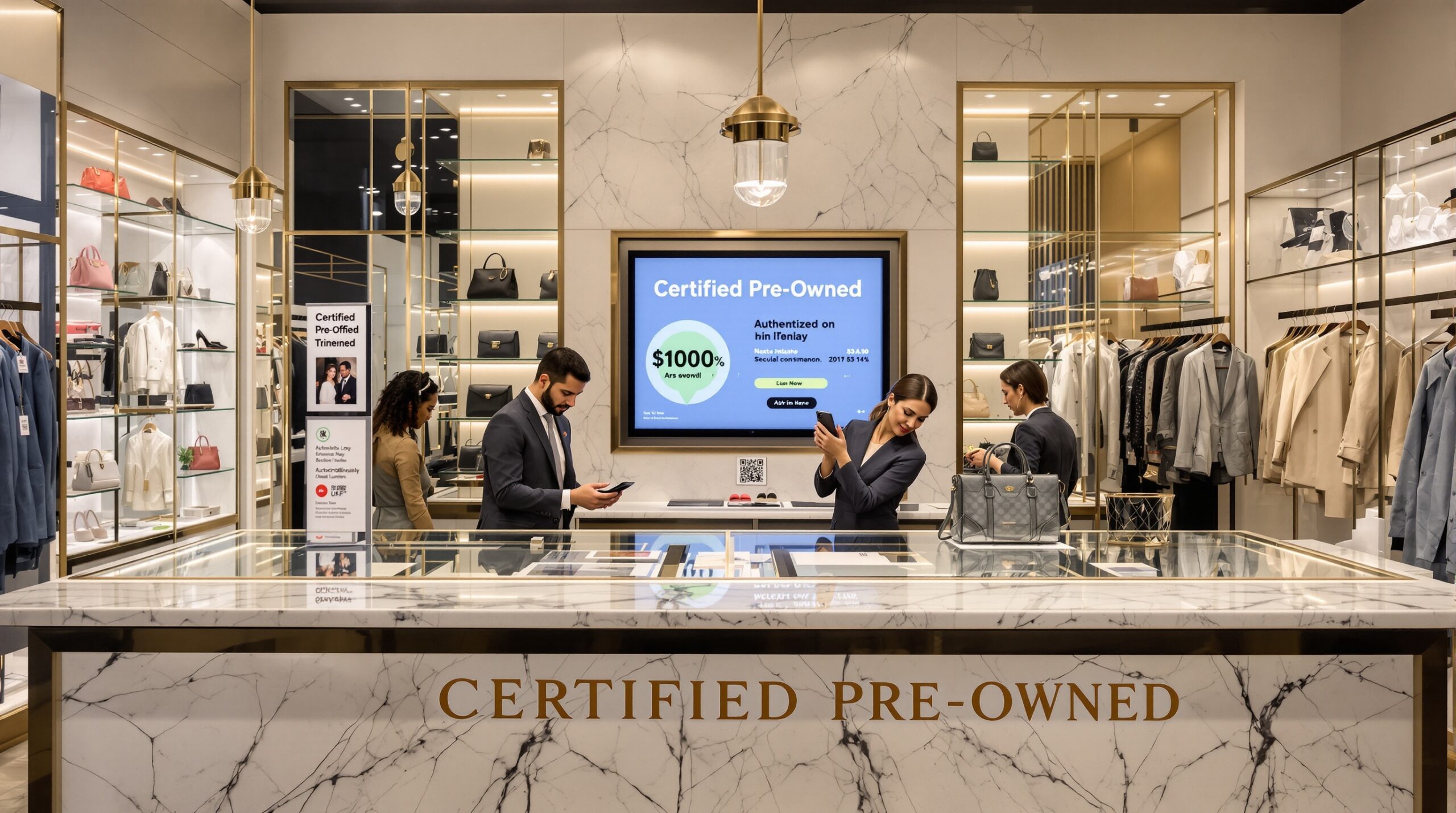
Luxury brands now embrace resale on their own terms. Flagship stores are adding authenticated resale counters beside new collections. Sales associates handle trade-ins and educate clients on care and provenance. The shift signals circular fashion’s arrival at the luxury core.
Why Luxury Embraces Resale Today
Shoppers prize durability, authenticity, and access at lower entry prices. Brands see customer acquisition opportunities and higher lifetime value. Executives also respond to sustainability commitments and changing regulations. Therefore, resale becomes both a growth lever and a responsibility play.
Gen Z and Millennials lead secondhand adoption across price tiers. Their values center on transparency, circularity, and uniqueness. Those preferences align with luxury’s heritage narratives and craftsmanship stories. Consequently, resale neatly fits modern luxury positioning.
How In-Store Resale Counters Work
Customers bring eligible goods to designated counters for evaluation. Trained teams inspect items and verify condition and authenticity. Brands issue immediate store credit or deferred payment upon sale. This process reduces friction and elevates trust for sellers and buyers.
Many counters also display curated pre-owned inventory. Shoppers discover rare colorways and archival styles beside seasonal drops. Staff share product histories and maintenance guidance during consultations. As a result, the counter becomes a learning space and sales driver.
Authentication and Grading Protocols
Brands combine human expertise with digital tools for checks. Specialists assess materials, stitching, serial numbers, and hardware. Advanced aids include NFC chips, UV inks, and microscopic imaging. The layered approach lowers fraud risk and strengthens consumer confidence.
Third‑party partners often support back‑office verification. Partnerships accelerate scaling and provide cross‑market consistency. Brands then apply standardized grades for condition. That grading informs pricing, warranties, and refurbishment decisions.
Pricing, Refurbishment, and Warranties
Pricing reflects brand equity, rarity, and condition. Teams benchmark against marketplace data and historical demand. Many houses refurbish leather, replace zippers, or re‑plate hardware. These repairs protect margins and lengthen product life.
Some programs attach limited warranties to pre‑owned pieces. Warranties reinforce trust and help justify premium pricing. Care plans and repair credits further encourage responsible ownership. Therefore, resale strengthens aftercare ecosystems and workshop utilization.
Case Studies Across Luxury Segments
Mulberry’s In‑Store Trade‑In and Pre‑Loved Displays
Mulberry buys back eligible bags through The Mulberry Exchange. The brand authenticates, refurbishes, and resells pre‑loved styles. Select boutiques display authenticated pieces alongside new ranges. Mulberry supports purchases with care services and warranty coverage.
This approach showcases craftsmanship longevity and British manufacturing credibility. It also drives store traffic and repeat purchases. Customers perceive strong value from guaranteed authenticity and support. Consequently, Mulberry builds loyalty while advancing circular goals.
Balenciaga and Alexander McQueen Facilitate Trade‑Ins
Balenciaga launched a branded resale program with Reflaunt. Customers can trade items through select stores or digitally. Reflaunt manages authentication and distribution across marketplaces. Store credit incentives keep clients within the brand universe.
Alexander McQueen piloted Brand Approved with Vestiaire Collective. Eligible pieces receive brand‑verified tags on the marketplace. Participating boutiques help clients initiate the process. The model links store service with scaled resale infrastructure.
Watches Pioneer Certified Pre‑Owned Counters
Rolex introduced Certified Pre‑Owned through authorized dealers. Dedicated counters display certified watches with official warranties. Dealers like Bucherer and others host the program in stores. The initiative formalized a long‑standing secondary market.
Breitling operates a certified pre‑owned offering as well. Its boutiques and partners stock authenticated timepieces. Digital passports document ownership history and service events. These counters attract collectors while preserving brand integrity.
Department Store and Marketplace Partnerships
Department stores integrate resale concessions within luxury floors. Selfridges developed Resellfridges as a permanent destination. The format validates pre‑owned within prestigious environments. It also enables cross‑brand curation and discovery.
Luxury houses coordinate with marketplaces for scale. Partners bring logistics, data, and global buyer networks. Brands set standards and retain control of storytelling. This balance protects equity while expanding reach.
Technology Underpinning Authentication and Traceability
Digital IDs help prove origin and ownership transfers. NFC chips and QR codes link to secure records. Aura Blockchain Consortium supports several luxury groups and maisons. Digital ledgers reduce disputes and speed in‑store checks.
Image recognition aids fraud detection for high‑risk categories. Algorithms flag anomalies in logos, grain, and stitching. Human experts validate final decisions before listing. This hybrid model increases accuracy and efficiency.
Store Design and Operational Considerations
Resale counters require privacy and flexible fixtures. Stores balance appraisal spaces with inviting displays. Lighting and signage emphasize craftsmanship and verification rigor. As a result, the area feels premium, not pawn‑like.
Training equips associates for nuanced conversations. Staff discuss condition, pricing rationales, and care plans. They also manage expectations about turnaround times. Smooth workflows keep lines short and experiences elevated.
Economics and Performance Metrics
Trade‑ins convert dormant closets into store credit. Credit redemption boosts full‑price sell‑through on new collections. Refurbishment margins support healthy contributions despite discounts. Inventory turns benefit from broadened price ladders.
Brands track cross‑shopping between pre‑owned and new. They monitor acquisition of first‑time luxury buyers. They also analyze repeat rates and repair attachments. These metrics justify investments in training and technology.
Consumer Behavior and Brand Perception
Shoppers value certainty about authenticity and condition. Official counters deliver that assurance and service. Many clients enjoy storytelling around archives and craft. Those encounters deepen emotional connections with maisons.
Resale can also reduce intimidation for newcomers. Entry prices feel more accessible without heavy compromises. Successful experiences often lead to future full‑price purchases. Thus, resale strengthens the brand funnel and community.
Regulation and Industry Standards Shape Momentum
Policymakers push circularity within textiles and luxury goods. European proposals include digital product passports for traceability. France restricts destruction of unsold goods and encourages reuse. These frameworks accelerate brand adoption and process rigor.
Industry groups advance common definitions and best practices. Standards cover grading, data integrity, and environmental reporting. Shared language reduces confusion for consumers and partners. Consequently, trust grows across the resale ecosystem.
Risks, Tensions, and Mitigations
Channel conflict remains a core concern for maisons. Resale must not cannibalize core product strategies. Clear assortment rules and release timing help. Exclusive capsules can stay new‑only while archives thrive pre‑owned.
Authentication mistakes damage reputations and margins. Multiple checkpoints and warranties mitigate that exposure. Transparent disclosures about condition also reduce returns. Insurance and indemnities further protect participating partners.
Operational complexity increases with mixed inventories. Systems must handle unique SKUs and provenance data. Staff scheduling must support appraisals and repairs. Investment in training produces smoother experiences and outcomes.
What Comes Next for Luxury Resale
Brands will normalize resale as a permanent store feature. Counters will integrate with appointment services and loyalty tiers. Digital IDs will follow products from first sale onward. That continuity will simplify verification and ownership transfers.
Expect more hybrid models across categories. Leather goods, watches, and jewelry will lead expansion. Ready‑to‑wear will grow as grading improves. Footwear programs will scale with better refurbishment methods.
Data will refine pricing and assortment decisions. Retailers will use AI to forecast demand and intake. Refurbishment workshops will move closer to stores. Shorter cycles will enhance selection and freshness.
Luxury resale now moves from experiment to core practice. Authenticated in‑store counters set the new standard. They offer trust, service, and circular value in one place. As mainstream adoption builds, the model will mature further.
