

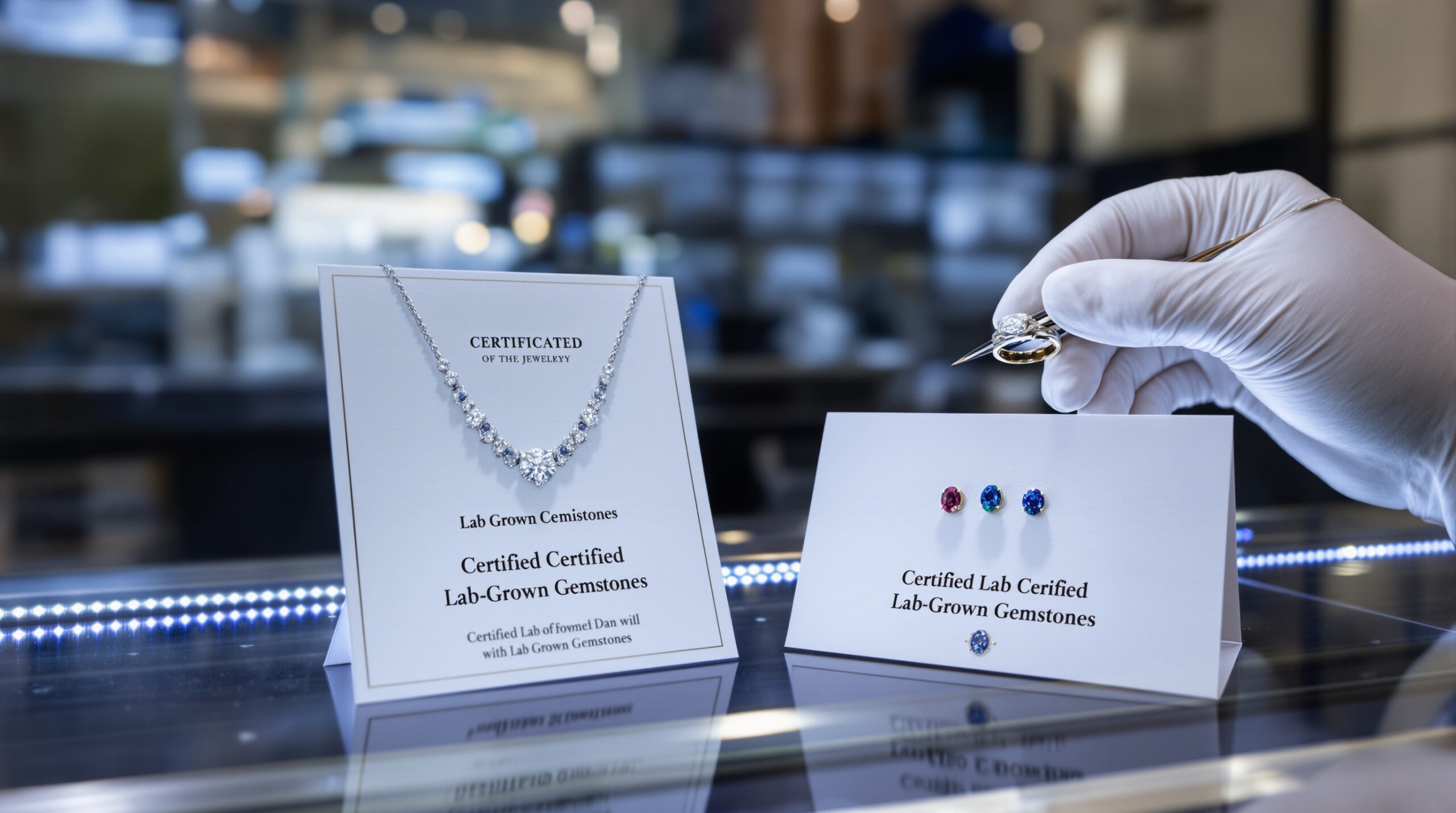
Top luxury houses are rethinking gemstone sourcing at the highest levels. Certified lab‑grown diamonds and colored gems are entering flagship collections. Designers gain new creative latitude without abandoning craftsmanship or prestige. Certification and disclosure practices anchor this shift in trust. The pivot now reaches high jewelry, not just entry lines.
What Lab‑Grown Gemstones Are, And Why They Matter
Lab‑grown diamonds are crystallized carbon, produced by HPHT or CVD technologies. They match natural diamonds’ optical, chemical, and physical properties. Growers control conditions to produce precise colors and clarities. This control enables consistent supply for demanding high jewelry programs. The science also supports bold, repeatable design briefs.
Color‑grown stones extend beyond diamonds. Makers produce lab‑grown sapphire, ruby, and emerald using established methods. Hydrothermal emeralds and flame‑fusion corundum lead volumes today. Advanced facilities also grow moissanite and spinel for specific aesthetics. Luxury houses select stones based on performance, not stigma.
Certification And Grading Move Center Stage
Credible certification underpins acceptance in luxury. GIA and IGI issue grading reports for lab‑grown diamonds. Reports state growth method and disclose any treatments. Laboratories laser‑inscribe “Laboratory‑Grown” on girdles for transparency. Leading houses require documented chain of custody as well.
SCS‑007 sets a sustainability benchmark for lab‑grown diamonds. The standard evaluates climate, origin, ethics, and traceability claims. Producers undergo audits and continuous performance verification. Brands use the mark to substantiate environmental messaging. This framework reduces greenwashing risk in marketing narratives.
RJC codes guide responsible sourcing for precious metals and stones. Blockchain platforms add tamper‑evident provenance records. Digital passports attach data to each piece across its lifecycle. Together, these tools create buyer confidence at haute joaillerie levels. That confidence enables bolder material choices.
Early Adopters Within Luxury
TAG Heuer’s Diamant d’Avant‑Garde Watches
LVMH’s TAG Heuer placed lab‑grown diamonds on center stage. The Carrera Plasma debuted with custom CVD diamonds in 2022. Designers used polycrystalline diamond for dials and bespoke crown stones. Later iterations introduced colored lab‑grown accents and wider sizes. Prices and craftsmanship aligned with haute horlogerie positioning.
TAG Heuer collaborated with leading growers and cutters. Partners engineered shapes impossible in mined material at scale. The watches validated lab‑grown stones for luxury innovation. That validation resonated across the LVMH ecosystem. Other maisons studied the approach for jewelry applications.
Breitling’s “Better Diamonds” Roadmap
Breitling committed to lab‑grown diamonds with robust provenance. The Super Chronomat Origins launched the approach in 2022. The brand tied diamonds to SCS‑007 certification and full supplier transparency. Subsequent collections scaled the concept across women’s references. The company targeted full transition on new products by 2024.
Breitling coupled diamonds with traceable artisanal gold. This pairing strengthened the sustainability narrative. Detailed proof points accompanied each watch’s supply chain. Customers could review origin data and third‑party verifications. The transparency bar rose for competitors as a result.
Swarovski Created Diamonds Move Upmarket
Swarovski expanded from crystal into fine lab‑grown diamonds. Its Created Diamonds collections reached higher luxury price points. The designs featured graded stones and gold with refined finishes. Campaigns spotlighted fashion‑forward styling and modern diamond cuts. The move broadened lab‑grown’s cultural cachet.
Flagship stores dedicated space to Created Diamonds. Sales associates emphasized grading reports and care. Customers responded to design variety and value positioning. These collections provided a bridge between fashion and fine jewelry. That bridge invited new luxury buyers to experiment.
Courbet On Place Vendôme
Parisian house Courbet built a luxury brand around lab‑grown stones. The maison operates from Place Vendôme among historic peers. Its high jewelry uses lab‑grown diamonds and recycled gold. Pieces carry grading reports and detailed origin claims. Courbet proved desirability does not require mined stones.
Its atelier maintains classic craftsmanship and daring design language. Limited series highlight large stones and intricate settings. Clients receive documentation mirroring legacy high jewelry practices. Courbet’s success pressured incumbents to evaluate alternatives. That evaluation now informs broader material strategies.
LVMH’s Investment Signal
LVMH invested in Lusix, a solar‑powered diamond grower, in 2022. The move supplied strategic insight and future optionality. Lusix markets “Sun Grown” diamonds with sustainability claims. The relationship supports experimentation across LVMH houses. It also helped normalize lab‑grown within top luxury boardrooms.
Other conglomerates engaged with innovative suppliers as well. Partnerships now span growth, cutting, and materials engineering. These ties unlock bespoke shapes and colors at scale. High jewelry teams value such predictable innovation cycles. Predictability strengthens collection planning and storytelling.
Design Freedom And Technical Advantages
Lab‑grown supply allows precise size matching across suites. Designers can spec dozens of identical stones quickly. Growers can target rare fancy colors through controlled treatments. Large rough sizes enable adventurous proprietary cuts. These factors open new aesthetic frontiers in high jewelry.
Engineers also integrate diamond in unconventional ways. Polycrystalline diamond forms ultra‑hard dials and decorative plates. Wafer‑thin diamond elements lighten pieces without losing sparkle. Custom growth supports invisible‑setting challenges with consistent girdle geometry. The toolkit expands beyond traditional mining constraints.
Environmental And Ethical Narratives Evolve
Luxury brands seek documented reductions in environmental impact. Lab‑grown stones can reduce climate footprints when powered by renewables. Energy‑intensive facilities must still manage emissions carefully. Third‑party verifications help separate claims from reality. Buyers increasingly demand this level of proof.
Ethical sourcing narratives also resonate strongly. Lab‑grown diamonds avoid mining’s land use and biodiversity impacts. However, responsible mining initiatives continue improving conditions. Houses now present nuanced choices rather than absolutes. Certified data lets clients decide based on their values.
Many maisons pair lab‑grown stones with recycled or traceable gold. This combination strengthens the overall impact profile. Workshops also invest in renewable energy and efficient fabrication. Packaging increasingly uses recycled and certified materials. Every detail supports a coherent sustainability story.
Market Dynamics Favor Experimentation
Lab‑grown diamond prices declined relative to natural stones. The gap widened as production scaled globally. Lower input costs encourage larger carat weights in design. High jewelry can feature dramatic center stones with less risk. Clients appreciate scale without compromising finish quality.
Consumer acceptance broadened across major markets. Younger luxury buyers prize traceability and innovation. They view lab‑grown stones as modern, not inferior. Grading reports reassure traditional clients, especially at higher prices. Retail education plays a decisive role at the counter.
Disclosure, Law, And Brand Protection
Clear disclosure remains non‑negotiable for luxury houses. U.S. advertising rules require qualifying terms for lab‑grown diamonds. French regulations also mandate explicit synthetic labeling. Brands maintain separate nomenclature across all channels. Sales training reinforces accurate, consistent language with clients.
Warranties and after‑sales policies mirror natural diamond programs. Appraisals include grading report numbers and growth methods. Insurance providers increasingly understand lab‑grown valuations. Secondary markets are forming around certified stones. These structures protect brand equity and client trust.
Why Not Everyone Moves At Once
Some heritage maisons still prioritize natural rarity and patrimony. Their archives center on exceptional mined stones. They fear brand dilution from rapid material change. Collectors sometimes share these reservations at the highest tiers. These concerns keep portfolios diversified for now.
However, designers want every possible tool. Limited capsules allow learning without wholesale shifts. Client feedback guides subsequent collection strategy. Successful pilots scale into permanent lines over time. This measured approach preserves identity while embracing innovation.
The Road Ahead For High Jewelry
Expect more hybrid collections mixing mined and lab‑grown stones. Digital product passports will document every component and process. Sustainability metrics will appear alongside carat and cut. New colors and crystal forms will inspire daring statements. Collaboration with growers will deepen design integration further.
Certification will standardize across leading laboratories and standards bodies. Auditable claims will become table stakes for luxury houses. Retail storytelling will emphasize proof as much as poetry. Workshops will adapt techniques to novel stone geometries. Training will elevate across bench and boutique teams.
Ultimately, clients benefit from greater choice and clarity. High jewelry keeps its magic while modernizing its materials. Certified lab‑grown gemstones now belong on the grandest stage. The pivot feels deliberate, not rushed. That pace preserves both beauty and trust.
