

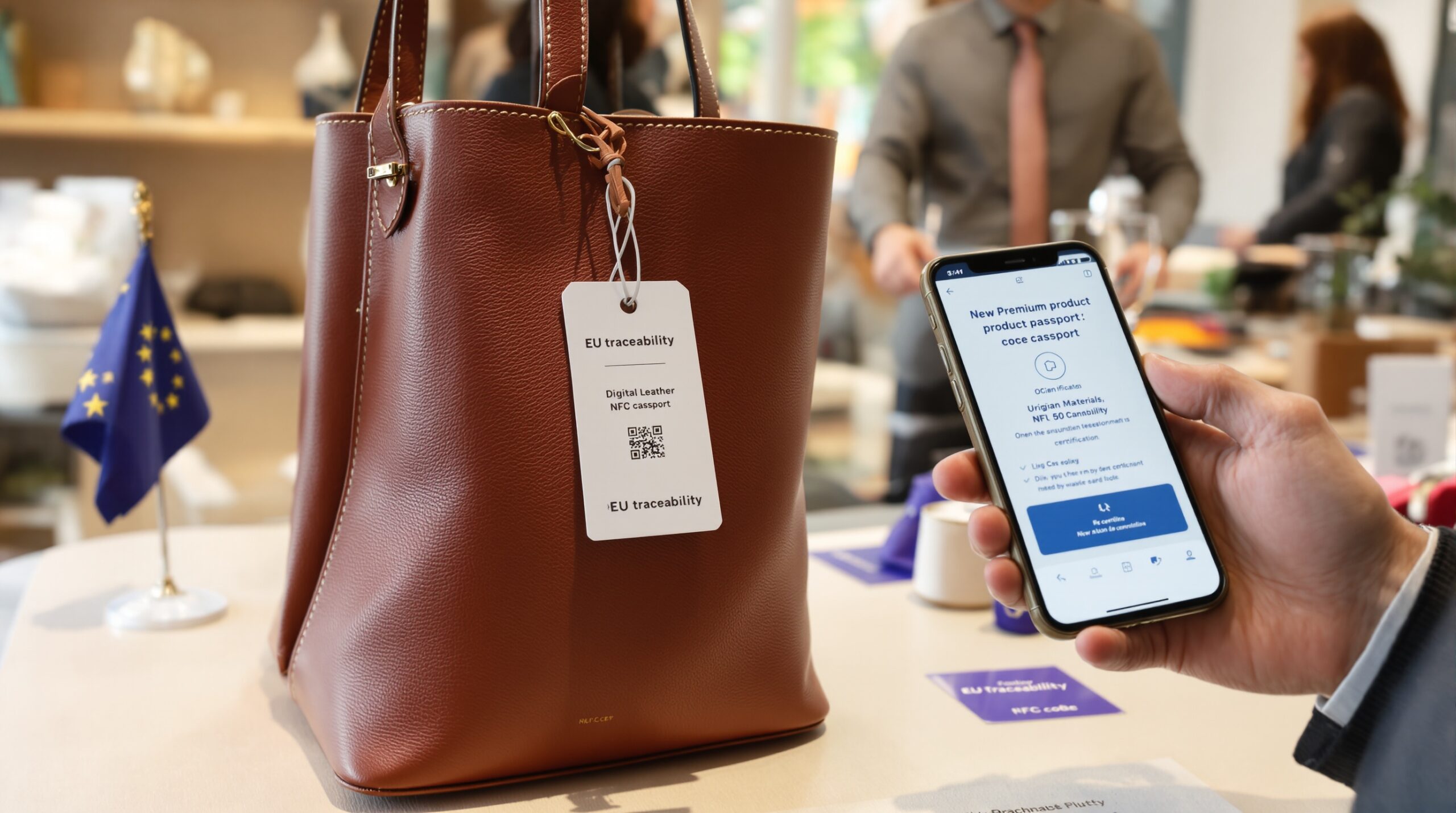
Luxury houses are linking new collections to digital product passports at scale. The shift reflects compliance planning and competitive strategy. It also signals a permanent pivot toward connected products. Momentum is accelerating as European rules move closer to enforcement.
Executives see an opportunity to shape standards while gaining operational benefits. They also want stronger defenses against counterfeits and gray markets. Passports enable both goals with one infrastructure. The timing aligns with upcoming European Union requirements.
What a digital product passport includes
A digital product passport stores item-level data accessible via a unique identifier. Brands attach that identifier to a scannable QR code or NFC chip. The passport can display materials, origin, care, repair, and recycling guidance. It can also authenticate the product and log ownership changes.
Access rights can vary by audience and context. Consumers see care and authenticity data through a scan. Authorities and partners can request deeper supply chain evidence. Brands manage that access through governed portals and APIs.
Why luxury brands are moving now
Compliance momentum in the EU
The EU adopted the Ecodesign for Sustainable Products Regulation in 2024. It introduces digital product passports for priority categories through future acts. Batteries face the earliest deadlines under a separate regulation starting mid‑decade. Textiles are prioritized next, with detailed rules expected later this decade.
Brands want compliant architectures before product‑level mandates arrive. They also need supplier data pipelines ready for audits. Early rollouts allow testing with limited risk. They also support phased internal change management.
Fighting counterfeits and gray markets
Luxury brands face persistent counterfeit pressures online and offline. A secure passport helps verify authenticity at the item level. It also strengthens traceability across distribution networks. That clarity deters diversion and supports targeted enforcement actions.
Consumers can scan before purchase and after resale. That simple action builds trust and reduces returns. Meanwhile, brands gain real‑time visibility into suspicious clusters. They can then escalate investigations more effectively.
Enabling circular services and resale
Passports support certified repair, refurbishment, and resale. They tie work orders and replacement parts to a single identity. That evidence streamlines valuation and pricing in secondary markets. It also supports take‑back and recycling programs at scale.
Resale partners can verify provenance with fewer manual steps. Buyers gain confidence through brand‑issued data, not paper cards. As a result, recommerce conversion rates can improve. That benefit directly supports circularity commitments.
Richer aftercare and customer experience
Passports unlock personalized care and content. Owners receive tailored maintenance guidance, warranty terms, and service history. They can book repairs through a single tap. Brands also gather consented insights for better aftersales outreach.
That experience turns a product into a service platform. It deepens loyalty beyond initial purchase. It also shifts contact from retailer to brand. The result is stronger lifetime value and retention.
How passports work in practice
Data captured and shared
Core data includes item identity, materials, origin, and care instructions. Many brands add supplier certificates and chain‑of‑custody evidence. Repair records, ownership transfers, and recycling outcomes can follow. Each event attaches to the persistent identifier.
Sharing follows role‑based access and consent. Consumers see product facts and services. Customs or market surveillance can access trusted evidence. Partners exchange data through standardized interfaces.
Carriers and identifiers
Most labels deploy QR codes using GS1 Digital Link. High‑risk products add tamper‑evident NFC chips. Some embed RFID for logistics while hiding consumer links. The carrier choice depends on category and budget.
Durable carriers matter for luxury goods resale. Leather goods need discreet yet scannable placement. Watches and jewelry use serials linked to digital certificates. Apparel often places codes on care labels or hangtags.
Tech stacks and interoperability
Brands are adopting product clouds and data standards. GS1 identifiers, EPCIS 2.0, and verifiable credentials support interoperability. Several pilots align with the EU‑funded CIRPASS architecture. Battery passports align with Global Battery Alliance standards.
Technology providers supply essential tooling. Platforms include Aura Blockchain Consortium, Arianee, EON, Avery Dennison atma.io, and Certilogo. They connect with PLM and ERP systems. They also provide consumer experiences and analytics.
Leading pilots and programs
Aura Blockchain Consortium supports LVMH, Prada Group, and Cartier. Members issue secure digital certificates for selected products. The system underpins traceability and authentication journeys. It also prioritizes interoperability with global standards.
Several watchmakers rolled out digital certificates at scale. Breitling offers blockchain‑based passports for its timepieces. Panerai launched digital passports for all new watches in 2023. These programs replace paper cards and simplify aftersales.
Chloé introduced digital IDs across ready‑to‑wear with EON. The brand connects care, resale, and impact information. It plans broader coverage across accessories categories. The approach supports circular business models and compliance readiness.
Loro Piana expanded QR‑based traceability on cashmere and vicuña lines. Customers can view fiber origins and quality checkpoints. The program enhances material storytelling and sourcing accountability. It also aligns with upcoming evidence needs.
Many houses use Certilogo on apparel and accessories. The tool authenticates products through AI and digital IDs. It supports brand protection and consumer engagement. Adoption has grown as resale volumes increased.
Data governance and privacy considerations
GDPR sets clear boundaries for personal data. Brands must gather explicit consent for owner services. They should separate product data from personal data. Pseudonymous approaches reduce privacy risks.
Access control is equally important. Some data remains public for consumer transparency. Sensitive supplier information requires restricted access. Regulators may need assured gateways for oversight.
Operational challenges and open questions
Supplier onboarding remains difficult across fragmented tiers. Smaller workshops need training and simple tools. Evidence collection must balance rigor with practicality. Audit fatigue is a real concern for upstream partners.
Data quality and verification present ongoing risks. Certificates must be current and tamper‑resistant. Physical‑digital binding needs secure deployment. Field teams require clear standard operating procedures.
Interoperability also needs constant attention. Brands should avoid proprietary dead ends. Aligning with GS1 and EU guidance reduces lock‑in. It also supports cross‑border logistics and enforcement.
Cost management remains a leadership question. Hardware, software, and change management add up. Savings appear in fraud reduction and service efficiency. Commercial gains arrive through resale and loyalty growth.
How programs integrate with retail and service
Store associates can scan passports during clienteling. They access fit notes, service plans, and personalization options. Repairs attach to the same product record. That continuity improves service consistency across markets.
Aftermarket partners can integrate through APIs. Authorized repair centers update component histories. Certified resellers confirm provenance and grade condition. Logistics partners add movement events for end‑to‑end visibility.
Regulatory timeline and likely scope
The EU will phase passports by product group. Batteries start first under their dedicated regulation from mid‑decade. Textiles, electronics, and furniture follow through ecodesign measures. Each group will define required datasets and carriers.
National rules may move faster than EU schedules. France already pushes transparency through sectoral decrees. That environment encourages regional pilots for global houses. Lessons then inform worldwide frameworks and rollouts.
What to expect over the next 24 months
Expect broader coverage across leather goods and footwear. High‑value items will receive NFC alongside QR codes. Apparel will expand QR tags on care labels. Watch and jewelry programs will deepen integrations.
Standards convergence should accelerate. GS1 Digital Link will dominate consumer access points. EU guidance will refine access models and schemas. Industry groups will publish implementation playbooks.
Brands will tie passports to circular services. More trade‑in and repair programs will link directly to IDs. Resale partners will automate intake through brand APIs. That automation should improve margins and speed.
Measurement will become more robust. Dashboards will track engagement, fraud reduction, and resale uplift. Compliance reporting will use the same data backbone. That dual value strengthens internal sponsorship.
Strategic implications for luxury houses
Digital product passports are becoming a core capability. They connect compliance, security, and growth objectives. Early movers will shape practical standards and expectations. They will also refine profitable service models first.
Leadership should align governance, technology, and operations. Cross‑functional teams need clear ownership and budgets. Supplier programs should emphasize enablement over policing. That approach builds durable data pipelines.
Ultimately, connected products redefine luxury value. Provenance becomes a living service, not a marketing line. Authenticity becomes verifiable by anyone, anywhere. That transparency can strengthen trust and brand equity.
By moving early, luxury labels reduce regulatory risk. They also unlock meaningful customer and operational benefits. The industry now treats passports as infrastructure, not experiments. That shift will shape fashion’s next decade.
