

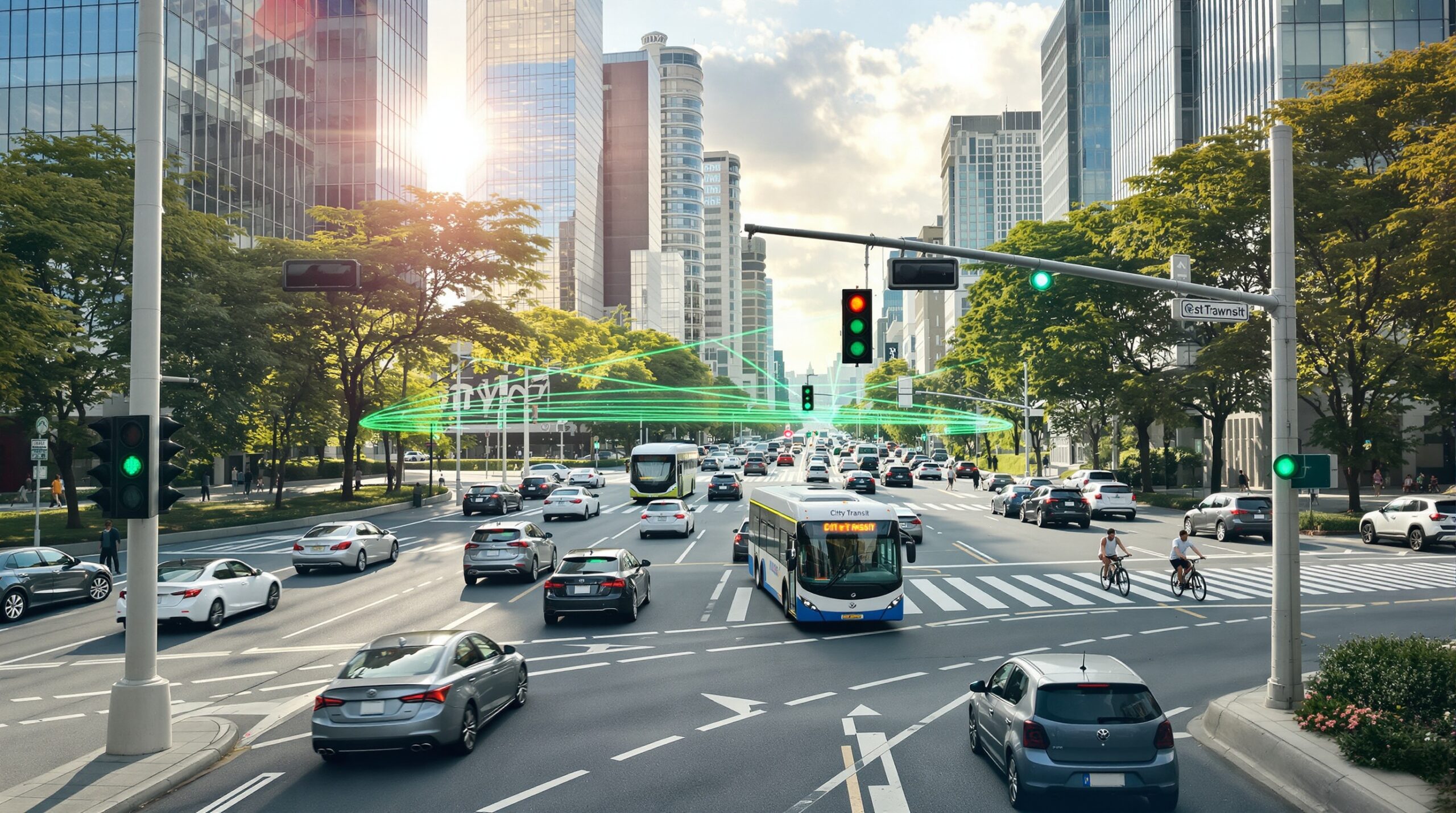
City officials have launched a pilot for AI-driven traffic lights on several busy corridors. The program seeks faster commutes, fewer emissions, and safer streets. Engineers will test adaptive signal timing that learns and responds in real time. The pilot covers intersections serving commuters, buses, cyclists, and pedestrians. Early results will inform a broader deployment decision.
Transportation departments worldwide face mounting congestion and climate pressures. Conventional fixed-timing signals struggle to handle unpredictable demand patterns. AI-driven systems promise nimble control that reduces wasted time and idling. This pilot aims to validate those promises in a complex urban environment. The city designed the effort to produce measurable, transparent outcomes.
How AI-Driven Traffic Lights Work
AI signal systems use sensors to estimate traffic demand and predict arrivals. They process camera feeds, radar detections, and connected vehicle data. Algorithms then choose phase sequences and green durations that minimize total delay. The system recalculates plans every few seconds as conditions change. It adjusts without waiting for a fixed cycle to end.
Many pilots run software at the intersection on edge computers. Local control reduces latency and keeps signals responsive. Supervisory software coordinates neighboring intersections for corridor-level performance. The network balances platoons, side-street queues, and pedestrian calls. This layered approach supports both local safety and network efficiency.
Vendors apply different AI techniques to the problem. Some systems use reinforcement learning to discover efficient policies. Others blend optimization with traffic flow models and heuristics. All prioritize safety rules and legal requirements in their decision logic. Failsafe modes revert to conventional timing if sensors misbehave.
Pilot Scope and Timeline
The pilot includes dozens of intersections along key commuter routes. Engineers selected segments with heavy peak congestion and transit delays. The team installed sensors, upgraded controllers, and configured secure communications. Test operations began after field verification and safety checks. The initial evaluation period spans several months across seasons.
Officials will compare performance before and after activation. They will also run controlled A/B tests on selected days. This structure isolates the impact of AI control from other factors. Results will inform future capital investments and policy decisions. The city will publish dashboards with anonymized metrics and summaries.
What Success Looks Like
Project goals focus on speed, reliability, safety, and sustainability. Target measures include average travel time and its variability during peak hours. Engineers will track the number of stops and total delay per vehicle. Transit agencies will monitor bus travel times and schedule adherence. Pedestrian wait times and crossing compliance will also receive attention.
Environmental metrics rely on well-established estimation methods. Reduced idling and smoother flow lower fuel consumption and emissions. Analysts will use traffic measurements and vehicle mix data for calculations. They will estimate reductions in carbon dioxide, nitrogen oxides, and particulates. Independent reviewers will validate methods and assumptions.
Evidence from Other Cities
Several cities have reported tangible benefits from adaptive and AI signals. Pittsburgh deployed AI-based control across numerous intersections. Academic studies in Pittsburgh reported reduced travel times and fewer stops. Those studies also reported significant reductions in vehicle idling. Hangzhou reported faster trip speeds after deploying AI coordination citywide.
Other pilots have improved emergency vehicle preemption. AI controllers can clear routes before sirens arrive at intersections. Transit priority features also demonstrate meaningful benefits. Buses receive green extensions or early starts when behind schedule. These case studies shape expectations for the current pilot.
Safety and Accessibility Protections
Safety remains the first constraint in every control decision. The system enforces minimum clearance times and conflict-free phases. Engineers monitor red-light compliance and near-miss surrogates. They also audit pedestrian service for adequate crossing times. Intervals adjust for slower walkers where detection allows.
Accessibility features extend beyond timing adjustments. Audible signals assist people with low vision at equipped crossings. Bike detection protects cyclists from being skipped at low volumes. The pilot also supports tactile feedback at pushbutton locations. These measures keep improvements inclusive and equitable.
Privacy, Data, and Cybersecurity
Program leaders adopted strict privacy and data minimization standards. Camera analytics run at the edge and avoid storing identifiable images. The system does not perform facial recognition or license plate storage. Sensor data remain aggregated for operational purposes. Public dashboards present only anonymized summaries.
Cybersecurity protections include network segmentation and encryption. Access controls restrict changes to authorized personnel with multifactor authentication. Vendors follow secure development practices and periodic penetration testing. The city maintains incident response procedures with clear escalation steps. These controls protect both safety and public trust.
Integration with Transit and Freight
Coordinated transit priority sits at the heart of the pilot. Buses share real-time locations and schedule adherence with the system. Signals respond with green extensions or phase reordering to help recovery. This strategy improves reliability without blanket preferential treatment. Riders benefit most during congested peaks.
Freight corridors also receive attention in the design. Sensors detect heavy vehicles and adjust timing to reduce stops. Smoother flow lowers fuel use and brake wear for trucks. The system also coordinates with railroad preemption where present. This integration reduces lengthy queues near crossings.
Cost, Funding, and Procurement
AI signal projects require capital and operating investments. Costs cover controllers, sensors, communications, and software subscriptions. Field work also includes power, mounting, and cabinet upgrades. Staff training and vendor support ensure reliable operations. Budget plans include maintenance for sustained performance.
Funding often blends local budgets with grants and partnerships. Federal programs support smart corridor deployments and safety enhancements. Competitive grants reward measurable benefits and strong evaluation plans. The city structured the contract with performance incentives and safeguards. That structure aligns vendor goals with public outcomes.
Challenges and Risk Management
Adaptive systems face practical and technical challenges in the field. Work zones and incidents can disrupt detection and plans. Algorithms must handle unexpected patterns without degrading safety. Sensor maintenance becomes critical to accurate operation. Staff must also manage software updates and configuration drift.
Equity issues require vigilant oversight and course corrections. Corridors in underserved areas deserve equal service improvements. The city will analyze who benefits and who bears impacts. Adjustments will rebalance outcomes as needed. Community input will guide those choices across neighborhoods.
Public Engagement and Transparency
Officials recognize that public trust underpins successful technology projects. The team will share plain-language explanations and findings. Open houses and online forums will gather feedback and concerns. Residents can report issues through existing service channels. Continuous engagement will shape refinements during the pilot.
Transparency extends to evaluation methods and raw results. The city will publish methodologies for calculating emissions and delays. Independent reviewers will check assumptions and boundary conditions. This approach ensures credible, comparable, and repeatable findings. Stakeholders can track progress and hold the program accountable.
What Drivers and Pedestrians Should Expect
Road users will notice more responsive signals during everyday travel. Greens may appear earlier when there is no cross traffic. Side streets may wait slightly longer when mainline traffic surges. Pedestrians can expect consistent walk intervals and fewer long delays. Everyone benefits from fewer start-stop cycles and smoother progress.
Change can feel unfamiliar during the first weeks. Engineers will watch operations and fine-tune parameters. Clear signage informs users about ongoing testing and adjustments. Law enforcement will emphasize education over citation during rollout. These steps help the city deliver a comfortable transition.
Future Outlook and Scalability
If the pilot meets targets, the city plans a phased expansion. Expansion would prioritize corridors with high delays and strong transit needs. Officials would also integrate with regional arterial management systems. Connected vehicle data could further improve detection and prediction. New sensors would support vulnerable road user safety.
The team will document lessons for other agencies. Standard interfaces and open data reduce vendor lock-in risks. Regional coordination helps manage spillover effects and diversions. Shared playbooks accelerate deployments and improve interoperability. These practices turn a pilot into a sustainable program.
Bottom Line
The pilot brings practical innovation to a daily urban challenge. AI-driven traffic lights promise faster trips and fewer emissions. Careful design, evaluation, and transparency support those goals. The city will refine the system based on real performance. Residents should see steady progress as the pilot advances.
Results from other cities suggest meaningful gains are possible. This pilot will show how those gains translate locally. With disciplined management, the benefits can scale across the network. That outcome would improve mobility, health, and economic productivity. The community has a clear stake in its success.
