

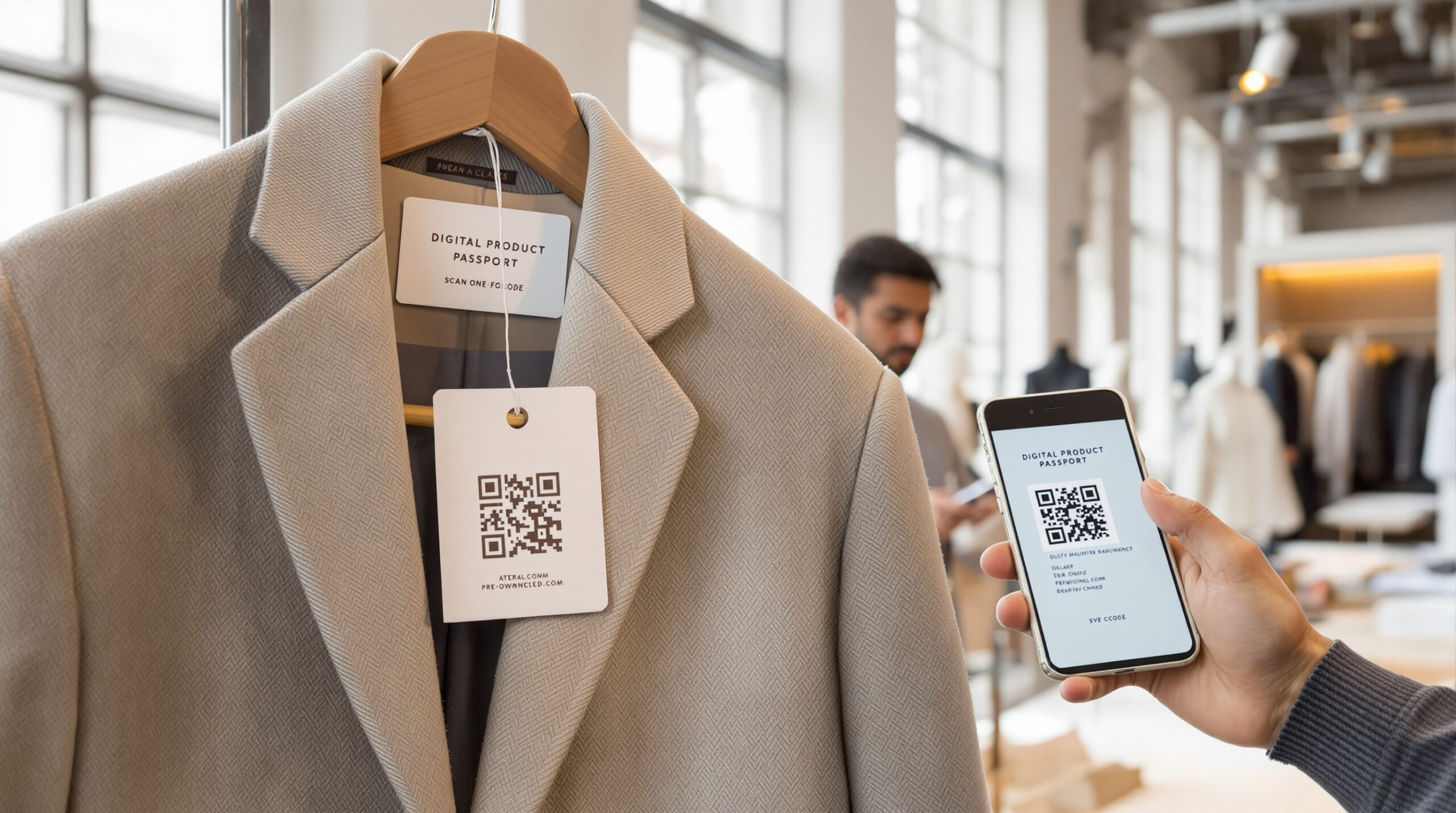
Major fashion houses adopt digital product passports to track garments from atelier to resale
Luxury leaders are turning garments into data-rich assets that tell their complete life story. Digital product passports connect items to verifiable information from atelier to resale, strengthening trust, circularity, and compliance. This shift is transforming how brands make, move, authenticate, and support their products. The industry now treats identity as essential infrastructure, not an afterthought.
What a digital product passport actually contains
A digital product passport, or DPP, is a persistent digital identity for a physical item. It links a garment’s unique identifier to a secure record accessible through a tag or code. Passports can include materials, origin, manufacturing sites, certifications, care guidance, and repair options. They can also store ownership transfers, service history, and verified sustainability claims.
Consumers typically scan a QR code or tap an NFC chip to view information. Supply chain teams access more detailed data through authenticated portals or APIs. Standards like GS1 Digital Link connect item identifiers to web resources using familiar barcodes. The result is a single source of truth that travels with the product.
Why luxury brands are moving first
Luxury depends on provenance, authenticity, and lifetime value, making DPPs immediately attractive. A passport lets brands prove origin while fighting counterfeits and gray markets. It also supports services that preserve value, including repairs, care, and authenticated resale. The investment aligns with premium pricing and the desire for enduring client relationships.
Resale growth adds urgency by putting proof of authenticity at the center of transactions. Clear provenance can increase confidence and pricing on secondary platforms. Passports also enable buy-back programs, trade-ins, and warranties anchored to verified items. Brands see strategic advantage in leading these experiences rather than outsourcing trust.
Consortia and platforms shaping the landscape
Major groups are collaborating on shared infrastructure to speed adoption. The Aura Blockchain Consortium, founded in 2021 by LVMH, Prada Group, and Cartier, issues tamper-resistant certificates for luxury goods. It uses blockchain to anchor item identities and provenance events. Members can verify authenticity across maisons while keeping sensitive data private.
Other platforms handle data at scale without blockchains. Avery Dennison’s atma.io tracks items using serialized labels across supply chains. EON provides product clouds that store Digital IDs for fashion and luxury. TrusTrace aggregates supply chain evidence and compliance documents for responsible sourcing claims. TextileGenesis, now part of Lectra, traces man-made and natural fibers from certified sources.
From atelier to retail floor: data capture in practice
Passports begin at design, when parts lists and materials are defined. Teams map bill of materials, including fiber types, trims, and chemicals. Sourcing then links suppliers, certifications, and batch numbers to the digital record. Manufacturing events log cutting, sewing, finishing, and quality checks with time and location stamps.
Brands apply serialized QR or NFC tags once items pass quality control. Logistics updates track shipments, customs clearances, and warehouse receipts as garments move worldwide. Retail systems record allocation, store receipt, and first sale with item-level detail. The passport consolidates these events, creating a persistent, auditable trail.
Technologies inside the label
QR codes offer low-cost, universal access for consumers and associates. NFC chips add tap interactions and can support cryptographic authentication. RFID supports inventory accuracy and loss prevention during operations and logistics. Many programs combine technologies to balance durability, privacy, and cost across product categories.
Interoperability is equally important for scaling passports. GS1 Digital Link and EPC standards enable consistent item identification across systems. Application programming interfaces connect product clouds to retail and service platforms. Robust identity ensures that every scan returns trusted, current information.
Authentication and resale integration
DPPs make digital authentication faster and more reliable for secondhand transactions. A passport can confirm origin, model details, and service history with a single scan. It also ties to cryptographic proofs where brands implement them. Resale platforms can integrate verification workflows directly into listing and intake processes.
Some luxury houses already partner with resale intermediaries to validate inventory. Stella McCartney works with The RealReal on authenticated consignment incentives. Alexander McQueen partnered with Vestiaire Collective on a “Brand Approved” program. Chloé announced Digital IDs across collections to support transparency and circular services.
These programs lay groundwork for deeper passport integrations over time. Buy-back and trade-in initiatives benefit from instant identity checks during returns. Repairs and refurbishment can be logged to maintain provenance and warranty integrity. The passport becomes a living record that enhances value at each transfer.
Regulatory drivers push momentum
Policy is accelerating adoption alongside brand strategy. The European Union’s Ecodesign for Sustainable Products Regulation establishes a framework for product passports. The regulation entered into force in 2024 and sets category-specific rollouts. Textiles are slated for delegated acts later this decade after batteries and electronics.
France’s AGEC law also promotes transparency and environmental information disclosure. Digital channels can support mandatory labeling with product-specific data. France already operates extended producer responsibility for textiles through an established system. Other markets are considering due diligence and circularity laws that favor traceable products.
Trade enforcement adds further incentives for visibility. U.S. rules targeting forced labor require stronger cotton traceability. DPP frameworks can help consolidate evidence and accelerate audits. Brands view regulatory readiness as a competitive necessity rather than optional compliance.
Sustainability claims and verification
Passports can support credible sustainability communication when grounded in verifiable data. Brands link certificates, transaction records, and standardized metrics to each item. Fiber-level tracing from suppliers like Lenzing improves origin confidence for specific materials. Independent audits and chain-of-custody documents add assurance across tiers.
The risk of greenwashing remains if data lacks rigor or context. Clear definitions and standardized categories help consumers interpret claims. The EU plans minimum data sets and formats for passports by category. These rules aim to make environmental information comparable and actionable.
Operational benefits beyond compliance
DPPs also unlock measurable operational improvements inside the enterprise. Item-level identity increases inventory accuracy and reduces out-of-stocks. Returns processing becomes faster because associates can verify items quickly and precisely. Service teams access repair history without searching across systems.
Designers gain insights from real-world usage and service patterns to refine durability. Product development can close loops between material choices and lifecycle outcomes. These feedback cycles align creative decisions with circular strategies and margin protection. The passport ties data to every SKU with precision.
Challenges brands must address
Data quality is the first and hardest challenge for any passport program. Brands must harmonize supplier formats and verify sources. Many suppliers still operate offline or with minimal digital records. Onboarding programs and incentives help bring partners into the system.
Privacy and security also require careful design choices. Consumer scans should avoid unnecessary tracking and respect consent preferences. Sensitive manufacturing data needs access controls and encryption. Governance determines which parties can read or write different passport fields.
Physical durability presents another hurdle for long-lived garments. Labels must withstand cleaning, wear, and resale transfers without failure. NFC in hard-to-reach locations can deter tampering while staying usable. Brands test placements and materials to balance resilience and aesthetics.
Implications for consumers and clienteling
For clients, passports create confidence and convenience throughout ownership. A quick scan reveals care instructions, repair options, and contact channels. Personalized content can celebrate craftsmanship and reveal atelier details responsibly. After years, owners still access documentation that proves origin and value.
Client advisors use passports to offer tailored services after purchase. They can schedule maintenance and recommend care based on material profiles. Advisors can also guide clients through brand-approved resale or trade-in. The experience strengthens loyalty while reducing friction at every step.
Designing for circularity at scale
Passports help design teams plan for reuse, repair, and recycling from the start. They ensure recyclers know fiber blends and dye systems accurately. Sortation facilities can scan labels to direct materials to appropriate streams. Circular business models function better with consistent, verifiable product data.
Over time, brands can measure circular outcomes at item and collection levels. They can track return rates, refurbishment impacts, and material recovery. These insights inform targets and supplier incentives that reward better outcomes. Data transforms circularity from aspiration into accountable practice.
What comes next for fashion passports
Expect pilots to become portfolio-wide programs as tooling matures. Implementations will expand beyond capsules into core collections and leather goods. Brands will align with forthcoming EU rules to standardize minimum data. Global consistency will reduce integration costs for partners and platforms.
Interoperability across resale, repair, and retail will improve rapidly. APIs will allow item journeys to update in near real time. Tamper-evident tags and cryptographic signatures will harden authentication measures. The most successful programs will balance openness with robust protections.
Luxury houses see strategic upside in owning product identity end to end. Passports anchor trust, services, and circular value beyond the first sale. With regulation on the horizon, leadership today reduces risk tomorrow. The garment’s story will increasingly be the product itself.
