

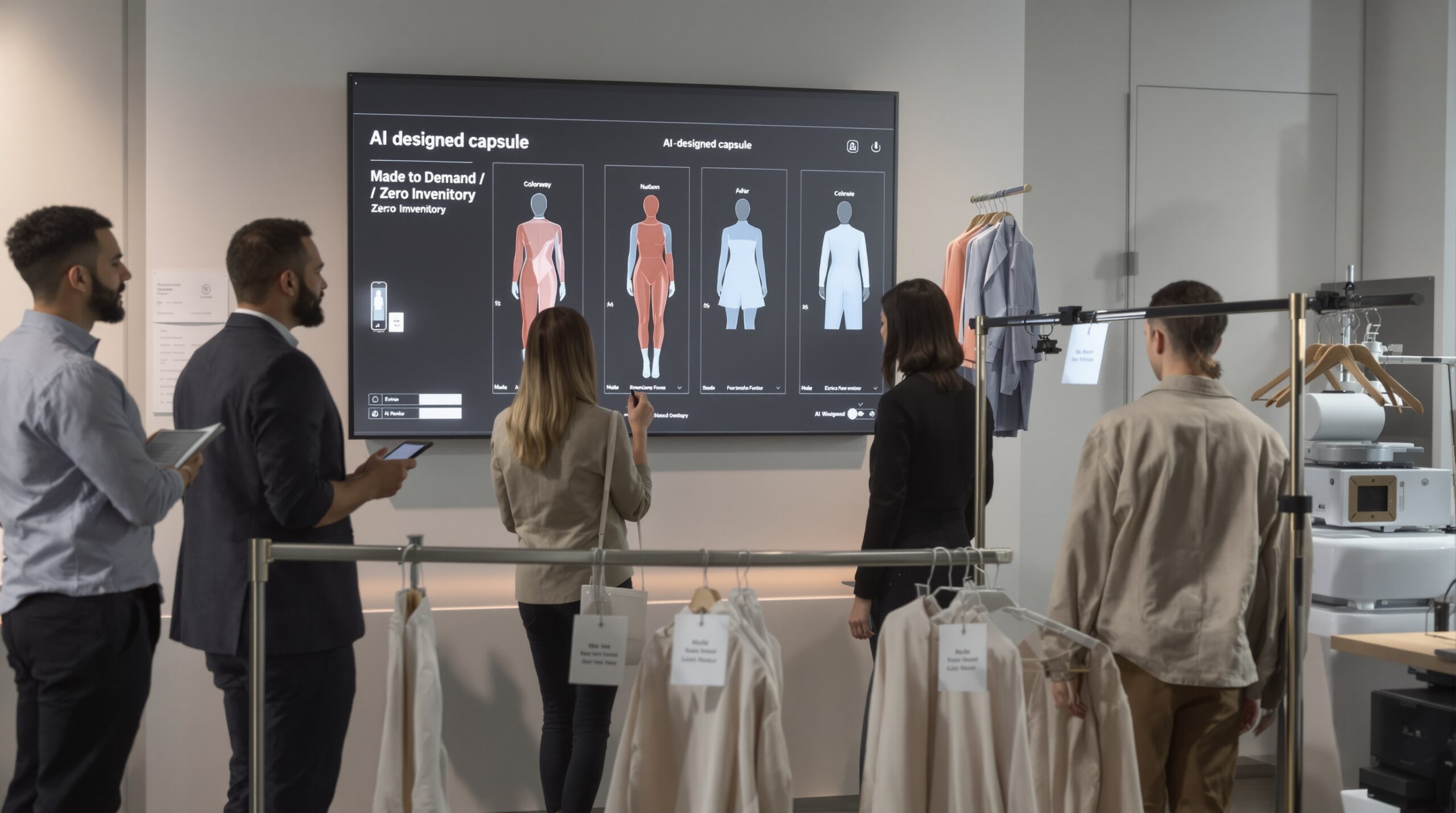
Fashion executives are testing a new operating model that blends AI design, on-demand manufacturing, and zero-inventory drops. The goal is faster creation, lower risk, and less waste across the product lifecycle. Labels see capsule collections as controlled sandboxes for innovation and learning. Early pilots show promising creative and operational results, yet challenges remain.
What AI-designed capsule collections mean
AI-designed capsule collections use generative tools to assist designers with concept development and iteration. Teams feed trend signals, historical sales, and brand guidelines into model prompts. Designers then steer variations, refine silhouettes, and lock materials with expert judgment. The final aesthetic remains human-directed, while AI broadens exploration and speed.
These capsules often center on tight themes and constrained SKUs. Compact assortments reduce complexity while testing new workflows and market reactions. AI supports cohesion by evaluating color harmony, fabric compatibility, and narrative consistency. This structure keeps risk low while surfacing measurable insights.
On-demand manufacturing moves from niche to enterprise scale
On-demand manufacturing produces garments after an order is confirmed. Production shifts from forecast-driven batches toward dynamic, demand-synchronized runs. Microfactories, automated cutting, and 3D knitting enable economic small runs. Brands leverage nearshoring and digital production lines to compress lead times.
Digital printing and dyeing reduce setup overhead and minimum orders. Computerized cutting systems standardize efficiency across variable volumes. Knitting machines deliver fully fashioned pieces with minimal waste. Connected production scheduling aligns equipment capacity with rolling order books.
Enterprise systems now integrate CAD, PLM, and manufacturing execution systems. Real-time data synch keeps specifications, bills of materials, and tolerances aligned. Labels gain visibility into WIP, defects, and capacity constraints. That visibility helps teams adjust designs for manufacturability before launch.
Zero-inventory drops reduce risk and waste
Zero-inventory drops open a timed ordering window and produce only purchased units. The approach converts demand into confirmed orders before cutting fabric. Brands ship within promised windows, often two to four weeks. This structure lowers inventory carrying costs and markdown exposure.
Customers accept a slight wait in exchange for exclusivity and customization. Clear timelines and order tracking maintain trust through fulfillment. Brands can prioritize VIP tiers and regional allocations during production. Drops also help test demand curves without speculative commitments.
How a typical pilot works
Design scope and data preparation
Teams define capsule objectives, such as silhouettes, materials, and target customers. They compile datasets spanning historical sales, trend feeds, and cultural signals. Legal teams review data provenance and usage rights. Designers calibrate prompts to reflect brand voice and signature codes.
Concept generation and refinement
AI tools generate moodboards, colorways, and pattern concepts from controlled prompts. Creative directors curate outputs and steer second-round variations. 3D design software builds virtual prototypes and fit simulations. Feedback loops resolve construction issues before sampling begins.
Sampling and manufacturability checks
Teams produce minimal physical samples using rapid methods. Engineers confirm stitch density, shrinkage, and print fastness tolerances. Factories run small test lots to validate cycle times and yields. Designers lock specifications only after passing manufacturability gates.
Preorder and zero-inventory launch
Marketing opens a timed preorder window with transparent delivery dates. Customers choose sizes, sometimes with guidance from fit algorithms. A threshold plan commits production by style and size. The system allocates capacity and releases final cut tickets after closure.
Production and fulfillment
Microfactories or nearshore partners run sequenced batches aligned to orders. MES dashboards track throughput, quality, and exceptions in real time. Quality teams spot-check critical dimensions and finish standards. Logistics fulfills orders with parcel-level tracking and proactive notifications.
Measurement and learning
Cross-functional teams review sell-through, margins, and return rates. They analyze wait-time satisfaction and communication effectiveness. Designers assess which AI prompts delivered usable creativity. Operations evaluate which steps bottlenecked flow and how to fix them.
Early outcomes and metrics brands track
Pilots often compress concept-to-launch timelines by significant margins. Teams report fewer sampling rounds when using 3D and digital fit. Sell-through improves when demand informs production quantities. Return rates decline when fit guidance and clearer sizing are present.
Inventory risk drops because production follows confirmed orders. Waste decreases through tighter material yields and reduced overproduction. Gross margins can improve through reduced markdowns and freight optimization. Teams track carbon impacts using standardized lifecycle methods.
Designers cite broader creative exploration without extended calendar pressure. They maintain authorship while testing more variations quickly. Merchandising gains cleaner readouts on true demand and size distribution. These insights inform future planning and regional assortments.
Real-world signals from the industry
Global luxury groups invest in AI for design support and demand forecasting. Technology partnerships focus on cloud computing, data governance, and digital twins. Sportswear leaders operate long-running customization and made-to-order programs. These programs inform playbooks for larger on-demand strategies.
Large retailers expand nearshoring to improve agility and replenishment speed. RFID and analytics enhance size precision and backroom visibility. Equipment providers showcase integrated microfactory lines for apparel and home textiles. Software vendors connect PLM with MES and e-commerce in unified stacks.
Industry conferences feature case studies on automated cutting, 3D knitting, and digital printing. Several brands highlight capsule pilots across categories and regions. Public announcements emphasize sustainability, speed, and creative empowerment. These signals indicate steady movement toward scaled adoption.
Consumer experience and marketing implications
AI-designed capsules invite storytelling around process and participation. Brands can show prompt-to-prototype journeys with behind-the-scenes content. Customers value transparency when it explains quality and timing. Clear communication turns wait times into anticipation, not frustration.
Interactive 3D models and augmented reality help customers evaluate products. Fit guidance and size prediction reduce returns and dissatisfaction. Personalization options increase perceived value and willingness to wait. Drops reward engaged communities with access and co-creation opportunities.
Marketing calendars evolve from fixed seasons to rolling capsule moments. Teams synchronize content, production, and fulfillment windows tightly. Influencer collaborations shift toward co-designed, data-backed capsules. That direction aligns storytelling with measurable demand signals.
Technology stack powering the shift
Generative design tools integrate with 3D apparel design platforms. PLM systems store structured specifications and version history. MES platforms orchestrate machine schedules and quality checkpoints. Data pipelines unify product, customer, and operational data securely.
Digital asset management keeps textures, trims, and color standards synchronized. Color management systems calibrate across monitors, printers, and dyes. APIs pass orders, sizes, and cut lists to manufacturing lines. Webhooks return tracking and exceptions for customer notifications.
Risk, governance, and ethics
Brands face intellectual property and data provenance questions. Legal teams verify training data sources and license terms carefully. Designers document human authorship and decision points. Audit trails support claims of originality and brand stewardship.
Labor and skills shift toward digital patterning and automation oversight. Companies invest in reskilling programs for technicians and operators. Vendor codes extend to algorithmic fairness and transparency standards. Procurement evaluates factories on both human and technical capabilities.
Green claims require rigorous measurement and third-party verification. On-demand reduces overproduction but does not guarantee sustainability. Fabric choices and dye methods still drive environmental impact. Honest reporting builds credibility with regulators and consumers.
Financial considerations and operating model
Zero-inventory drops change cash flow timing for brands and suppliers. Preorders improve working capital by funding production cycles. Contracts align payment schedules with confirmed order milestones. Forecasting models shift from seasonal buys to rolling commitments.
Unit economics depend on setup costs, equipment utilization, and defect rates. Microfactories must maintain high uptime and balanced workloads. Freight costs fall when shipments move steadily, not in surges. Returns and remakes require contingency buffers and clear policies.
What comes next for scaled adoption
Standards will improve interoperability across design and manufacturing. Digital product passports will strengthen traceability and disclosures. Regulators will refine guidance on AI transparency and claims. Suppliers will specialize in short runs with enterprise-grade quality.
Brands will expand from capsules to evergreen on-demand programs. Insights from pilots will rewire calendars, assortments, and sourcing. Teams will measure success with shared, cross-functional dashboards. That alignment will anchor creativity to reliable operational performance.
The model will not replace all production methods. Seasonal platforms, wholesale channels, and core products will persist. However, capsules will carry more innovation and consumer engagement. This hybrid approach will define the next era of fashion operations.
