

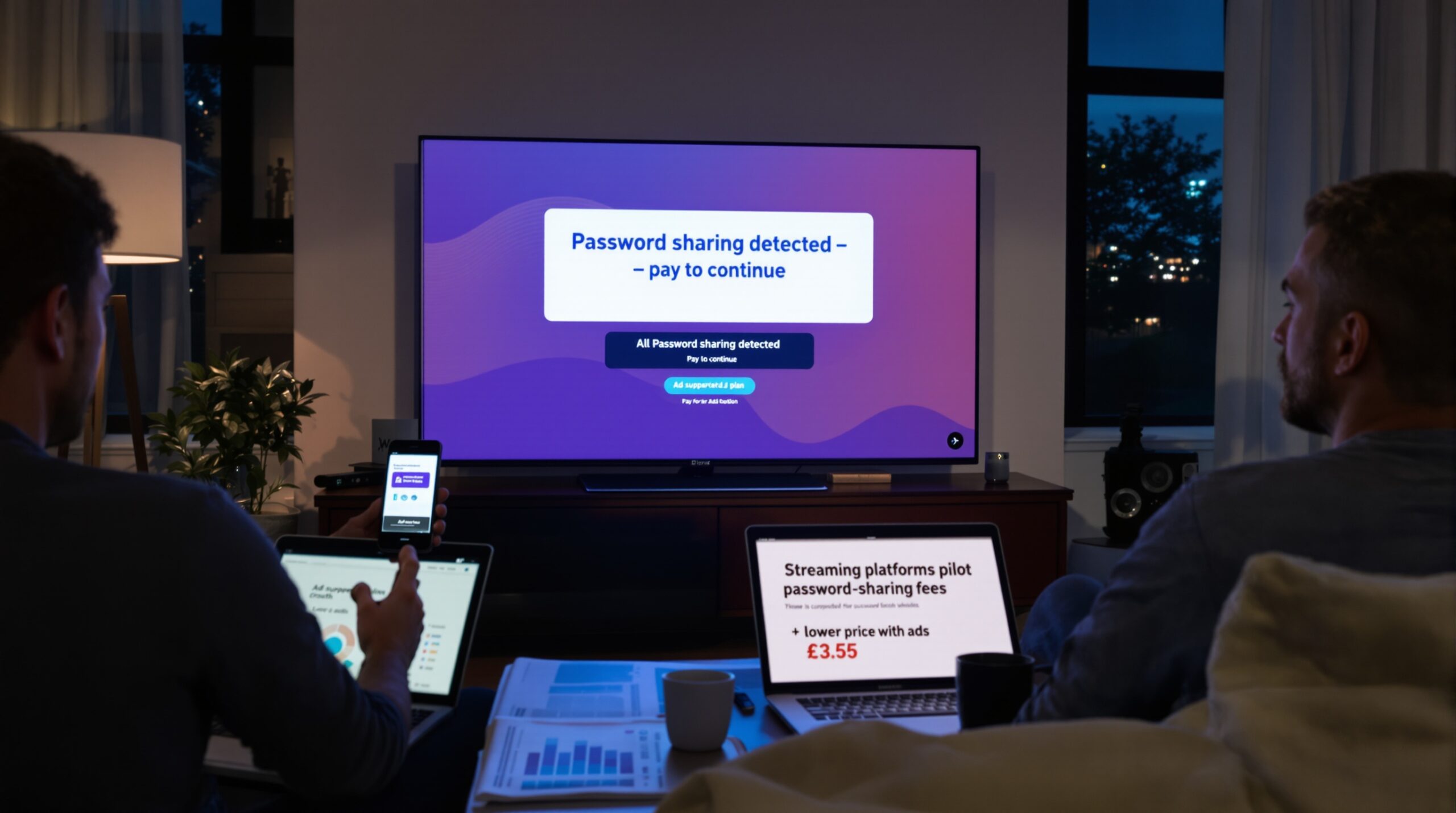
Streaming leaders are testing bold monetization levers as growth slows. Executives want consistent subscriber gains without sacrificing margins. To reach that goal, platforms are piloting password-sharing fees and ad-tier bundles. These moves target casual viewers while preserving premium experiences for loyal fans.
Both strategies reflect a maturing market. Companies need new paths to revenue that respect user habits. They also aim to stabilize cash flows in a volatile ad market. Together, the pilots signal a lasting shift in streaming economics.
The tests span markets, plans, and partners. They seek data on pricing power, churn, and advertising demand. Early results show promise, though execution matters. The next sections examine how the pieces fit together.
The Shift to Paid Sharing
Netflix led the paid sharing push across many countries in 2023. The company framed the change around account households. It encouraged account owners to transfer profiles and create extra member slots. Those options offered clear paths from shared access to paid access.
Enforcement combined messaging, product nudges, and plan rules. Netflix positioned the update as fairness for paying households. It promised better control over who uses an account. It also highlighted travel features to reduce friction for frequent travelers.
Management reported stronger subscriber additions after enforcement. Revenue trends improved alongside rising engagement on paid accounts. The company credited product clarity and flexible pricing tiers. The experience provided a roadmap for peers considering similar steps.
Disney+ has tightened account rules and signaled broader enforcement. It began restrictions in select regions and expanded efforts in 2024. The company plans options for adding extra households, where available. It also offers profile transfers to preserve viewing histories during changes.
Other services are watching outcomes and user sentiment. Some emphasize household definitions and device limits in updated terms. Pilots vary by territory due to local regulations and partnerships. This measured pace aims to avoid punishing legitimate use cases.
These paid sharing experiments try to convert borrowed-password viewers. They create a low-friction path into the paying funnel. The next lever sits at the opposite end of pricing. Ad-supported plans expand reach while softening subscription costs.
Ad-Supported Tiers Make a Comeback
Ad tiers returned to prominence as growth matured. Netflix launched an ad-supported plan in late 2022. Disney+ introduced an ad tier in the same period. Max, Paramount+, and Peacock also operate ad-supported options.
Hulu built its business on ad-supported streaming long ago. It demonstrated that advertisers will pay for premium connected TV. Streamers leverage that playbook at greater global scale today. They pitch targeted reach, brand safety, and flexible formats to marketers.
Ad tiers broaden the subscriber funnel for price-sensitive viewers. They can lift average revenue per user when ads perform well. They also create upgrade paths to ad-free viewing. Platforms encourage upgrades with product features and content windows.
Some services retired lower-cost ad-free plans in select markets. That move nudged entry subscribers toward ad-supported options. It also cleaned up plan lineups for clearer positioning. Clear choices help customers weigh value and features more easily.
Ad-supported viewing introduces creative measurement opportunities. Streamers experiment with brand integrations and interactive spots. They test new ad loads to balance revenue and satisfaction. Those tests inform global rollout plans and pricing adjustments.
Ad tiers and paid sharing reinforce each other. One converts borrowers into paying viewers. The other welcomes budget-conscious subscribers with a lower sticker price. Bundles then multiply perceived value across services.
Bundles Reshape Value Perception
Bundles aim to reduce churn and expand reach. They package multiple ad-supported services at attractive rates. Verizon introduced a Netflix and Max bundle with ads for subscribers. That offer showcased cross-service savings and single-bill simplicity.
Charter and Disney struck a carriage deal in 2023. The agreement included Disney+ Basic in select Spectrum TV plans. That integration tied streaming value to traditional pay television. It also encouraged upgrades to broader Disney bundles.
Comcast promotes Peacock Premium through broadband and streaming bundles. Its NOW TV package includes Peacock and curated streaming networks. Such offers defend cable relationships while supporting streaming growth. They also introduce customers to ad-supported environments.
Disney consolidates value through Trio and Duo bundles. The packages combine Disney+, Hulu, and ESPN+ in select configurations. Ad-supported options keep entry prices compelling for families. Live sports strengthen the overall bundle proposition for many households.
Bundles create win-win dynamics across partners. Telcos reduce churn with added entertainment benefits. Streamers gain subscriber scale and marketing support. Consumers get more content with fewer separate bills.
As bundles proliferate, platforms study user behavior closely. They watch which bundles drive upgrades or downgrades. They also test regional bundles that fit local content tastes. The next section examines what early pilots reveal.
Pilots Reveal Behavioral Shifts
Paid sharing pushes some viewers to start paying. Others leave and return later with ad tiers. Profile transfer tools reduce friction during changes. They preserve watchlists and recommendations across account migrations.
Ad-supported plans attract cost-conscious families and new streamers. Some subscribers later upgrade to ad-free experiences. That path often follows peak viewing seasons or big releases. It reflects flexible willingness to pay for premium moments.
Bundles influence plan stickiness across services. Customers often accept ads when perceiving strong bundle value. They revisit cancellation decisions when bundled savings feel meaningful. These patterns help platforms forecast churn and lifetime value.
Pilots also surface usability tensions. Travel verification prompts can interrupt legitimate sessions. Household definitions sometimes confuse roommates and extended families. Platforms iterate product guidance to ease those pain points.
The observed shifts inform broader rollouts. Teams refine pricing and messaging based on cohorts. They also calibrate promotions around tentpole releases. Revenue strategies then align with content calendars.
The Economics Behind the Strategy
Paid sharing taps a warm acquisition pool. Borrowed-password viewers already value the content library. Conversion costs stay lower than typical marketing spends. The approach also clarifies the product’s rules and benefits.
Ad tiers monetize time spent through advertising demand. Strong targeting and brand safety win premium budgets. Live sports and cultural moments command higher pricing power. Seasonal campaigns support both brand and performance objectives.
Max introduced a sports add-on with ads during 2023. That move expanded premium ad inventory for marquee events. Other services blend sports, news, and entertainment in ad packages. The goal is to diversify demand across cycles.
Bundles reduce acquisition costs through partner distribution. They leverage telco marketing and billing platforms. Shared promotions lift discoverability across apps. Each participant benefits from the pooled audience scale.
Together, these levers seek predictable cash flows. They support measured content investments tied to returns. They also create optionality across pricing tiers. That flexibility helps platforms navigate macroeconomic swings.
Policy, Privacy, and User Experience Considerations
Services updated terms to define household use and limits. They aim for clarity without overburdening legitimate viewers. Verification prompts support enforcement with minimal friction. Travel features help maintain access on the go.
Advertising raises privacy and consent questions. Streamers publish privacy notices and control centers. Regional laws shape consent flows and data sharing. Teams balance measurement needs with regulatory obligations.
Ad load and creative formats affect satisfaction. Platforms test frequency caps and ad lengths carefully. Better relevance reduces perceived intrusion for viewers. Those insights inform global ad product roadmaps.
User experience remains a decisive factor. Clear communication reduces confusion during policy changes. Helpful tooling strengthens trust with households. Success depends on execution as much as strategy.
Competitive Landscape and Risks
Amazon added ads to Prime Video in early 2024. It introduced an ad-free upgrade for an additional fee. The change aligned Prime Video with broader industry trends. It also expanded connected TV ad inventory for marketers.
Apple TV+ maintains a mostly ad-free experience. Its sports broadcasts include advertising inventory. Paramount+ and Peacock prioritize ad-supported plans. They also emphasize live events to anchor engagement.
Risks accompany these shifts. Confusing rules can alienate households and increase churn. Aggressive ad loads can hurt engagement and retention. Poor enforcement can drive piracy or negative sentiment.
Competitors will copy successful tactics quickly. Differentiation then hinges on content strength and product polish. Partnerships can create temporary advantages in some markets. However, execution quality remains the ultimate advantage.
What to Watch Next
Key metrics will reveal durable impact. Watch net additions by plan type across major services. Track churn rates among ad-supported subscribers. Monitor ARPU trends as ad markets fluctuate.
Expect more telco and cable partnerships. Look for regional bundles tailored to local tastes. Anticipate expansion of paid sharing to new markets. Pricing experiments may accelerate during marquee content windows.
Sports rights will influence ad strategies. Services will package live events within broader bundles. They will balance reach with sponsorship exclusivity. That balance affects both revenue and brand relationships.
Product investments will shape satisfaction. Enhanced profiles, downloads, and discovery features drive retention. Simpler household management reduces support burdens. Clear onboarding smooths migration from shared access to paid accounts.
Conclusion
Streaming is pivoting toward hybrid monetization at scale. Paid sharing policies convert known enthusiasts into paying customers. Ad-supported tiers open the door for budget-conscious viewers. Bundles then weave value across services and partners.
Strong execution will separate leaders from followers. Clear messaging and respectful ad experiences matter greatly. Smart partnerships can magnify distribution and savings. Above all, compelling content must anchor every strategy.
The pilot phase is already reshaping expectations. Consumers now weigh ad loads, bundles, and household rules together. Platforms will iterate as data accumulates across markets. Growth will favor those balancing flexibility, clarity, and trust.
