

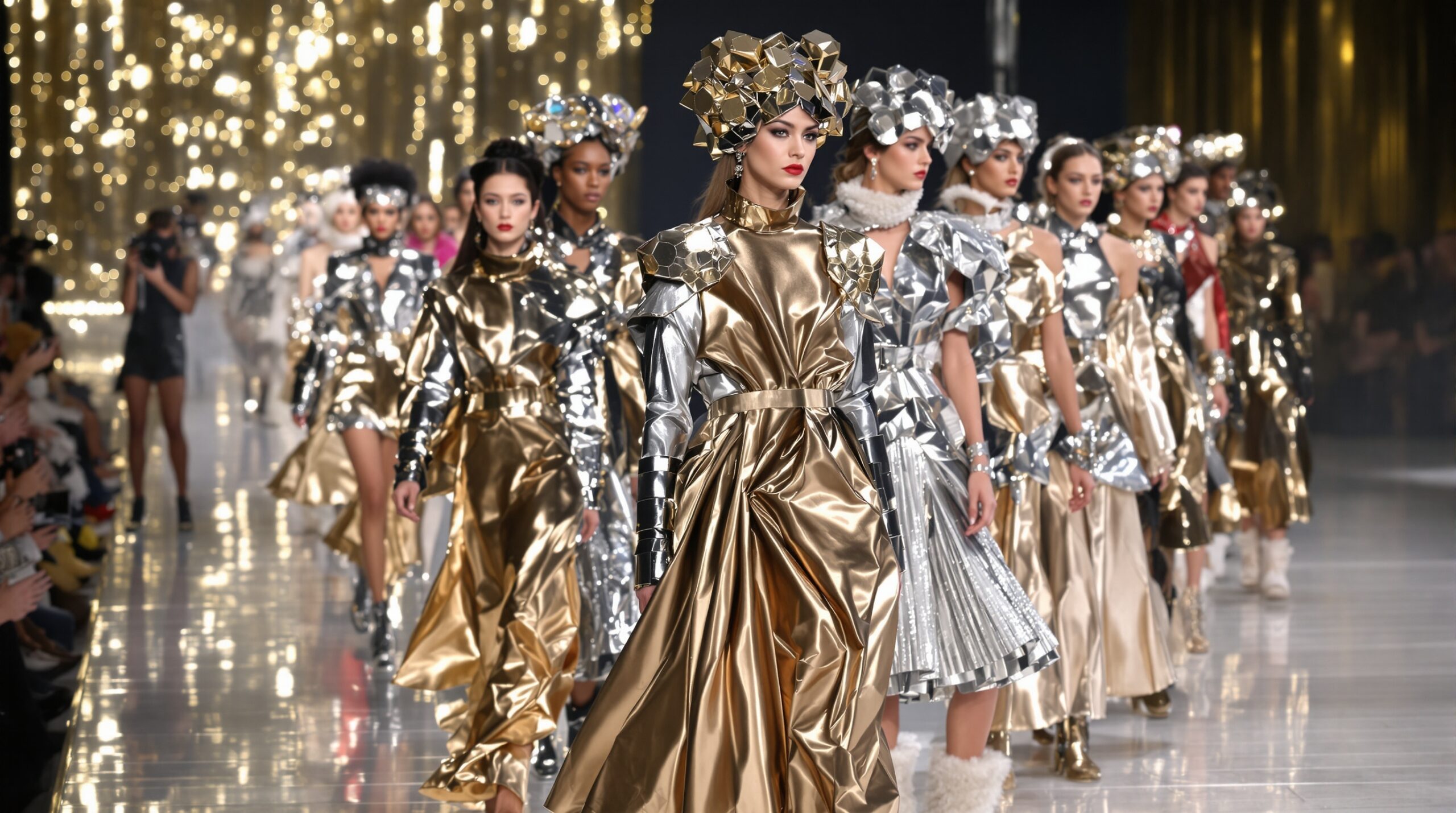
Winter runways embraced spectacle and shine this season. Designers favored maximalist metallics and boldly sculptural accessories across fashion capitals. Reflective surfaces caught the lights and cameras with magnetic force. Voluminous forms redrew silhouettes and energized familiar winter staples. The mood favored confidence, drama, and unapologetic glamour.
Silver dominated, yet gold, pewter, and gunmetal also surged. Shimmering textiles amplified movement and emphasized line. Oversize jewelry, statement belts, and architectural bags framed each look. Elevated boots and sculpted hats completed the strong narrative. The message felt clear and compelling for cold months.
Why Metallics Dominate Cold-Weather Collections
Shine performs beautifully under winter lighting and short days. Metallic surfaces reflect warmth and command attention in dim settings. Designers use reflective finishes to energize heavier fabrics and tailoring. Metallics also signal celebration during holiday and gala periods. The runway embraced that seasonal impulse with conviction.
Technical innovation sustains the trend beyond pure decoration. Foil coatings, metallized yarns, and mirror paillettes now flex with the body. These advancements keep garments comfortable while projecting high voltage glamour. Designers can push silhouette and surface at once. The result brings charisma without sacrificing wearability.
Key Materials and Finishes Shaping the Look
Liquid lamé returned with richer drape and weight. New blends temper stiffness and resist cracking during wear. Foil-coated leathers offered mirror sheen on outerwear and boots. Designers balanced rigid shine with supple backing for comfort. The finish looked assertive and sophisticated on structured shapes.
Chainmail advanced beyond heritage references. Lightweight aluminum meshes replaced heavier steel versions on gowns and tops. Fluid panels moved effortlessly with the body on runways. Engineers joined rings with modern micro-links for durability. The technique carried Rabanne’s legacy into contemporary wardrobes.
Mirror sequins and paillettes scaled up noticeably. Large discs created armorlike surfaces without extreme weight. Multi-sized mixes added depth and optical texture on evening pieces. Designers favored tonal metallic palettes for refined impact. The effect read modern, not costume, under directional styling.
Vacuum metallization delivered uniform gloss on synthetics and knits. This process bonds metallic film at controlled thicknesses. Garments maintained stretch while reflecting like polished chrome. PVD coatings and anodized aluminum appeared in accessories. These methods yield consistent color and improved abrasion resistance.
Sculptural Accessories Build the Season’s Silhouette
Accessories carried much of the season’s architecture. Oversized cuffs, collars, and ear ornaments framed faces and shoulders. Designers used exaggerated curves and spikes to shape space. Rigid clutches and metal-handled bags reinforced that geometry. The accessory choices supported bolder clothes without clutter.
Belts stood out as structure builders. Wide, molded belts cinched knits, coats, and shirting with precision. Some featured plated hardware that echoed jewelry shapes. Others used leather corsetry with sculpted panels. The waist returned as a focal point across collections.
Footwear pushed volume and height with intention. Platform boots and block heels grounded reflective looks. Designers used squared toes and inflated shafts for modern edge. Metallic leathers enhanced the architectural emphasis without overwhelming outfits. The resulting lines felt clean and powerful.
Runway Highlights Across Fashion Capitals
Paris set the tone with dramatic surfaces and form. Houses including Schiaparelli and Balmain showcased armorlike shine and sculpted jewelry. Rabanne continued its chainmail evolution with fluid, reflective panels. Loewe emphasized precision shape with sleek, gleaming details and refined hardware. Rick Owens delivered monumental boots and structured proportions with mythic presence.
Milan offered technical polish and controlled glamour. Prada explored sheen on tailoring, nylons, and satin blends. Bottega Veneta highlighted craftsmanship with substantial bags and metal handles. Gucci leaned into sparkle and evening textures with confident restraint. Dolce & Gabbana presented corsetry and metallic tailoring with signature sharpness.
London pressed sculptural experimentation and playful scale. JW Anderson played with molded accessories and clever proportions. Roksanda emphasized drape with bold jewelry accents and saturated metallics. Simone Rocha used embellishment to create three-dimensional floral effects. The city affirmed artistry through material risk and silhouette.
New York underscored nightlife energy and body-conscious cuts. LaQuan Smith delivered liquid metal eveningwear and strong accessories. Area amplified crystals and hardware into sculptural motifs. Thom Browne featured conceptual millinery and meticulous metallic accents. The American approach favored clarity and polished drama.
How Stylists Translate Runway Shine for Real Life
Stylists temper maximalist shine with grounded layers. A metallic skirt pairs well with a dense fisherman knit. Silver trousers feel wearable with navy cashmere and loafers. A gleaming blazer transforms denim and a crisp shirt. The balance keeps outfits modern and approachable.
Monochrome strategies work especially well with metals. Shades of gray frame silver with persuasive subtlety. Deep chocolate flatters bronzed metallic finishes effectively. Black sharpens gold without harsh contrast during daytime. These combinations extend metallics beyond party hours.
Accessories earn daytime roles with minimal styling. A sculptural cuff lifts a simple turtleneck instantly. Metal-handled bags read chic with tonal outerwear. Statement belts refine oversized coats and long knits. The key lies in editing around a single focal point.
Retail Momentum and Category Growth
Retailers expanded metallic offerings across price tiers this season. Contemporary labels adopted mirror finishes on core shapes. Luxury houses delivered runway pieces alongside commercial derivatives. Footwear and bags showed the strongest breadth of options. Jewelry categories scaled size without losing perceived quality.
Rental platforms support the trend’s event-driven moments. Consumers test bold metallics for weddings and holidays. Positive experiences often translate into permanent purchases later. Resale platforms carry archival chainmail and sculptural pieces. That availability deepens the trend’s cultural footprint and longevity.
Care, Comfort, and Practical Considerations
Foil coatings need mindful storage and cleaning. Avoid folding sharply to prevent finish stress and cracking. Hang garments with padded hangers for support. Spot clean gently with non-abrasive cloths whenever possible. Always test products on hidden sections first.
Chainmail and large paillettes can snag delicate knits. Pair them with smooth layers to reduce friction. Consider silk slips or sturdy tights beneath skirts and dresses. For metallic leather, use conditioners designed for coated hides. Protective sprays help shield against winter salt and moisture.
Material Responsibility and Sustainability
Metallized textiles raise recyclability questions for brands and consumers. Mixed-material laminations complicate downstream processing significantly. Designers address this through separable constructions and modular panels. Some shift toward mono-material fabrics with metallic yarns. These approaches enhance potential recovery and reuse.
Accessory makers explore lower-impact methods actively. Chrome-free tanning supports metallic leather development more responsibly. Aluminum components offer strong recycling pathways and lightness. PVD coatings emit fewer pollutants than some legacy plating techniques. Third-party certifications can help validate process improvements.
Consumers can prioritize longevity in selections. Choose lined garments and reinforced stress points for durability. Consider repair services offered by many luxury houses. Request spare paillettes or hardware at purchase when possible. Favor styles adaptable to daytime and evening use.
What Comes Next for Shine and Structure
Metallics will evolve beyond mirror finishes next season. Expect patinated textures with brushed and hammered effects. Colored metallics like petrol blue and verdigris green will rise. Designers will test ombré coatings and gradient foils. These treatments add depth without losing radiance.
Sculptural accessories will become more modular and convertible. Magnetic components can reconfigure necklaces into belt embellishments. Detachable handles will shift bags between day and evening. Ear cuffs and collars will stack with greater versatility. The format encourages collection and customization over time.
Technology will drive new materials and effects. 3D-printed bases can accept lightweight metallic skins. Flexible OLED elements may appear in runway accessories. Smart closures will streamline wear and improve security. These innovations will complement, not replace, craftsmanship.
Conclusion: A Season Defined by Bold Light and Form
Maximalist metallics and sculptural accessories shaped winter fashion with clarity. The trend balanced innovation, heritage, and performance codes. Designers used shine to animate heaviness and celebrate the season. Strong accessories structured silhouettes without cluttering looks. The result felt glamorous, modern, and decisively wearable.
From Paris to New York, a unified message emerged. Light, proportion, and materiality can rewrite familiar staples. Retail momentum and material research support sustained interest. Consumers will keep exploring these statements well into next year. The runway delivered the spark, and wardrobes will follow.
