

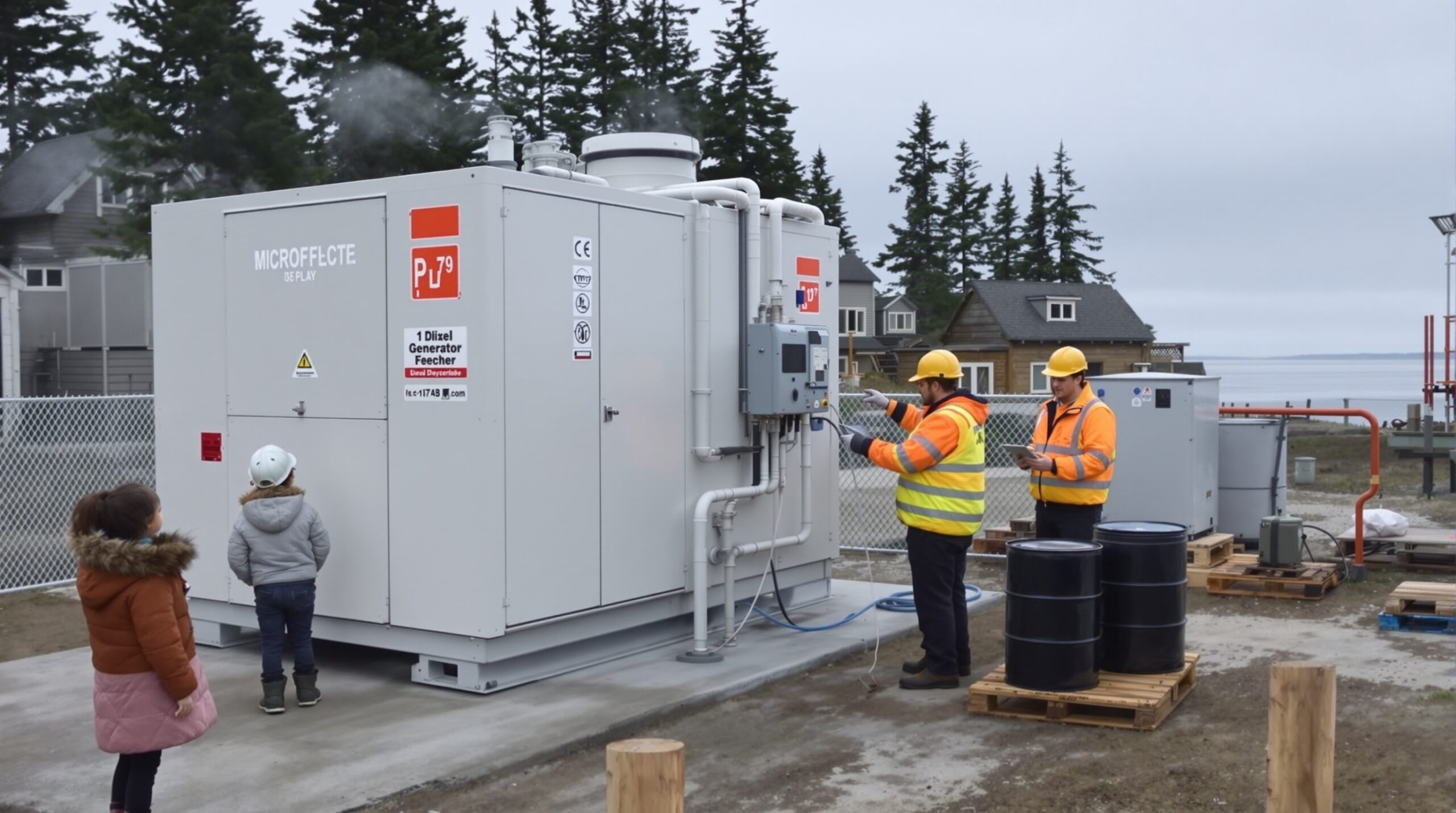
Remote villages and mine sites still burn costly diesel for electricity and heat. Long supply lines, harsh weather, and volatile prices strain budgets and reliability. Startups now target these communities with compact, factory-built nuclear units. Their pitch emphasizes simplicity, safety, and dependable power where grids do not reach.
These teams borrow lessons from advanced reactors and aerospace engineering. They package reactors into transportable modules sized for trucks, rail, or cargo planes. Operators can install units within fenced microgrids and start producing power quickly. That possibility signals a major shift for off-grid energy planning.
Why remote communities need alternatives to diesel
Diesel generators dominate remote electrification because they are familiar and dispatchable. However, they require constant fuel deliveries and careful maintenance. Barge schedules, ice roads, and airlifts all add risk and cost. Climate change shortens ice-road seasons and complicates logistics further.
Electricity in isolated communities often costs several times urban rates. Mines and northern villages report electricity costs nearing one dollar per kilowatt-hour. Fuel spills and air pollution impose environmental and health burdens. Therefore, many communities seek stable, cleaner baseload options.
Renewables help but face variability and storage limits in extreme climates. Wind turbines may ice up and need de-icing systems. Solar panels deliver less winter output at high latitudes. Consequently, microgrids still lean on diesel for reliability.
What microreactors promise
Microreactors are very small nuclear plants, generally below 10 megawatts electric. Designers emphasize factory fabrication, modularity, and minimal onsite construction. Many propose sealed cores that run several years between refueling. Operators could then remove the module and send it back to the vendor.
Several concepts use high-assay low-enriched uranium fuel, also called HALEU. Many also use TRISO particles or heat pipes for high temperature tolerance. Passive safety features remove heat without pumps or operator actions. Those features aim to simplify operation and shrink emergency planning zones.
Microreactors can produce both electricity and usable heat. District heating, desalination, and industrial steam become feasible in remote settings. Some designs also support hydrogen production and ore processing. These co-products can improve project economics and reduce diesel use further.
Developers propose short installation times after site preparation. Factory-built modules reduce the need for specialized construction crews. Startups market the systems as “plug-and-play” for microgrids. Nevertheless, licensing, site works, and grid integration still require careful planning.
Leading startups and near-term demonstrations
Westinghouse eVinci
Westinghouse is developing the eVinci microreactor with a heat-pipe core. The design targets up to around five megawatts of electricity. It also offers significant process heat for district heating or industry. The company promotes rapid deployment and minimal onsite staffing.
Westinghouse is pursuing Canadian regulatory engagement through the vendor review process. Canadian mining and northern communities represent early customers. The company also explores demonstration opportunities with public and private partners. These steps could validate performance and licensing approaches.
Ultra Safe Nuclear Corporation MMR
Ultra Safe Nuclear Corporation proposes a Micro Modular Reactor using TRISO fuel. The design provides about 15 megawatts of thermal output. Paired with a power block, it can deliver electricity and heat. The company emphasizes inherent safety and a sealed fuel cartridge.
Global First Power plans a demonstration at the Chalk River site in Canada. Canadian Nuclear Safety Commission licensing activities are underway for that project. The demonstration aims to serve an industrial-like load and district energy. If successful, similar units could support mines and communities.
Oklo
Oklo is developing a compact fast reactor for remote and industrial customers. The company promotes a small footprint and long-core life. It has pursued U.S. licensing and site agreements for initial deployments. Oklo also emphasizes energy-as-a-service contracts to lower customer risk.
The company went public to raise deployment capital and expand partnerships. Oklo targets facilities requiring steady power and thermal energy. The approach prioritizes fuel efficiency and strong passive safety features. Successful licensing would open additional demonstration opportunities.
Radiant
Radiant Energy Systems is designing a portable, one-megawatt microreactor. The concept uses TRISO fuel and gas cooling for simplicity. It aims to fit within standard shipping sizes for rapid transport. The company highlights quick installation and minimal civil works.
Radiant has tested subsystems and advanced its licensing path. The team targets military bases, disaster relief, and remote communities. Pilot deployments would validate transportability and microgrid integration. These use cases also feature clear demand for reliable power.
BWXT and Project Pele
BWX Technologies is building a prototype mobile microreactor for the U.S. Defense Department. The effort, known as Project Pele, targets a transportable unit. The goal is reliable, resilient power for forward operating locations. The prototype will undergo testing at a national laboratory site.
Defense applications demand ruggedness and rapid setup under challenging conditions. Lessons from Project Pele will inform civilian deployments. The program also accelerates HALEU fuel supply and component qualification. These outcomes support the broader microreactor ecosystem.
Business models and delivery approaches
Many startups offer energy-as-a-service contracts rather than equipment sales. Customers pay for delivered electricity and heat over time. This structure reduces upfront costs for communities and mines. Vendors then manage fuel, operations, and decommissioning responsibilities.
Developers plan factory manufacturing to achieve repeatability and cost control. Standardized modules simplify training, maintenance, and logistics. Shorter construction schedules reduce financing costs and risks. As volumes grow, learning effects should lower unit costs.
Anchor customers help early projects reach bankability. Mines, military installations, and research campuses provide predictable loads. Regulators also gain valuable operating data from these sites. That information can streamline future commercial approvals.
Regulatory pathways and policy signals
Licensing remains a critical path item for microreactors. In the United States, the Nuclear Regulatory Commission oversees approvals. The agency updates guidance for advanced reactors and microreactor sizing. A new rulemaking effort also examines advanced reactor requirements.
Canada uses a staged process under the Canadian Nuclear Safety Commission. Developers often pursue a vendor design review before site licensing. That process identifies technical gaps before formal applications. It can shorten later stages and reduce project uncertainty.
Emergency planning rules are evolving for small, passively safe designs. Regulators now consider smaller emergency planning zones case-by-case. This shift reflects different hazard profiles from legacy reactors. Communities should evaluate proposed boundaries and protective strategies carefully.
Fuel supply constraints and solutions
Many microreactors require HALEU fuel enriched up to 19.75 percent. Today, global HALEU supply is constrained and geographically concentrated. Domestic production in the United States remains limited but growing. Federal programs aim to expand enrichment, deconversion, and fuel fabrication.
Centrus Energy began producing demonstration quantities of HALEU in Ohio. Additional commercial-scale capacity will require contracts and funding. Defense and demonstration projects can anchor early demand. Over time, competition should reduce costs and delivery risk.
Vendors often propose take-back of used fuel cartridges. Centralized handling simplifies waste management for small communities. National policies will ultimately govern long-term disposition. Clear agreements will be essential before deployment commitments.
Community engagement and Indigenous partnerships
Projects must earn a social license through transparent engagement. Communities need understandable information about benefits and risks. Developers should share monitoring plans, emergency procedures, and oversight structures. Independent experts can help build trust and accountability.
Indigenous rights require early, meaningful consultation and consent. Benefit agreements can include jobs, training, and revenue sharing. Cultural and environmental protection must guide siting decisions. Long-term partnerships should outlast project lifecycles.
Local workforce development strengthens project acceptance and resilience. Training programs can focus on microgrid operations and maintenance. Remote monitoring can complement onsite roles and reduce staffing demands. However, communities still need clear escalation and support pathways.
Use cases beyond electricity
Many remote communities need heat more than electricity in winter. Microreactors can supply district heating with steady thermal output. Mines can use steam for processing and enhanced recovery. Desalination and water treatment also benefit from reliable heat.
Hybrid systems pair microreactors with renewables and storage. The reactor provides baseload, while renewables shave peaks and save fuel. Batteries manage fast transients and black start capabilities. This approach reduces curtailment and improves resilience.
Hydrogen production offers another pathway to decarbonize fuel use. Heat and electricity from microreactors can drive electrolyzers. Local hydrogen could displace diesel in some applications. That substitution would further cut emissions and logistics costs.
Risks, unknowns, and next milestones
First-of-a-kind projects face cost and schedule uncertainty. Regulatory reviews can extend timelines beyond optimistic plans. Supply chains must mature for fuel, components, and testing. Insurance and financing communities also need operational data.
Security and safeguards remain central to public acceptance. Designers integrate robust physical and cybersecurity features. Smaller footprints and lower inventories reduce some risks. Still, operators must maintain strong security cultures and readiness.
Several milestones could shape investor confidence within five years. Defense prototypes will test mobile deployment and operations. Canadian demonstrations may validate community-scale heating and power. Early U.S. licenses would open additional commercial pathways.
Outlook for remote communities
Microreactor startups now align technology, policy, and business models for off-grid markets. Their success depends on licensing, fuel supply, and community partnerships. Demonstrations will clarify costs, reliability, and real deployment timelines. Those results will guide procurement decisions and financing structures.
Diesel will not disappear immediately, even with successful pilots. Hybrid microgrids can reduce fuel burn while maintaining reliability. Over time, standardization and scale could enable broader adoption. Communities will choose systems that best match their needs.
Microreactors promise dependable power and heat with small footprints. They could stabilize energy costs where logistics drive prices. Equally important, they offer cleaner air and fewer spills. With careful governance, the technology can complement renewables and storage.
Remote communities deserve resilient, affordable, and safe energy options. Microreactor startups aim to deliver exactly that value proposition. Continued transparency will support informed decisions and consent. The next wave of demonstrations will show what is possible.
