

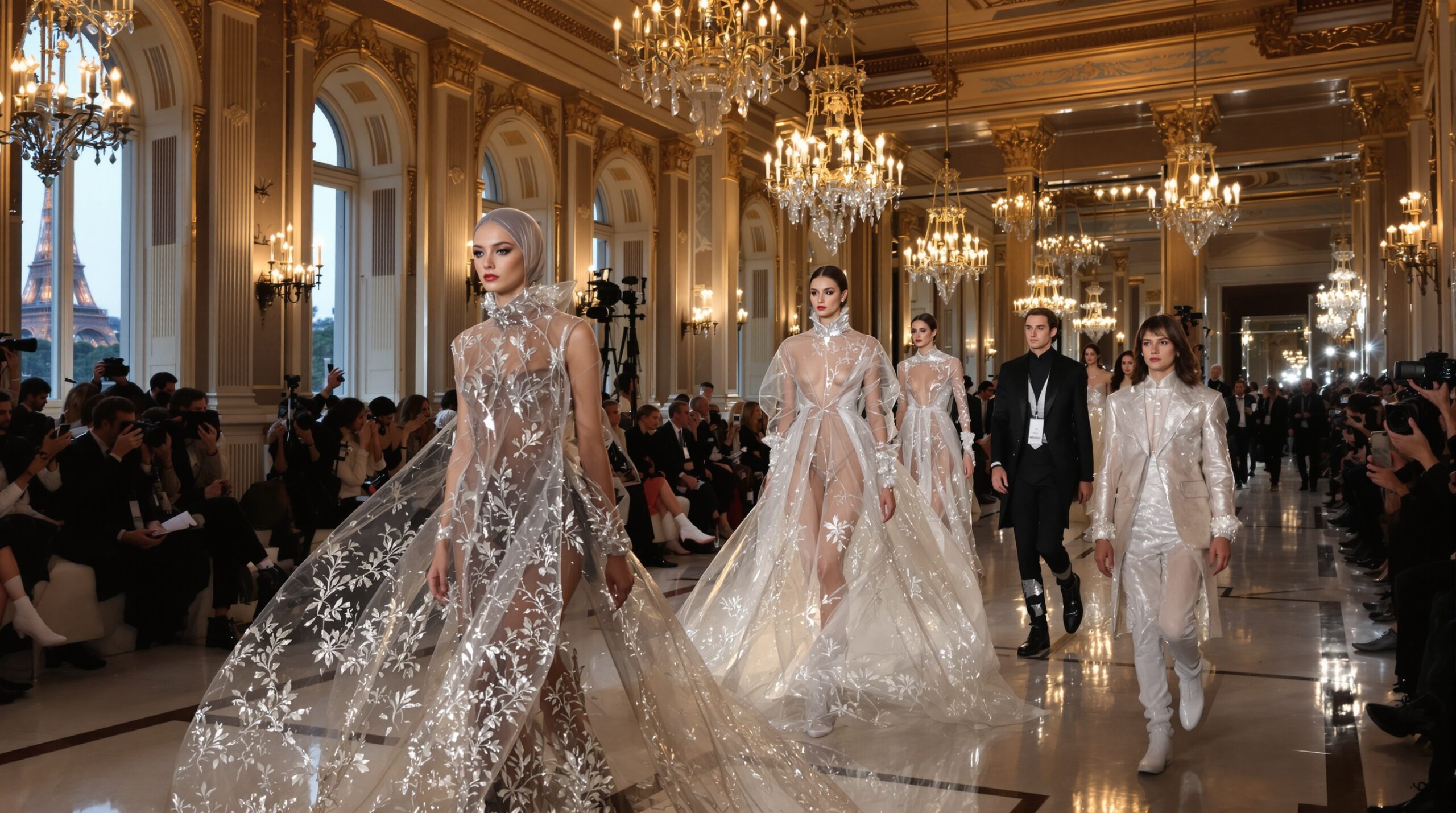
Paris Haute Couture Week placed material innovation in the limelight this season. Designers highlighted biofabricated silk and lab-grown leather across shows, presentations, and intimate salons. The week’s focus connected centuries-old craft with cutting-edge biotechnology. This convergence signaled how couture can pioneer change without sacrificing artistry.
Industry attention followed the materials from atelier to audience. Editors discussed hand-feel and finish with the same intensity as silhouettes. Buyers asked technical questions about performance, sourcing, and care. The conversation moved beyond novelty toward practical adoption.
What Biofabricated Silk Means in Couture
Biofabricated silk refers to silk-like protein fibers produced through biotechnology. Companies program microbes to produce silk proteins through fermentation. Engineers then spin these proteins into yarns that mimic natural silk. The process aims to deliver similar drape, sheen, and strength without traditional sericulture.
Couture houses value silk’s versatility and luxurious hand. Biofabrication offers control over fiber properties during design. Teams can tune denier, elasticity, and luster for specific silhouettes. That level of control supports bolder shapes and more precise tailoring.
These proteins echo spider silk’s celebrated toughness. However, they avoid farming spiders, which is impractical commercially. Fermentation occurs in controlled tanks rather than fields. This industrial approach promises consistent quality and traceable inputs.
Showrooms featured swatches with distinct finishes. Some fabrics held a crisp, organza-like structure for sculptural pieces. Others offered fluid charmeuse movement ideal for bias draping. The range encouraged experimentation with both volume and flow.
How Lab-Grown Leather Is Made
Lab-grown leather emerges from biofabrication as well. Developers grow collagen, the main leather protein, through controlled cell culture. They assemble and tan these collagen matrices into leather-like sheets. The result aims to replicate premium hides without animal husbandry.
Mycelium-based materials also entered the couture conversation. Mycelium forms a foam-like network that can be finished like leather. These sheets can achieve stiffness or suppleness through finishing chemistry. Though distinct from collagen, they compete in similar applications.
Artisans explored how these materials accept stitching, skiving, and embossing. The best samples held seam integrity under tension. They also accepted luxury-grade finishes and edge paint. That compatibility is critical for couture handbags, corsetry, and structured bodices.
Why Couture Houses Care
Couture thrives on rarity and technique. Biofabricated materials offer new canvases for age-old crafts. Embroiderers can test tension, weight, and bead density without fear of tearing. Patternmakers can design for properties set at the fiber level.
Customization begins upstream with the polymer. Teams can commission fibers that complement specific couture visions. That upstream design aligns with couture’s bespoke ethos. It turns material development into part of the creative brief.
These materials also answer growing client expectations. High-net-worth clients increasingly ask about impact, provenance, and science. Couture appointments now include material origin discussions. That transparency supports trust and long-term loyalty.
What Walked and What Showed in Salons
Runway looks demonstrated proof of concept while preserving couture fantasy. Designers placed biofabricated silk in panels, insets, and flowing capes. The placements showcased movement without overexposing early supply limitations. Accessories expanded the storytelling with lab-grown leather clutches and belts.
Salons and showrooms provided deeper technical dives. Teams offered touch tests comparing hand-feel to classic silk and calfskin. Visitors examined seam samples, rivet pulls, and abrasion swatches. The format encouraged dialogue between scientists and couturiers.
Several houses presented atelier trials alongside couture looks. Muslins sat beside test panels cut from biofabricated bolts. The juxtaposition clarified where materials already excel. It also revealed where finishing continues to evolve.
Hand, Drape, and Finish on the Runway
Biofabricated silk carried luminous sheen under show lights. It caught movement cleanly during turns and walks. The fabrics avoided cling while maintaining body and bounce. That balance played well with bias cuts and pleating.
Lab-grown leather excelled in precise, sculpted applications. Corseted tops showed crisp edge stability without heavy reinforcements. Small leather goods highlighted emboss clarity and paint adhesion. The finishes matched luxury expectations under close inspection.
Environmental Claims and Evidence
Sustainability claims appeared in show notes and press materials. Biofabrication can reduce land use and avoid livestock impacts. Fermentation and mycelium growth use controlled facilities instead of pastures. That shift can lower deforestation pressure associated with leather production.
Water and chemical use also differ across processes. Some systems rely on gentler tanning or fewer hazardous chemicals. Energy demand depends on facility efficiency and power sources. Life cycle assessments must reflect actual industrial conditions and scale.
Several producers pursue third-party verification frameworks. ISO 14040 and 14044 guide life cycle assessment methodologies. Independent reviews improve credibility and comparability. Couture clients increasingly request such documentation during private viewings.
End-of-life remains an active discussion. Protein-based fabrics may biodegrade under defined conditions. Coatings and blends complicate that outcome. Clear care labels and material disclosures help manage expectations.
Supply, Scale, and Price Reality
Couture’s small volumes make it a strategic testbed. Houses can commission limited yardage for statement pieces. That approach avoids immediate scale pressures on suppliers. It also fosters joint development with realistic timelines.
Producers still face scale-up challenges. Fermentation capacity, downstream spinning, and finishing require investment. Mycelium growth must balance speed, density, and consistency. Each step influences cost and quality.
Price points remain premium at pilot scale. Couture accommodates higher material costs within artistic narratives. Houses then capture learning for eventual diffusion lines. That pathway mirrors historical adoption of innovations.
Craft Techniques and Atelier Integration
Ateliers adapted techniques to protect delicate finishes. Embroiderers adjusted thread tensions and backing choices. Tailors tested new interlinings to preserve drape. Patternmakers mapped stress points to avoid distortion.
Heat, steam, and pressure required careful calibration. Pressing temperatures varied by coating and fiber composition. Teams recorded settings for repeatability across garments. Documented protocols now join house archives.
Leather workshops refined edge treatments and adhesives. Skiving parameters ensured clean folds without fiber tear. Stitch density balanced strength and flexibility. Results met couture standards for longevity.
Regulatory, Testing, and Care Guidance
Compliance teams evaluated chemical safety and restricted substances. European REACH requirements guided material selection. California regulations influenced finish choices for global clients. Labels reflected verified claims rather than marketing language.
Labs performed abrasion, pilling, and colorfastness tests. Wet and dry rub tests assessed dye stability. Seam slippage tests informed construction decisions. These standards ensured performance during wear and storage.
Care instructions emphasized longevity and repair. Gentle cleaning preserved coatings and luster. Professional services handled deep cleaning and restoration. Houses committed to lifetime support for couture clients.
Consumer Reception and Market Outlook
Clients responded to both innovation and storytelling. They appreciated tactile experiences alongside technical explanations. The narrative linked science with heritage craft. That combination suited couture’s intimate sales model.
Resale and authentication also entered the discussion. Houses explored digital passports for material traceability. These records document origin, finishing, and care history. Collectors value provenance alongside design importance.
Broader adoption will depend on reliability and aesthetics. Couture can de-risk early trials without sacrificing quality. Successful pieces will influence ready-to-wear experimentation. That downstream effect can accelerate scale and cost improvements.
What Comes Next for Couture Innovation
Expect deeper integration of biofabricated textiles in upcoming seasons. Houses will lock preferred suppliers and finishes. Joint development agreements will formalize requirements and volumes. Those partnerships will stabilize quality and delivery timelines.
Material palettes will widen beyond neutrals. Dyers will perfect saturated hues and subtle tonal shifts. Finishers will refine matte, satin, and high-gloss options. The aesthetic range will approach legacy materials’ breadth.
Training will scale across ateliers. New modules will cover handling, finishing, and repair techniques. Knowledge will pass from lead artisans to apprentices. That continuity preserves craft while adopting innovation.
Paris Haute Couture Week showed couture’s leadership role clearly. The runways and salons connected vision with verifiable progress. Biofabricated silk and lab-grown leather earned serious consideration. The industry now moves from prototypes toward enduring, collectible garments.
