

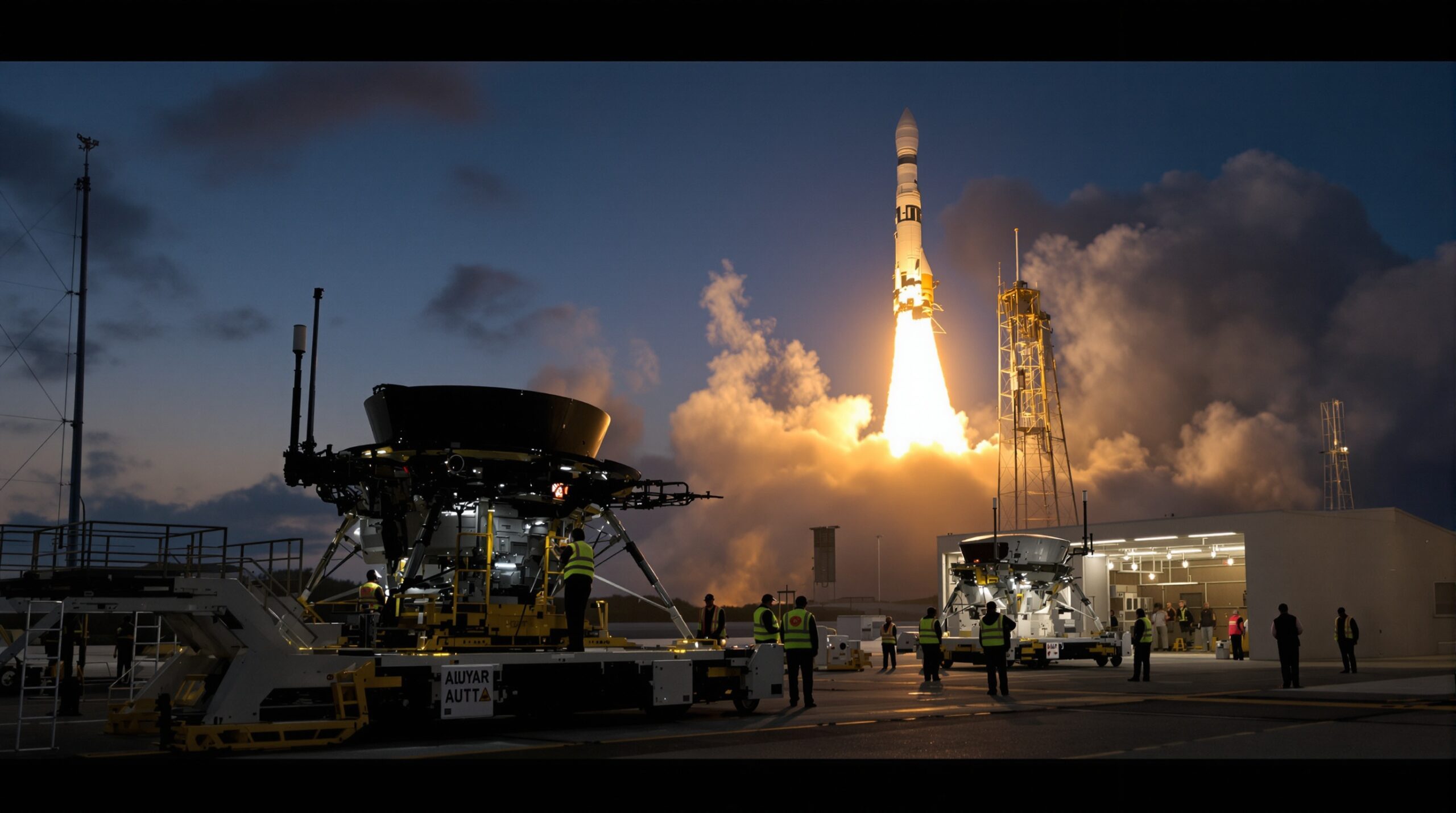
Private lunar landers are returning to launch manifests with growing confidence. Companies now pursue back-to-back missions that emphasize cadence. This strategy follows painful setbacks that exposed technical gaps and program risks. Executives argue that only frequent flights will harden systems. Investors also demand schedules that convert prototypes into repeatable services. The stage now supports a more disciplined, competitive commercial race.
A turbulent start sharpened the industry
Early attempts delivered harsh but valuable lessons. Astrobotic’s Peregrine suffered a propellant leak shortly after deployment. The team guided the vehicle to a safe reentry over the Pacific. ispace’s Hakuto‑R Mission 1 misjudged altitude and crashed near its landing site. Masten Space Systems entered bankruptcy, underscoring financial fragility. These events forced teams to redesign hardware and strengthen risk controls.
Regulators and insurers also tightened expectations. Mission assurance reviews grew deeper and more intrusive. Providers built stronger fault trees and environmental margins. The community began sharing failure insights across company boundaries. That transparency accelerated design maturity without repeating identical mistakes. Those lessons now inform the next wave of lunar attempts.
Intuitive Machines sets a new benchmark
Intuitive Machines delivered Odysseus to the lunar surface in February 2024. The lander touched down near Malapert A in the south polar region. The vehicle later tipped but continued to transmit engineering data. NASA payloads returned measurements on plume effects and landing dynamics. The mission marked America’s first soft lunar landing since Apollo. That achievement restored confidence in commercial lunar delivery.
The company now targets a faster cadence. IM‑2 aims to deploy a drill and mass spectrometer to sample polar volatiles. The mission also plans a small hopping probe demonstration. IM‑3 follows with additional science and technology payloads. Each flight intends to iterate navigation, software, and descent margins. That rhythm seeks to convert a breakthrough into a dependable service.
Odysseus also shifted customer perceptions. Agencies saw commercial teams operate through anomalies with discipline. Universities gained new opportunities for low-cost instruments. Private customers considered marketing and data partnerships on future flights. The mission’s mixed success still expanded the addressable market. Competitors took careful notes while planning their next launches.
Astrobotic regroups for renewed attempts
Astrobotic completed a detailed Peregrine failure review. Engineers targeted valve behavior, propellant management, and contamination controls. The company updated test plans and acceptance standards accordingly. Peregrine’s follow-on mission now targets mid-decade opportunities with refined systems. Astrobotic communicates more conservative margins and clearer go‑no‑go criteria. The company aims to rebuild trust through careful execution.
Griffin remains a flagship lander within the portfolio. It will carry NASA’s VIPER rover to investigate polar volatiles. NASA adjusted VIPER’s schedule and budget after internal reviews. Astrobotic continues structural, thermal, and propulsion testing at full scale. Teams coordinate traverses, communications, and power strategies for extreme lighting. Success there would anchor Astrobotic’s long-term lunar logistics business.
Pittsburgh operations underscore regional manufacturing momentum. The company expanded facilities and workforce to support parallel builds. Suppliers aligned delivery timelines with new integration milestones. Program partners revised interface documents and environmental constraints. These preparations set the stage for a refreshed launch campaign. The next flight will test whether changes hold under pressure.
Firefly and Draper expand the competitive field
Firefly Aerospace advances its Blue Ghost lander line. Mission 1 will deliver NASA instruments to a mare region. The payload suite targets heat flow, regolith properties, and navigation experiments. Mission 2 aims for a far side destination with a communications relay. Firefly integrates lander avionics with its Alpha launch heritage. That approach blends production efficiencies with mission flexibility.
Draper leads a CLPS delivery to the lunar far side. The mission targets the Schrödinger Basin for unique geophysical science. An ispace platform will provide the lander hardware for delivery. JPL’s Farside Seismic Suite will listen for moonquakes and impacts. Additional instruments will examine regolith, radiation, and magnetic fields. These data will illuminate the Moon’s interior and surface processes.
These efforts widen customer choices and technical approaches. Providers pursue different engine cycles, avionics stacks, and landing architectures. Diverse designs create resilience across the industrial base. They also stimulate competitive pricing for agencies and universities. This variety reinforces the sector’s momentum after early disappointments. More nodes mean more ways to succeed.
International entrants keep pressure high
ispace plans a second mission with improved landing software. The firm also develops a larger Series‑2 lander for heavier payloads. Its European subsidiary builds partnerships for future services and technology. JAXA’s SLIM performed a precise landing demonstration in 2024. India’s Chandrayaan‑3 achieved a controlled landing with rover operations in 2023. International momentum raises expectations for commercial reliability and precision.
Global achievements reshape collaboration opportunities. Commercial providers now propose shared experiments with national agencies. Scientists coordinate networks for seismology, radiation, and dust monitoring. Customers seek multi-mission campaigns across different latitudes and terrains. The market rewards providers that integrate international standards and practices. That convergence supports interoperable logistics over the long term.
Technology breakthroughs enable tighter margins
Teams refine terrain-relative navigation using optical landmarks and lidar. They test hazard detection that steers away from boulders and slopes. Developers exercise deep‑throttling engines and precise guidance algorithms. Avionics now process sensor data with greater redundancy and fault tolerance. Thermal systems handle polar shadows and harsh noon temperatures. These advances increase landing accuracy and survival chances.
Propulsion choices continue to diversify. Some providers favor storable bipropellants for simplicity and schedule. Others explore methane oxygen systems for performance and scalability. Manufacturers improve tanks, valves, and lines to prevent leaks. They also expand acceptance tests for contamination and vibration. Each improvement directly addresses failures seen on earlier missions.
Business models evolve beyond delivery fees
NASA’s CLPS program anchors demand with fixed-price task orders. Companies supplement revenue with hosted payloads and data subscriptions. Marketing and outreach projects add sponsorship income on select flights. Some teams explore in‑situ resource prospecting for future services. Others study lunar communications packages and navigation beacons. Diversified income supports the cadence required for reliability.
Insurance markets respond with sharper risk models. Underwriters request deeper test evidence and mission assurance records. Premiums reflect design maturity and mission complexity. Providers adjust cash flows to cover potential delays. Investors favor companies that demonstrate disciplined burn and incremental milestones. Financial rigor now complements technical excellence in bid evaluations.
Launch options broaden access and schedule resilience
Commercial landers now secure multiple launch partners. SpaceX’s Falcon 9 carried Intuitive Machines to translunar injection. ULA’s Vulcan Centaur launched Astrobotic’s Peregrine on its debut flight. New Glenn will compete for lunar launches after flight certification. International launch vehicles add redundancy for global providers. Flexible rideshare strategies further protect schedules and costs.
Launch integration has become a strategic differentiator. Teams design for fairing constraints and dynamic loads. They practice rapid mate and demate operations at the pad. Providers also coordinate trajectory windows for polar lighting needs. These choices preserve mission margins during inevitable slips. Launch agility supports the desired back‑to‑back cadence.
Why cadence matters more than a single first
Frequent flights shrink learning cycles and stabilize supply chains. Data from one landing feeds directly into the next design. Engineers maintain operational muscle memory between missions. Customers gain schedule alternatives when delays occur. Suppliers keep production lines warm and responsive. Consistent cadence becomes the core competitive advantage.
Cadence also builds trust with regulators and insurers. Authorities observe repeatable processes and transparent risk management. Insurers price coverage based on proven reliability trends. Universities can plan campaigns across several flights. Agencies can distribute instruments to balance risk. The ecosystem matures when cadence replaces sporadic heroics.
Risks and policy constraints still shape outcomes
Extreme thermal swings punish batteries and avionics. Polar lighting complicates power, imaging, and thermal design. Dust can blind sensors and jam mechanisms. The long lunar night threatens hardware without robust heaters. Terrain hazards increase the risk of lander tipping. Teams must design for graceful degradation and recovery.
Policy and licensing also affect schedules. Export controls guide component choices and partnerships. The Outer Space Treaty shapes liability and resource rights discussions. Spectrum coordination protects communications and science bands. Planetary protection norms influence polar volatile investigations. Environmental testing standards continue to tighten with new data. Careful compliance remains essential alongside engineering excellence.
Outlook: a race measured in reliability
Commercial lunar flight now feels tangible rather than theoretical. Companies emphasize checkouts, margins, and rehearsal over glossy renderings. Expect multiple attempts within the next 12 to 24 months. Some missions will fail, and others will surprise. Survivors will prioritize reliability, cadence, and customer service. Those strengths will define leadership more than any single first.
The next phase rewards operational discipline. Providers that fly often will fix issues faster. Teams that share data will learn collectively. Customers will shift payloads toward reliable schedules. Investors will back platforms that demonstrate repeatable performance. The commercial Moon race has entered its execution era.
