

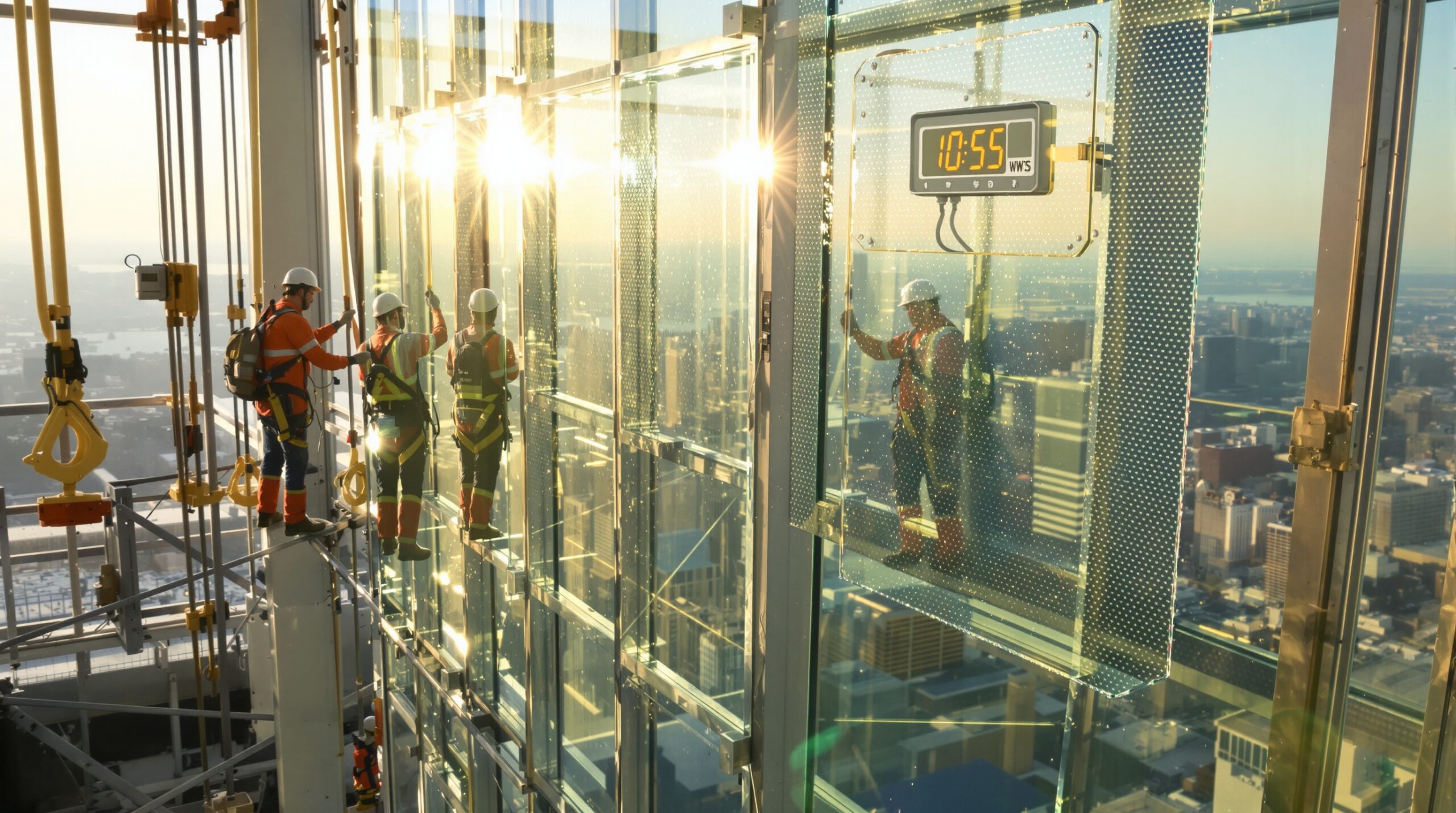
Quantum dot solar windows are leaving the lab and entering commercial pilot programs worldwide. Developers are installing power-generating glazing on occupied buildings to validate performance and durability. These pilots aim to transform facades from passive envelopes into silent energy producers. Building owners are seeking verified data on yield, comfort, and payback. Early results suggest meaningful electricity generation without sacrificing daylight or views. The transition marks a pivotal step for building-integrated photovoltaics.
What quantum dot solar windows are
Quantum dot solar windows use luminescent particles to harvest sunlight while maintaining transparency. The glass contains a thin interlayer that absorbs ultraviolet and part of infrared light. Quantum dots re-emit the captured energy at longer wavelengths within the pane. The glass then guides the light to the edges, where small solar cells convert it. This architecture is known as a transparent luminescent solar concentrator. The design keeps visible light transmission high for comfortable interiors.
Quantum dots are nanoscale semiconductors with tunable optical properties. Manufacturers select compositions and sizes to absorb unwanted spectral bands and re-emit efficiently. Cadmium-free formulations, including indium phosphide and copper indium sulfide, are gaining traction. Some research lines also explore perovskite quantum dots for higher efficiency. Encapsulation strategies protect the dots from moisture, oxygen, and heat. That protection is essential for long service lifetimes in demanding facade environments.
Why high-rise buildings are prime candidates
High-rise buildings feature vast glass areas that seldom generate energy today. Their vertical surfaces present an enormous opportunity for on-site renewable electricity. Even modest wattage per square meter produces significant output when multiplied across entire facades. Quantum dot windows also filter heat-contributing wavelengths, improving thermal comfort. This spectral control supports lower cooling loads in sunny climates. Urban skylines could become active energy harvesters without changing their appearance.
From lab to facade: the pilot phase
Pilots are bridging the gap between prototypes and full commercialization. Startups and glazing partners are installing systems on office towers, transit hubs, and campuses. Site selections aim to capture different climates and orientations. Project agreements define data collection, maintenance responsibilities, and performance guarantees. Monitoring plans cover energy yield, temperatures, optical quality, and weather impacts. These field results inform product refinements and certification pathways.
Performance metrics and early results
Developers report power densities from roughly 10 to 30 watts per square meter in strong sun. Annual energy yield often ranges from 8 to 25 kilowatt-hours per square meter. Output depends on transparency, orientation, cloud cover, and local shading. Visible light transmittance typically spans 40 to 70 percent in pilots. The windows can include low-e coatings and tints to balance daylight and heat gain. Comfort and aesthetics remain central alongside energy production.
Several groups compare their results against modeled expectations. Data loggers capture real-time voltage, current, and solar irradiance at facade locations. Building operators integrate microinverters or DC optimizers to manage varying panel segments. Some pilots tie output to battery storage for resilience testing. Others feed electricity directly to building loads and meters. Such diversity helps quantify performance under real urban conditions.
Integration with building envelopes and systems
Quantum dot solar windows install like conventional insulated glass units. The active interlayer sits between laminated lites for safety and durability. Edge-mounted photovoltaic strips connect to concealed wiring within mullions. Curtain wall fabricators route cables to junction boxes at floor slabs. Electricians interface the circuits with balance-of-system components. This approach preserves clean lines while delivering functional energy infrastructure.
Façade engineers coordinate optics, structure, and electrical routing early in design. They evaluate daylight, glare, and color rendering alongside power generation. Mechanical engineers assess impacts on heating and cooling loads from spectral filtering. Architects tune visual transmittance by zone to suit occupant needs. Controls integrate shading systems with sensor feedback for comfort. Holistic design strengthens the business case and user experience.
Durability, safety, and certification pathway
Facade products must endure decades of sun, moisture, and mechanical stress. Manufacturers subject interlayers to accelerated aging and ultraviolet exposure tests. Laminated units undergo thermal cycling, moisture ingress, and seal durability protocols. Safety certifications address impact resistance and laminated glass retention. Electrical safety includes insulation, grounding, and fire behavior of embedded components. Compliance enables use in regulated high-rise environments.
Standards bodies provide relevant frameworks for validation. Building glass products reference safety standards and insulated unit performance specifications. Photovoltaic elements align with applicable PV module safety and performance tests. Pilot projects often include third-party monitoring to enhance credibility. Independent results help building officials and insurers evaluate risk. Certification progress is a decisive milestone toward widespread adoption.
Economics, incentives, and payback
Project economics combine glazing value, energy generation, and thermal benefits. The windows can offset facade costs by replacing separate PV panels. They also reduce operational expenses by generating on-site electricity. Incentives for building-integrated photovoltaics improve returns in several regions. Policy frameworks often treat these systems like traditional PV for credits. Owners also value sustainability certifications and visibility for corporate goals.
Financial models consider facade area, electricity prices, and demand charges. Analysts include avoided peak cooling from spectral filtering in hot climates. Maintenance expectations closely mirror standard curtain wall practices. Electric components may require periodic checks and firmware updates. As pilots mature, cost benchmarks will become more transparent. Clear data allows lenders to underwrite projects with confidence.
Environmental considerations and materials
Material selection shapes both performance and environmental profile. Cadmium-free quantum dots align with evolving regulatory trends. Encapsulation limits potential exposure and supports recyclability planning. Manufacturers explore take-back schemes for end-of-life units. Life-cycle assessments quantify carbon savings from energy generation and reduced cooling loads. Transparent reporting builds trust with customers and regulators.
Supply chains are maturing for specialty interlayers and optical coatings. Glass partners standardize processes to ensure consistent color and clarity. Manufacturing lines target high yield and low defect rates. Quality control measures track emissions and solvent recovery. These steps help scale production while minimizing environmental impact. Sustainability commitments now influence procurement across the facade sector.
Key players and collaborations
Startups, research institutes, and established glass companies drive the field forward. Several firms focus on luminescent solar glazing for buildings. Some groups highlight quantum dot formulations with high photostability and tunable spectra. Others integrate alternative luminescent particles for similar outcomes. Partnerships with major glass manufacturers accelerate product qualification. Collaboration is vital to meet stringent construction timelines and standards.
Demonstration sites span North America, Europe, Asia, and Australia. Universities host monitored testbeds for transparent photovoltaics. Municipal buildings showcase technology for public education and climate leadership. Corporate offices adopt pilots to advance decarbonization targets. Transportation hubs evaluate facade power for lighting and signage. These varied contexts broaden the evidence base for decision-makers.
Challenges that pilots must address
Several challenges remain before mass deployment across skylines. Long-term photostability must match facade service life expectations. Electrical integration needs seamless maintenance access without disrupting tenants. Color neutrality under different sun angles requires careful spectral design. Costs must decline through manufacturing scale and supply chain learning. Clear standards for performance rating will aid fair comparisons. Transparent data from pilots will guide these improvements.
Outlook and next milestones
The commercial pilot phase signals a substantial readiness shift for quantum dot solar windows. Building stakeholders now have real installations to evaluate across seasons. Verified performance will inform specifications for new towers and retrofits. Manufacturers expect larger facade orders following successful pilots. Broader certification and procurement frameworks will accelerate adoption. Urban skylines could soon generate power quietly, one pane at a time.
What to watch in the coming year
Watch for standardized energy ratings tailored to transparent photovoltaics. Expect growing integration with smart building management systems. Look for modular electrical architectures that simplify facade maintenance. Track financing models that blend efficiency and generation benefits. Anticipate collaborations between architects and engineers on signature projects. These developments will define the pace of market expansion.
Quantum dot solar windows promise a new role for architectural glass. Pilots are turning that promise into measurable outcomes on real buildings. The technology offers energy, comfort, and design flexibility within one product. Results from early adopters will shape specifications and codes. Stakeholders now have a clearer path from concept to contract. The power-generating facade era is beginning in earnest.
