

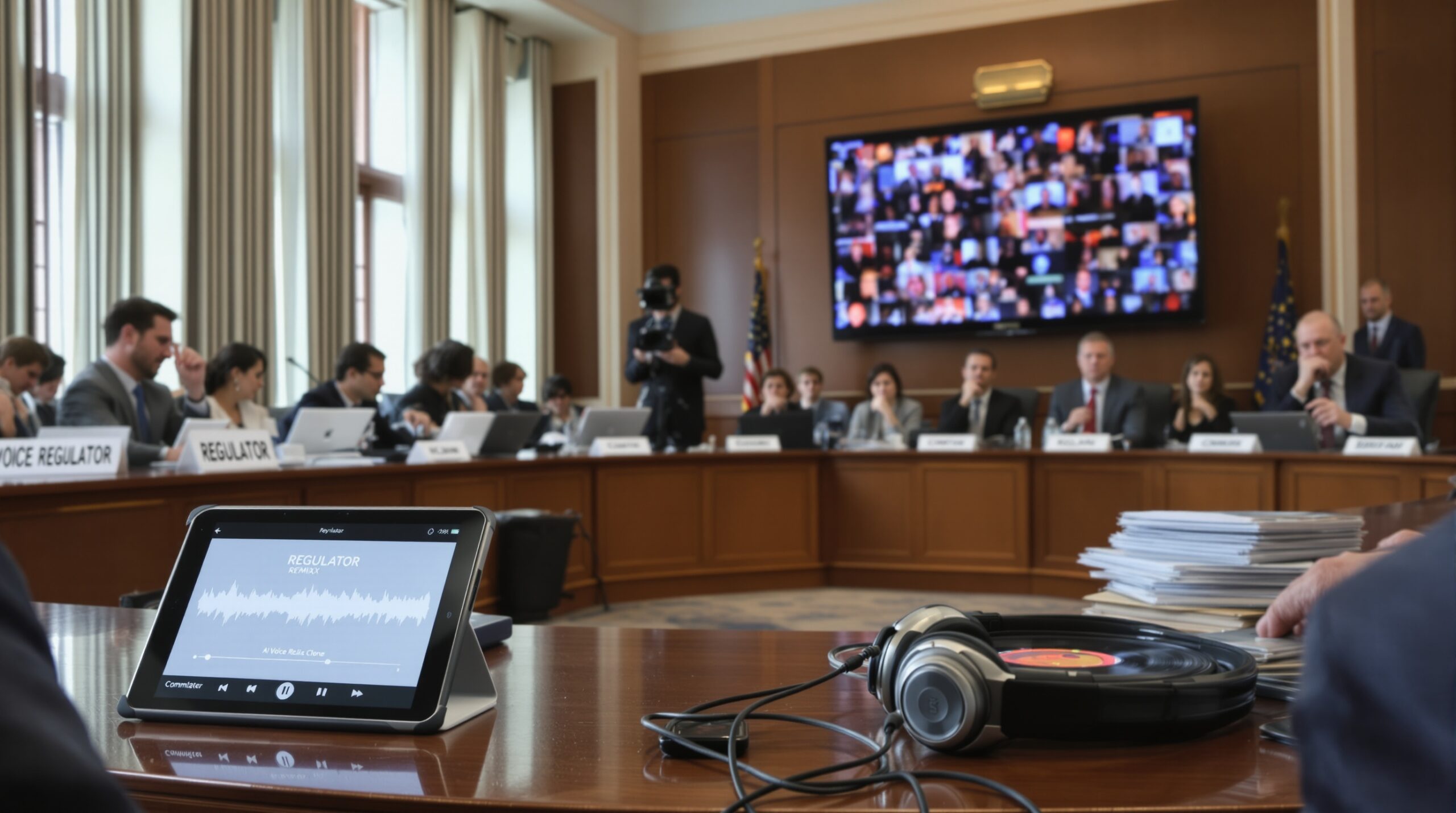
AI voice cloning has exploded across music platforms and social media. Viral remixes now mimic famous singers with uncanny precision. Fans share tracks that sound like favorite artists, yet no studio sessions ever occurred. Labels scramble to remove uploads as views and streams soar. The tension between innovation and rights grows louder. Policymakers hear the remix and are moving toward rules.
The Viral Surge of AI Voice Clones in Music
Generative tools let creators transform vocals into convincing celebrity performances. A laptop and a model can emulate a recognizable tone and phrasing. Some tracks combine unauthorized vocals with copyrighted instrumentals or melodies. Others build entirely new compositions using synthetic artist voices. The results travel fast through short-form video and audio platforms. These trends reveal both creative possibilities and mounting legal risks.
Listeners often cannot distinguish an engineered voice from a real studio take. The spectacle attracts curious audiences and opportunistic uploaders. Labels and publishers issue takedowns where copyrights clearly apply. Artists voice concerns about misuse, dilution, and reputational harm. Meanwhile, new AI musicians emerge with synthetic voices by design. The boundaries between homage, parody, and impersonation blur.
Why Regulators Are Watching
Voice cloning enables fraud, harassment, and misinformation beyond music. Scammers can mimic loved ones or executives to request urgent payments. Political actors can fabricate statements that appear authentic. These risks raise consumer protection, election integrity, and privacy concerns. As a result, agencies and lawmakers are considering targeted, enforceable guardrails.
Music deepfakes are the most visible cultural flashpoint. The same tools power robocall scams and synthetic blackmail. Regulators therefore view musical remixes as part of a broader threat landscape. The policy conversation spans copyright, publicity rights, and telecommunications law. It also touches advertising, disclosure, and data governance.
United States: Federal Actions Take Shape
The Federal Trade Commission warns companies about deceptive AI marketing and impersonation. It has pursued cases against misleading AI claims and related fraud. The agency proposed expanding its impersonation rule to cover individuals. That proposal includes voice cloning used for scams and harassment. The FTC also highlights training data transparency and consumer consent. Enforcement will likely focus on deception and unfair practices.
The Federal Communications Commission addressed AI voices in robocalls. In 2024, the FCC clarified that cloned or synthetic voices are illegal without consent. The ruling interprets the Telephone Consumer Protection Act’s prohibition on artificial voices. State attorneys general quickly cited the ruling in enforcement campaigns. This approach targets election robocalls and consumer scams using cloned voices. It also signals stricter oversight of telemarketing technologies.
The White House issued an executive order directing watermarking and provenance work. Federal agencies are developing standards for labeling synthetic content. NIST and partner efforts advance evaluation and authentication research. These initiatives do not ban voice cloning. They aim to reduce deception and improve accountability. The federal posture blends enforcement with technical guidance and industry cooperation.
States Move Fast on Voice and Likeness Rights
States increasingly anchor rights around name, image, and voice. Tennessee enacted the ELVIS Act, protecting artists against unauthorized AI voice replicas. The law updates publicity protections to reflect modern cloning risks. It addresses musical performers and commercial misuse across digital platforms. Other states are drafting similar updates to publicity statutes. Momentum suggests a growing state-level patchwork.
New York updated its publicity law to cover digital replicas. The statute extends some protections to deceased performers as well. California targeted deceptive election deepfakes and explicit synthetic imagery. Texas restricts election deepfakes that injure candidates near voting periods. Several legislatures considered broader consent and disclosure requirements. These efforts converge on clearer rights to control one’s voice.
Europe and the United Kingdom Set Transparency Expectations
The European Union’s AI Act includes deepfake transparency obligations. Providers and deployers must disclose synthetic or manipulated content in many contexts. The rule includes exceptions for journalism and safety uses. The Digital Services Act adds duties for large platforms. Platforms must address systemic risks, including deceptive synthetic media. Together, these frameworks push labeling and risk mitigation.
The United Kingdom’s Online Safety Act strengthens platform accountability. It requires responses to illegal content and abuse, including intimate deepfakes. Regulators emphasize risk assessments and user empowerment tools. The UK also encourages watermarking and provenance research. Cultural regulators engage with labels and creators on music applications. This approach complements international efforts on content authenticity.
Platforms and Labels Craft Interim Rules
Music services and social platforms update policies for AI content. YouTube introduced labels for altered content and disclosure requirements. It launched a process for removing AI tracks mimicking artists’ singing voices. That process involves music partners and rightsholders. Spotify revised rules against impersonation and manipulation of streams. TikTok requires labels for synthetic media and limits realistic portrayals of private individuals.
Labels rely on copyright for instrumentals and compositions. They also invoke trademark, unfair competition, and publicity rights. DMCA notices target tracks using protected recordings or lyrics. Artists request platform tools to flag and remove impersonations. Marketplaces face verifying consent for legitimate voice models. Industry codes of conduct could standardize consent practices and metadata.
Technical Tools Offer Partial Guardrails
Provenance standards embed creation and editing metadata within files. The C2PA approach attaches cryptographic “content credentials” to media. These credentials can record edits, tools, and authorship claims. However, attackers may strip or alter metadata during uploads. Watermarking aims to signal synthetic origins through resilient signals. Yet audio watermarking remains fragile under compression, mixing, and re-recording.
Model-side safety adds another layer of defense. Developers can block prompts requesting a living artist’s voice. They can limit voice similarity and require verified consent tokens. Output classifiers can detect prohibited impersonations with confidence thresholds. None of these measures provide complete guarantees today. Defense therefore combines policy, product, and technical controls.
Key Challenges Ahead for Policymakers
First, rules must distinguish parody from harmful impersonation. Overly broad bans could chill legitimate creativity and satire. Second, rights vary across states and countries. A patchwork complicates compliance for global platforms and developers. Third, copyright often misses pure voice impersonation without sampled recordings. That gap pushes lawmakers toward publicity rights and consent regimes.
Fourth, labeling alone will not stop malicious actors. Bad actors ignore disclosure rules and obfuscate provenance signals. Fifth, creators deserve clear routes to enforcement and redress. Scalable, fast-twitch processes matter for viral content. Policymakers therefore weigh incentives for cooperation across the ecosystem. Harmonized standards can reduce friction and forum shopping.
Practical Steps for Artists, Platforms, and Developers
Artists should audit contracts for AI and voice provisions. They can negotiate consent requirements and licensing terms for models. Management teams should monitor platforms for impersonations. They should use available takedown tools and rights portals. Artists can publish official stems with clear licenses where desired. Transparent releases help fans distinguish legitimate collaborations from impersonations.
Platforms should require disclosure for synthetic vocals and voices. They should build pathways for rights holders to verify identity and consent. Rapid response teams can freeze distribution during disputes. Clear repeat-offender policies reduce whack-a-mole dynamics. Platforms should invest in provenance signals and behavioral detection. Regular transparency reports can document enforcement outcomes and gaps.
Developers should implement consent-centric voice pipelines. They should log training data sources and honor opt-outs. Safety filters should block prompts referencing specific living artists. Output thresholds should cap similarity for risky matches. Developers should test watermarking and provenance features despite current limitations. Security reviews should evaluate spoofing risks against voice biometrics.
Outlook: Toward Clearer Rules and Better Signals
Regulators are moving from warnings to enforceable standards. Music deepfakes hasten that shift by highlighting real-world harms. Expect more consent requirements, disclosure rules, and impersonation enforcement. Technical provenance and labeling will mature alongside policy. With coordination, the industry can protect voices while enabling responsible creativity.
