

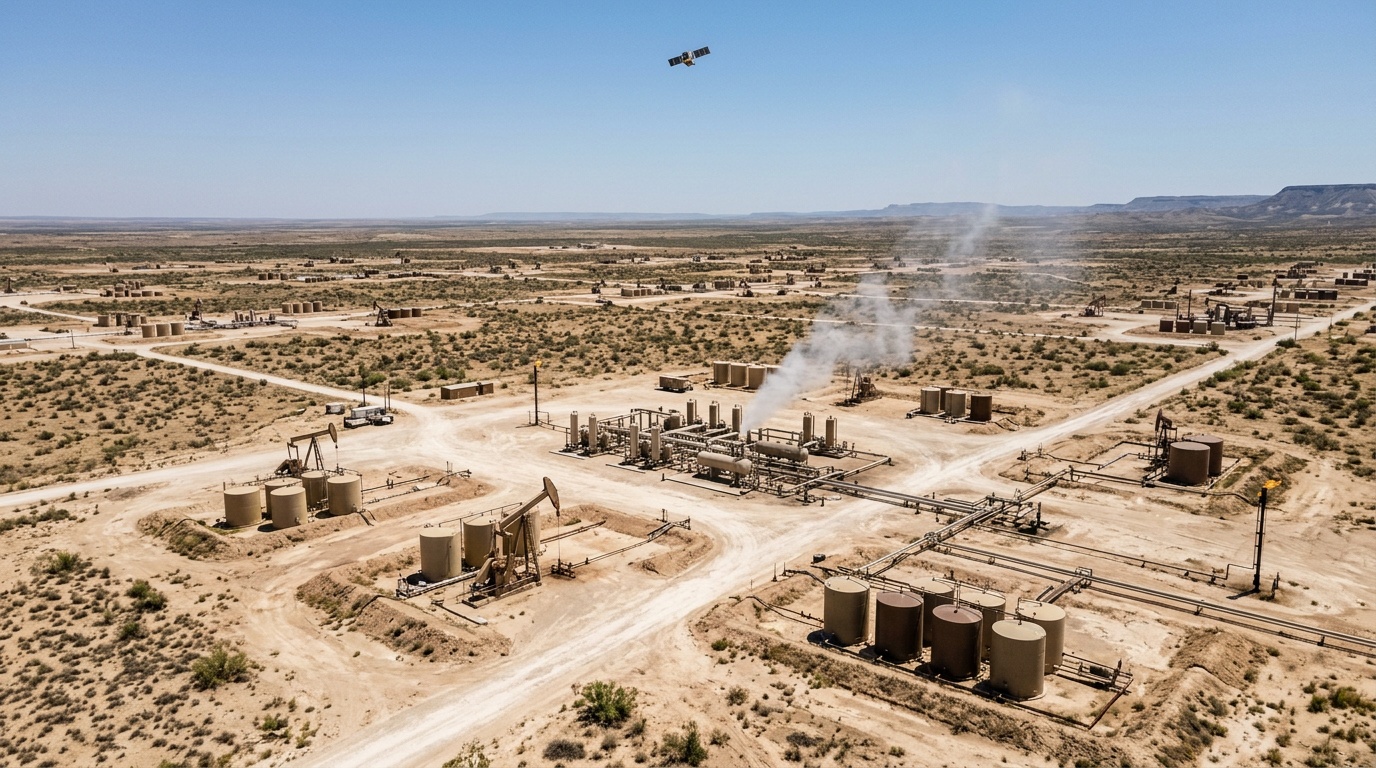
A satellite survey identified 166 major methane plumes connected to oil and gas sites across New Mexico. The detections revealed concentrated releases that conventional emissions inventories can miss or underestimate. They also provided regulators and operators with specific locations for inspections, repairs, and follow-up measurements. However, the total represents observed plumes, not every methane source operating within the state.
Most detections occurred within southeastern New Mexico, where oil and gas production dominates the landscape. Eddy and Lea counties contain thousands of wells, pipelines, storage tanks, compressors, and processing facilities. These counties form part of the Permian Basin, one of the world’s most productive petroleum regions. That production creates many opportunities for methane to escape through equipment failures or operating practices.
What the satellite observations revealed
Carbon Mapper’s Tanager-1 satellite supplied observations associated with the widely reported New Mexico count. Its imaging spectrometer can locate large methane releases across broad industrial areas. Researchers then connect visible plumes with nearby infrastructure using geographic data and facility records. This process helps identify likely sources, although ground inspections must confirm exact equipment failures.
A plume does not always represent a separate facility or a continuously leaking component. The satellite might observe the same location during multiple passes if emissions continue. Conversely, a short release could disappear before another observation occurs. Researchers therefore examine timing, wind conditions, facility locations, and repeated detections when interpreting results.
The word “leak” also simplifies several possible causes behind a methane plume. Damaged valves, open tank hatches, faulty compressors, and aging pipelines can release gas unintentionally. Operators may also vent gas during maintenance, liquid unloading, or other activities. Poorly operating flares can release unburned methane instead of converting it into carbon dioxide.
Large sources receive priority
Satellite instruments generally detect large emissions more easily than small leaks near individual components. Detection thresholds change with wind, clouds, ground brightness, viewing angle, and instrument sensitivity. Consequently, the 166 plumes represent a portion of New Mexico’s total oilfield methane emissions. Many smaller sources probably remained below the satellite’s detection capability during each pass.
How remote sensing finds invisible gas
Methane has no visible color, so ordinary cameras cannot photograph it directly. Imaging spectrometers measure sunlight reflected from Earth across many narrow wavelengths. Methane absorbs light at distinctive wavelengths, leaving a measurable pattern within the collected spectrum. Computer algorithms use that pattern to map elevated methane concentrations above the background atmosphere.
Scientists combine the mapped concentration with estimated wind speed to calculate an approximate emission rate. Stronger winds spread a plume faster, while lighter winds allow methane to remain concentrated. Accurate wind information therefore plays an important role in estimating each source’s output. Researchers report uncertainty ranges because weather data and plume shapes can change quickly.
Remote sensing offers important advantages over inspections performed only from roads or facility boundaries. A satellite can repeatedly survey remote locations without entering private property or disrupting operations. It can also reveal emissions between scheduled inspections, especially from isolated infrastructure. Still, aircraft, drones, handheld cameras, and ground sensors provide more detailed confirmation.
Why methane releases matter
Methane forms the primary component of natural gas and traps substantial heat after entering the atmosphere. Over 20 years, methane warms the planet far more strongly than an equal carbon dioxide mass. It remains atmospheric for less time than carbon dioxide, making prompt reductions especially valuable. Repairing large sources can therefore produce relatively fast climate benefits.
Escaping natural gas can also carry volatile organic compounds and hazardous air pollutants. These compounds contribute to ground-level ozone formation when they react with nitrogen oxides and sunlight. Ozone can worsen asthma, damage lungs, reduce visibility, and harm vegetation. Communities near intensive development may face additional exposure from engines, flares, trucks, and processing equipment.
New Mexico’s methane controls
New Mexico has adopted separate rules addressing wasted gas and oilfield air pollution. The state’s natural gas waste requirements restrict routine venting and flaring during production. They also require operators to improve gas capture and report significant volumes. The rules establish a statewide goal of capturing 98 percent of produced gas by the end of 2026.
The New Mexico Environment Department also regulates ozone-forming pollution from oil and gas operations. Covered facilities must inspect equipment, repair detected leaks, maintain records, and meet specific equipment standards. Inspection schedules vary according to facility type, emissions, and applicable requirements. Satellite alerts can help officials decide where additional field investigations may deliver the greatest benefit.
Federal methane standards add another layer of requirements for many oil and gas sources. These measures address flaring, leak detection, pneumatic equipment, compressors, and other emission points. State implementation and federal oversight depend on each facility’s age, equipment, and regulatory classification. Satellite evidence can support enforcement, but agencies usually need documentation connecting emissions to regulated equipment.
Operators can use the same information
Public plume data can alert companies before a release continues for weeks or months. Operators can dispatch technicians with optical gas cameras or other instruments to find the responsible component. Many repairs involve replacing seals, closing hatches, adjusting flares, or fixing control systems. Captured methane may also retain commercial value because companies can sell recovered gas.
Important limits behind the number
The 166 detections should not serve as a complete ranking of companies or facilities. Clouds can block observations, while unfavorable surfaces can reduce an instrument’s ability to recognize methane. Satellites also pass over locations at specific times, leaving gaps between measurements. A facility with no detected plume might still release methane outside those observation periods.
Emission rates may also change because production equipment operates intermittently. A tank can release gas when liquids enter, then stop after pressure declines. Maintenance activities can create temporary emissions that do not reflect normal operations. Repeated observations provide stronger evidence about persistent problems and their overall climate impact.
Turning detection into reductions
The satellite findings give New Mexico a practical starting point for targeted action. Regulators can compare plume locations with permits, inspection histories, production records, and operator reports. Companies can investigate facilities quickly and document completed repairs. Researchers can revisit detected sites to determine whether emissions stopped or returned.
Effective follow-up requires cooperation among satellite teams, state agencies, federal officials, communities, and operators. Data systems must deliver alerts quickly enough for inspectors to observe active releases. Transparent reporting can show whether repairs produced lasting reductions. Public access also allows residents to understand pollution patterns near homes, schools, and workplaces.
The 166 plumes demonstrate both the scale of New Mexico’s challenge and the value of improved monitoring. Satellites cannot replace inspectors, detailed inventories, or continuous ground measurements. However, they can expose large releases that might otherwise remain unnoticed. Combined with prompt repairs and strong enforcement, that visibility can reduce waste, pollution, and climate damage.

