

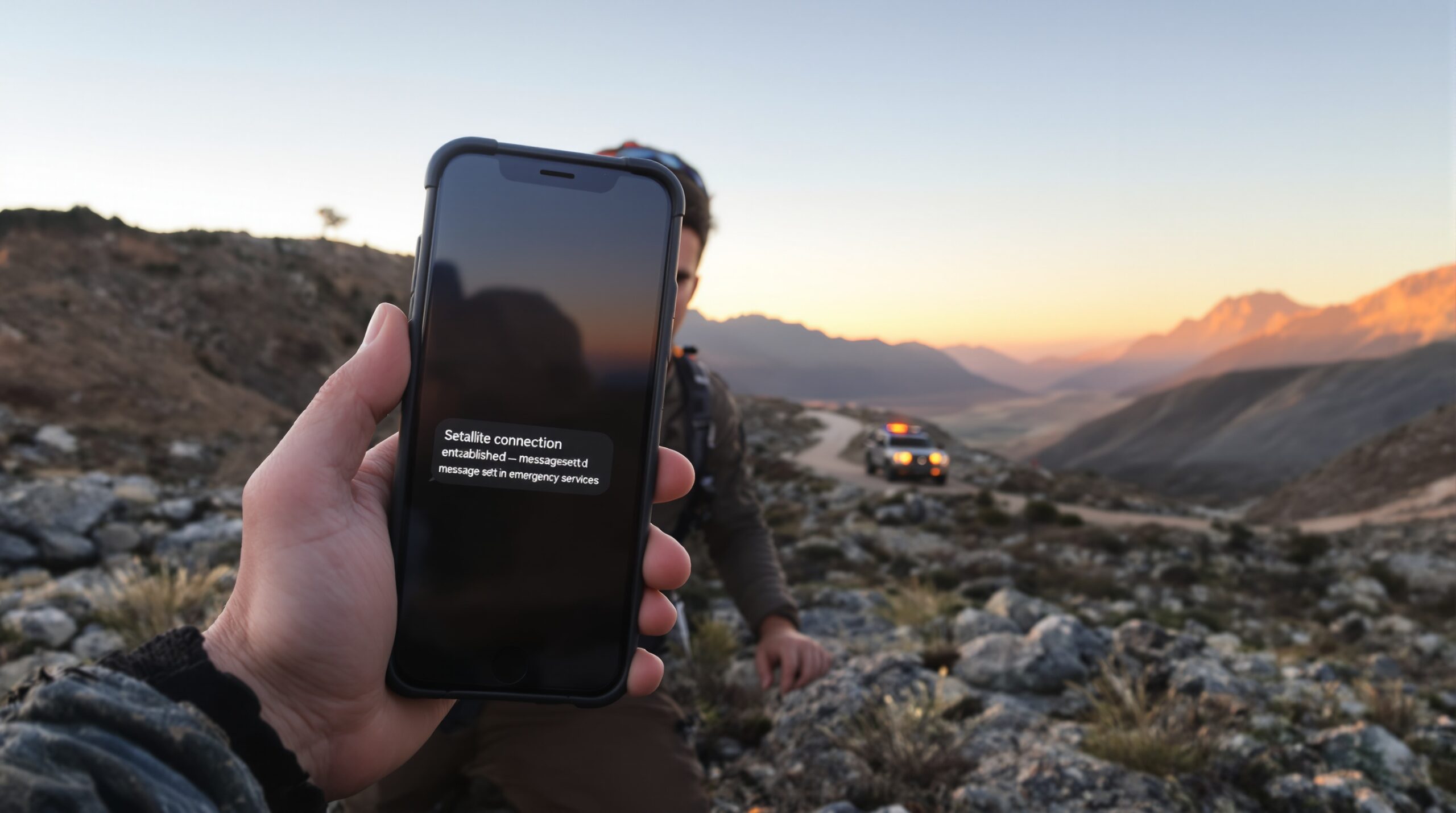
Satellite-to-phone texting is moving from promise to reality on several major networks. Carriers and satellite partners are activating limited services and pilots. These projects focus on basic messaging and emergency help first. As coverage grows, more people will gain a vital lifeline beyond terrestrial networks.
What Satellite-to-Phone Texting Actually Does
The service lets standard phones exchange texts with satellites overhead. Messages travel through space to ground gateways and carrier networks. You can reach emergency services or contacts when towers are out of range. That capability adds resilience during outages and wilderness trips.
Unlike satellite phones, compatible smartphones do not require special antennas. Networks use low-band spectrum and large satellite antennas to link devices. Connections tolerate weak signals and movement, but prefer clear sky views. Therefore, users should expect outdoor use and occasional delays.
Who Is Rolling Out Service Today
Several high-profile partnerships have progressed from announcements to trials. T-Mobile and SpaceX began direct-to-cell texting tests using Starlink satellites. AT&T and AST SpaceMobile advanced testing with larger satellites and carrier spectrum. Meanwhile, Vodafone continues pilots across multiple regions with AST SpaceMobile.
Other operators are also moving ahead with early capabilities. Lynk Global works with carriers to provide emergency SMS in select markets. Canadian carriers announced plans with Lynk and SpaceX for rural coverage. Additional partnerships span Latin America, Africa, and island nations.
Apple’s Emergency SOS via satellite remains widely available on supported iPhones. That service uses Globalstar satellites for emergency messaging workflows. It routes messages to trained relay centers when needed. Consequently, many iPhone owners already have a satellite lifeline today.
Why Emergency Connectivity Comes First
Carriers are prioritizing emergency messages for a simple reason. Lifesaving communications require little bandwidth yet deliver huge value. A single text can summon help when minutes matter. Therefore, emergency support provides an impactful early milestone for these systems.
Disaster recovery adds another compelling case. Hurricanes, wildfires, and earthquakes can disable terrestrial networks quickly. Satellite links can restore basic messaging during critical response windows. As a result, communities gain redundancy when infrastructure suffers damage.
How the Technology Works Today
Most early deployments use low Earth orbit satellites flying in large constellations. Satellites act like very high cell towers in space. They reuse terrestrial spectrum with special coordination and timing. Ground stations then hand traffic into carrier cores.
Early services emphasize standard protocols on existing phones. Some use LTE waveforms for texting and basic signaling. Others use 2G or NB-IoT modes for wide reach. Texting usually comes first, with voice and broadband planned later.
Standards and Regulatory Foundations
3GPP standards underpin these capabilities across ecosystems. Release 17 introduced Non-Terrestrial Networks for 5G and IoT. Release 18 improves performance, mobility, and capacity for NTN. Standards help phones interoperate with satellites more reliably.
Regulators are also clearing paths for deployment. The FCC adopted Supplemental Coverage from Space rules in 2024. Those rules enable carrier and satellite partnerships using terrestrial spectrum. Similar frameworks are emerging in other jurisdictions worldwide.
Device Support and Setup Expectations
Direct-to-cell services target unmodified 4G and 5G phones. Compatible bands and power levels determine performance and reach. Some models add software flows for satellite messaging prompts. Apple devices implement a guided workflow for emergency use.
Android has added platform support for satellite messaging integration. Manufacturers and carriers can expose native emergency flows and prompts. Users should keep software updated for compatibility and stability. Clear guidance improves success during stressful situations.
Coverage, Performance, and Limitations
Coverage is expanding but remains uneven during early rollouts. Constellations need more satellites for continuous service. Users may wait for passes when satellites are scarce. Therefore, messages can take minutes during sparse coverage periods.
Environment strongly influences performance in practice. A clear view of the sky helps connections succeed. Trees, canyons, and buildings can block signals or delay messages. Indoors usage generally fails without a view to space.
Texting throughput remains modest by design today. Latency can feel longer than terrestrial networks, especially under load. Retry behavior handles Doppler and intermittent visibility automatically. Patience and positioning often improve results significantly.
Coverage maps will evolve quickly as launches continue. Carriers plan phased activations by region and service tier. Consumers should review live maps before travel off-grid. Ultimately, more satellites will shorten gaps and improve reliability.
Costs, Plans, and Access Policies
Carriers are testing different pricing approaches for satellite texting. Many emphasize free emergency messages where supported. Some offer beta access for trial participants and first responders. Broader consumer plans may follow as capacity increases.
Safety, Privacy, and Security Considerations
Emergency solutions often share location and device details with responders. Those disclosures help teams coordinate timely assistance. Standard SMS lacks end-to-end encryption by default. RCS encryption depends on app support and available data paths.
Satellite operators and carriers process telemetry to deliver messages. Their privacy policies govern retention and operational use. Users should review carrier disclosures for satellite features before enabling them. Transparency supports trust during sensitive emergencies.
Implications for the Connectivity Market
Direct-to-cell service challenges long-standing coverage assumptions. Rural communities gain new options without expensive tower builds. Travelers can plan trips with more confidence and resilience. Meanwhile, carriers can differentiate plans using satellite coverage extensions.
The ecosystem is also diversifying rapidly. Multiple satellite operators pursue partnerships with major carriers. Device makers integrate satellite-aware features and antennas more deeply. Standards progress reduces fragmentation as deployments mature.
Practical Tips for Off-Grid Users
Prepare before leaving coverage for long periods. Update the phone’s software and carrier settings first. Download offline maps and emergency contact details. Share your itinerary with trusted contacts where possible.
Practice the emergency flow when safe and permitted. Learn how your device prompts for satellite connections. Step into open areas for better sky visibility. Hold still and keep the phone pointed as directed.
Conserve power when stranded or lost. Lower screen brightness and disable nonessential radios when possible. Carry a battery pack for longer trips. Every extra percentage point can matter in emergencies.
What Comes Next for Satellite Messaging
The roadmap includes higher capacity and expanded features. Operators plan to add voice and lightweight data next. Integration with RCS and verified emergency services should improve. Consequently, satellite messaging will feel more seamless over time.
Network density will continue to grow with new launches. Larger satellite antennas and better radios will enhance links. Ground systems will optimize routing and location services. These improvements should reduce delays and increase availability.
Competition will accelerate innovation and lower costs. Carriers will refine plans as usage patterns emerge. Regulators will update frameworks using real-world data. That feedback loop should foster safer, more reliable services.
Satellite-to-phone texting has entered a pivotal phase. Basic services are rolling out on major networks and partners. Emergency connectivity is reaching uncovered regions at last. With steady progress, the sky will help keep everyone connected.
