
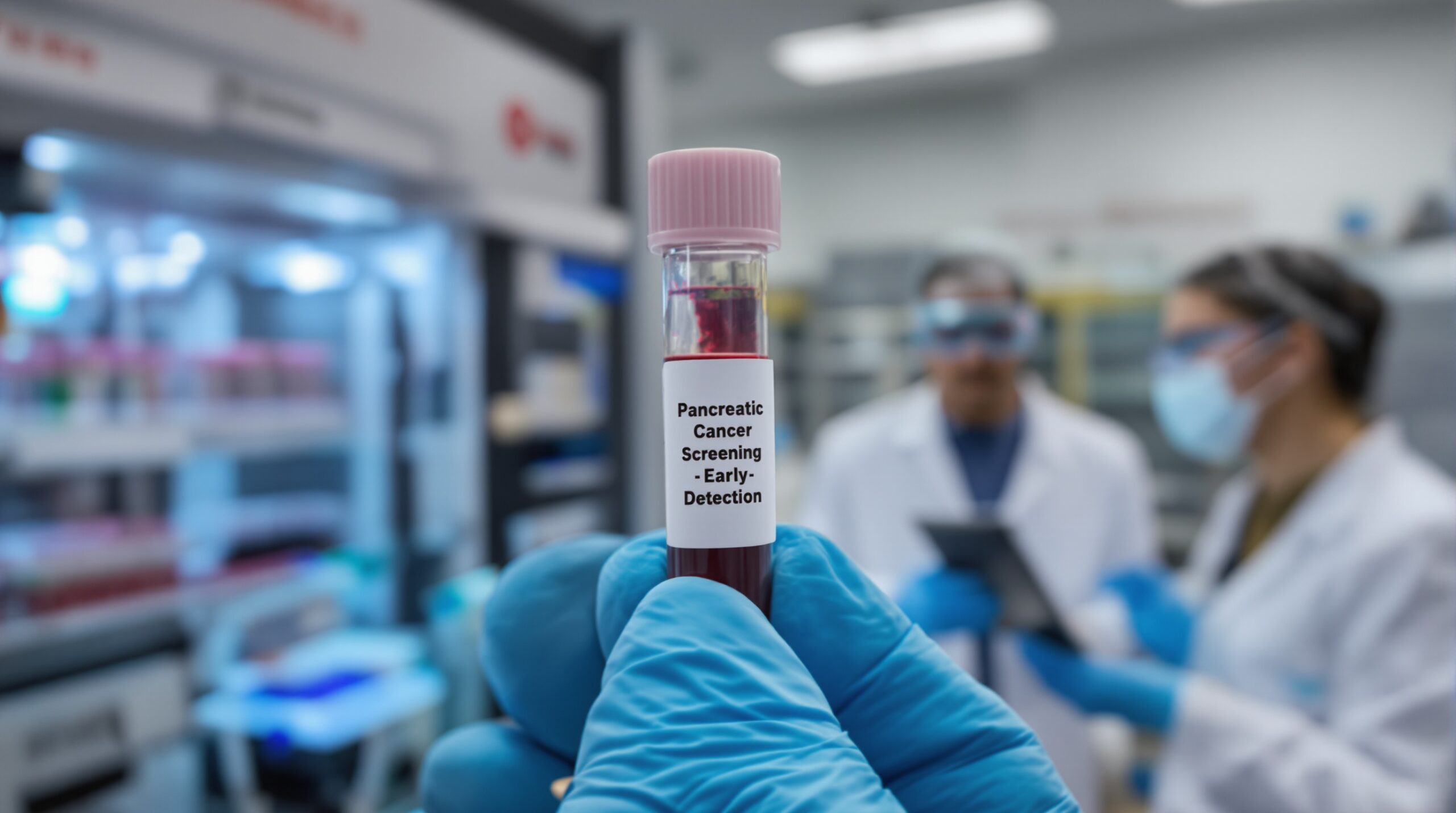
Scientists unveiled a simple blood test that flags early-stage pancreatic cancer with high accuracy. The test could enable routine screening and shift diagnoses earlier. The debut marks a potential turning point for a notoriously lethal cancer.
Pancreatic cancer is often diagnosed late, after tumors spread beyond the pancreas. Surgery then becomes impossible for many patients, and survival rates drop sharply. Five-year survival hovers near the low teens, underscoring the urgent screening need.
Catching tumors while still localized can enable surgery and curative therapy. Even months can matter for pancreatic cancer, given its rapid progression. A reliable blood test could transform that narrow window into an actionable opportunity.
What the New Blood Test Does
The new assay uses a small blood sample drawn during a routine clinic visit. Researchers analyze molecules shed by tumors into the bloodstream. A computational model then integrates these signals to estimate cancer likelihood.
The test reads a composite signature rather than a single marker. It can include fragments of tumor DNA, protein biomarkers, and metabolites. That combination boosts performance, because cancers perturb many biological pathways simultaneously.
Importantly, the test targets early-stage disease, when tumor cells are fewer. Sensitive detection methods help capture faint signals from small tumors. Machine learning further improves accuracy by filtering noise from complex blood features.
How Researchers Evaluated Performance
Scientists trained the model using samples from patients with and without pancreatic cancer. They included individuals with benign pancreatic conditions to test real-world specificity. They also enrolled early-stage cases to gauge sensitivity where it matters most.
Analysts then validated the model in an independent cohort to reduce overfitting risk. Blinded evaluation helped confirm that accuracy persisted beyond the training set. The study reported high sensitivity for early-stage disease and strong specificity in controls.
These findings suggest clinical potential, though larger prospective trials remain vital. Researchers note the need to test many diverse populations. They also plan to monitor performance in community care settings.
Why a Simple Blood Draw Matters
Screening must be easy, affordable, and repeatable to reach large populations. A standard venous blood draw meets those criteria in most clinics. Laboratories already process similar samples daily for other tests.
Imaging can detect pancreatic tumors, but broad imaging creates access and cost barriers. Blood tests can identify who most needs targeted imaging. That staged approach improves efficiency and reduces unnecessary procedures.
How This Differs from Traditional Markers
Clinicians have long used CA19-9 to help monitor pancreatic cancer. However, CA19-9 alone lacks the performance required for screening. Levels can rise from benign conditions, and some people cannot produce it.
The new test moves beyond a single biomarker limitation. It draws on cell-free DNA patterns, protein panels, and metabolic shifts. That multi-analyte strategy can better distinguish early cancer from lookalike conditions.
Potential Path to Routine Screening
Experts envision a two-step pathway if validation continues to hold. Individuals would receive periodic blood tests at defined intervals. Positive results would trigger confirmatory imaging with MRI or endoscopic ultrasound.
Such a workflow could fit within primary care and specialty clinics. Clear referral protocols would ensure rapid follow-up for positive findings. Standardized pathways also minimize delays that erode early detection benefits.
Who Might Benefit First
High-risk groups offer the earliest opportunity for screening deployment. Candidates include people with inherited mutations linked to pancreatic cancer. Families with multiple affected relatives also warrant special attention and counseling.
People over 50 with new-onset diabetes face increased risk as well. Long-standing chronic pancreatitis can also elevate risk. A risk-stratified approach could prioritize screening where prevalence is higher.
Confirmatory Testing and Care Navigation
A positive blood test does not equal a definitive diagnosis. Clinicians should arrange timely confirmatory imaging and multidisciplinary review. Patient navigators can help manage anxiety and logistics during that period.
When imaging confirms a localized tumor, surgeons can evaluate resectability promptly. Oncologists can discuss neoadjuvant therapy when appropriate for better outcomes. Early, coordinated care often yields the best path forward.
Balancing Benefits and Harms
Any screening program must weigh benefits against potential harms. False positives can prompt invasive procedures and cause distress. False negatives can delay care and erode trust in screening programs.
Developers aim to set thresholds that balance sensitivity and specificity responsibly. Health systems can mitigate harm with rapid follow-up and clear communication. Informed consent should explain limits, next steps, and expected timelines.
Equity, Access, and Cost Considerations
Access must extend beyond academic centers to deliver true population benefit. Community clinics, rural hospitals, and safety-net systems need inclusion. Mobile phlebotomy and mail-in kits could expand reach further.
Pricing and reimbursement will shape real-world adoption significantly. Payers often require strong evidence of clinical utility and cost effectiveness. Policymakers can support pilots that test screening in diverse communities.
Importantly, programs should avoid deepening existing disparities in cancer care. Outreach, language access, and transportation support can close gaps. Training local providers helps sustain equitable screening over time.
Regulatory and Guideline Pathways
Before broad rollout, developers must complete rigorous clinical validation. Regulators will review analytical performance and clinical evidence carefully. Independent replication across sites will strengthen confidence in results.
Guideline bodies will look for outcomes beyond accuracy alone. Stage shift, treatment rates, and mortality impact will carry weight. They will also evaluate downstream harms and resource demands.
Some tests may launch through certified clinical laboratories initially. Others may pursue formal device clearance pathways. Either route requires transparent reporting and ongoing post-market monitoring.
What Patients and Clinicians Can Do Now
Patients should discuss personal risk factors with their clinicians proactively. Family history, certain genetic variants, and smoking all increase risk. Obesity, chronic pancreatitis, and new-onset diabetes also merit attention.
Clinicians can identify high-risk individuals and consider specialized surveillance referrals. Genetic counseling can clarify inherited risk and guide testing choices. Shared decision-making should anchor all screening conversations.
Meanwhile, patients can monitor symptoms that warrant prompt evaluation. Unexplained weight loss, jaundice, or persistent abdominal pain deserve attention. Early reporting can accelerate diagnosis, even without formal screening.
How Technology May Improve the Test Further
Researchers continue to refine algorithms and laboratory methods. Improved sequencing sensitivity may capture rarer tumor fragments. Better protein panels may distinguish cancer from inflammation more reliably.
Longitudinal monitoring could further sharpen accuracy with personalized baselines. Repeated tests can track subtle changes over time. That dynamic view helps separate noise from meaningful biological shifts.
Integration with broader multi-cancer screening platforms may add value. Cross-cancer signals can guide tailored workups across organ systems. Coordination prevents duplication and reduces patient burden.
Key Questions That Remain
Several important questions now guide the next research phase. How often should average-risk individuals receive testing? Which thresholds optimize benefit for specific subgroups?
What confirmatory pathway works best after a positive result? How do programs ensure timely access to advanced imaging? Which support services reduce anxiety and improve adherence?
Researchers will also track how screening influences health economics. Costs saved through earlier treatment may offset program expenses. Real-world data will clarify that balance over time.
The Bottom Line
The debut of a simple, accurate blood test represents a meaningful advance. Pancreatic cancer has long lacked a practical screening tool. Early detection could now become realistic for many at-risk people.
Careful validation, equitable access, and clear care pathways will be essential. With those elements, screening can shift diagnoses earlier and save lives. The field now moves from promise toward proven population impact.