

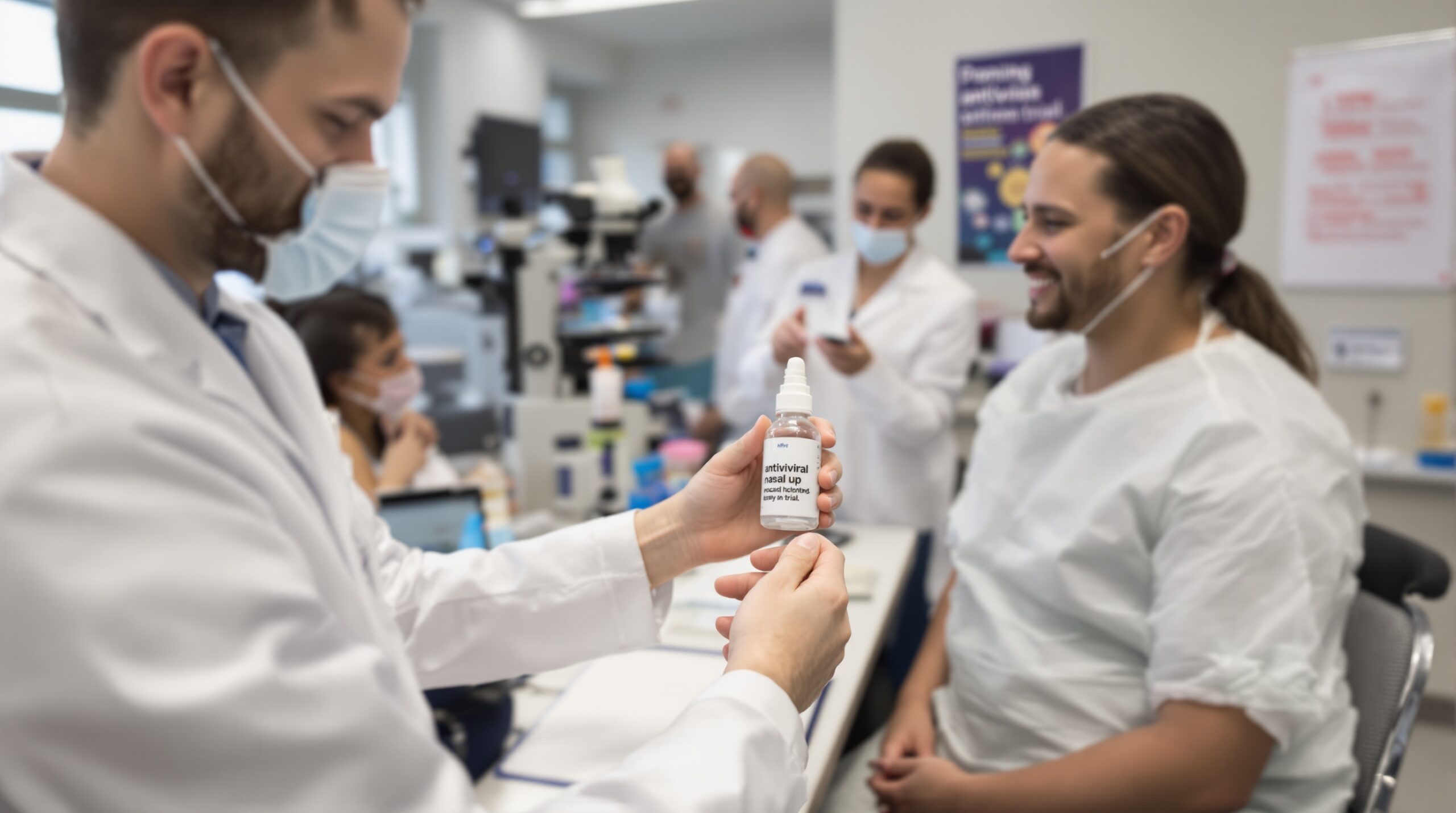
Scientists report a nasal spray that blocks several respiratory viruses in early human trials. The candidate shows encouraging safety and antiviral activity. These early results suggest a new frontline tool against seasonal surges and future outbreaks.
The spray targets the nose, where many respiratory infections begin. Researchers designed it to trap and deactivate incoming viruses. This localized approach aims to stop infection before it takes hold in the body.
How the antiviral spray works
The spray delivers a protective layer across the nasal lining. That layer forms a biochemical barrier hostile to incoming viral particles. It also carries compounds that interfere with viral attachment and entry.
Scientists focused on highly conserved viral entry steps. Many respiratory viruses bind receptors on nasal cells to invade. The spray targets those interactions and reduces the odds of successful infection.
Several mechanisms contribute to the effect, according to the research team. Some ingredients mimic natural cell surface sugars and decoy the virus. Others disrupt viral envelopes or modify local conditions inside the nose.
These actions combine to block multiple viruses rather than one. That broad activity is valuable during unpredictable respiratory seasons. It also helps when new variants emerge with changed surface proteins.
What early human trials examined
The first trials enrolled healthy adults and people recently exposed to respiratory viruses. Investigators evaluated safety, tolerability, and antiviral signals. They also measured how long protective effects lasted inside the nose.
Researchers administered the spray several times per day over short periods. They collected nasal swabs to assess viral markers and local immune responses. Participants reported any side effects through structured diaries.
Early trials emphasize safety above all else. These studies also explore dosing schedules that balance coverage and convenience. The data help guide larger and longer studies.
Safety and tolerability findings
Participants generally tolerated the spray well in early testing. The most common reactions were mild and temporary nasal sensations. Reports included brief dryness, a slight tingling, or a transient aftertaste.
Investigators monitored participants for systemic side effects. They found no serious safety signals during the study windows. Routine assessments of vital signs and lab values remained within expected ranges.
These observations support continued development of the nasal spray. Ongoing studies will track long-term safety under broader use. Larger samples help detect rarer adverse events.
Early signs of antiviral activity
Researchers observed reduced viral markers in nasal samples from treated participants. These reductions suggest impaired viral replication or entry. The effect appeared strongest within hours of application.
Some participants faced natural exposures during high transmission periods. Treated volunteers showed fewer symptomatic infections than untreated peers. These signals require confirmation in controlled, larger trials.
The team also measured changes in local immune factors. They detected patterns consistent with a primed nasal defense. Those shifts may enhance protection alongside direct antiviral actions.
Why a nasal spray matters for respiratory defense
The nose is the gateway for many respiratory pathogens. Stopping viruses there can protect the lungs and lower airways. A nasal spray offers immediate protection at the point of entry.
Vaccines remain essential for long-term population protection. However, immune responses can fade or miss new variants. A nasal spray can add timely, situational protection during spikes.
People also need tools that fit daily routines. Sprays are simple to carry and apply. That convenience can improve adherence during busy seasons.
How this approach compares with current options
Oral antivirals treat infections after symptoms start. They require prescriptions and early diagnosis. A preventive spray aims to intervene even earlier.
Masks reduce exposure but depend on consistent use and fit. A spray adds a private layer of protection in shared spaces. It also complements hand hygiene and ventilation measures.
Some sprays act mainly as physical barriers. This candidate includes targeted antiviral mechanisms beyond simple blockage. That distinction could broaden coverage across varied viruses.
Potential use cases and beneficiaries
High-exposure workers could benefit during peak seasons. Examples include health care staff, teachers, and transit employees. Travelers may also value protection in crowded terminals and cabins.
People visiting vulnerable relatives might use the spray before visits. Households could use it during known local outbreaks. Students might apply it during dormitory surges.
These scenarios highlight situational prevention rather than continuous use. Flexible dosing can match changing risk levels across weeks. That practicality supports real-world adoption.
Manufacturing and distribution considerations
Developers designed the formulation for stability at room temperatures. That property simplifies storage and distribution across climates. Simple packaging reduces supply chain complexity and costs.
Production can scale using standard pharmaceutical processes. Multi-dose bottles and single-use sprays may serve different settings. Manufacturers plan to assess recyclability and material impacts.
Access and affordability remain central concerns. Partnerships with public health agencies can broaden reach. Tiered pricing can support low-resource regions during outbreaks.
Limitations and remaining questions
Early trials are small and short by design. They cannot measure long-term protection or rare events. Larger, longer trials must answer those questions.
Effectiveness depends on proper and timely use. Missed doses may reduce protective coverage. Clear instructions and user education will help.
Variants may alter receptor use or entry pathways. Developers must track changes and test performance against new strains. Adaptive formulation strategies can address shifts over time.
Regulatory pathway and next steps
The team plans to advance into larger randomized trials. Those studies will test different dosing regimens and durations. They will also compare the spray against placebos and existing approaches.
Regulators will review safety, manufacturing, and efficacy data. Approvals require consistent evidence across multiple studies. Post-market surveillance would continue after any authorization.
Developers also aim to evaluate pediatric and older adult populations. These groups carry distinct risks and nasal physiology. Tailored studies can clarify dosing and outcomes.
Expert perspectives and public health context
Independent experts view nasal antivirals as promising complements to vaccines. They emphasize the importance of layered protection strategies. No single tool solves respiratory transmission alone.
Public health leaders also stress evidence-based deployment. Clear guidance reduces confusion and promotes trust. Active surveillance supports targeted use during local surges.
Healthcare systems could integrate sprays into outbreak responses. Toolkits might include tests, masks, and nasal antivirals. Such bundles can support households and workplaces.
Implications for preparedness and future outbreaks
Broad-spectrum nasal antivirals can strengthen pandemic preparedness. They act quickly while vaccines are still in development. They also protect people who respond poorly to vaccines.
Stockpiles could support rapid deployment during early waves. Local manufacturing reduces dependence on distant suppliers. Distribution through pharmacies enables fast community access.
Real-world studies will refine strategies for different settings. Schools, workplaces, and care homes face unique constraints. Tailored protocols improve impact and efficiency.
What to watch as evidence grows
Upcoming trials will measure symptomatic infections and transmission. Researchers will track how well the spray prevents spread within households. They will also monitor durability across days and weeks.
Investigators will examine performance against diverse viruses and variants. Laboratory assays will map the breadth of activity. Real-world studies will confirm findings under natural exposures.
Transparency will matter throughout development. Peer-reviewed publications help teams refine methods and claims. Open data fosters trust and collaboration across disciplines.
Bottom line
Early human trials of an antiviral nasal spray show promising safety and activity. The approach targets viruses at their point of entry. These properties make it a practical complement to existing tools.
More research must confirm protection in larger, diverse populations. Clear guidance and equitable access will shape real-world impact. If results hold, the spray could help blunt seasonal and emerging threats.
For now, the findings justify cautious optimism and continued study. Layered protection remains the best defense against respiratory viruses. This spray may soon become an important layer.
