

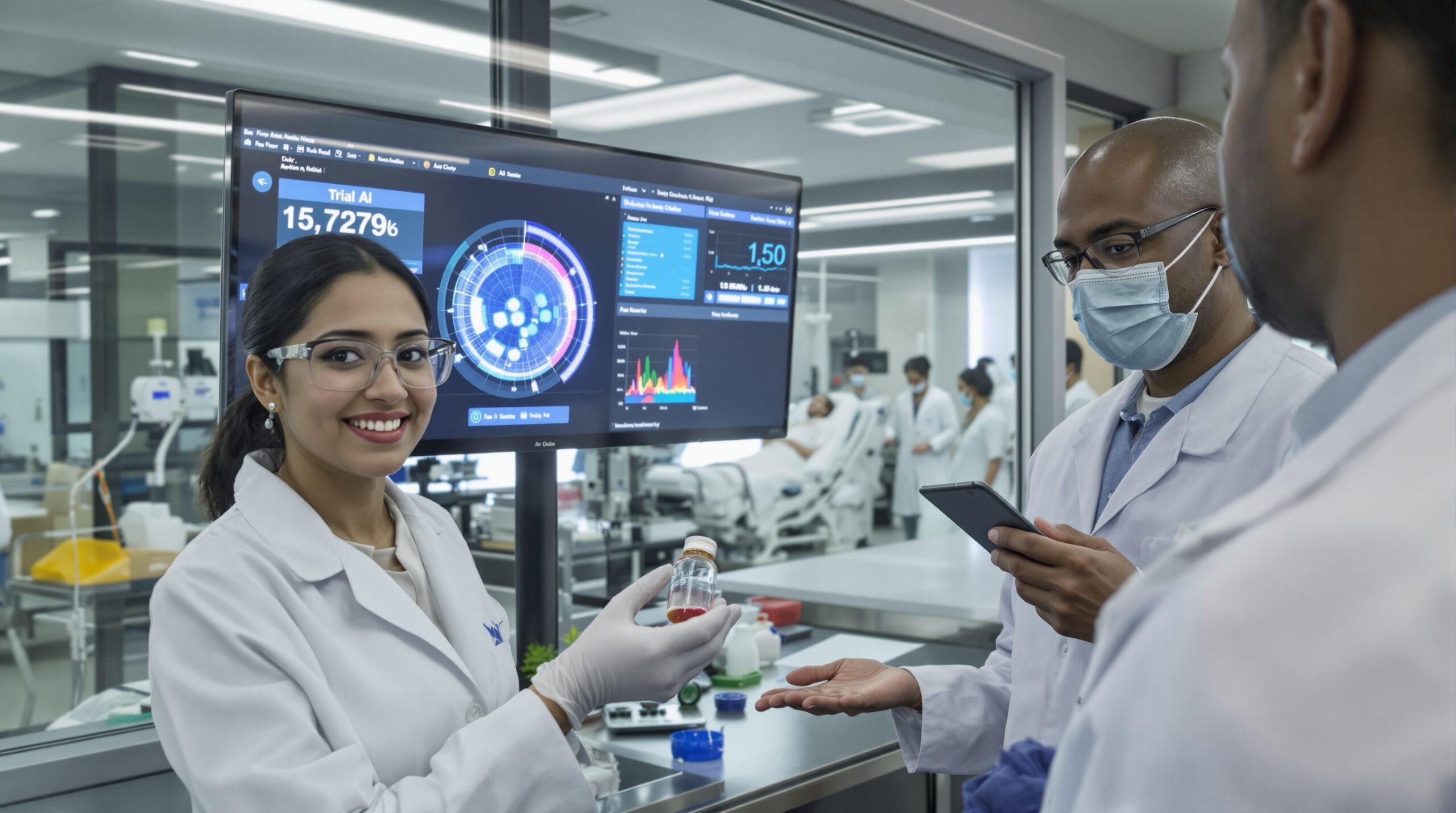
Scientists have announced a promising antibiotic discovered with artificial intelligence, targeting stubborn hospital infections with striking early results. The candidate eliminated dangerous pathogens in laboratory tests and cleared difficult infections in animal models. Researchers designed the molecule using advanced algorithms that sifted through immense chemical possibilities. Early data suggest a potent, selective agent that spares beneficial bacteria more effectively than many current drugs. The findings signal a powerful new path for antibiotic discovery and clinical innovation.
Why this breakthrough matters for modern medicine
Hospitals struggle with infections that resist multiple drugs, prolonging illness and increasing mortality. Resistant organisms complicate surgery, chemotherapy, and intensive care, undermining critical medical advances. New antibiotics have been scarce, and development pipelines often move slowly. AI-driven discovery offers speed, breadth, and novel chemical ideas that traditional methods may miss. This new candidate demonstrates that approach, providing fresh urgency for early clinical translation.
How artificial intelligence designed the antibiotic
Researchers trained machine-learning models on large datasets linking chemical structures to antimicrobial activity. The models learned patterns that predict which molecular features suppress bacterial growth. They then screened millions of virtual compounds in silico, ranking candidates by predicted potency and selectivity. The team prioritized structures with unusual scaffolds and favorable safety hypotheses. This workflow compressed years of discovery into months, enabling rapid experimental validation.
Computational design did not replace experiments; it guided them more intelligently. Chemists synthesized top-ranked compounds and iteratively refined the design with new data. These loops improved predictions and trimmed weak candidates quickly. The result was a focused set of molecules with compelling laboratory performance. That disciplined process laid the foundation for early trials in relevant models.
Targets and pathogens of concern
The antibiotic targets pathogens frequently causing hospital-acquired infections, including resistant Gram-negative and Gram-positive species. These organisms thrive in intensive care units and complicate ventilator use, catheters, and surgical wounds. Common culprits include Acinetobacter baumannii, Pseudomonas aeruginosa, and methicillin-resistant Staphylococcus aureus. Many strains carry multiple resistance mechanisms that blunt standard treatment options. By design, the new compound addresses these difficult adversaries with a novel chemical approach.
Preliminary studies suggest the molecule acts on essential bacterial processes that are poorly targeted by existing drugs. This novelty reduces cross-resistance with current antibiotic classes. The compound’s structure also limits penetration into mammalian cells, supporting a favorable safety hypothesis. Researchers continue to map its precise binding interactions and resistance liabilities. Those mechanistic insights will guide dosing strategies and companion diagnostics.
What early trials show so far
Early trials evaluated the antibiotic in laboratory assays and animal infection models. In vitro tests showed potent activity against multi-drug resistant clinical isolates. Time-kill studies demonstrated rapid bacterial clearance at achievable concentrations. Animal models of bloodstream and wound infection confirmed robust efficacy with appropriate dosing. These results suggest meaningful therapeutic potential against high-risk hospital pathogens.
Importantly, the compound maintained activity in the presence of complex biological fluids. That resilience improves the likelihood of success in clinical settings. Researchers also observed sustained efficacy across several dosing schedules. Such flexibility can help clinicians tailor treatment around patient needs and comorbidities. The evidence supports advancing to formal safety studies and human exploration.
Safety, selectivity, and resistance considerations
Early toxicity screens found low cytotoxicity in human cell lines at therapeutic exposures. The compound also showed limited disruption of commensal gut bacteria in ex vivo models. Selectivity for bacterial targets reduces the risk of collateral microbiome damage. Lower off-target effects can help prevent complications like Clostridioides difficile overgrowth. These properties are valuable in hospitals, where vulnerable patients face multiple risks.
Resistance remains a critical concern for every antibiotic, including AI-designed ones. Researchers exposed bacteria to sublethal drug levels and monitored for resistance emergence. The frequency appeared lower than several comparator agents under similar laboratory conditions. Combination therapy strategies further suppressed resistance development in those tests. Ongoing surveillance will remain essential as the candidate advances toward broader use.
Implications for hospitals and infection prevention
Hospitals face rising costs and complications from antimicrobial resistance. A potent, selective antibiotic could shorten stays and reduce intensive interventions. Rapid pathogen clearance also lowers the chance of transmission within wards. These benefits depend on strong stewardship and diagnostics to guide use. Institutions will need protocols that preserve efficacy and prevent misuse.
Deployment should align with infection control programs and isolation practices. Targeted use against documented resistant organisms will deliver maximum value. Diagnostics that identify susceptibility quickly will support precise prescribing. These systems help clinicians match therapy to biology in real time. The result is better outcomes and less selective pressure on the microbiome.
Building on earlier AI antibiotic successes
AI has previously helped discover novel antibacterial scaffolds with unique mechanisms. Those efforts demonstrated that algorithms can reveal overlooked chemical space efficiently. The current candidate extends that momentum into demonstrations of broad preclinical efficacy. Multiple teams now refine models with richer microbiology and medicinal chemistry data. This convergence promises faster cycles from concept to clinic.
Importantly, hybrid teams bridge disciplines that rarely collaborated at such depth. Data scientists, microbiologists, pharmacologists, and clinicians coordinate decisions together. That integration reduces failure points and clarifies translational next steps. The approach also creates reusable playbooks for future pathogen targets. Over time, these playbooks could reshape antibiotic development pipelines worldwide.
What comes next in development
The project now moves toward formal safety studies and human trials. Researchers will assess pharmacokinetics, dosing ranges, and drug-drug interactions. Manufacturing scale-up must ensure consistent quality and stable supply. Regulatory teams will design Phase I protocols to evaluate safety in healthy volunteers. If successful, Phase II trials will measure efficacy in infected patients.
Clinical development will likely prioritize indications with urgent unmet need. These include ventilator-associated pneumonia, bloodstream infections, and complicated wound infections. Trial designs may incorporate rapid diagnostics to enrich for resistant pathogens. That strategy increases statistical power and clarifies clinical benefit. Parallel studies will explore combination regimens to prevent resistance emergence.
Economic and access considerations
Antibiotics face unique market challenges that discourage investment. Stewardship rightly limits sales volume to preserve effectiveness. Companies need incentives that reward value without driving overuse. Subscription models and pull incentives can support sustainable development. Policymakers are testing such frameworks to revitalize antibiotic pipelines responsibly.
Equitable access also deserves early planning. Hospitals in low-resource settings confront severe resistant infections regularly. Pricing and procurement strategies must include those facilities thoughtfully. Partnerships with global health organizations can align supply and stewardship. Such alignment ensures benefits reach patients who need them most.
Ethical and regulatory oversight of AI-driven medicines
AI introduces transparency questions for regulators and patients. Developers should document model training data, performance, and limitations clearly. Auditable pipelines help regulators evaluate safety and reproducibility rigorously. Post-market surveillance must track effectiveness and resistance patterns in real settings. Ethical oversight should evolve alongside these technical capabilities thoughtfully.
Patient privacy remains paramount when integrating clinical data with discovery platforms. De-identified, secure datasets can enable insights without compromising confidentiality. Clear consent and governance frameworks build trust among stakeholders. Such trust accelerates responsible adoption across healthcare systems. Robust governance will help balance innovation with accountability.
What patients and clinicians should watch
Clinicians should monitor forthcoming trial registrations and early human safety results. Therapeutic guidelines will update as evidence matures. Infectious disease teams can prepare stewardship strategies aligned with likely indications. Hospitals may consider diagnostic investments that support targeted deployment. These preparations will smooth implementation if approvals arrive.
Patients should expect careful, stepwise evaluation before broad availability. New antibiotics undergo rigorous safety checks to protect the public. Responsible development takes time but delivers durable outcomes. Transparent communication will help communities understand benefits and risks clearly. Stakeholder engagement will strengthen confidence during each development phase.
The bottom line
This AI-designed antibiotic marks a promising advance against dangerous hospital infections. Early trials show rapid, selective activity against resistant pathogens. The discovery process compressed timelines and uncovered novel chemistry. Success now depends on rigorous trials, stewardship, and equitable access. If validated clinically, this approach could reshape how we fight bacterial resistance globally.
