

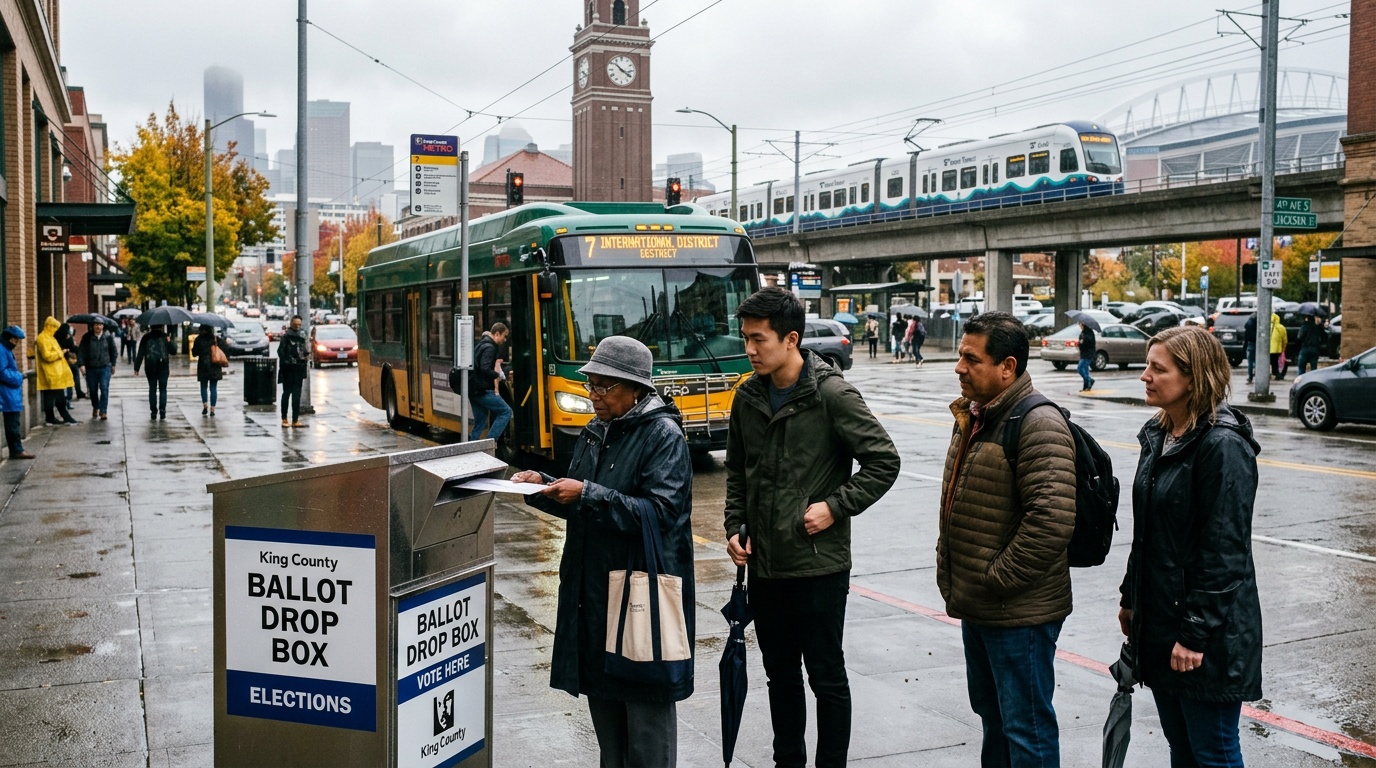
Seattle voters faced a major transportation decision during the November 5, 2024, general election. Proposition 1 proposed an eight-year, $1.55 billion property tax levy. The measure replaced the expiring Levy to Move Seattle, which voters approved in 2015.
The proposal promised investments across Seattle’s transportation system. Those investments included street repairs, bridge maintenance, pedestrian improvements, bicycle infrastructure, and transit corridors. As Axios Seattle reported, voters had to balance those improvements against higher property taxes.
What Proposition 1 asked voters to approve
Proposition 1 authorized Seattle to collect $1.55 billion over eight years. The city planned to use that revenue between 2025 and 2032. Officials divided the money among 11 transportation program areas.
The Seattle City Council placed the measure on the ballot after reviewing Mayor Bruce Harrell’s original proposal. Harrell initially recommended a $1.45 billion package. Council members added $100 million before sending the final measure to voters.
The levy followed the $930 million Levy to Move Seattle. That earlier measure supported transportation projects during a nine-year period. However, inflation, construction costs, and changing travel patterns increased the estimated cost of future work.
How the property tax worked
Property owners financed the measure through taxes based on assessed property values. City estimates placed the annual cost near $500 for a median-valued Seattle home. That represented an increase of roughly $20 monthly from the expiring levy’s estimated cost.
Actual bills varied because assessed values differed across homes and neighborhoods. Seattle’s total assessed property base also influenced the levy rate. Commercial property owners paid according to their properties’ assessed values.
Renters did not receive a direct levy bill. However, landlords could consider higher operating costs when setting future rents. That possibility added another concern during Seattle’s broader affordability debate.
Where Seattle planned to spend the money
Street maintenance received the proposal’s largest allocation. The measure directed $403 million toward repaving and repairing heavily traveled streets. Crews could also improve pavement markings, drainage, and accessibility while completing those projects.
Bridge maintenance and safety received another $221 million. Seattle manages an aging collection of bridges serving drivers, buses, freight, cyclists, and pedestrians. Regular maintenance can prevent small structural problems from becoming expensive emergencies.
The plan reserved $193 million for pedestrian safety and accessibility. Projects included new sidewalks, repaired walkways, curb ramps, and safer street crossings. Seattle intended to prioritize locations with missing infrastructure and documented safety needs.
Another $151 million supported Vision Zero, school safety, and neighborhood safety projects. Seattle adopted Vision Zero to eliminate serious and fatal traffic crashes. The city has struggled to achieve that goal, especially on wide arterial streets.
Bicycle safety programs received $133.5 million. That funding could build protected bicycle lanes and improve connections within the existing network. Designers could also address dangerous intersections and gaps between established routes.
Smaller allocations covered traffic signals, freight mobility, public spaces, climate resilience, and emerging needs. Together, those categories expanded the levy beyond basic road repairs. They also reflected Seattle’s goals for safety, accessibility, and lower transportation emissions.
What the levy meant for transit
The measure assigned $160.5 million specifically to transit corridors and connections. Seattle could use those funds for bus lanes, upgraded stops, and traffic signal improvements. Such projects help buses avoid congestion and provide more reliable trips.
Other levy categories also supported transit indirectly. Repaved streets provide smoother routes for buses and passengers. Better sidewalks and crossings help riders safely reach stops, stations, homes, and workplaces.
Still, the levy did not primarily pay for bus operations. King County Metro operates most local buses and determines service levels. Sound Transit operates Link light rail and several regional transit services.
Seattle separately uses its Transportation Benefit District to purchase additional Metro service. That program has relied on a dedicated sales tax approved by voters. Proposition 1 instead focused mainly on the physical infrastructure supporting transportation and transit.
Why reliable corridors matter
Buses often lose time when they share congested lanes with cars. A delayed bus can miss scheduled connections and create longer waits. Transit-priority signals and dedicated lanes can reduce those disruptions.
Reliable service can also lower operating costs. A bus completing trips faster may provide more service without requiring another vehicle. However, street changes can remove parking or reduce space available for general traffic.
Those tradeoffs often generate neighborhood debates. Businesses may worry about deliveries, while residents may value parking access. Transit riders usually emphasize speed, safety, frequency, and predictable arrival times.
Arguments supporting the measure
Supporters described the levy as essential infrastructure funding. Seattle depends on local tax revenue because state and federal grants rarely cover every project. A dedicated levy also gives transportation planners a more predictable funding schedule.
Backers argued that deferred maintenance creates larger future expenses. Pavement failures can damage vehicles and slow buses. Neglected bridges can eventually require weight restrictions, major rehabilitation, or complete replacement.
Safety formed another central argument. Seattle continued recording serious crashes despite earlier Vision Zero commitments. Advocates said redesigned streets could protect pedestrians, cyclists, drivers, and transit passengers.
Supporters also connected transportation investments with Seattle’s climate policies. Improved transit access can make driving less necessary for some trips. Safe walking and cycling routes can provide additional alternatives.
Concerns about cost and delivery
Critics focused heavily on affordability. Seattle property owners already pay several city, county, school, and state levies. Adding another increase could burden homeowners with fixed or limited incomes.
Some residents also questioned whether Seattle could complete every promised project. The previous levy encountered changing costs, revised schedules, and altered project scopes. Early estimates had underestimated some design, engineering, and construction expenses.
The city later adjusted the earlier levy’s plans and reporting practices. Nevertheless, that history shaped the 2024 debate. Voters wanted clearer schedules, measurable commitments, and public explanations when projects changed.
Construction inflation presented another risk. The levy established a total collection amount, but material and labor costs could rise. Significant increases could force Seattle to reduce project scopes or seek other funding.
Oversight and public accountability
Seattle’s transportation department manages most levy projects. The City Council controls annual budgets and reviews departmental spending. An independent oversight committee also monitors progress and evaluates whether officials fulfill voter commitments.
Public reporting allows residents to compare spending with completed work. Reports can identify delayed projects, revised costs, and changes in scope. However, useful oversight depends on clear data and consistent performance measures.
The levy can also help Seattle compete for outside grants. State and federal programs often require local matching funds. Seattle can use levy revenue to demonstrate that local commitment.
The broader choice facing voters
Proposition 1 offered voters a broad transportation package rather than a single project. Its benefits could appear gradually across streets, bridges, sidewalks, bicycle routes, and transit corridors. Many projects would require several years of planning and construction.
The measure also illustrated Seattle’s reliance on voter-approved levies. Regular city revenue cannot cover every major infrastructure need. Levies provide additional resources, but they place recurring tax decisions before residents.
Voters ultimately approved Proposition 1 with support from roughly two-thirds of ballots cast. That decision moved the debate from campaign promises toward implementation. Seattle must now demonstrate that the expanded investment produces safer and more reliable transportation.
