

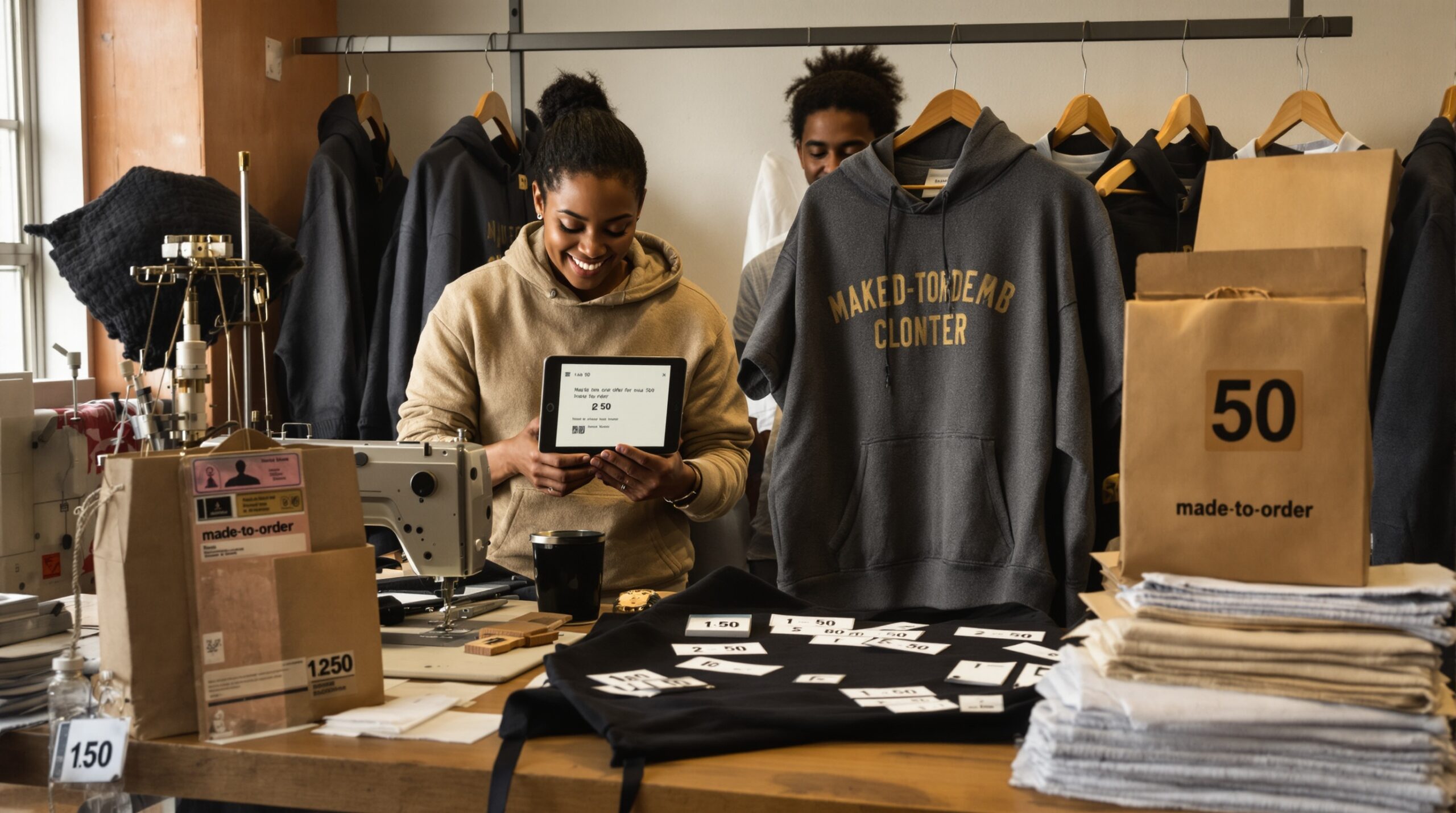
Streetwear brands are rethinking how they release products amid shifting consumer expectations and mounting waste concerns. Many labels are moving from mass-produced drops to made-to-order capsules built around real-time demand. The approach trims excess inventory while strengthening the sense of rarity that fuels streetwear culture. That combination attracts sustainability-minded shoppers without sacrificing hype.
Drop culture reshaped retail by rewarding speed, novelty, and scarcity. The model also produced frequent overbuys, markdowns, and waste when forecasts missed. Made-to-order offers a cleaner signal by capturing orders before committing production dollars. This shift increasingly defines the category’s most progressive operators.
Why the Pivot: Waste, Risk, and Culture
Overproduction remains fashion’s most stubborn sustainability problem. Unsold goods often require heavy markdowns, liquidation, or destruction. Streetwear’s short trend cycles can intensify the problem when a theme loses steam quickly. Made-to-order reduces these outcomes by aligning production with verified demand.
Financial risk also drives the change. Inventory absorbs cash, adds storage costs, and invites write-downs if demand fades. Made-to-order shifts spending closer to revenue collection. That timing helps small labels preserve working capital during volatile seasons.
Culture matters as much as spreadsheets. Streetwear values scarcity, story, and community access. Made-to-order reinforces those values by publishing edition sizes and timelines. The approach also centers the creator’s intent over algorithmic guesswork.
How Made-to-Order Works in Streetwear
Brands open a timed preorder window for a capsule or single item. Customers place orders, often with full payment or a deposit. The window closes after a set period or target quantity. The brand then locks specs, quantities, and size curves based on orders.
Production begins after materials, trims, and labels are confirmed. Many labels build a small contingency buffer for size exchanges and defects. Final inspections follow brand standards before packing. Shipments go out in waves tied to production batches.
Operations and Supply Chain Adjustments
To succeed, labels must align mills, dyehouses, printers, and sewing rooms to shorter cycles. Capacity reservations and flexible minimums become critical. Nearshoring improves lead times and communication across steps. The entire chain shifts from forecasts to rolling, time-boxed commitments.
Forecasting Demand Without Inventory
Brands still forecast, but with new signals. Waitlists, click-throughs, and Discord polls inform capsule planning. Historic sell-throughs and style analogs support decisions when ideas are untested.
Algorithms help smooth spikes while respecting scarcity. Teams set guardrails to limit runaway quantities that might dilute exclusivity. A clear cap keeps the story focused and meaningful.
Production Technologies Enabling MTO
On-demand printing has matured rapidly with DTG and DTF systems. Automated screen setups reduce downtime for small runs. Laser cutters and advanced nesting software minimize fabric waste. Modular sewing cells improve throughput on short, varied batches.
Digital product creation speeds development. Designers build virtual samples in 3D tools and validate drape and fit on avatars. This lowers sample waste and freight while tightening timelines. Accurate grading and measurement tables reduce fit surprises after delivery.
Economics, Pricing, and Cash Flow
Made-to-order changes unit economics. Labor and setup costs can rise on short runs, but markdowns shrink dramatically. Prepayment improves cash conversion cycles and reduces financing costs. Overall margins can stabilize when forecasting errors fall.
Pricing must reflect speed, personalization, and edition size. Some labels charge a rush fee for earlier ship windows. Others fold shipping into pricing to simplify checkout. Transparency about costs builds trust during longer waits.
Exclusivity, Hype, and Community Engagement
Scarcity marketing evolves under made-to-order. Brands publish edition caps, control windows, and serialize labels. Creative storytelling shifts focus from queues to craft. Hype becomes knowledge-driven instead of purely time-driven.
Community engagement deepens with process access. Designers host livestreams from factories and dyehouses. Fans witness cutting, printing, and finishing decisions. The journey validates the wait and elevates loyalty.
Sustainability Claims and Verification
Claims should avoid vague promises. Brands should quantify avoided inventory waste, packaging reductions, and materials improvements. Life cycle assessments need clear system boundaries and assumptions. Repair programs and resale partnerships extend product life beyond delivery.
Traceability technologies now support verifiable storytelling. QR-enabled product passports link to fabric sources, dye methods, and factory certifications. Third-party audits strengthen claims and identify improvements. Consumers reward specifics over slogans.
Consumer Experience, Wait Times, and Service
Expectation management decides success. Brands should present honest production windows with milestone updates. Customers value manufacturing transparency, not vague promises. A status portal reduces support tickets and anxiety.
Changes will happen across weeks or months. Offer address edits, size swaps before cut dates, and cancellations within fair windows. Clear policies reduce chargebacks and frustration. Goodwill compounds with consistent communication.
Fit drives satisfaction and wardrobe longevity. Detailed size charts, tolerance ranges, and user reviews reduce returns. Materials and stitching specs should be published and enforced. Quality consistency builds repeat business.
Legal and Compliance Considerations
Preorder operations must follow consumer protection rules. In the United States, the FTC’s Mail Order Rule applies. Brands must ship as promised or seek consent for delays. Prompt refunds are mandatory when customers decline delays.
European Union rules require clear delivery estimates and specific refund rights. Local laws may regulate deposits and communication timelines. Terms and conditions should match operational realities. Compliance reduces legal risk and improves trust.
Challenges, Trade-offs, and Risks
Supply delays can cascade through small batches. Color variance between dye lots may irritate discerning customers. Labels need guardrails for acceptable tolerance ranges. Contingency planning matters when vendors miss slots.
Cancellation spikes can damage cash flow. Clear windows and incentives help discourage last-minute changes. Social fatigue may emerge if timelines slip repeatedly. Credibility takes time to build and moments to lose.
Bots and resellers also adapt to new systems. Platforms should implement strong identity checks and purchase limits. Raffles and waitlists reduce stress on checkout infrastructure. Fairness protects community goodwill.
Outlook: Hybrid Futures for Streetwear
A hybrid model is emerging across the category. Quick-ship evergreen items anchor cash flow and service speed. Made-to-order capsules deliver storytelling, exclusivity, and lower waste. Both streams reinforce each other when executed well.
Retail spaces can host on-demand embellishment and fit services. Microfactories stitch limited pieces live for community events. Digital twins and product passports enhance provenance and resale value. Data flows connect creators, suppliers, and collectors.
As constraints tighten globally, agility becomes critical. Brands that master made-to-order build resilience and relevance. They also reduce environmental harm without abandoning excitement. The next chapter of streetwear feels more personal and precise.
That transformation will not happen overnight. Early adopters are documenting playbooks and sharing lessons across communities. Suppliers are updating equipment and contracts to support shorter cycles. The movement signals a durable reset rather than a passing trend.
