

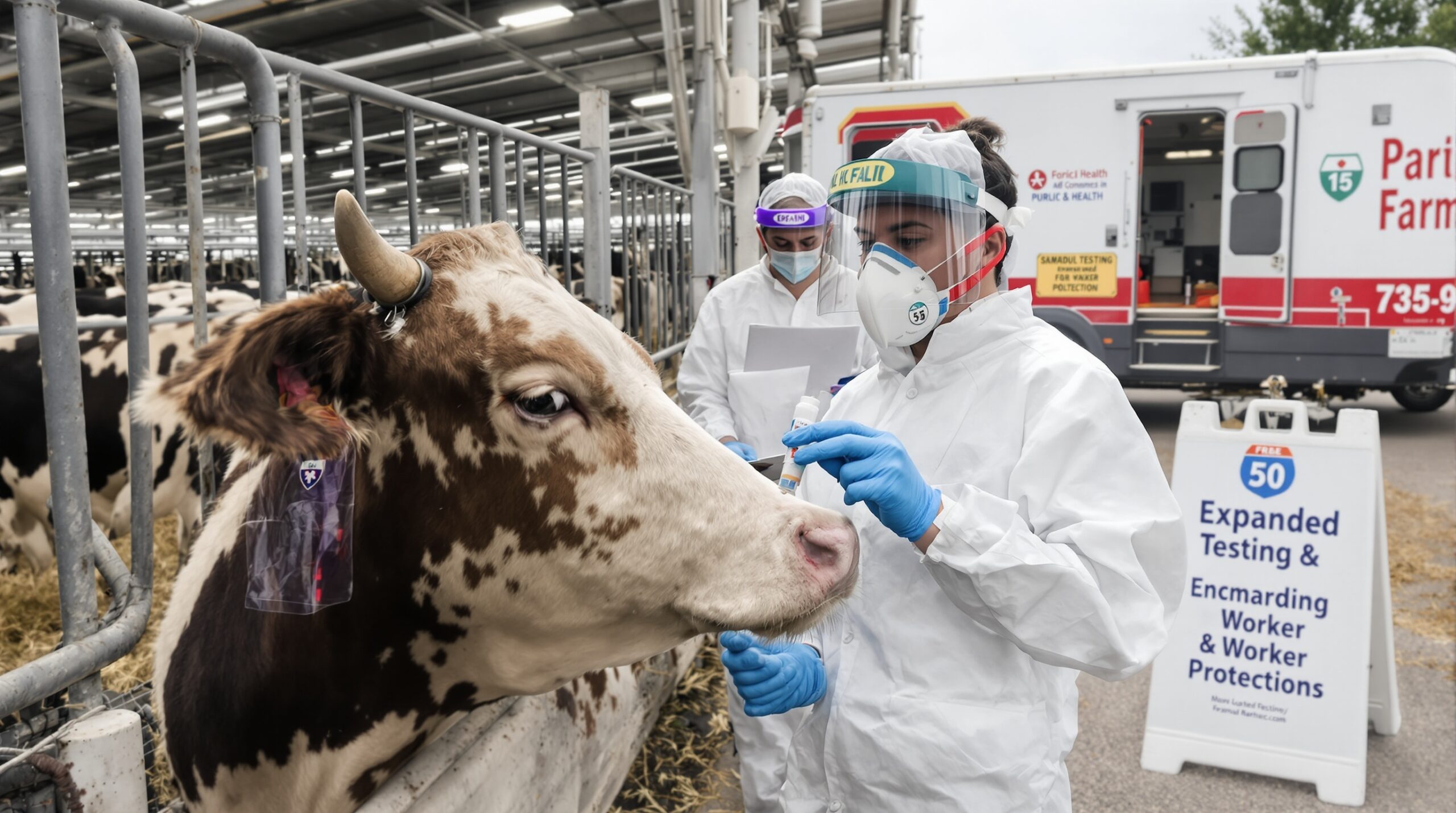
Reports of H5N1 detections in U.S. dairy herds have accelerated across multiple states. Health and agriculture agencies expanded testing and worker protections in response. Officials emphasize swift coordination between state laboratories, federal partners, and farm operators. The actions aim to limit spread, protect workers, and stabilize milk supplies.
Understanding the Unusual Cattle Infections
H5N1 avian influenza historically targets wild birds and poultry. The virus’ detection in dairy cattle marked an unusual development. Veterinarians report affected cows with reduced appetite and abrupt production declines. Milk from sick cows often appears thick or colostrum-like during illness.
Producers also note fever and dehydration in some animals. Herds usually show clustered cases, reflecting close contact during milking and housing. Investigators continue evaluating transmission routes among cattle. They also track links to wild bird exposures and animal movements.
Geographic Spread and Regulatory Response
Confirmed detections spanned multiple states in the Midwest, West, and South. State animal health officials reported new affected herds over successive weeks. Federal authorities coordinated national messaging and testing standards. Movement controls and testing requirements increased as case counts grew.
The U.S. Department of Agriculture announced pre-movement testing rules for lactating dairy cattle. The goal is to reduce farm-to-farm spread risks. States aligned their entry permits with federal orders. Agencies stress continued compliance to keep markets open and herds protected.
Expanded Testing Protocols and Laboratory Capacity
Authorities expanded testing in suspected herds and before interstate movements. Veterinarians collect nasal swabs, milk samples, and environmental swabs as needed. State laboratories rapidly screen samples using molecular assays. The National Veterinary Services Laboratories confirm positives and support sequencing.
Testing capacity increased through extended hours and streamlined workflows. Laboratories prioritized samples from symptomatic animals and movement-clearance submissions. Producers receive guidance on sampling logistics and biosecure packaging. Turnaround times remain a central performance target during response surges.
Strengthening Worker Protections on Dairies
Health agencies updated worker safety guidance for dairy operations. Recommendations include N95 respirators, eye protection, gloves, and protective clothing. Employers should provide training in proper donning and doffing techniques. They should also offer fit testing and replacement supplies.
Agencies advise symptom monitoring for exposed workers and rapid access to testing. Clinicians receive alerts to test symptomatic workers promptly. Antiviral treatment should start quickly after symptom onset when indicated. Employers are encouraged to support paid sick leave and reporting.
On-Farm Biosecurity and Movement Controls
Producers implemented stronger biosecurity practices to reduce spread. Operations restrict nonessential visitors and control access to milking parlors. Farms isolate new or returning animals for observation and testing. Trucks, equipment, and footwear receive enhanced cleaning between premises.
Calf housing and feeding practices underwent careful review. Managers evaluate shared tools and milk handling pathways for risks. Dedicated clothing and boot policies limit cross-contamination between barns. Movement controls add another protective layer across the dairy sector.
Milk Safety and Consumer Guidance
Public health leaders emphasize that pasteurization inactivates H5N1. Retail pasteurized milk remains safe according to federal assessments. Regulators continue surveillance of commercial dairy products to verify safety. They caution strongly against consuming raw milk during outbreaks.
States reinforced rules against selling raw milk from affected herds. Inspectors work with processors to ensure compliance and traceability. Consumers received clear instructions on safe handling of dairy foods. Authorities maintain unified messages to prevent confusion and misinformation.
Protecting Poultry and Wildlife Interfaces
Wild birds continue to carry H5N1 across migratory routes. Farms deploy deterrents to reduce bird presence near feed and water. Managers seal buildings and cover feed to limit contamination. Officials urge distance between cattle areas and backyard poultry.
Poultry outbreaks require rapid reporting and containment measures. Indemnity and response programs help farmers manage losses. Coordinated surveillance across species supports early detection and control. Cross-sector communication remains essential for One Health preparedness.
Occupational Health Surveillance and Clinical Coordination
Public health departments expanded outreach to rural clinics and hospitals. They distributed testing guidance for exposed dairy workers. Providers received instructions on specimen collection and lab submission routes. Health teams track cases and exposures through established reporting channels.
Officials recommend testing symptomatic workers, regardless of vaccination status. They also encourage monitoring close household contacts when indicated. Health departments advise early antiviral use for high-risk exposures. Clinical coordination supports faster diagnostics and safer return-to-work decisions.
Data Reporting, Privacy, and Transparency
Agencies publish aggregated data to inform stakeholders and communities. Reporting includes affected herds, counties, and general trends. Officials protect farm privacy while sharing essential risk information. Clear definitions help standardize case counts and testing metrics.
Dashboards highlight laboratory capacity and turnaround times. Updates describe response priorities and evolving guidance changes. Public reporting supports trust and informed decision-making. Transparent communication also discourages rumors during rapidly evolving events.
Economic Pressures and Support Programs
Dairy producers face new testing costs and operational delays. Illness reduces milk production and increases veterinary expenses. Some farms adjust shipping due to movement requirements. Local processors may face scheduling disruptions and staffing pressures.
Federal and state programs can offset certain response costs. Assistance may include diagnostic support and technical guidance. Lenders and insurers monitor risks and coverage implications closely. Coordination helps maintain market continuity while protecting animal health.
Research Priorities and Knowledge Gaps
Scientists are studying how H5N1 spreads within cattle herds. They examine viral shedding in milk and respiratory secretions. Sequencing helps track mutations and transmission patterns across regions. Studies also assess persistence on equipment and housing surfaces.
Researchers evaluate intervention effectiveness in real farm settings. They measure PPE adherence and engineering controls during milking. Teams explore vaccine and therapeutic options for high-risk species. Evidence will guide future policies and outbreak playbooks.
Clear Messaging and Community Engagement
Officials emphasize practical steps for farms and families. They provide multilingual materials for workers and rural communities. Outreach covers symptom recognition and when to seek testing. Communications explain pasteurization safety and raw milk risks clearly.
Community leaders help share guidance through trusted channels. Extension services and veterinarians support consistent messaging on biosecurity. Regular updates address new findings and policy changes. Clarity reduces confusion during a complex, multi-state response.
What Producers and Workers Can Do Now
Producers should contact veterinarians at the first sign of illness. They should implement strict PPE and hygiene protocols immediately. Managers must isolate sick animals and adjust milking workflows. They should document visitor logs and animal movements carefully.
Workers should use assigned PPE and follow fit-testing guidance. They should report symptoms promptly and seek testing quickly. Households should avoid sharing work clothing and boots. These steps help protect families and maintain farm operations.
Outlook and Next Steps
Health and agriculture agencies will maintain heightened surveillance. Seasonal bird migrations could influence risk patterns and timing. Authorities plan continuous review of testing and movement rules. They will adjust safeguards as new evidence emerges.
Producers, workers, and communities play central roles in control. Strong biosecurity and rapid reporting remain the foundation of response. Consistent PPE use reduces occupational risks during daily tasks. Continued collaboration can limit spread and support resilient dairy markets.
The multi-state surge prompted faster testing and stronger worker protections. Agencies, laboratories, and farms aligned around shared goals. Clear communication and practical measures guide the path forward. Vigilance today helps protect people, animals, and the milk supply tomorrow.
