

A Temporary Pause Exposes a Larger Problem
An FAA ground stop can transform an invisible infrastructure problem into a nationwide travel disruption within minutes. Controllers hold departing aircraft at airports until officials determine that the system can safely handle additional traffic. The resulting delays quickly spread through airline networks, affecting passengers far beyond the original disruption. That ripple effect places the nation’s air-traffic infrastructure under renewed public scrutiny.
Officials use ground stops to protect safety during equipment failures, severe weather, congestion, or security events. The measure does not automatically indicate that controllers lost control of aircraft already flying. Instead, it reduces workload and prevents new flights from entering constrained airspace. However, a broad stop can reveal how heavily the system depends on reliable technology.
How the FAA Manages Traffic
The Federal Aviation Administration manages the National Airspace System through a large network of facilities and technologies. Airport towers direct aircraft near runways, while approach facilities manage traffic around busy metropolitan areas. Regional centers guide aircraft across wider sections of high-altitude airspace. The Air Traffic Control System Command Center coordinates traffic flows across the entire country.
Ground stops represent only one tool available to traffic managers. Ground delay programs assign departure times when destination airports cannot accept normal arrival volumes. Airspace flow programs control traffic through congested regions, including areas affected by thunderstorms. These measures require dependable communications, accurate flight data, and continuous coordination between facilities.
A Network Built Across Several Eras
Parts of the air-traffic system use modern satellite surveillance, digital communications, and advanced navigation procedures. Other components depend on older software, specialized hardware, and communications equipment with limited replacement options. The FAA added many systems over decades rather than building one unified network. That history created layers of technology with different maintenance requirements and life cycles.
Older equipment does not necessarily operate unsafely, because technicians maintain it under strict standards. Yet aging systems often demand more maintenance and rely on shrinking pools of technical expertise. Manufacturers may stop producing components, forcing the FAA to repair parts or locate specialized suppliers. Those pressures make outages harder and more expensive to prevent.
Federal Auditors Have Raised Repeated Warnings
A 2024 Government Accountability Office review examined 138 systems supporting air-traffic control operations. The GAO classified 51 systems as unsustainable and another 54 as potentially unsustainable. It found that many systems lacked complete modernization plans. The watchdog urged the FAA to improve investment priorities and accelerate replacement decisions.
Federal auditors have also questioned cost estimates, schedules, and benefits for major modernization projects. Large aviation programs must operate while engineers install replacements, which complicates planning. Officials cannot simply disconnect an old system before proving its successor works reliably. Consequently, modernization often resembles rebuilding a moving vehicle without stopping it.
The NOTAM Outage Became a National Warning
The January 2023 Notice to Air Missions outage demonstrated the consequences of a critical information-system failure. NOTAM messages alert pilots about hazards, closed runways, equipment problems, and temporary airspace restrictions. The FAA paused domestic departures while technicians restored the system and validated its information. Airlines canceled or delayed thousands of flights during the disruption.
The FAA later linked the failure to damaged database files and contractor actions that bypassed procedures. Officials said they found no evidence of a cyberattack. The incident prompted reviews of backup systems, contractor controls, and operational resilience. It also showed how one essential service can influence the entire aviation network.
Modernization Has Delivered Real Improvements
The FAA has modernized significant portions of the system through its Next Generation Air Transportation System program. Automatic Dependent Surveillance-Broadcast technology lets aircraft transmit precise positions using satellite navigation. Data Communications allows controllers and pilots to exchange certain instructions digitally. Performance-based navigation creates more precise routes and can improve airport efficiency.
These improvements have reduced reliance on some older practices and expanded available operational information. However, NextGen does not function as a single replacement for every aging component. Modern tools must connect with legacy databases, telecommunications links, radar systems, and flight-processing platforms. Each connection can create technical dependencies that require careful testing.
Replacement Programs Face Practical Obstacles
Air-traffic systems must meet demanding safety, cybersecurity, and reliability requirements before entering service. The FAA also needs training, spare parts, technical documentation, and backup procedures for each deployment. Controllers must learn new interfaces without disrupting daily operations. These safeguards lengthen project schedules but protect the public during complex transitions.
Funding patterns can create another obstacle. Congress authorizes aviation programs, while annual appropriations determine how quickly agencies can spend money. Continuing resolutions may restrict new projects or delay contract decisions. Stable multiyear funding would give planners greater certainty, although strong oversight would remain essential.
Staffing and Technology Problems Intersect
Equipment receives attention after outages, but controller staffing also shapes the system’s resilience. Many facilities have operated below staffing targets, especially in complex and expensive metropolitan regions. Training a new controller can take several years, depending on the assigned facility. Retirements and unsuccessful training candidates make shortages difficult to correct quickly.
Short staffing can reduce scheduling flexibility and increase dependence on overtime. Technology failures then place additional pressure on employees already managing demanding traffic. Controllers can use established contingency procedures, but those procedures may reduce airspace capacity. Therefore, staffing investments and equipment upgrades must advance together.
Ground Stops Create Expensive Ripple Effects
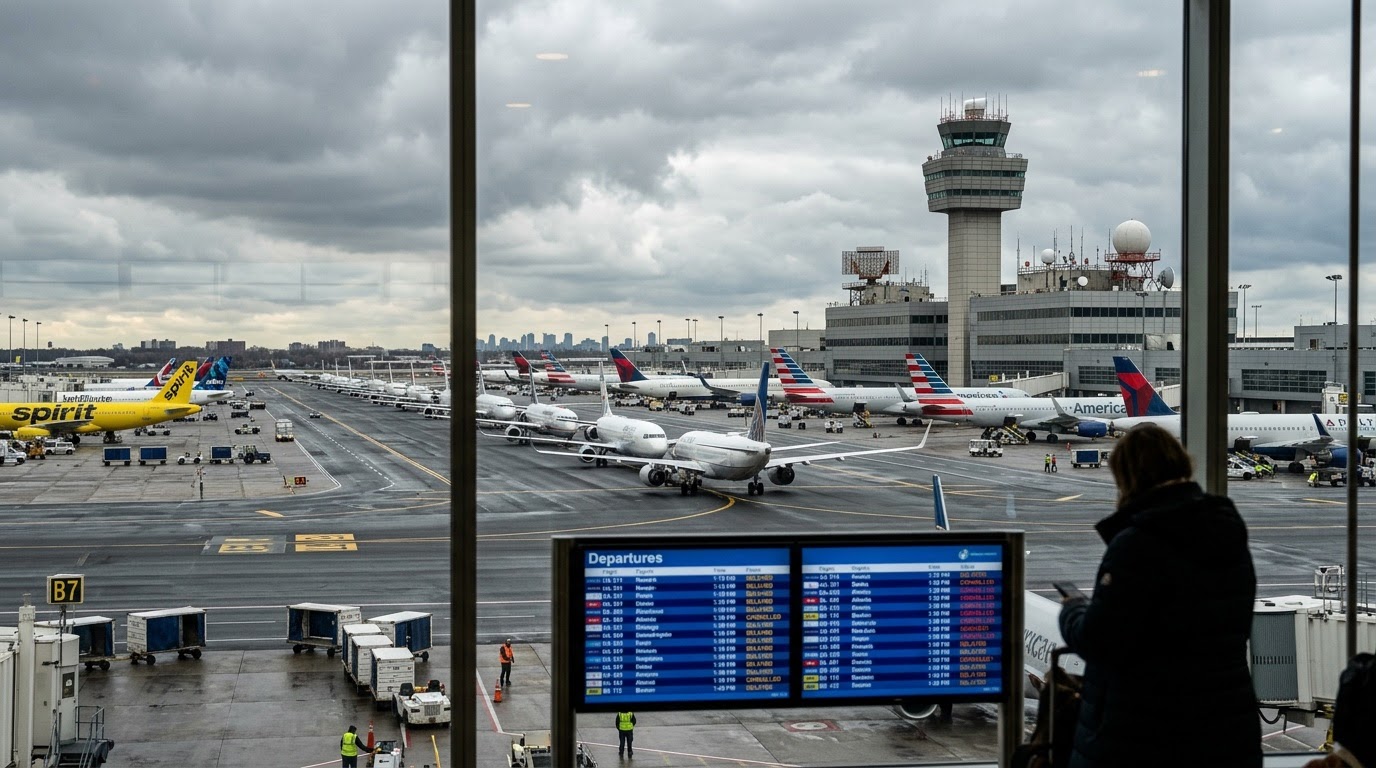
A ground stop immediately affects aircraft waiting at departure gates or airport taxiways. Delays then move across airline schedules because crews and aircraft operate several flights daily. A late inbound aircraft may cause a later cancellation elsewhere. Crew duty limits can deepen disruption even after officials lift the restriction.
Airlines may also lose scarce takeoff, landing, or gate opportunities at crowded airports. Passengers can miss connections, hotel reservations, business meetings, and international departures. Cargo carriers face scheduling problems for time-sensitive shipments. These costs explain why even a short national pause attracts intense attention.
Resilience Requires More Than New Equipment
Replacing old hardware will not eliminate every operational interruption. The FAA also needs independent backups, diverse communications routes, tested recovery plans, and strong configuration controls. Engineers must detect problems quickly and isolate failures before they spread. Regular exercises can confirm whether backup services work under realistic conditions.
Cybersecurity adds another requirement because air-traffic systems exchange data with airlines, airports, contractors, and government networks. Agencies must authenticate users, monitor unusual activity, and install security updates without interrupting operations. Segmented networks can limit the reach of compromised equipment. Effective contractor oversight must support those technical protections.
Congress and the FAA Face Long-Term Choices
The 2024 FAA reauthorization law provided five years of policy direction and authorized substantial aviation spending. It supported controller hiring, airport improvements, safety programs, and technology modernization. Authorization alone does not guarantee timely appropriations or successful project delivery. Lawmakers must track milestones, costs, staffing, and operational results.
The FAA must also identify the systems that create the greatest operational and safety risks. Replacing everything simultaneously would overwhelm budgets, contractors, trainers, and facilities. A risk-based plan should prioritize fragile components with limited redundancy or unavailable replacement parts. Transparent progress reports could help Congress and the public evaluate that strategy.
Safety Remains the Central Measure
Ground stops inconvenience travelers, but they demonstrate a deliberate preference for safety over schedule performance. Controllers need confidence in communications, surveillance, weather information, and flight data before accepting normal traffic volumes. Restricting departures creates time for technicians and managers to assess uncertain conditions. That caution remains a fundamental strength of American aviation.
Still, repeated disruptions can weaken confidence and impose growing economic costs. The latest scrutiny gives policymakers another opportunity to address warnings that auditors have documented for years. Modern equipment, sufficient staffing, dependable funding, and tested backups can reduce systemic risk. The next ground stop will show whether that attention produced durable action.


