

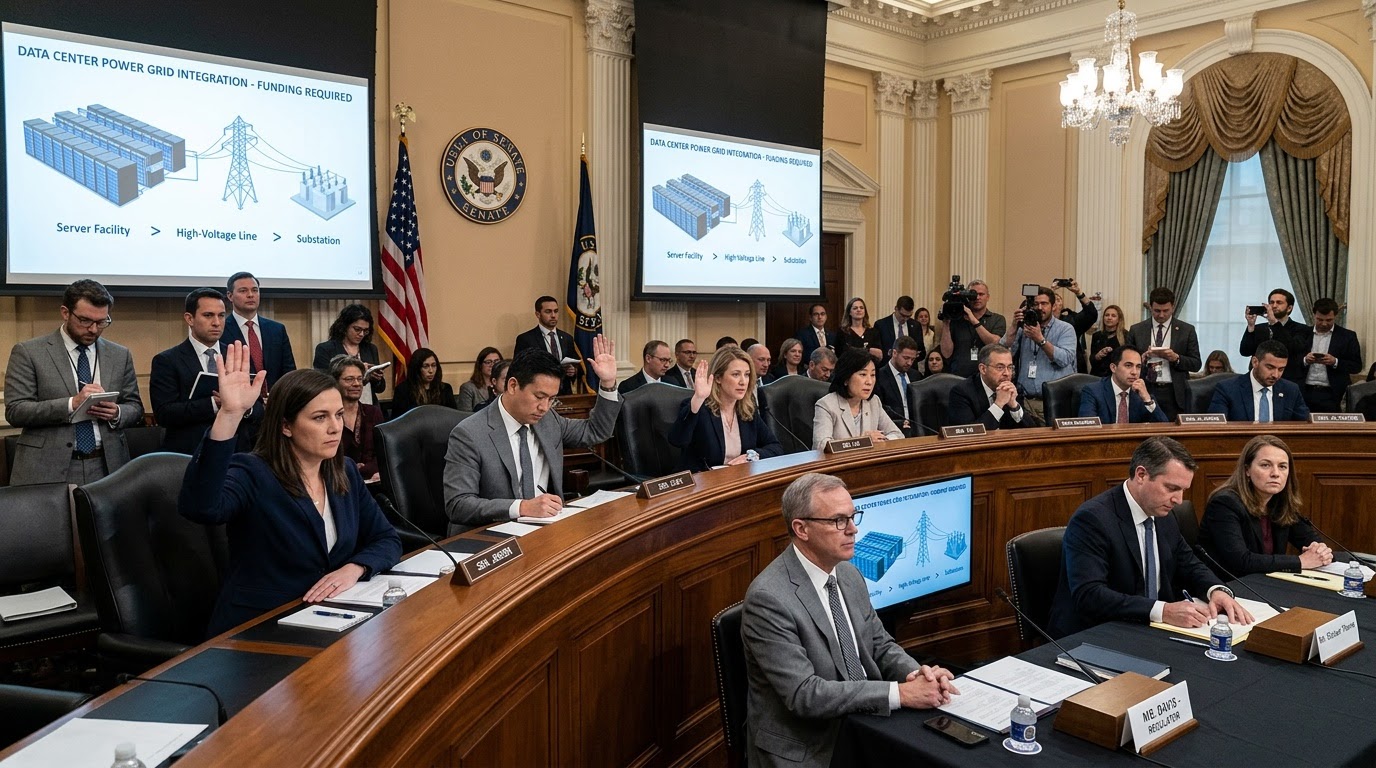
Senate action moves the proposal forward
Senators advanced a permitting package designed to accelerate energy projects and address rapidly rising electricity demand. The proposal links faster approvals with a requirement that large data centers finance grid upgrades tied to their service. Supporters say the pairing can expand power supplies without shifting disproportionate costs onto households and small businesses. The action moves the legislation forward, but it does not make the proposal law. Further congressional action and presidential approval would still be required.
Data center development has intensified the permitting debate because these facilities often need enormous, uninterrupted power supplies. Artificial intelligence systems, cloud services, and digital commerce are driving that growth. Utilities must add substations, transmission lines, generators, or storage when existing systems cannot handle new loads. Those projects can take years to plan, permit, finance, and build. The bill tries to align customer growth with infrastructure investment.
Why costs have become central
Grid investments traditionally enter utility rate bases, which customers repay through monthly bills over many years. That model can spread useful network costs across everyone benefiting from a stronger system. However, a single data center campus can trigger expensive facilities serving a concentrated new demand source. Lawmakers worry ordinary customers could subsidize those investments if regulators allocate costs too broadly. The proposal therefore emphasizes direct financial responsibility for upgrades caused by large data center connections.
Under the measure, data center developers would fund grid improvements needed to connect and reliably serve their projects. Utilities and regulators would still determine which facilities qualify and which expenses reflect broader system needs. That distinction matters because a transmission project may support both a data center and surrounding communities. Sound allocation requires evidence, transparent forecasts, and enforceable agreements. The cost provision forms the financial counterpart to faster permitting.
How faster permitting would work
The permitting provisions seek to reduce delays for power plants, transmission facilities, substations, and related infrastructure. They aim to coordinate agency reviews, clarify schedules, and prevent duplicative work across governmental offices. Faster review does not automatically guarantee approval for any project. Agencies would still examine environmental effects, engineering plans, land requirements, and applicable legal standards. Sponsors argue that predictable decisions can lower financing risks and construction costs.
Transmission remains a major obstacle
Transmission development remains especially difficult because long lines can cross multiple jurisdictions and private properties. Developers may need federal, state, tribal, and local permissions before construction begins. Separate timelines can create bottlenecks, even when regulators agree that a project supports reliability. The bill attempts to move those reviews together while preserving required analysis. That approach connects permitting reform directly with the data center funding rule.
What data centers would pay for
Connection costs can include dedicated substations, transformers, feeders, protection equipment, and nearby transmission reinforcements. Larger campuses may also require generation additions or upgrades far beyond the immediate connection point. The bill’s principle follows “cost causation,” a longstanding utility concept assigning expenses to customers creating them. Regulators often apply that principle through special contracts, tariffs, deposits, and minimum payment commitments. Federal legislation could push agencies toward a more consistent national approach.
Developers may face upfront payments, long-term service obligations, or financial guarantees if expected demand fails to appear. Such protections matter because utilities plan equipment around forecasts made years before facilities begin operating. A canceled project can otherwise leave remaining customers responsible for unused infrastructure. Conversely, a completed project can generate substantial utility revenue and support broader investments. Careful rules must balance those outcomes without blocking economically sound development.
Reliability and consumer protection goals
Data centers usually operate around the clock and can consume power at industrial scale. Their steady demand can support utility revenues, but sudden growth can strain generation reserves and local equipment. Extreme weather adds pressure because homes, businesses, and critical services also need dependable electricity. Requiring customer-funded upgrades can provide capacity before a new facility reaches full operation. The policy also signals that speed cannot replace reliability planning.
Ratepayers remain part of the debate
Consumer advocates focus on whether utility customers will pay higher bills for infrastructure built around private projects. They also question contracts that offer large users discounts unavailable to households. The bill answers part of that concern by assigning upgrade costs to data centers. Yet regulators must still examine energy charges, contract terms, depreciation schedules, and stranded-asset risks. Those details will determine whether the protection works in practice.
Environmental and community considerations
Faster approvals can create economic benefits, including construction jobs, tax revenue, and earlier access to new capacity. However, communities often raise concerns about water consumption, diesel backup generators, noise, and land conversion. Transmission routes can also affect farms, wildlife habitat, cultural sites, and nearby property owners. A shorter review should still produce usable information and meaningful public participation. The central dispute concerns efficiency, not whether consequences exist.
Environmental groups often support cleaner generation and expanded transmission but resist weakened review standards. Industry groups generally favor firm deadlines, coordinated agencies, and fewer opportunities for repetitive litigation. Local leaders may welcome investment while seeking authority over zoning, roads, emergency services, and water. The Senate debate must reconcile those interests as lawmakers refine the package. This balance will influence support beyond the chamber.
Regulators retain key roles
Congress can establish broad requirements, but regulators will translate them into tariffs and interconnection rules. The Federal Energy Regulatory Commission oversees interstate transmission rates and many wholesale power market practices. State commissions regulate retail utility service and decide many questions involving local customer costs. Regional grid operators also study connections, forecast demand, and identify network upgrades. Coordination among those institutions will shape the legislation’s practical effects.
Definitions will affect implementation
Implementation will require clear definitions for data centers, covered upgrades, and qualifying demand thresholds. Rules must also address campuses built in phases or served through competitive power arrangements. Accurate forecasts remain essential because developers can revise schedules, equipment, or computing strategies quickly. Regulators may require security deposits or contracts protecting customers from abandoned projects. Those choices will decide who carries risk before electricity starts flowing.
The legislative path ahead
Advancement marks an important procedural step, yet the bill still faces negotiations and possible amendments. Senators may debate environmental safeguards, federal authority, customer protections, and the treatment of existing projects. House lawmakers could pursue different permitting language or different rules for large electricity users. Any final measure would need matching text from both chambers. The president would then decide whether to sign it.
Utilities and developers will watch the debate because planning decisions already extend many years into the future. Communities will watch for guarantees that new investment will not weaken affordability or environmental oversight. Data center operators will seek predictable charges, workable schedules, and access to sufficient power. The package attempts to connect those priorities through faster decisions and direct cost responsibility. Its success will depend on regulatory details, enforcement, and realistic forecasts.
The immediate result is a clearer framework linking energy infrastructure approvals with customers driving new demand. The bill does not resolve every grid challenge, including generation shortages and slow equipment deliveries. It does, however, place cost allocation beside permitting speed. That linkage now anchors the next stage of debate.


