

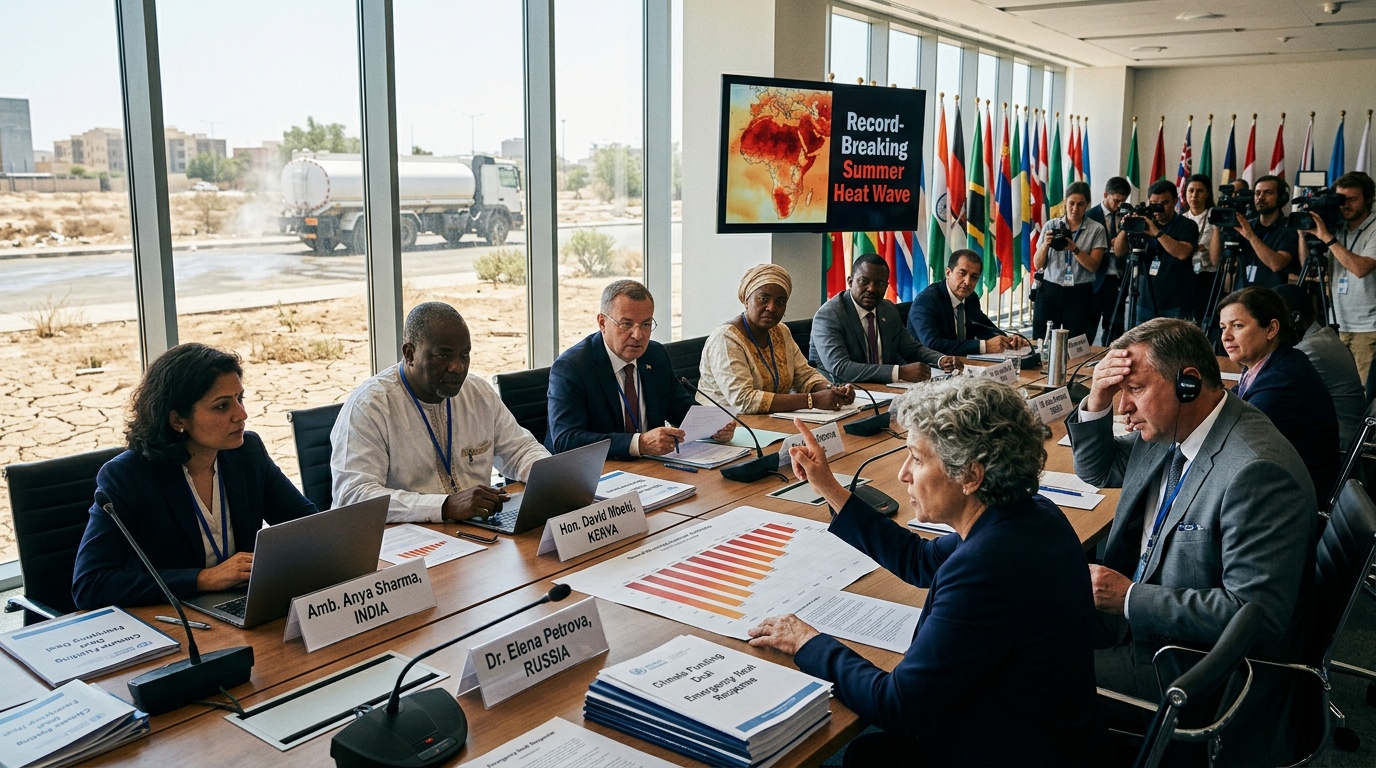
Record-breaking summer heat has intensified international calls for stronger climate action and greater financial support. Governments now face growing pressure to protect communities from worsening weather extremes. The latest heat waves affected millions across several continents. Scientists continue linking many of these events to human-driven climate change. As a result, political leaders are renewing negotiations over climate finance. They hope fresh funding can help vulnerable countries prepare for future risks while reducing greenhouse gas emissions.
The debate extends beyond environmental concerns. Economic stability, food production, public health, and infrastructure all face increasing climate-related challenges. These pressures have strengthened arguments for expanding financial commitments. Many governments believe existing funding arrangements no longer match the scale of climate impacts. Therefore, negotiations have gained fresh urgency following another exceptionally hot summer.
Extreme Heat Highlights Growing Climate Risks
Several regions experienced prolonged periods of dangerous temperatures during the latest summer season. Heat records fell across parts of Europe, Asia, North America, and other areas. Extended heat strained electricity systems and increased wildfire risks. Hospitals also reported higher numbers of heat-related illnesses. Agricultural production suffered in some locations because crops struggled under persistent high temperatures.
Climate researchers emphasize that individual weather events involve many factors. However, long-term warming increases the likelihood and intensity of extreme heat. The Intergovernmental Panel on Climate Change has repeatedly warned about these trends. Scientific assessments also indicate that future heat extremes may become more frequent without substantial emissions reductions. Consequently, many policymakers see climate adaptation as an urgent priority.
Why Climate Finance Remains a Central Issue
Climate finance refers to money supporting emissions reductions and climate adaptation efforts. Funding comes from governments, development banks, private investors, and international organizations. Wealthier nations have historically pledged financial assistance for developing countries. Those commitments recognize differing economic resources and historical contributions to global emissions. Yet disagreements continue over funding levels, delivery methods, and accountability.
Many lower-income countries argue they require greater financial assistance to strengthen resilience. Coastal defenses, water management systems, emergency planning, and cleaner energy projects often require substantial investment. Limited public budgets make those improvements difficult without outside support. Therefore, climate funding discussions frequently dominate international climate negotiations.
International Negotiations Gain Fresh Momentum
Global leaders have renewed discussions through international meetings and diplomatic engagements. Climate summits remain important venues for negotiating financial commitments. Delegations often debate funding targets, reporting standards, and implementation timelines. These discussions involve developed economies, emerging markets, vulnerable nations, and multilateral institutions. Despite differing priorities, many participants acknowledge that stronger cooperation remains necessary.
Recent negotiations have also focused on improving trust between countries. Some developing nations argue previous financial promises arrived slowly or fell short of expectations. Wealthier governments often highlight budget constraints and changing domestic priorities. Even so, both sides generally recognize that delayed action may increase future costs. That shared understanding has encouraged continued dialogue.
The Role of Development Banks
Multilateral development banks play an important role in climate finance. These institutions provide loans, grants, technical expertise, and investment support. Several banks have announced efforts to expand climate-related lending. They also seek to attract additional private investment through risk-sharing mechanisms. Supporters believe these reforms could increase available funding without relying solely on public budgets.
Adaptation Receives Greater Attention
Climate adaptation has become a major focus alongside emissions reduction. Adaptation measures help communities prepare for changing environmental conditions. Projects include stronger flood barriers, drought-resistant agriculture, improved cooling systems, and better emergency response planning. These investments aim to reduce future damage and protect lives. Many experts argue adaptation deserves significantly greater financial support.
Small island states and low-lying coastal nations frequently emphasize adaptation needs. Rising sea levels and stronger storms threaten homes, transportation, and freshwater supplies. Other countries face prolonged droughts, changing rainfall patterns, or expanding wildfire seasons. Because climate impacts differ across regions, funding priorities also vary considerably.
Loss and Damage Discussions Continue
Loss and damage financing has become another important element of international climate negotiations. This concept addresses climate impacts that cannot be fully prevented through adaptation. Examples include severe storm destruction, permanent land loss, and other irreversible consequences. Vulnerable countries have long argued for greater international assistance in these situations.
Negotiators continue discussing how such funding should operate. Questions remain about eligibility, governance, and long-term financial sources. Several countries have announced contributions to emerging funding arrangements. However, many observers note that overall financial needs remain much larger than current commitments.
Private Investment Could Expand Available Resources
Public funding alone is unlikely to meet estimated global climate investment needs. Therefore, governments increasingly encourage greater private sector participation. Investors have shown growing interest in renewable energy, sustainable infrastructure, and resilience projects. Clear regulations and stable policies often improve investor confidence. Those conditions can help attract additional long-term financing.
Financial institutions also continue developing climate-related investment products. Green bonds, sustainability-linked financing, and blended finance structures have expanded in recent years. These approaches seek to mobilize larger pools of capital. Nevertheless, investment remains uneven across regions, especially in lower-income countries.
Challenges Facing a New Funding Agreement
Reaching consensus remains difficult despite broad recognition of climate risks. Governments must balance international commitments with domestic economic pressures. Inflation, public debt, and competing policy priorities influence budget decisions. Political changes can also affect long-term climate strategies. Consequently, negotiations often require lengthy compromises.
Transparency represents another important issue. Donor countries want clear reporting on how funds are used. Recipient governments seek predictable financial flows and simpler application processes. Better monitoring systems may strengthen confidence among participating countries. Greater accountability could also improve project effectiveness.
Scientific Evidence Shapes Policy Decisions
Scientific research continues informing international climate discussions. Climate models help governments evaluate future risks under different emissions scenarios. Observational data also reveal long-term warming trends across land and oceans. Policymakers often rely on these findings when designing national climate plans. Evidence-based decisions remain central to effective climate policy.
Researchers also study the economic impacts of extreme weather. Heat waves can reduce worker productivity and increase healthcare costs. Transportation systems and energy infrastructure may require costly upgrades. These findings strengthen arguments for preventive investments. Preventing damage often costs less than rebuilding afterward.
Looking Ahead
The latest record-breaking summer has reinforced the urgency of international climate cooperation. Governments continue exploring ways to strengthen financial commitments while supporting economic development. Future negotiations will likely address funding levels, implementation mechanisms, and accountability measures. Progress will depend on sustained diplomatic engagement and practical policy solutions.
Climate finance alone cannot solve every environmental challenge. However, adequate funding can support cleaner energy systems, stronger infrastructure, and better disaster preparedness. Continued scientific research, international cooperation, and transparent implementation will remain important. As climate risks evolve, many governments view effective financial partnerships as an essential part of the global response.
