

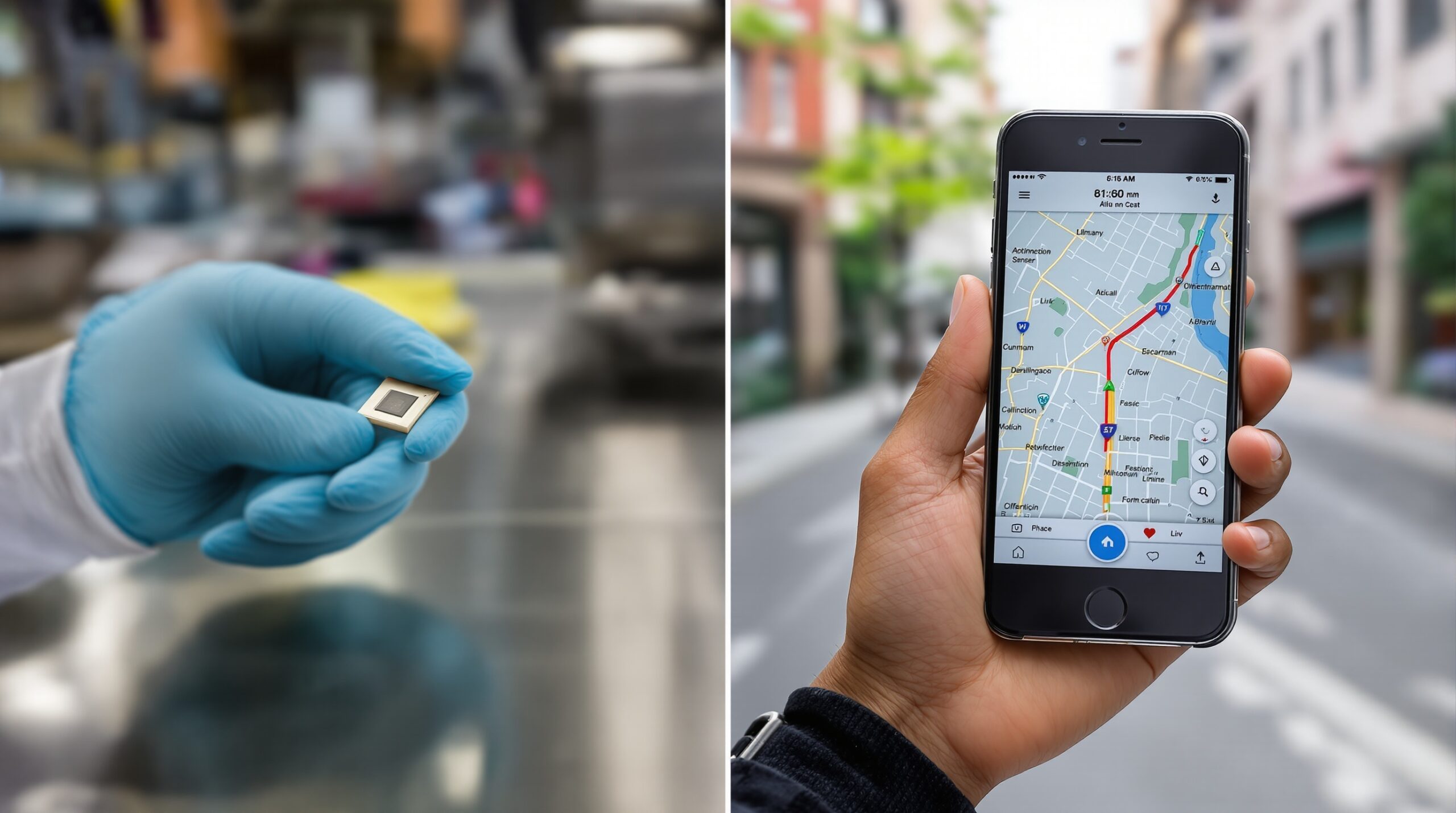
Quantum sensors are leaving physics labs and entering consumer product roadmaps. This shift could transform everyday navigation, timing, and environmental awareness. It also raises fresh questions about privacy, consent, and security. Understanding the technology helps you anticipate both benefits and tradeoffs.
What makes a sensor “quantum”?
Quantum sensors exploit quantum states to measure tiny changes in fields, forces, or time. These states respond predictably to magnetic, electric, or inertial influences. Engineers read those responses with lasers, microwaves, or precise electronics. The result is sensitivity that often beats classical devices of similar size.
Key families include atomic clocks, magnetometers, gyroscopes, and gravimeters. Atomic clocks use atoms as timing references for exceptional stability. Magnetometers use atomic vapors or diamond defects to sense weak magnetic fields. Gyroscopes and accelerometers use quantum interference or spin effects to measure motion with lower drift.
Several approaches already fit on chips or small modules. Chip‑scale atomic clocks deliver precision timing in matchbox packages. Optically pumped magnetometers remove cryogenics and use compact optics. Nitrogen‑vacancy diamond sensors use room‑temperature defects monitored by tiny lasers. Each approach favors different tradeoffs in power, size, and cost.
Why miniaturization is advancing now
Manufacturing progress drives this transition more than hype. Photonic integration packs lasers, filters, and detectors onto small substrates. Microfabrication patterns vapor cells and waveguides with semiconductor techniques. Low‑noise electronics and better packaging reduce interference from heat and vibration. Together, these improvements enable portable and affordable devices.
Industry demand also accelerates development. Telecom networks want robust timing that survives outages. Automotive and robotics teams need reliable inertial guidance in tunnels and cities. Consumer platforms seek indoor positioning for shopping, safety, and mixed reality. These markets motivate suppliers to shrink quantum modules and reduce costs.
From prototypes to phones
Smartphone integration will not happen overnight. Power budgets, heat, and cost constraints set a high bar. Still, component trends point toward gradual adoption. Expect early modules in accessories, wearables, or specialized handsets. Later generations could integrate deeper into mainstream phones as costs drop and software matures.
Developers will likely begin with navigation and timing features. Quantum‑enhanced inertial sensors can reduce drift during GPS gaps. Precision timing can improve network synchronization and secure protocols. Magnetic and gravity features enable environment awareness without radios. These abilities support privacy‑preserving positioning and reliable augmented reality experiences.
Navigation: beyond GPS dependency
Today’s phones rely on GNSS, Wi‑Fi, Bluetooth, and MEMS inertial sensors. Urban canyons and buildings degrade those signals and maps. MEMS inertial sensors drift quickly during dead reckoning. Quantum gyroscopes and accelerometers can extend accurate navigation through long GNSS outages. They reduce cumulative error and stabilize trajectories.
These sensors track rotation and acceleration with improved stability. Sensor fusion algorithms combine quantum readings with maps and radio cues. The phone can maintain direction and distance in subways and stairwells. Emergency responders could locate people underground or inside large complexes. Logistics and autonomous devices also benefit significantly.
Atomic clocks strengthen timing, which anchors all positioning systems. Better timing reduces errors in multilateration and two‑way ranging. Networks gain resilience during synchronization failures or jamming events. Consequently, navigation becomes more robust across diverse environments. That resilience supports safety, accessibility, and economic activity.
Mapping and context sensing
Phones can use magnetometers to recognize indoor locations by unique magnetic fingerprints. Building materials distort Earth’s field in consistent patterns. Algorithms match patterns to maps without sharing raw location data. Quantum magnetometers expand the signal space with higher sensitivity and bandwidth. This improvement enhances recognition and stability.
Gravity sensors can reveal tiny density changes under floors. Those changes correlate with features like stairwells or voids. Though gravimeters remain bulky today, miniaturization continues steadily. Even modest quantum improvements can strengthen step detection and floor estimation. These gains improve accessibility tools and emergency routing.
Developers can also detect device interference more precisely. Better magnetic sensing flags tampering or spoofing attempts near payment modules. It can guard compasses from hard‑iron distortions by attachments. As a result, phones maintain trustworthy headings and safer transactions. Users experience fewer calibration prompts and fewer errors.
Privacy stakes rise as sensitivity increases
Greater sensitivity creates new information flows. The device can infer location from ambient fields and motion alone. That inference can happen without radios or explicit user consent. Data brokers might request sensor streams to build fine‑grained maps. Policymakers and platforms should anticipate these capabilities now.
Location inference from ambient fields
Magnetic anomalies produce signatures unique to buildings and paths. A phone can match signatures to stored maps for positioning. This method works indoors and underground, where GNSS fails. However, it also enables silent location tracking if apps access sensors. Permission models must treat such access as sensitive.
Inertial patterns can also reveal routines and addresses. Repeated travel paths and elevation profiles become identifying. Combined with clock and barometer data, inference improves further. Differential privacy and on‑device processing can limit exposure. Even so, developers should justify and minimize retained sensor data.
Device, bystander, and data risks
Stronger magnetometers raise side‑channel concerns. Apps could profile nearby electronics or accessories without notice. Attackers might infer keystrokes on poorly shielded hardware. Platform policies should block background access for untrusted apps. Security reviews should scrutinize sensor APIs and sampling rates.
Bystanders face indirect exposure when phones scan environments. Ambient field maps may reveal building layouts or valuable assets. Organizations may restrict scanning in sensitive facilities. Clear indicators and enterprise controls can mitigate accidental collection. Transparency reduces surprises and legal conflicts.
Data retention and sharing amplify risks beyond raw sensing. Combined datasets enable powerful reidentification. Contracts and regulation should curb secondary use and resale. Opt‑out choices and audit logs support accountability. Privacy engineering must accompany every feature that uses quantum sensors.
Mitigations and responsible design
Platforms should classify high‑fidelity sensor streams as sensitive. Users should grant explicit permissions with clear explanations. System prompts should describe purpose, frequency, and benefits. On‑device processing should handle mapping and inference whenever possible. Only share derived results that protect individual traces.
Developers can adopt data minimization and strict scoping. Collect only needed channels and only when necessary. Use low‑rate sampling unless the task requires high fidelity. Apply differential privacy to shared statistics when appropriate. Provide deletion controls and transparent retention limits.
Standards bodies can help align expectations and safety. Common calibration files avoid leaking private environments. Test suites can evaluate spoofing resistance and bias control. Certification programs can verify permission handling and on‑device safeguards. Regulators can update guidance under existing privacy laws. Collaboration reduces fragmentation and confusion.
Technical hurdles before mass adoption
Power remains the toughest constraint for phones. Many quantum modules need lasers or heaters for stability. Designers must trim watts to tens of milliwatts. Duty‑cycling and burst measurements can reduce average draw. Thermal isolation prevents hot spots that bother users or sensors.
Interference presents another challenge in compact phones. Speakers, radios, and chargers produce noisy fields. Shielding and smart placement reduce coupling and bias. Real‑time calibration and machine learning can cancel residual noise. Robust software matters as much as novel hardware.
Cost and reliability will determine mainstream timing. Yields must rise for exotic materials and photonics. Modules must survive drops, humidity, and daily temperature swings. Multi‑year stability must hold without frequent service. Supply chains must support secure and ethical sourcing. These steps take disciplined engineering effort.
What consumers should watch and do
Expect gradual features, not overnight revolutions. First, look for better indoor navigation and smoother augmented reality. Then, watch for stronger timing in connectivity features. Review app permissions that request motion or magnetic data. Question requests that lack clear user value.
Prefer devices that process data on the device. Check for visible indicators during environment scanning. Use enterprise controls in sensitive workplaces. Update firmware to get security and calibration improvements. Read transparency reports from platform providers and developers.
Outlook: powerful capabilities need careful stewardship
Quantum sensors promise stronger navigation, timing, and context awareness. These strengths reduce reliance on external signals and maps. They also create new vectors for location inference and profiling. Responsible design can deliver benefits while respecting rights. We can deploy safeguards now while the market grows.
Near‑term progress will likely favor magnetometers and timing modules. Wider adoption of quantum inertial sensors may follow. Cold atom systems may stay niche until power drops further. Each step will widen ambient sensing capabilities in phones. Stakeholders should coordinate standards, permissions, and education accordingly.
Consumers gain resilience when networks falter or signals vanish. Businesses gain reliability for logistics and safety. Society gains better tools for emergencies and accessibility. Yet, safeguards must match the technology’s sensitivity. With vigilance, smartphones can host quantum sensors without sacrificing privacy.
