

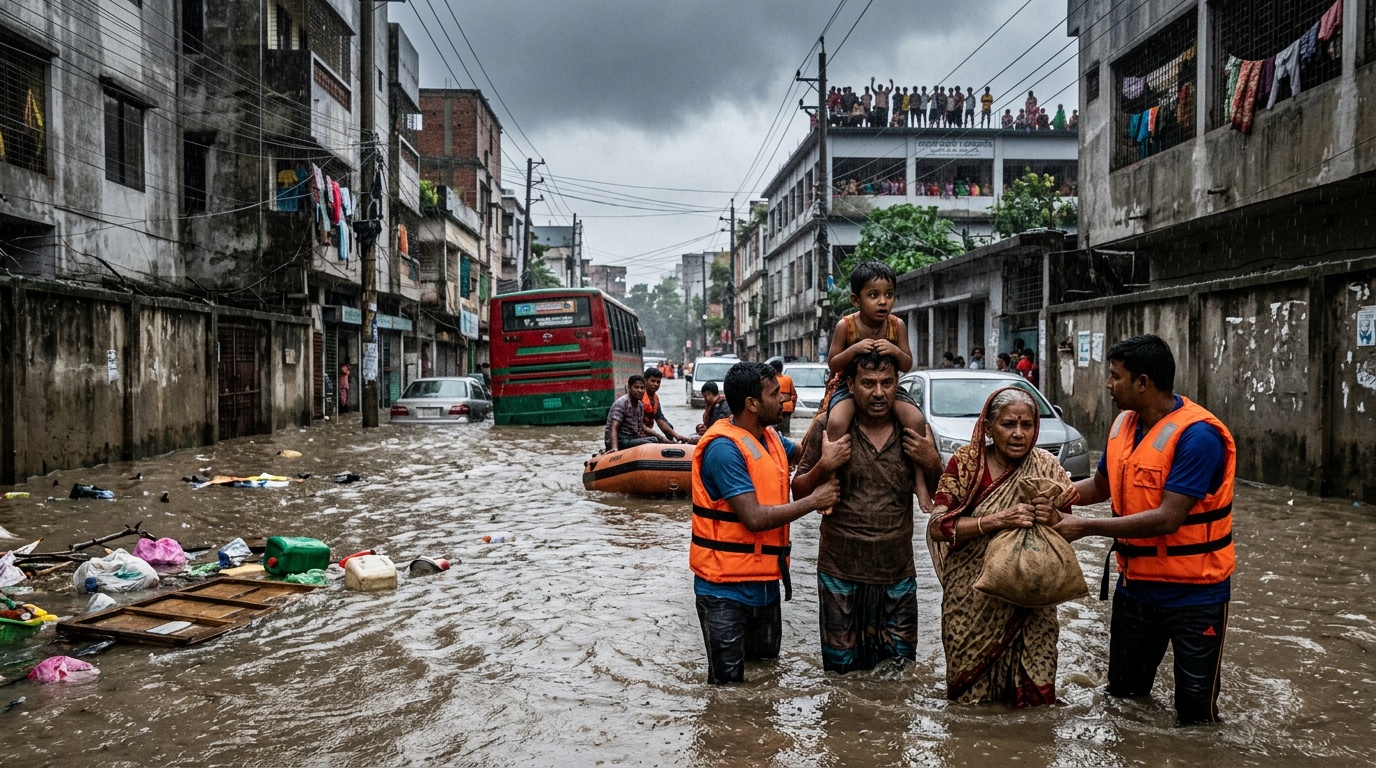
Severe monsoon flooding has disrupted transport networks and forced evacuations across several parts of South Asia. Heavy rainfall has swollen rivers, inundated roads, damaged bridges, and isolated communities in low-lying areas. Authorities have deployed rescue teams while transport agencies face repeated interruptions on roads and railways. Floodwater has also entered homes, farmland, markets, and public buildings in vulnerable districts.
The annual monsoon provides essential water for agriculture, reservoirs, and households across the region. However, intense rainfall can overwhelm drainage systems and push major rivers beyond safe levels. Mountainous terrain creates additional dangers because saturated slopes can trigger landslides and debris flows. These hazards often compound flooding by blocking roads, damaging infrastructure, and delaying emergency assistance.
Flooding disrupts essential transport links
Flooded highways and rural roads have created major transport problems in affected areas. Local authorities regularly close submerged routes because strong currents can sweep away vehicles and pedestrians. Water can also weaken road foundations before visible damage appears on the surface. That danger forces officials to inspect affected sections before reopening important connections.
Rail services face similar threats when floodwater covers tracks or erodes the ground beneath them. Operators can suspend trains when engineers identify unsafe tracks, damaged signaling equipment, or unstable embankments. These suspensions leave passengers searching for alternative routes during already difficult travel conditions. Freight movements can also slow, affecting deliveries of food, fuel, construction materials, and other goods.
Air travel can face disruption when thunderstorms, poor visibility, or waterlogged facilities affect airport operations. Weather conditions may delay flights even where runways remain usable. Meanwhile, landslides can sever mountain highways connecting remote communities with regional centers. Together, these disruptions complicate both ordinary travel and emergency response operations.
Authorities evacuate communities at risk
Rising water levels have prompted evacuations from vulnerable settlements across flood-prone districts. Emergency workers use boats and high-clearance vehicles when ordinary vehicles cannot navigate submerged streets. Authorities may also move residents before rivers reach dangerous levels. Early evacuations reduce exposure to fast-moving water and give emergency teams more time to reach isolated households.
Schools, government buildings, and community centers can serve as temporary shelters during major floods. Displaced families often need clean water, food, sanitation, medicine, and secure sleeping areas. Children, older people, pregnant women, and people with disabilities may require additional assistance. Livestock evacuation also matters because many rural households depend heavily on animals for income and food.
Rescue operations become harder after darkness or during continued heavy rain. Strong currents can conceal open drains, collapsed roads, and other hazards beneath muddy water. Emergency agencies therefore urge residents to follow evacuation orders and avoid attempting to cross flooded routes. Conditions can change quickly when upstream rainfall causes rivers to rise downstream.
South Asia faces recurring monsoon risks
Monsoon flooding affects South Asian countries differently because geography, river systems, urban development, and infrastructure vary widely. India and Bangladesh share major river basins that carry enormous seasonal flows toward the Bay of Bengal. Pakistan also faces river flooding and destructive flash floods during periods of extreme monsoon rainfall. Nepal and Bhutan experience landslide risks where steep terrain meets intense precipitation.
Sri Lanka can experience flooding and landslides when monsoon systems produce prolonged rainfall over saturated ground. The Maldives faces different water-related risks because its islands sit at very low elevations. Afghanistan also experiences destructive seasonal floods, although rainfall patterns differ from those farther south and east. Cross-border river systems make regional forecasting and information sharing especially important.
Urban flooding creates additional pressure
Rapid urban growth has increased exposure to flooding in many South Asian cities. Paved surfaces prevent rainfall from soaking naturally into the soil. Blocked drains, construction, and inadequate stormwater systems can worsen flooding during intense downpours. Water may then accumulate rapidly on streets, around railway stations, and inside densely populated neighborhoods.
Urban transport systems can suffer cascading disruption when a few strategic routes become unusable. Buses may stop operating or divert onto already congested roads. Commuters can struggle to reach workplaces, hospitals, schools, or transport terminals. Electricity failures and telecommunications problems may create further difficulties when floods damage local infrastructure.
Floodwater threatens health and livelihoods
Beyond immediate transport disruption, prolonged flooding creates significant public health challenges. Contaminated water can spread diarrheal illnesses when sewage mixes with drinking supplies. Standing water can also provide breeding sites for mosquitoes. Health agencies therefore monitor disease risks while supporting clean water, hygiene, vaccination, and medical services where necessary.
Floods can also damage crops shortly before harvest or prevent farmers from reaching fields. Waterlogged soil may destroy vegetables and other crops that cannot tolerate prolonged submersion. Flood currents can wash away stored grain, agricultural equipment, and livestock. Such losses can reduce household incomes long after roads reopen and displaced families return home.
Food supply chains can experience additional pressure when damaged roads prevent trucks from reaching markets. Perishable goods face particularly high losses during long transport delays. Prices may increase locally when supplies become scarce or delivery costs rise. However, the scale of these effects depends on flood duration and the availability of alternative routes.
Climate change increases extreme rainfall concerns
Scientists expect a warmer atmosphere to hold more moisture, creating conditions for heavier rainfall events. Research also indicates that climate change influences precipitation extremes across parts of South Asia. However, individual floods result from multiple factors rather than a single cause. Rainfall intensity, land use, drainage, river management, terrain, and local vulnerability all shape flood impacts.
Warmer conditions can also affect Himalayan snow and glaciers, adding complexity to regional water risks. Glacial lakes can present separate hazards when natural barriers fail and release water suddenly. These events differ from ordinary monsoon flooding but can damage the same downstream transport networks. Better monitoring helps authorities distinguish threats and issue more useful warnings.
Forecasting and preparation remain critical
Meteorological agencies use satellites, weather radar, rain gauges, and forecasting models to monitor developing storms. River authorities also track water levels and discharge at monitoring stations. These observations support warnings for districts located downstream. Mobile alerts, sirens, television, radio, and local volunteers can then communicate risks to threatened communities.
Warnings work best when residents receive clear information early enough to act. Authorities must also identify evacuation routes that remain usable as water rises. Prepared shelters need reliable sanitation, electricity, drinking water, and medical support. Local planning can reduce confusion when rapidly deteriorating weather requires large-scale movement.
Longer-term measures can reduce disruption during future monsoon seasons. Governments can strengthen bridges, improve drainage, protect floodplains, and design infrastructure for changing rainfall extremes. Maintaining culverts and drainage channels also helps water move away from populated areas. Nature-based measures, including restored wetlands, can store some floodwater while providing environmental benefits.
Recovery continues after water recedes
The end of heavy rain does not immediately end the emergency. Rivers may remain high for days after rainfall moves away. Engineers must assess bridges, roads, embankments, and railway tracks before transport services fully resume. Utility crews may also need to restore electricity, water systems, and communications in flooded communities.
Families returning home often face mud, damaged belongings, unsafe buildings, and contaminated wells. Farmers must assess crop losses and determine whether fields can support another planting. Businesses may need repairs before reopening, while workers can lose income during extended closures. Recovery costs therefore extend well beyond the visible damage caused by floodwater.
South Asia’s monsoon will remain essential to the region despite the dangers created by extreme rainfall. The immediate priority during severe flooding remains protecting lives and maintaining access to essential services. Reliable forecasts, resilient transport networks, and effective evacuations can reduce losses when rivers rise. Continued preparation will become increasingly important as communities confront recurring and evolving flood risks.
