

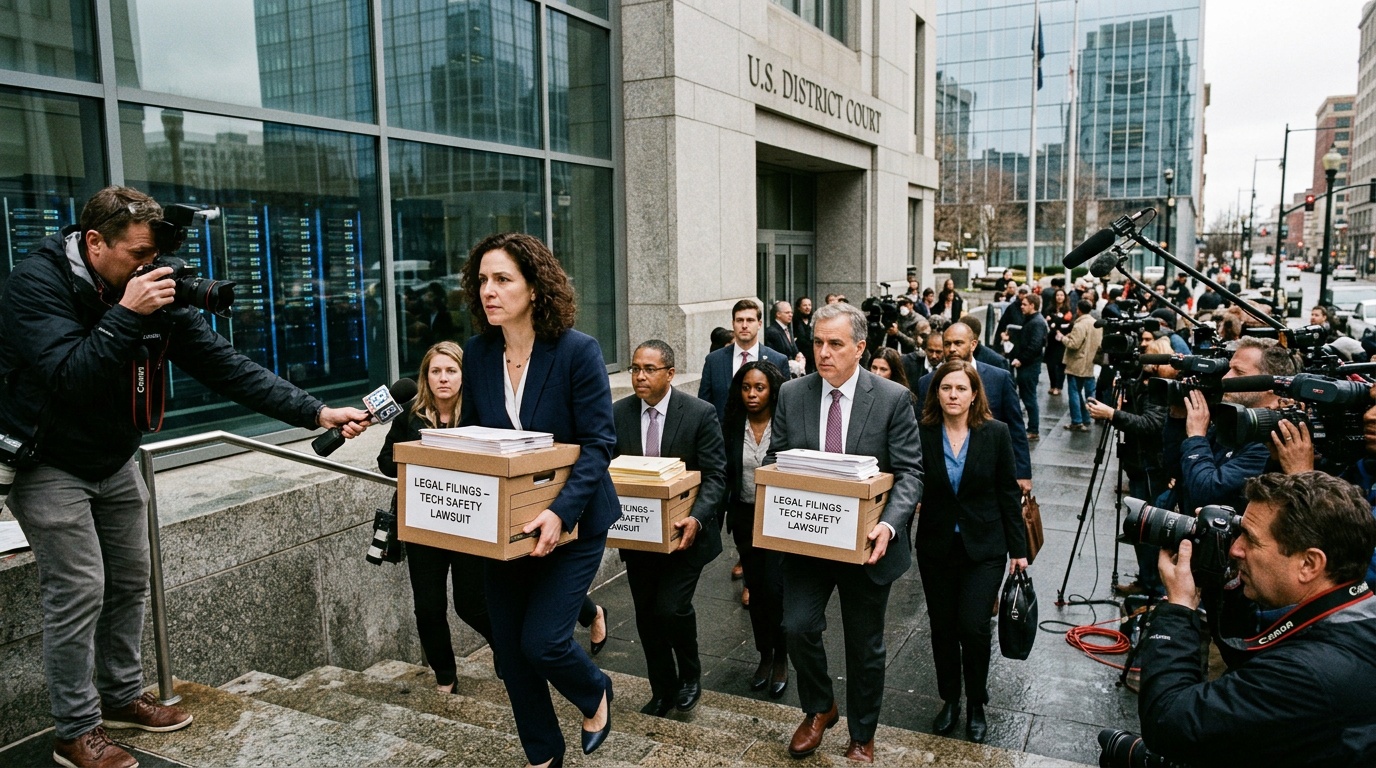
Safety-focused advocacy groups are turning to courts as artificial intelligence systems become more capable and widely deployed. Their filings argue that weak controls could expose the public to harms reaching far beyond ordinary product failures. Those alleged harms include cyberattacks, biological misuse, automated deception, critical infrastructure disruption, and loss of human control. Developers dispute many claims and emphasize their testing, safeguards, and staged release practices. The legal record remains unsettled, and no allegation alone establishes that a catastrophic outcome will occur.
A changing legal strategy
AI safety campaigns once focused mainly on research, voluntary commitments, and proposed legislation. Litigation adds a coercive tool that can compel responses, preserve evidence, and produce judicial oversight. Advocates may seek injunctions, disclosures, independent evaluations, or limits on releasing especially capable systems.
However, public descriptions often blur direct lawsuits, regulatory complaints, and friend-of-the-court briefs. A group filing an amicus brief supports a party’s argument but does not become a plaintiff. A petition to an attorney general also differs from a complaint filed in court. These distinctions matter because each process offers different remedies and procedural rights.
What advocates allege
Advocates argue that frontier models can scale dangerous capabilities faster than governments can create effective safeguards. They cite evaluations showing that some models can assist with coding, persuasion, scientific research, and strategic planning. Those capabilities have beneficial uses, but campaigners say malicious actors could redirect them.
Some filings describe catastrophic risk as a low-probability event carrying extraordinary consequences. They compare preventive action with safety rules governing aviation, medicines, nuclear materials, and other high-impact technologies. The comparison remains contested because general-purpose models differ from tightly defined physical products. Courts must therefore separate plausible mechanisms from broad predictions about future systems.
Legal theories behind cases
Potential claims include negligence, defective design, failure to warn, public nuisance, misrepresentation, and violations of consumer protection laws. Each theory requires specific elements, which vary by jurisdiction and the requested remedy. Plaintiffs cannot simply label a technology dangerous and automatically obtain judicial restrictions.
Negligence usually requires a duty, a breach, causation, and legally recognized harm. Product liability may require courts to decide whether software, model outputs, or related services qualify as products. Public nuisance claims face limits when plaintiffs allege generalized harms shared by society. Consumer claims usually depend on misleading statements, omitted facts, purchases, or other measurable injuries.
The challenge of standing
Standing presents one of the largest obstacles, especially in federal court. Plaintiffs generally need a concrete injury that defendants caused and a favorable ruling can address. A speculative future catastrophe may not satisfy that standard without evidence of a sufficiently imminent threat.
Organizations can sometimes sue for injuries to themselves or qualifying members. They may cite diverted resources, impaired missions, or direct exposure to a challenged practice. Yet courts scrutinize efforts to manufacture standing through voluntary spending. State courts may apply different standing rules, creating strategic choices about venue.
Evidence and causation
Catastrophic-risk cases also create difficult questions about proof. Advocates may rely on capability evaluations, internal policies, expert testimony, incident reports, and statements from company leaders. Developers may challenge testing methods, assumptions, benchmarks, and predictions about model scaling.
Causation becomes complicated when a user prompts a model, modifies its output, or combines it with outside tools. Defendants may argue that criminal misuse constitutes an independent act breaking the causal chain. Plaintiffs may answer that foreseeable misuse requires stronger design controls and access restrictions. Courts will examine facts rather than resolve those arguments through slogans.
How major firms respond
Leading developers publicly describe safety testing, red teaming, access controls, usage monitoring, and incident response programs. Several companies publish model cards, system cards, preparedness frameworks, or responsible scaling policies. These documents explain some thresholds and mitigations, although disclosure depth varies considerably.
Companies also warn that sweeping injunctions could freeze useful research and shift development toward less accountable actors. They may invoke trade-secret protections when plaintiffs request model weights, training details, or internal evaluations. Depending on the claim, firms could also raise federal preemption or constitutional defenses. None of these defenses automatically defeats a properly supported safety claim.
The role of existing litigation
Several prominent AI disputes illuminate the terrain without directly deciding existential-risk allegations. Copyright cases test training practices and generated outputs, while chatbot cases examine alleged injuries to individual users. Elon Musk’s litigation over OpenAI concerns governance, contracts, and its nonprofit origins, among other issues.
Safety organizations have also used amicus briefs and regulatory petitions to influence corporate restructuring and deployment decisions. Those actions can shape legal arguments, but they should not be confused with direct plaintiff lawsuits. No final judgment in an unrelated case automatically proves that frontier AI creates catastrophic danger.
Possible court orders
Advocates often view injunctions as more valuable than damages because prevention remains their central objective. A proposed order might require evaluations before release, external audits, reporting duties, or controlled access to dangerous capabilities. Plaintiffs could also request accurate risk disclosures and preservation of safety records.
Judges generally avoid vague orders that leave defendants uncertain about prohibited conduct. An effective injunction needs clear terms, workable boundaries, and a close connection to proven violations. Courts also weigh public interests and competing harms before granting preliminary relief. That balancing process can favor caution without accepting every catastrophic prediction.
Regulation shapes the courtroom
Litigation develops alongside legislation, agency enforcement, technical standards, and international rules. The European Union’s AI Act imposes risk-based obligations and special requirements for certain general-purpose models. United States policy remains divided among federal agencies, sector-specific laws, executive actions, and state measures.
Technical frameworks can influence a court’s view of reasonable care, even when they remain voluntary. The NIST AI Risk Management Framework offers guidance on mapping, measuring, managing, and governing risks. Company policies may also matter when plaintiffs argue that a developer ignored its own safety commitments. Still, violating a voluntary guideline does not necessarily establish legal liability.
Broader stakes for innovation
Supporters of litigation say market incentives can reward speed while shifting rare, enormous risks onto the public. They believe discovery could reveal internal assessments unavailable to researchers, lawmakers, and affected communities. Even unsuccessful claims may clarify responsibilities and expose gaps in existing law.
Critics fear that judges lack technical expertise and could impose requirements better designed by elected institutions. They also warn that expensive compliance may strengthen established companies and disadvantage smaller competitors. Both concerns can coexist with the need for credible oversight.
What happens next
Early proceedings will likely focus on jurisdiction, standing, pleading standards, and the requested scope of relief. Discovery, if permitted, could shift attention toward internal testing results and executive decisions. Expert witnesses would then debate capability trends, threat models, safeguards, and feasible alternatives.
The central legal question is narrower than the public debate about humanity’s future. Courts ask whether identified defendants violated existing duties and caused legally cognizable injuries. Advocates must translate systemic fears into evidence, doctrine, and practical remedies. Developers must show that their safety promises correspond with real operational controls. That contest may influence AI governance even before any case reaches a final judgment.
