

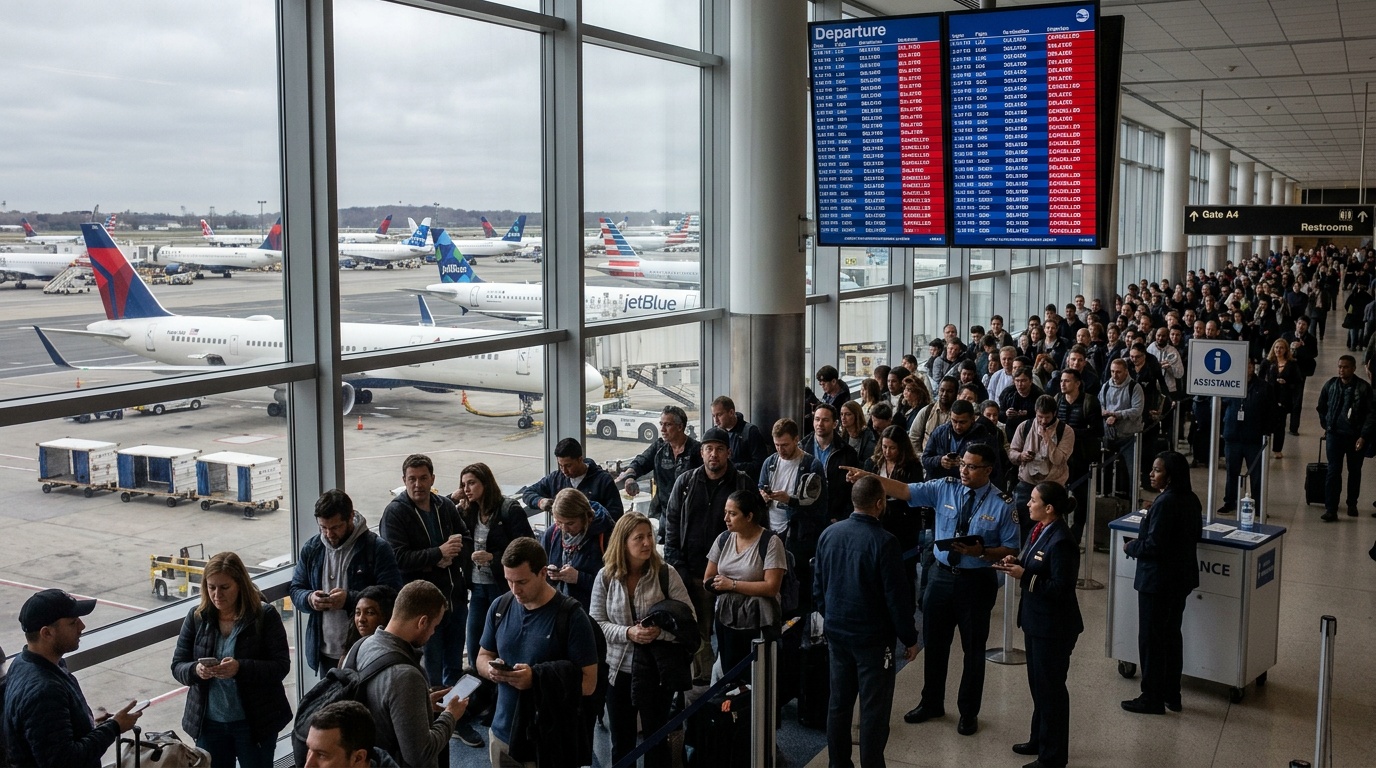
Air travelers across the United States faced widespread delays after a Federal Aviation Administration computer system failed. The FAA temporarily halted domestic departures while technicians restored critical safety information. The decision protected passengers and crews, but it immediately disrupted airline schedules nationwide.
The FAA used a ground stop, one of its strongest traffic-management tools, to prevent additional aircraft from departing. Aircraft already airborne continued toward their destinations under controller guidance and normal safety procedures. That distinction limited congestion while keeping the skies manageable during the outage.
The interruption centered on the Notice to Air Missions system, commonly called NOTAM. Pilots and dispatchers use that network to review hazards, restrictions, runway closures, and equipment problems. Without dependable notices, the FAA could not confidently release normal traffic.
Why the FAA stopped departures
The NOTAM outage began during the evening of January 10, 2023, before continuing into the next morning. The FAA ordered airlines to pause domestic departures around 7:30 a.m. Eastern Time on January 11. Officials began lifting the restriction after 8:50 a.m., once checks showed the system operated correctly.
The failure did not silence controller radios or remove radar displays. Instead, it interrupted a separate digital channel that distributes essential operational notices. Calling it a communications failure therefore describes information delivery, rather than a complete loss of air traffic control.
NOTAMs can identify closed taxiways, unlit towers, navigation outages, military activity, or temporary airspace restrictions. Pilots must review relevant notices before departure and consider them during flight planning. Dispatchers also use the information when selecting routes, fuel loads, and alternative airports.
A ground stop keeps selected aircraft at their departure gates or parking areas. Controllers can apply one to a single airport, geographic region, airline, or the entire domestic system. The January order covered domestic departures nationwide, although inbound and airborne flights generally continued.
The measure prevented aircraft from entering a system without verified safety information. It also gave technicians space to test the repaired platform before traffic increased. However, the aviation network amplified the effects of that relatively brief shutdown.
Investigators identify the failure
The FAA initially traced the outage to a damaged database file. A preliminary investigation later found that contract personnel unintentionally deleted files during maintenance work. They were correcting synchronization problems between the primary database and its backup system.
The backup could not provide full protection because the maintenance process affected synchronized information. That weakness turned a database problem into a national operational emergency. The FAA reported no evidence that hackers or other malicious actors caused the failure.
Database integrity matters because incomplete notices can hide serious hazards from flight crews. A missing runway closure could send an aircraft toward workers or construction equipment. An omitted navigation warning could also affect routing during poor weather or limited visibility.
Officials therefore chose caution instead of allowing departures with potentially incomplete information. Aviation safety systems rely on accurate data, clear procedures, and multiple protective layers. When one layer becomes unreliable, traffic restrictions can reduce exposure while specialists investigate.
Delays spread through airline networks
FlightAware recorded more than 10,000 delayed United States flights and over 1,300 cancellations during the disruption. Those figures included direct delays and later schedule changes. Airlines needed many hours to rebuild their operations after the FAA lifted the stop.
Major carriers organize daily schedules around tightly timed groups of arriving and departing flights. A morning interruption can leave aircraft, crews, and passengers in the wrong cities. Later flights may then depart without equipment or enough legally available employees.
Pilots and flight attendants must follow federal limits covering duty periods and required rest. Long delays can push crews beyond those limits before an aircraft departs. Airlines must then locate replacements, delay the flight again, or cancel it.
Airport gates create another challenge during a nationwide stoppage. Arriving aircraft may occupy gates needed for delayed departures, producing congestion on ramps and taxiways. Baggage teams, fueling crews, and catering workers must also adjust their assignments.
Weather and heavy traffic can make recovery even harder. Airlines cannot immediately launch every delayed aircraft after controllers cancel a ground stop. The FAA must release traffic gradually to prevent dangerous congestion around busy airports and crowded routes.
Why normal service returned slowly
Controllers manage recovery by adjusting departure rates and spacing aircraft along established routes. They may continue local restrictions at congested airports after ending a nationwide order. These measures balance demand against available runways, airspace, weather conditions, and staffing.
Airlines also inspect aircraft and update flight plans before releasing delayed departures. Some planes need additional fuel because revised routes increase flying time. Others require maintenance checks after spending extended periods at gates or remote parking areas.
Passengers connecting through large hubs face particular risks during such recoveries. One missed connection can require new flights, hotel arrangements, and baggage transfers. Limited available seats can strand travelers even after the broader system stabilizes.
That slow recovery explains why disruption continued long after the communications platform returned. Restoring a computer system solves only the original technical problem. Airlines must still reposition people, aircraft, and equipment across a complex national network.
Oversight and system improvements
The outage renewed scrutiny of aging federal aviation technology and maintenance procedures. Lawmakers requested explanations about redundancy, contractor access, and the FAA’s modernization schedule. Aviation groups also urged the government to strengthen systems supporting flight planning and safety notices.
The FAA added safeguards following its investigation. Those changes included stronger oversight of database work and delays between updates to primary and backup systems. A synchronization delay can preserve an unaffected copy when technicians damage live data.
Modernization involves more than replacing old computer hardware. Engineers must transfer massive databases without interrupting continuous aviation operations. They must also test cybersecurity, backup systems, user access, and compatibility with airline software.
Training remains equally important because human actions can defeat otherwise reliable technology. Clear approval procedures can reduce mistakes during maintenance or software changes. Detailed recovery plans also help technicians restore service quickly when preventive controls fail.
What affected passengers can do
Travelers should monitor airline applications, airport displays, and official FAA updates during major disruptions. Airline notifications often provide rebooking options before crowded customer-service lines move. Passengers should also keep receipts for meals, transportation, hotels, and other unexpected expenses.
Federal rules require airlines to offer refunds after cancellations or significant changes when travelers reject alternative transportation. Additional assistance depends on each airline’s policies and the disruption’s cause. Carriers may treat an FAA system failure differently from an airline-controlled problem.
Travel insurance or certain credit cards may cover eligible costs that airlines refuse to reimburse. Coverage varies substantially, so travelers should review exclusions and documentation requirements. Keeping written cancellation notices can support later insurance or refund claims.
The nationwide ground stop demonstrated the close relationship between digital information and physical flight operations. Controllers maintained radio contact, yet missing safety notices still made normal departures unacceptable. The FAA’s cautious response reduced risk while exposing significant technological and operational vulnerabilities.
Air travel resumed after technicians restored the system, but schedules needed hours to recover. The event showed how one communications failure can affect passengers across thousands of routes. Reliable backups, careful maintenance, and rapid coordination remain essential for preventing another nationwide interruption.
