
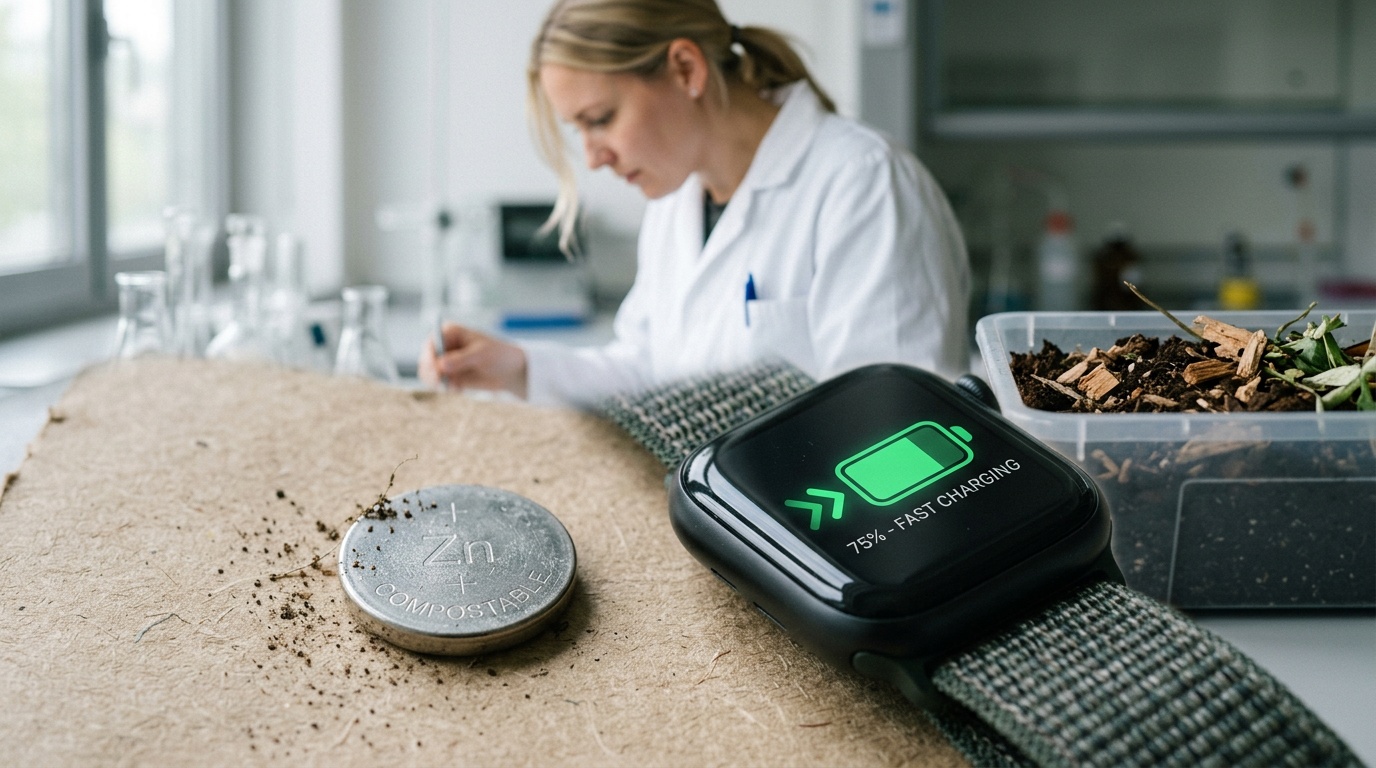
Biodegradable zinc-based batteries are moving from lab curiosity to wearable power option. They promise faster charging, safer materials, and easier disposal. Their chemistry uses abundant zinc and water-based electrolytes rather than flammable solvents. That shift could reshape how designers power soft, skin-safe devices. The path forward includes both clear advantages and practical challenges.
Why Wearables Need Better Batteries
Many wearables still rely on lithium-ion coin cells or pouch cells. Those chemistries use organic electrolytes that can burn. Designers often add rigid packaging and protection circuits for safety. That rigidity fights against soft, stretchable product goals. Aqueous zinc batteries approach these constraints from a different angle.
Wearables face additional sustainability pressure today. Tiny batteries generate disproportionate electronic waste by volume. Mixed materials complicate standard recycling streams. Medical patches and single-use sensors amplify the challenge. A biodegradable, functional battery could reduce waste without sacrificing performance.
How Zinc-Based Batteries Work
Zinc-based rechargeable cells often use an aqueous zinc-ion design. The anode plates and strips zinc metal during cycling. The cathode stores and releases zinc ions within its structure. Common cathodes include manganese oxides, vanadium oxides, and Prussian blue analogs. Water-based electrolytes carry ions quickly between both electrodes.
That design supports fast charge acceptance because ions move readily in water. Aqueous electrolytes offer higher ionic conductivity than many organic systems. Zinc metal also supports high areal capacities at modest cost. Engineers still manage parasitic reactions like hydrogen evolution. They also address zinc dendrite growth during repeated fast charging.
Biodegradability and Biosafety Advantages
Biodegradable zinc batteries replace persistent plastics and metals with natural polymers. Researchers use cellulose, chitosan, silk fibroin, gelatin, and alginate components. Many devices embed electrolytes in water-rich hydrogel matrices. These materials can break down under composting or environmental conditions. Designers also explore dissolvable substrates and transient packaging.
Zinc offers an additional biosafety benefit over cobalt-rich chemistries. Zinc is an essential trace element in biology. That does not eliminate environmental impact, but it reduces toxicity concerns. Aqueous electrolytes further remove flammability hazards near skin. Those traits align well with health monitoring and medical patches.
Recent Research Highlights
Academic teams have demonstrated fully biodegradable, paper-based zinc batteries. One group printed zinc and graphite onto paper with a water-activated electrolyte. The device powered small electronics and degraded in controlled conditions. Other teams built silk fibroin or gelatin hydrogel electrolytes for flexible zinc cells. These prototypes validate key material choices for wearables.
Researchers also reported stretchable zinc batteries for soft electronics. Designs used textile electrodes and polymer gels that resist drying. Some prototypes maintained performance under bending and twisting. Others withstood repeated stretching cycles without shorting. These results suggest real promise for on-body applications.
Design Features Enabling Faster Charging
Engineers pursue fast charging through several complementary strategies. They increase anode surface area using 3D hosts and patterned structures. Such hosts guide uniform zinc deposition during rapid charging. Protective interphases also suppress dendrite growth and side reactions. These approaches help stabilize metal plating at high current.
Electrolyte selection strongly influences rate capability. Concentrated zinc salts can reduce water activity and corrosion. Gel polymer electrolytes limit convective flow and localize ions. Additives tune nucleation behavior and electrode wetting. Together, these tactics enable faster, safer charge acceptance.
Cathode chemistry also affects charging speed. Manganese dioxide offers abundant sites and established processing. Prussian blue analogs enable open frameworks for rapid ion transport. Organic cathodes can provide flexible, lightweight structures. Designers choose materials with short diffusion paths and robust cycling. That mix supports quick energy delivery with manageable degradation.
Safety and Disposal Considerations
Aqueous zinc batteries reduce fire risk compared with lithium-ion cells. The water-based electrolytes do not ignite under typical abuse. Biodegradable casings lessen persistent waste after product retirement. However, zinc salts and other components still require responsible handling. Municipal guidance should determine proper end-of-life management.
Designers can further reduce hazards using skin-friendly electrolytes. Saline or buffered solutions can support biosafe operation. Natural polymer gels prevent leakage and limit exposure. Dissolvable substrates eliminate sharp fragments after degradation. These design choices complement safer cell chemistry.
Manufacturing Pathways and Scalability
Manufacturers can print zinc-based batteries using scalable methods. Screen printing, blade coating, and inkjet deposition suit flexible substrates. Roll-to-roll processes reduce cost and improve throughput. Zinc’s abundance and low price support cost-effective materials sourcing. Water-based processing simplifies environmental controls and worker safety.
Biodegradable components must still meet durability requirements. Barrier coatings can slow water loss without blocking eventual degradation. Designers balance shelf life, cycle life, and compostability criteria. Standards-based testing confirms performance and degradation timelines. These steps help transition prototypes into commercial wearables.
Use Cases in Next‑Gen Wearables
Zinc-based biodegradable batteries fit short-lifetime or disposable wearables. Examples include medical patches, festival electronics, and logistics tags. They also suit smart textiles and soft robotic skins. Fast charging supports quick top-ups between tasks. That feature pairs well with intermittent energy harvesting.
Designers can combine batteries with miniature solar or motion harvesters. The cell can recharge frequently with small energy bursts. Near-field or wireless charging pads enable rapid opportunistic charging. Thin, conformal formats improve comfort and aesthetics. Those traits encourage adoption in consumer and clinical settings.
Integration with Biocompatible Materials
Skin-contact devices demand gentle, breathable materials. Cellulose and silk fibroin layers allow moisture exchange and comfort. Hydrogel electrolytes cushion movement and resist irritation. Adhesive systems can use medical-grade, biodegradable formulations. Battery stacks can bond seamlessly with fabric or elastomers.
Engineers also route interconnects through stretchable conductors. Silver nanowires, carbon inks, or conductive textiles carry current safely. Encapsulation protects circuits while allowing vapor transmission. The entire assembly must survive sweat, motion, and cleaning. Proper system design ensures reliable performance on the body.
Open Technical Challenges
Several challenges still limit widespread adoption. Zinc dendrite formation can cause shorts during aggressive fast charging. Hydrogen evolution reduces Coulombic efficiency and raises pressure. Gel electrolytes can dry out over long deployments. Flexible packaging must also withstand daily wear and sweat.
Standards for biodegradation require careful validation. Researchers reference compostability and biodegradation protocols for polymers. Examples include ASTM and OECD methods for aerobic breakdown. Batteries must meet safety and disposal rules simultaneously. Clear labeling and instructions support responsible end-of-life actions.
Environmental and Regulatory Landscape
Regulators increasingly target battery waste and hazardous substances. Safer chemistries can ease compliance for disposable devices. Life cycle assessments should quantify total environmental benefits. Designers can model impacts across manufacturing, use, and disposal. Clear data will guide policy and procurement decisions.
Certification programs may emerge for biodegradable electronics. Standards will likely address degradation rates and residue safety. Supply chains must document sourcing and processing methods. Transparent reporting builds trust with consumers and clinicians. That trust will accelerate market entry for new devices.
What to Watch Next
Expect continued improvements in dendrite suppression strategies. Researchers are refining interphases and host structures for stable plating. Electrolyte formulations will also gain selectivity and robustness. Cathode discovery may deliver faster kinetics and longer life. Manufacturing pilots should test scale and cost targets.
Cross-disciplinary teams will drive breakthroughs in wearables integration. Materials scientists and designers must collaborate early. Human factors will shape geometry and attachment methods. Clinicians can guide biocompatibility testing and regulatory planning. These collaborations will define successful product experiences.
Practical Design Tips for Developers
Developers can reduce risk by prototyping with commercial zinc chemistries. They should then transition to biodegradable components stepwise. Early testing should stress charging rates and mechanical deformation. Moisture management deserves special attention for gel systems. Pilot users can validate comfort and charging routines.
- Map duty cycles to charge acceptance and safe current limits.
- Choose cathodes with fast diffusion and benign constituents.
- Specify gels with proven water retention under use conditions.
- Validate biodegradation with recognized test protocols.
- Plan clear disposal instructions for end users.
Outlook for Next‑Gen Wearables
Biodegradable zinc-based batteries address pressing needs for safety, sustainability, and speed. Their aqueous chemistry supports quick recharging and stable operation. Natural polymers reduce persistent waste and improve skin compatibility. Careful engineering can overcome rate and durability barriers. The result could be greener, faster, and softer power for wearables.
Fast charging will influence how users interact with devices. Short, frequent top-ups fit daily routines and energy harvesting. Safer disposal reduces guilt around single-use wearables. Regulatory clarity could further accelerate adoption. The technology is poised for important real-world trials.
Progress will depend on balanced performance targets. Developers must align cycle life, charging speed, and biodegradation timelines. Clear communication can set realistic expectations for consumers, and transparent testing data will support broader trust. With careful execution, the promise can become practice.