

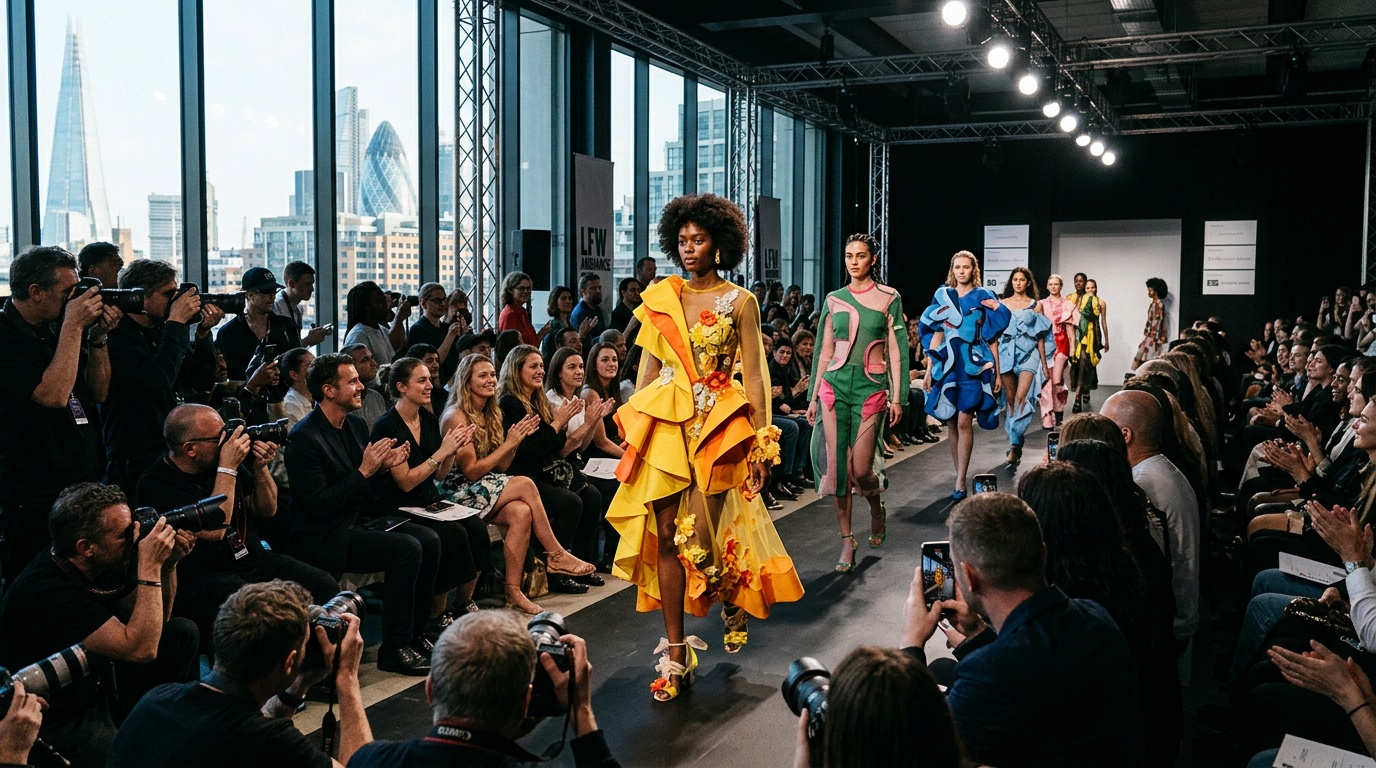
London Fashion Week turns the city into a concentrated showcase for experimentation, commerce, and cultural debate. Each September edition presents spring and summer collections to buyers, editors, stylists, celebrities, and international audiences. Established houses attract global attention, yet emerging labels often provide the event’s sharpest ideas. These designers test unfamiliar silhouettes, personal narratives, and resourceful production methods under intense industry scrutiny. Their collections reveal how younger businesses interpret British style beyond familiar traditions.
A Global Platform With London Character
The British Fashion Council organizes London Fashion Week as one of the industry’s four major international fashion events. New York, Milan, and Paris host the other leading seasonal showcases. London usually presents spring collections during September, while February focuses mainly on autumn and winter designs. Physical shows, presentations, appointments, and digital releases form the official schedule. This varied structure gives younger labels several ways to communicate their ideas.
London’s fashion identity encourages designers to challenge conventional definitions of beauty, luxury, gender, and formal clothing. The city’s art schools, music scenes, nightlife, and multicultural communities provide constant creative references. Designers frequently combine historical research with streetwear, craft, theatrical styling, or subcultural influences. That creative freedom distinguishes London from more commercially conservative fashion centers. It also gives emerging talent a visible role within the wider event.
Support Systems Create Valuable Opportunities
Young labels rarely command the financial resources available to established luxury companies. Runway venues, samples, production teams, casting, public relations, and international sales require substantial investment. The British Fashion Council addresses these barriers through mentoring, grants, business advice, and promotional programs. Its BFC Foundation brings several talent initiatives under one charitable structure. These programs help selected designers strengthen both creative work and commercial planning.
NEWGEN Builds Early Careers
The British Fashion Council launched NEWGEN in 1993 to identify and support promising British fashion businesses. The program has assisted designers including Alexander McQueen, Erdem, Simone Rocha, Jonathan Anderson, and Grace Wales Bonner. Recipients can receive financial support, mentoring, showcasing opportunities, and access to industry contacts. Selection also brings credibility when designers approach buyers, investors, manufacturers, and potential collaborators. That institutional support leads directly to stronger visibility during Fashion Week.
Independent Incubators Expand the Schedule
Independent talent platforms also shape London’s reputation for discovering unconventional designers. Lulu Kennedy founded Fashion East in 2000 as a nonprofit incubator for emerging talent. The organization gives selected designers practical support and a shared showcase during London Fashion Week. Alumni include Kim Jones, Simone Rocha, Martine Rose, and Wales Bonner. Many participants later developed influential labels or joined major international fashion houses.
Fashion schools strengthen this pipeline by attracting students from Britain and many other countries. Central Saint Martins and the London College of Fashion have educated numerous internationally recognized designers. Graduate collections allow students to demonstrate technical ability before entering a difficult employment market. Tutors often encourage research, experimentation, and individual authorship rather than simple trend imitation. Consequently, London’s spring calendar frequently carries the energy of a graduate studio.
Spring Collections Encourage Bold Experimentation
Spring collections allow designers to work with lighter fabrics, brighter colors, exposed construction, and flexible layering. London designers often reject a single seasonal mood and instead build tension between contrasting elements. Delicate dresses may appear beside sculptural tailoring, distressed knitwear, or technical outerwear. Designers can also pair romantic prints with severe proportions or utilitarian accessories. These contrasts give photographers and editors memorable images while demonstrating technical range.
Boldness does not always require spectacle or extreme volume. An emerging designer can make a strong statement through precise cutting, unusual casting, or carefully developed textiles. Hand-dyed surfaces, engineered prints, embroidery, pleating, and patchwork can give simple shapes distinctive identities. Some labels reinterpret corsetry, uniforms, sportswear, or ceremonial dress through contemporary construction. Others use restrained collections to examine intimacy, migration, memory, or changing gender expectations.
Personal Stories Drive Design
Emerging designers frequently draw upon family histories, regional traditions, and diasporic experiences. Their work can bring overlooked references into an industry that once promoted narrower cultural narratives. Responsible storytelling requires research, context, and respect for the communities involved. Designers who explain their sources can deepen an audience’s understanding of each garment. That narrative strength helps small labels compete without matching the marketing budgets of global brands.
Casting and Styling Shape the Message
A runway collection communicates through more than clothing. Casting directors, stylists, makeup artists, musicians, and set designers help construct the complete presentation. Emerging labels often choose models who reflect their communities or challenge traditional runway standards. Varied ages, body types, identities, and backgrounds can strengthen a collection’s central message. However, audiences increasingly expect consistent inclusion rather than a temporary publicity gesture.
Show locations also influence how viewers interpret spring designs. London presentations have occupied galleries, warehouses, gardens, schools, clubs, and historic buildings. A modest room can support an intimate performance, while an industrial venue can emphasize texture and scale. Designers must balance atmosphere with practical needs, including lighting, seating, backstage access, and photography. Smart production choices can make a limited budget appear purposeful rather than restrictive.
Sustainability Moves Beyond a Slogan
Environmental concerns now influence material selection, production quantities, packaging, transport, and collection schedules. Many emerging designers explore deadstock fabric, recycled fibers, natural dyes, local manufacturing, or made-to-order systems. These methods can reduce some waste, although every material carries environmental and social impacts. Small businesses also face higher costs and limited access to certified supply chains. Clear evidence therefore matters more than broad sustainability claims.
Designers can extend a garment’s useful life through durability, repair services, adaptable sizing, and timeless construction. Some labels reuse studio scraps for accessories, surface decoration, or limited pieces. Others release fewer styles and maintain closer relationships with specialist makers. These approaches cannot solve fashion’s wider environmental problems alone. Nevertheless, London Fashion Week gives experimental business models a prominent testing ground and a global audience.
Digital Access Broadens the Audience
Fashion Week once depended heavily on invitation-only rooms and delayed media coverage. Livestreams, short films, social platforms, and online showrooms now carry collections far beyond London. Students and consumers can watch presentations alongside industry professionals, although buyers still value physical garment inspections. Digital tools also let designers explain research and construction through interviews or backstage footage. This access can quickly introduce an unknown label to international viewers.
However, digital visibility creates relentless competition for attention. Designers must produce compelling images while protecting the meaning and detail of their work. A viral look may attract followers without generating wholesale orders or stable revenue. Successful labels connect publicity with reliable production, realistic pricing, and timely delivery. Therefore, Fashion Week exposure marks an opportunity rather than a guarantee of commercial survival.
Commercial Pressure Meets Creative Ambition
Buyers assess more than runway impact when considering an emerging collection. They examine fabric quality, sizing, margins, delivery dates, minimum orders, and customer demand. Designers must translate experimental ideas into garments that stores can sell and customers can wear. Accessories or signature pieces often provide recognizable entry points for new audiences. Strong business planning helps preserve creative independence as orders and responsibilities grow.
The spring schedule therefore creates both excitement and pressure for young companies. A successful presentation can generate press coverage, retailer meetings, collaborations, and new investment conversations. Poor production planning can create debt or damage relationships when a label cannot fulfill orders. Mentors often encourage measured growth instead of immediate international expansion. That balance allows designers to build lasting businesses around bold creative identities.
Emerging Voices Keep London Relevant
London Fashion Week maintains its influence by giving experimental designers space beside established names. Emerging labels bring new techniques, communities, and questions onto an international stage. Their bold spring collections can challenge industry habits while proposing different approaches to beauty and clothing. Support programs provide essential foundations, but designers still need resilience, discipline, and commercial knowledge. Each season renews London’s reputation as a place where fashion can take meaningful risks.
