

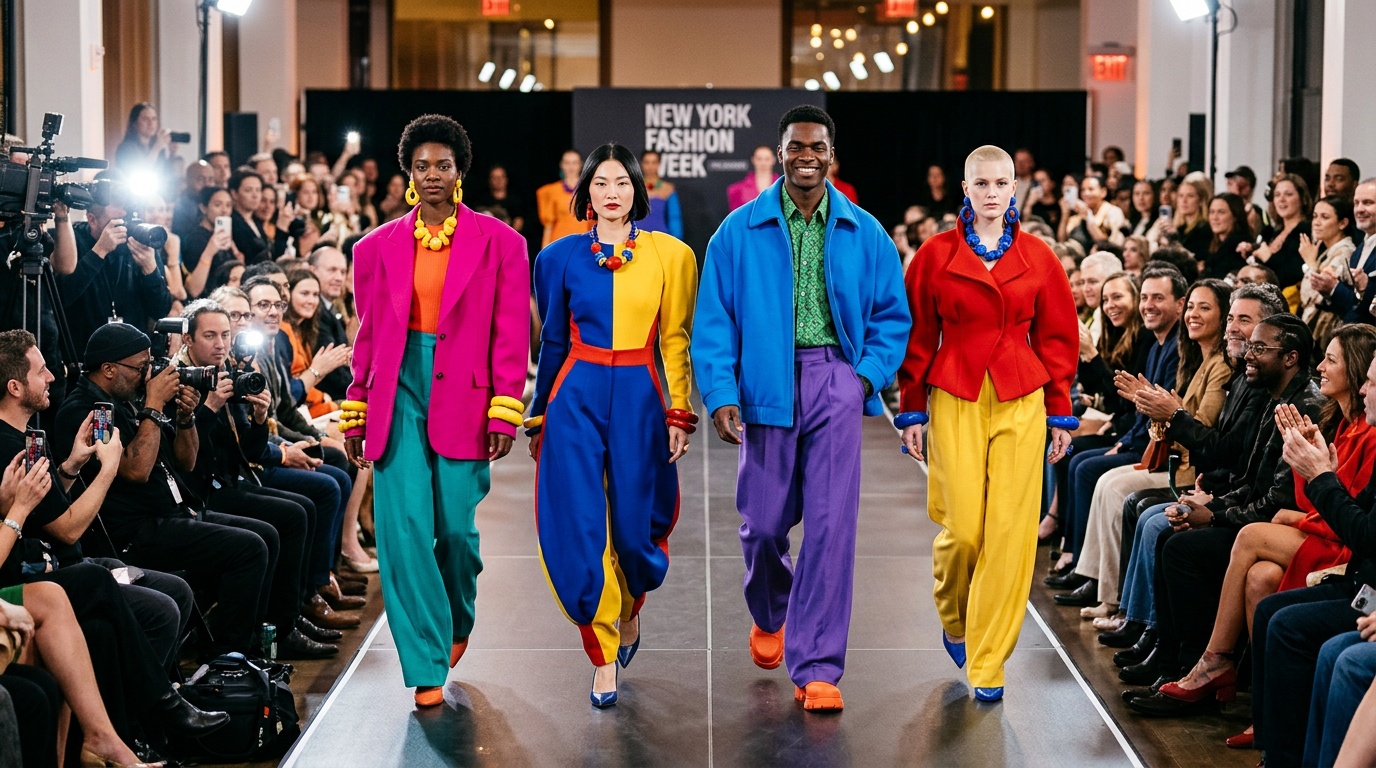
New York Fashion Week has rediscovered the persuasive power of clothes that create immediate pleasure. Designers are embracing saturated color, expressive proportions, and tailoring with a playful attitude. These collections offer optimism without ignoring the practical needs of modern wardrobes. They also encourage personal style rather than prescribing one rigid seasonal uniform.
Joyful dressing does not represent a single trend or silhouette. Instead, it describes an emotional approach to color, shape, texture, and presentation. A vivid coat can transform familiar trousers, while an oversized blazer can change the body’s proportions. This energy has spread across established labels and independent studios.
Color Returns as a Runway Language
Bold color has become one of New York’s clearest creative signals. Designers frequently combine scarlet, cobalt, emerald, citrus, and electric pink within streamlined outfits. These shades command attention before viewers notice construction or fabric. However, the strongest looks use color to clarify design rather than conceal it.
Monochromatic dressing gives intense shades additional authority. A matching jacket, shirt, skirt, and shoe creates one continuous visual statement. Other designers use contrasting colors to divide garments into graphic sections. Both methods translate effectively from runway images to retail displays and social media.
Designers Build Recognizable Palettes
Christopher John Rogers has consistently championed saturated hues, dramatic stripes, and sculptural eveningwear. His collections often connect formal techniques with an energetic sense of celebration. Sergio Hudson also uses strong color within polished suits and fitted dresses. His precise silhouettes give vibrant shades a controlled, luxurious presence.
At Carolina Herrera, creative director Wes Gordon frequently explores bright florals, jewel tones, and expansive gowns. Prabal Gurung regularly combines rich color with draping, embellishment, and socially conscious storytelling. These designers follow different aesthetics, yet each treats color as a meaningful design element.
Tailoring Loses Its Corporate Restraint
Color provides immediate excitement, but playful tailoring gives the movement lasting structure. Designers have widened shoulders, shifted closures, and extended jacket lengths. They have also paired formal blazers with shorts, transparent skirts, and relaxed trousers. These combinations loosen traditional rules surrounding professional dress.
The suit still carries authority, although designers now present that authority with humor and flexibility. Cropped jackets emphasize the waist, while oversized versions create a protective frame. Extra-long sleeves introduce deliberate awkwardness. Curved lapels, exposed seams, and unusual fastenings make classic construction feel less predictable.
Proportion Creates Personality
Willy Chavarria often uses broad shoulders and generous trousers to examine power, identity, and American style. His tailoring amplifies the wearer’s physical presence without relying on conventional office codes. LaQuan Smith takes another approach, combining sharp jackets with body-conscious cuts and glossy surfaces.
Tory Burch has experimented with altered waistlines, unconventional layering, and technical fabric treatments. Those choices complicate otherwise recognizable wardrobe pieces. Coach, led by Stuart Vevers, frequently mixes oversized outerwear with youthful styling and distressed accessories. Together, these approaches make tailoring feel active rather than ceremonial.
Texture Strengthens the Feeling of Optimism
Joyful fashion depends on touch as much as color. Designers use sequins, feathers, fringe, satin, lace, and metallic surfaces to produce movement. Light changes these materials throughout a runway presentation. As models walk, reflective details create flashes that still photography cannot fully capture.
Area has built a distinctive identity through crystal embellishment, sculptural decoration, and exaggerated glamour. The label often turns familiar objects and symbols into elaborate garments. Collina Strada uses print, texture, and unconventional casting to create a different kind of exuberance. Its shows regularly connect fashion with environmental awareness and community.
Craft Makes Playfulness Convincing
Playful clothing still requires disciplined construction. A dramatic sleeve needs internal support, while a flowing ruffle requires controlled cutting. Tailors must balance oversized proportions so garments move comfortably. Embellishment teams also distribute weight carefully across delicate fabrics.
These technical demands explain why successful exuberance rarely feels accidental. The designer establishes a clear idea, then skilled makers translate it into clothing. That process separates purposeful fantasy from random decoration. It also gives retailers confidence that expressive pieces can survive beyond the runway.
Styling Encourages Individual Interpretation
Runway styling strengthens this season’s cheerful direction through unexpected combinations. A formal skirt may appear with a simple knit or weathered jacket. Evening pieces can accompany flat shoes, while tailored trousers might support a sparkling top. These contrasts make special garments appear more adaptable.
Accessories provide another accessible route into bold dressing. Designers use colorful tights, oversized bags, sculptural jewelry, and decorated footwear to punctuate restrained outfits. Consumers can adopt these elements without rebuilding an entire wardrobe. Consequently, runway experimentation can influence everyday style through relatively small purchases.
Youthful Details Reshape Familiar Codes
Sandy Liang has helped popularize bows, rosettes, ballet references, and nostalgic accessories within contemporary fashion. Her work demonstrates how sweetness can coexist with practical outerwear and urban styling. Other New York designers use school uniforms, sportswear, and party clothes as creative reference points.
Nostalgia works best when designers revise it for current lives. Modern fabric, inclusive sizing, and flexible styling can prevent references from becoming simple costume. This balance matters because audiences quickly recognize empty revivalism. They respond more strongly when familiar details support a fresh viewpoint.
Runway Production Amplifies the Mood
New York Fashion Week no longer operates from one central location. Brands stage shows in warehouses, theaters, galleries, offices, and outdoor spaces. Each venue shapes how audiences understand a collection. Music, lighting, casting, and choreography can make bright clothing feel intimate, rebellious, or grand.
Creative casting also supports joyful presentation. Designers increasingly feature models across broader ranges of age, gender expression, ethnicity, and body type. Progress remains uneven across the industry, but visible variety changes a show’s emotional tone. Clothes appear more relevant when different people inhabit them confidently.
New York Has Always Balanced Business and Spectacle
Publicist Eleanor Lambert organized Press Week in New York during 1943. The event promoted American designers while wartime conditions limited access to Paris. Decades later, centralized shows at Bryant Park gave the schedule greater efficiency and visibility. Today, the Council of Fashion Designers of America manages the official calendar.
That history explains New York’s continued focus on wearable ideas. Designers must attract editors and celebrities, but they also need commercial support. Bold color and flexible tailoring serve both goals. They create memorable images while offering separable pieces for stores and clients.
Commercial Reality Shapes Joyful Dressing
Retailers rarely buy complete runway looks exactly as presented. Buyers select jackets, dresses, knitwear, and accessories that suit particular customers. A vivid collection gives them several levels of participation. They might choose an orange coat, a striped sweater, or simply a bright handbag.
Designers therefore balance theatrical impact with useful components. Many collections place experimental showpieces beside straightforward trousers and dependable shirts. This approach supports sales without weakening the overall message. It also allows customers to control how boldly they engage with the trend.
Social Media Rewards Immediate Visual Impact
Digital platforms have increased the value of recognizable color and dramatic silhouette. Audiences often encounter runway images through short videos or isolated photographs. Strong visual ideas communicate quickly within those formats. Designers can reach global viewers before traditional reviews appear.
However, online attention does not guarantee long-term demand. Garments still need quality, comfort, and a persuasive price. Joyful design succeeds commercially when emotional appeal accompanies practical value. The most effective collections understand both requirements.
A Broader Definition of Everyday Luxury
New York’s colorful runways suggest that luxury can involve emotional usefulness. A beautifully made jacket offers durability, but it can also improve the wearer’s mood. Playful details invite conversation and strengthen personal identity. These benefits matter during uncertain economic and political periods.
Still, joyful dressing does not demand constant brightness. A neutral suit can express playfulness through proportion, texture, or an unexpected lining. Likewise, one vivid accessory can transform a restrained outfit. The movement values expressive choice more than any specific color chart.
Optimism Meets Practical Wardrobes
The strongest New York collections recognize that customers lead varied lives. People need clothes for work, travel, celebrations, and ordinary errands. Adaptable tailoring helps garments move between those settings. Color and decoration then add personality without eliminating function.
This combination gives joyful dressing greater staying power than a narrow seasonal fad. It builds excitement from established wardrobe foundations rather than rejecting them. Designers can continue adjusting proportions, palettes, and styling while preserving familiar categories. Consumers can participate at their preferred level of visibility.
New York Chooses Expression Over Restraint
Bold color and playful tailoring now provide a compelling counterpoint to minimalism. They reflect a desire for fashion that communicates emotion immediately. New York designers deliver that message through craft, styling, and strategic spectacle. Their work proves that practical clothing can still carry fantasy.
The result feels optimistic without becoming naive. These runways acknowledge commercial pressures while defending creativity and individual pleasure. A colorful suit or unusually shaped coat cannot solve wider problems. Yet expressive clothing can offer confidence, connection, and a welcome sense of possibility.
