

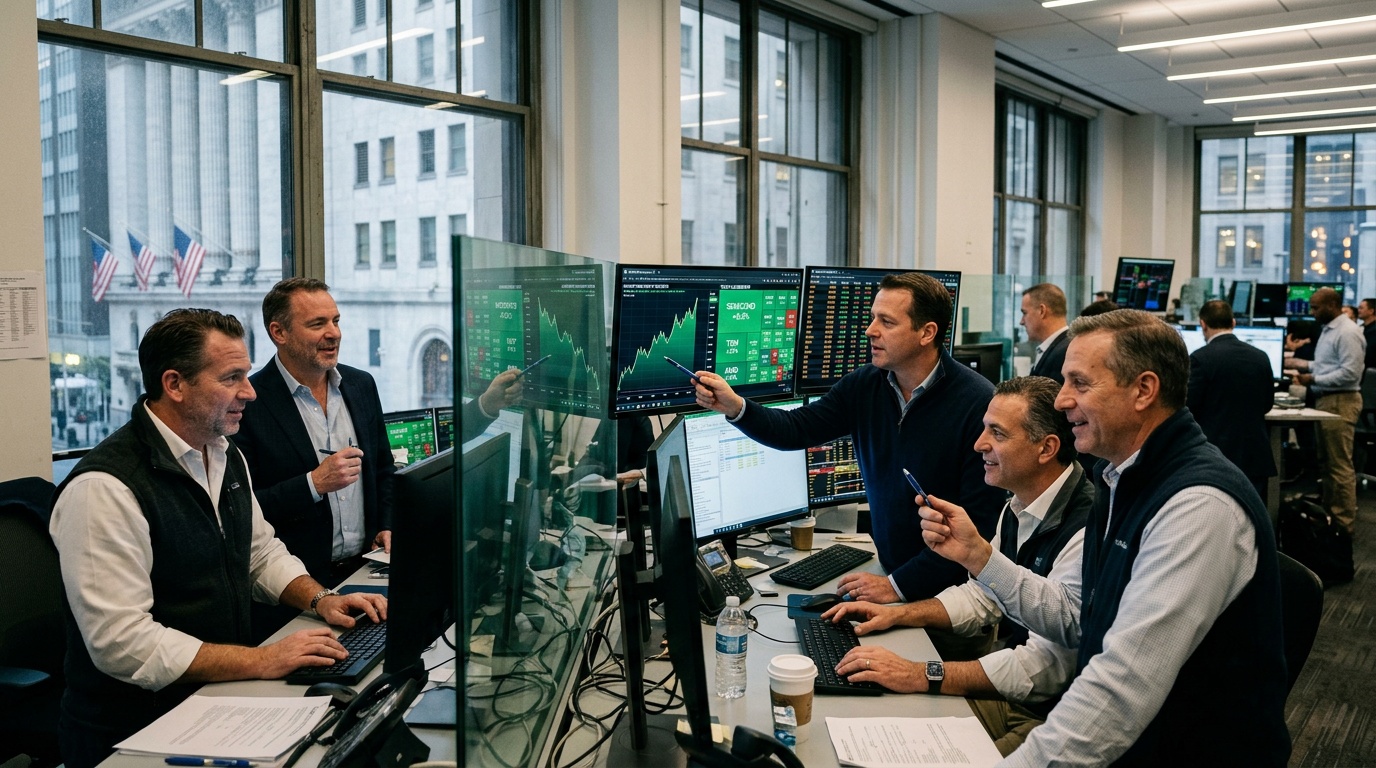
Wall Street’s latest AI-stock rebound has done more than lift a group of prominent technology shares. It has revived confidence that artificial intelligence can support a durable corporate investment cycle. Buyers have returned to chipmakers, cloud providers, and companies supplying data centers. The recovery has also eased fears that earlier enthusiasm relied only on momentum.
Investors now treat AI demand as more than a short-lived hardware surge. They see a broader chain linking semiconductors, networking equipment, electricity, software, and cloud services. That view does not guarantee profits across the sector. It does explain why rebounds in leading shares can quickly improve sentiment across major indexes.
What changed beneath the rebound
The recovery followed repeated bouts of selling tied to rich valuations and questions about future returns. Competitive breakthroughs also challenged assumptions about how much computing power advanced models require. Those concerns forced investors to separate durable demand from speculative excitement. When earnings and spending plans remained firm, buyers gained reasons to reconsider the harshest forecasts.
Large cloud companies continue to direct substantial capital toward servers, chips, networking, and data centers. Microsoft, Alphabet, Amazon, and Meta have described AI infrastructure as strategically important. Their budgets create revenue opportunities for suppliers throughout the technology stack. They also offer investors a measurable signal that corporate demand has not disappeared.
Interest-rate expectations have strengthened the rebound when bond yields eased or stopped rising. Lower yields can increase the present value investors assign to distant technology profits. Meanwhile, resilient earnings have helped justify some premium valuations. Together, rates and results have replaced panic with a more selective form of optimism.
Nvidia remains a central bellwether
Nvidia remains the clearest symbol of Wall Street’s AI trade because its accelerators dominate many training workloads. The company also supports customers through its CUDA software platform and related systems. Strong demand for newer chips can reassure investors about data-center spending. Weak guidance, delays, or margin pressure can produce the opposite reaction across the market.
The stock’s influence extends beyond one company because the S&P 500 gives megacap technology businesses significant weight. A sharp Nvidia move can therefore affect passive funds, options markets, and broader risk appetite. Its rebound often encourages investors to revisit other semiconductor names. However, that relationship can magnify volatility when expectations shift suddenly.
Wall Street now watches revenue growth, gross margins, supply availability, and customer concentration more closely. Investors also compare management forecasts with enormous capital commitments from cloud operators. This scrutiny marks an important change from the earliest phase of AI enthusiasm. Confidence increasingly depends on execution, rather than announcements or demonstrations alone.
Broadening beyond headline chipmakers
The rebound has spread toward companies that provide memory, networking chips, manufacturing tools, and advanced packaging. Broadcom, AMD, Micron, and semiconductor equipment makers offer different exposure to infrastructure growth. Taiwan Semiconductor Manufacturing remains crucial because it fabricates leading chips for many designers. This broader participation makes the rally look healthier than a move centered on one stock.
Data-center construction has also lifted attention around cooling systems, electrical equipment, backup power, and fiber connections. AI servers consume substantial electricity and produce significant heat. Operators must therefore upgrade physical infrastructure alongside computing capacity. Investors increasingly view those suppliers as practical beneficiaries, although their valuations still require careful analysis.
Utilities and power producers have entered the conversation because data centers need dependable, round-the-clock electricity. Some operators have pursued nuclear, renewable, and natural-gas arrangements to secure future supply. Transmission constraints can delay projects even when chip availability improves. The rebound therefore links technology sentiment with industrial investment and energy planning.
Software companies present a more complicated picture because monetization varies widely by product and customer. Some vendors charge premiums for AI assistants, automation tools, or enhanced analytics. Others include features within existing subscriptions to defend market share. Investors reward companies that show adoption, pricing power, and improving productivity without sacrificing margins.
How market confidence is changing
The rebound has encouraged portfolio managers to buy pullbacks rather than abandon the theme entirely. That behavior suggests investors distinguish temporary disappointments from structural declines. They still reduce positions when valuations outrun revised earnings estimates. Yet stronger price support can limit forced selling and stabilize sentiment during volatile sessions.
Analyst estimate revisions now carry greater importance than ambitious long-term forecasts. Rising revenue or profit estimates can validate higher prices and attract institutional money. Falling estimates can expose a rebound built mainly on multiple expansion. This discipline makes confidence more conditional, but potentially more durable.
Corporate executives also shape sentiment through comments about customer demand, capacity needs, and expected returns. Clear disclosures help investors estimate when infrastructure spending may generate revenue. Vague promises invite skepticism, especially after large share-price gains. As a result, earnings calls increasingly function as tests of the entire AI investment thesis.
Exchange-traded funds and options can amplify these shifts in confidence. Broad technology funds channel inflows toward the largest companies according to index weights. Options dealers may buy or sell shares while hedging changing exposures. Those mechanics can accelerate rallies, although they do not replace underlying business fundamentals.
Fundamentals now set the threshold
Investors increasingly ask whether AI products can improve sales, lower costs, or deepen customer relationships. Usage statistics matter, but paid adoption provides stronger evidence of economic value. Companies must also show that computing expenses do not consume every incremental dollar. This focus has shifted discussion from model capability toward sustainable returns.
Capital intensity creates another challenge for confidence. Cloud operators spend heavily before they know the final utilization rates of new facilities. Fast chip cycles can also shorten equipment lives and raise depreciation charges. Investors therefore examine free cash flow alongside revenue growth and operating profit.
Risks still define the rally’s limits
Valuation remains the most immediate risk because many AI leaders trade on demanding growth expectations. Even solid results can disappoint when prices imply near-perfect execution. A renewed rise in bond yields could also pressure long-duration technology shares. For that reason, confidence can weaken without any collapse in end-market demand.
Export controls can restrict advanced chip sales and complicate forecasts for suppliers. Trade tensions also threaten equipment flows and global semiconductor supply chains. Taiwan’s central role in advanced manufacturing adds a well-known geopolitical vulnerability. Companies can diversify some operations, but replacing leading capacity requires years and enormous investment.
Power shortages, permitting delays, and local opposition can slow data-center expansion. Competition may also reduce model costs faster than vendors can build pricing power. Cheaper computing could expand usage, but it might pressure margins for some providers. These crosscurrents explain why the rebound supports confidence without eliminating caution.
What the rebound means next
Wall Street’s renewed confidence rests on evidence that AI investment can produce economic returns. The rebound has broadened participation, improved risk appetite, and rewarded companies showing execution. Still, investors test valuations against earnings, cash flow, and competitive threats. That balance between belief and scrutiny now defines the AI trade’s more mature phase.
