

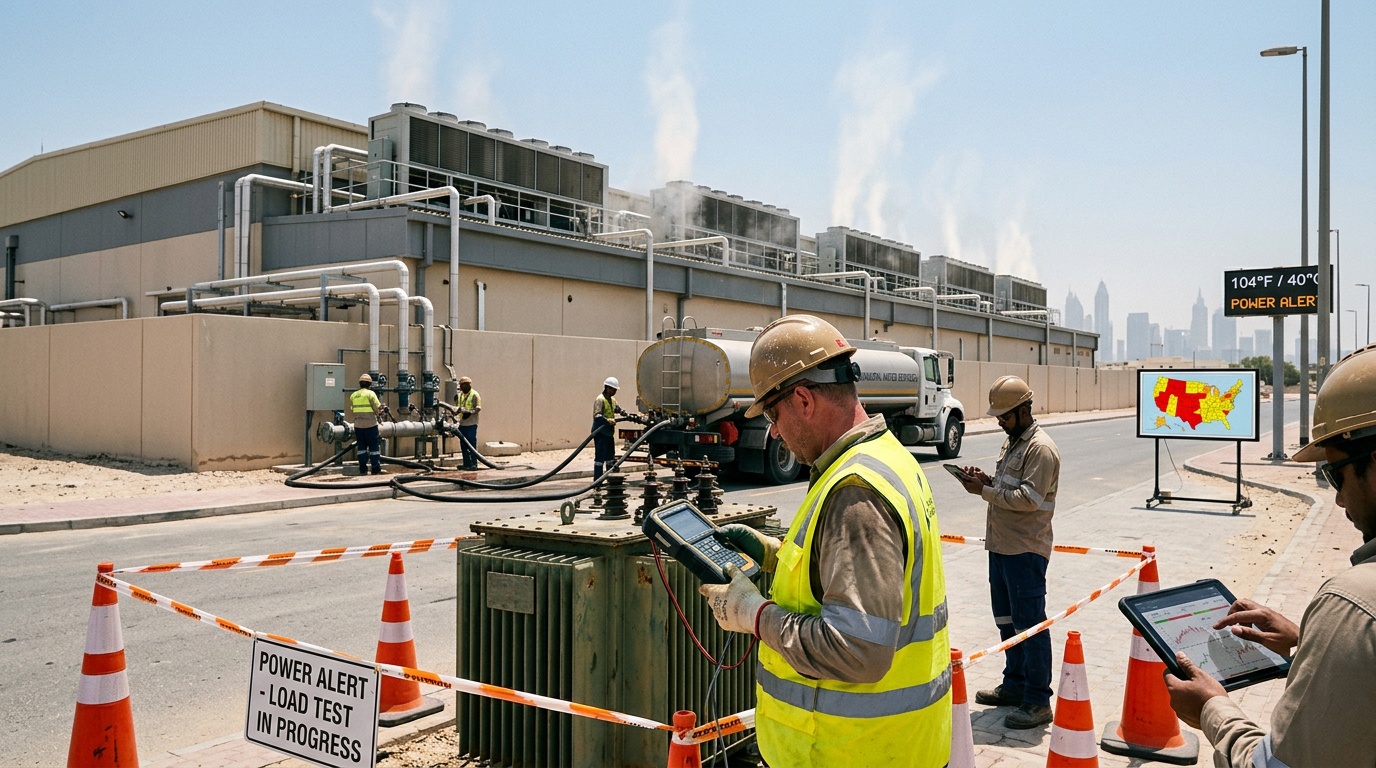
Blistering heat waves are smashing records across continents, pushing electric grids to their limits. Air conditioners are running nonstop while transmission lines sag in extreme heat. At the same time, an AI-fueled data center buildout is accelerating electricity demand in key regions.
Communities, regulators, and technology companies now face interlocking choices about energy and water. The stakes feel immediate during a prolonged heat event. Thoughtful planning can align reliable power, sustainable cooling, and continued digital innovation.
Heat Waves Push Power Systems to the Brink
Global agencies reported 2023 as the hottest year on record, with 2024 delivering more relentless heat. High temperatures spike demand for air conditioning and weaken power equipment. Grids must deliver more electricity even as assets operate less efficiently.
Texas, California, and parts of the Southeast set new summer peak demand records. Operators issued conservation notices to avoid rolling outages. Europe and China faced similar pressure during prolonged heat waves that hit multiple regions simultaneously.
Extreme heat also erodes thermal plant output and solar panel efficiency. Wildfire smoke and dust storms further complicate generation and transmission. These stresses compound local distribution constraints near fast-growing load centers.
Against this volatile backdrop, a surging digital economy adds new megawatts. The conversation naturally turns to data centers and AI workloads. That conversation continues to broaden as facilities cluster near cities and cloud regions.
The AI Data Center Surge Changes the Load Shape
Data centers already anchor crucial cloud, commerce, and streaming services. Generative AI has intensified compute demand, especially for training large models. That training often concentrates power draw into dense clusters with high, continuous loads.
The International Energy Agency estimates global data centers used around 460 terawatt-hours in 2022. The agency projects 620 to 1,050 terawatt-hours by 2026. AI and cryptocurrencies drive a significant share of the potential increase.
U.S. hubs like Northern Virginia, central Ohio, and Phoenix see rapid interconnection requests. Dominion Energy previously slowed approvals near “Data Center Alley” due to constraints. Utilities are planning new substations, feeders, and transmission capacity to keep pace.
AI training clusters push rack densities well beyond traditional enterprise loads. Cooling these systems at high ambient temperatures demands careful design. That design choice sits at the center of a growing water debate.
Cooling Choices Shape Energy and Water Footprints
Data center operators balance energy efficiency, water consumption, and reliability. Evaporative cooling reduces electricity use but consumes more water. Mechanical chillers use less water but require more electricity during hot spells.
Arid regions face heightened scrutiny of water withdrawals for industrial cooling. Communities question whether scarce water should support new data clusters. Some facilities now use reclaimed wastewater to limit impacts on drinking supplies.
Utilities also expend water when generating electricity for data centers. Thermoelectric power plants withdraw large volumes for cooling, depending on technology. Wind and solar have far lower direct water requirements per kilowatt-hour.
Local tensions have surfaced from Oregon to Arizona as loads grow. Cities have asked for transparency on water and energy usage. Companies increasingly publish site-level reports to address public concerns.
Liquid Cooling Rises With AI Density
AI accelerators generate concentrated heat that overwhelms traditional air cooling. Operators are deploying liquid-cooled cold plates and rear-door heat exchangers. Some sites test immersion systems, which submerge servers in specialized dielectric fluids.
Liquid cooling can improve efficiency and reduce fan energy. It also supports higher rack densities within constrained footprints. These shifts ripple through facility design, procurement, and maintenance practices.
Communities Weigh Land, Noise, and Air Quality Trade-offs
Large campuses require land, reliable water access, and high-capacity feeders. Backup diesel generators ensure continuity but raise air quality concerns. Noise from cooling equipment and transformers can affect nearby neighborhoods.
Supporters highlight local tax revenue, construction jobs, and long-term operations roles. Critics point to high electricity use and limited job counts per acre. Elected officials must balance economic development with cumulative environmental impacts.
These conversations are not binary or fixed. Stakeholders can negotiate performance standards and community benefits. That pragmatic approach is drawing attention across fast-growing corridors.
Policymakers Consider Guardrails and Incentives
States and cities are exploring disclosure requirements for water and energy use. Some jurisdictions consider siting guidance or temporary moratoria near stressed grids. Others streamline permits when projects meet clear performance thresholds.
Regulators are modernizing interconnection processes to cut backlogs. Transmission planning increasingly accounts for large, clustered loads. Time-varying rates and demand charges aim to encourage flexible operations.
Water agencies evaluate reclaimed water pipelines and pricing structures for industrial users. Building codes reference ASHRAE thermal guidelines and efficiency targets. Public utility commissions examine resilience investments to handle compounding heat risks.
Policy design still matters greatly for outcomes. Well-calibrated incentives can scale beneficial technologies faster. Poorly aligned rules can slow projects without improving resilience.
Industry Commits to Cleaner, Smarter Growth
Cloud leaders have announced ambitious energy and water goals. Google targets 24/7 carbon-free energy matching by 2030. Microsoft seeks to be carbon negative by 2030 and water positive.
Amazon and Meta report large renewable energy procurement portfolios. Many firms now publish annual environmental reports with site-level detail. Partnerships with utilities are expanding to develop new clean capacity near clusters.
Companies also fund grid-enhancing technologies that unlock existing transmission capacity. Some pilot district heat reuse from data centers in colder climates. Others trial on-site storage to support peak shaving and backup.
Corporate commitments do not replace regulation or planning. They can, however, accelerate markets and set expectations. Effective verification and transparency will determine credibility and impact.
Technology Can Bend the Demand Curve
Efficiency remains the first, best tool for managing growth. Modern designs push power usage effectiveness closer to ideal values. AI workload orchestration can schedule non-urgent training during off-peak hours.
Advanced power management reduces idle consumption across servers and accelerators. Direct liquid cooling supports higher densities with lower fan energy. Heat reuse offers practical benefits where suitable offtakers exist nearby.
On-site batteries can absorb short peaks and provide grid services. Smart UPS systems now support frequency regulation and fast response. Integration with demand response programs strengthens regional reliability during heat waves.
Siting strategy also helps. Locating near strong transmission and abundant renewables reduces impacts. Choosing regions with reclaimed water infrastructure can ease local pressures.
Grid Upgrades Build Resilience for a Hotter, Smarter Era
Utilities are expanding transmission and hardening distribution networks. New conductors, dynamic line ratings, and flexible transformers boost capacity. Weatherization and vegetation management reduce heat-related and wildfire risks.
Regional planners are assessing interregional lines that balance variable renewables. Virtual power plants aggregate flexible loads and storage across customers. These assets help flatten peaks during widespread heat events.
Probabilistic planning considers correlated weather extremes and clustered loads. Scenario analysis highlights when AI demand surges create local bottlenecks. Transparent planning builds trust with communities near expansion projects.
Resilience investments require time and coordination. Early alignment with large customers can avoid stranded costs. Clear cost-sharing frameworks help projects advance efficiently.
What to Watch Over the Next Two Years
Watch how quickly liquid cooling becomes standard for AI racks. Follow reported power usage effectiveness and water usage effectiveness trends. Track commitments to 24/7 carbon-free energy by major cloud operators.
Monitor interconnection queue reforms and substation build timelines. Review utility integrated resource plans for clustered load assumptions. Evaluate whether heatwave reliability metrics improve under extreme conditions.
Pay attention to siting decisions in arid or heat-vulnerable regions. Note expanded use of reclaimed water and heat reuse partnerships. Assess transparency around water withdrawals and consumptive use at facility and grid levels.
Together, these indicators reveal whether growth is becoming more sustainable. They also show where policy or technology gaps persist. That visibility supports better decisions by communities and investors.
Conclusion: Aligning Reliability, Sustainability, and Innovation
Record-breaking heat is testing grids just as AI accelerates data demand. Electricity and water systems feel the combined pressures acutely. Clear choices can avoid trade-offs that harm communities or delay innovation.
Smarter cooling, stronger grids, and cleaner power can move together. Transparent reporting helps communities understand impacts and hold partners accountable. Flexible operations and strategic siting reduce stress during extreme weather.
The path forward depends on collaboration among utilities, operators, and regulators. Pragmatic policies and credible corporate goals can reinforce each other. With foresight, the digital revolution can thrive in a hotter world.
