

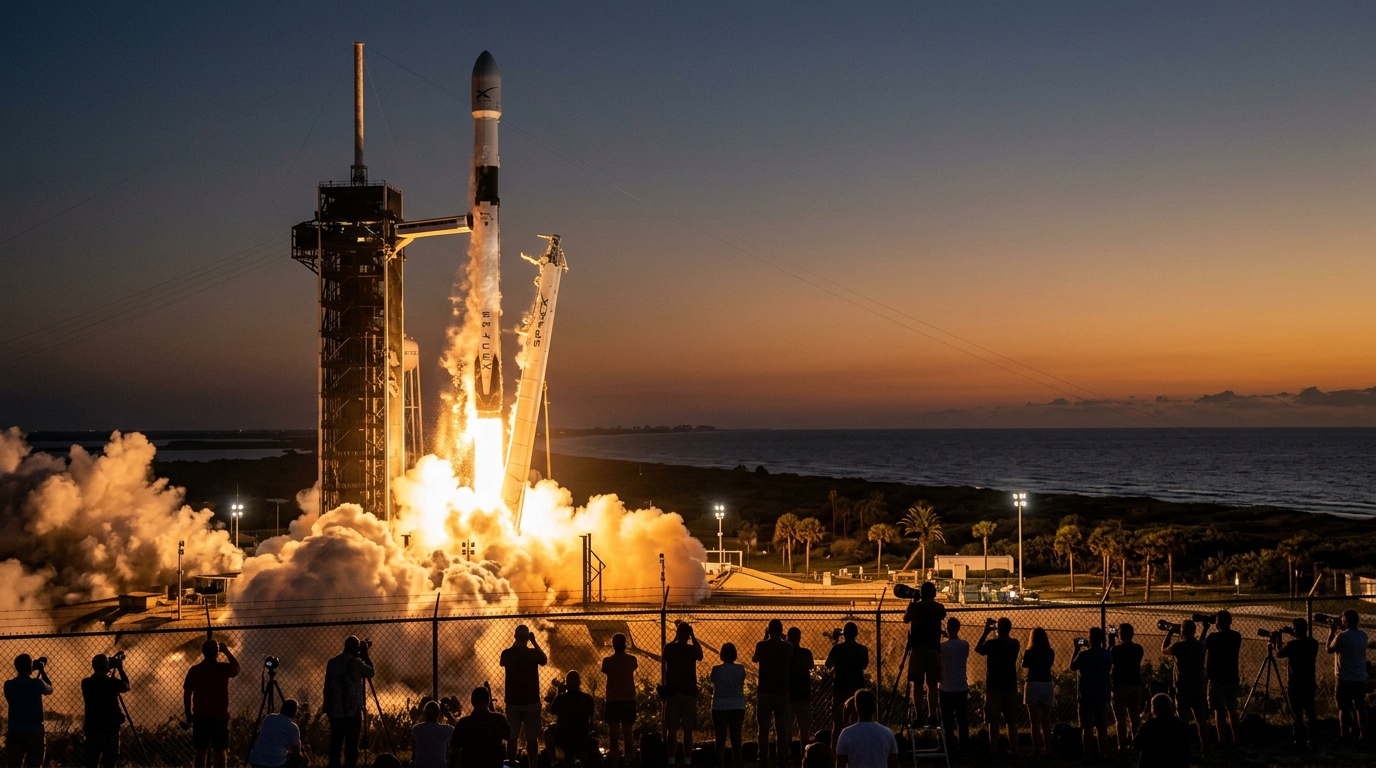
SpaceX launched another batch of Starlink satellites from Cape Canaveral, continuing its frequent orbital deployment schedule. The mission lifted off aboard a Falcon 9 rocket from Florida’s Space Coast. Engineers monitored every stage carefully from launch through satellite deployment. The flight added more spacecraft to the growing Starlink broadband constellation. Each successful mission strengthens the network’s global coverage and overall capacity. The launch also highlighted the company’s steady operational pace and reusable rocket technology.
The mission reflected SpaceX’s established approach to rapid launch operations. Falcon 9 has become one of the world’s most active orbital launch vehicles. Frequent flights allow the company to expand Starlink while serving commercial and government customers. As a result, each successful mission supports both satellite deployment and broader launch experience. That combination has become a defining feature of SpaceX operations.
Launch Site and Mission Preparation
Cape Canaveral remains one of the world’s busiest spaceports for orbital launches. SpaceX operates several launch facilities along Florida’s Atlantic coast. Teams spend days preparing the rocket, payload, and ground systems before liftoff. Engineers complete inspections, fueling procedures, and software checks before receiving final launch approval. Weather conditions also receive close attention because safety remains the highest priority.
Mission controllers review thousands of technical measurements before countdown reaches its final minutes. Automated systems monitor rocket health and detect unusual conditions immediately. If necessary, launch officials can delay a mission to resolve technical concerns. That careful process helps improve reliability while protecting valuable spacecraft and launch infrastructure.
Falcon 9 Continues Demonstrating Reusability
Falcon 9 plays a central role in SpaceX launch operations. The rocket features a reusable first stage designed to return after launch. Following stage separation, the booster performs controlled maneuvers toward a landing site. Many Starlink missions conclude with booster landings aboard autonomous drone ships positioned offshore. Successful recoveries allow SpaceX to refurbish and fly boosters again.
Rocket reusability has changed the economics of orbital launches. Reflying major hardware reduces manufacturing demands for future missions. Engineers continue improving inspection and refurbishment procedures between flights. Consequently, reusable rockets support a higher launch cadence than traditional expendable systems. That operational model remains one of SpaceX’s defining innovations.
How the Starlink Satellites Reach Orbit
After the first stage separates, the Falcon 9 upper stage continues carrying the satellite payload toward orbit. The upper stage engine performs precise burns to reach the planned trajectory. Once orbital conditions match mission requirements, the satellites separate from the rocket. Deployment occurs in a carefully timed sequence to reduce collision risks. Each spacecraft then begins independent operations.
Following deployment, Starlink satellites activate onboard systems and establish communication with ground controllers. Solar arrays deploy to generate electrical power. Navigation systems help each satellite reach its assigned operational orbit. Electric propulsion gradually raises orbital altitude using efficient ion thrusters. This process may take weeks before full service begins.
Purpose of the Starlink Constellation
Starlink is designed to provide broadband internet service through a large constellation of low Earth orbit satellites. Unlike traditional geostationary systems, these satellites orbit much closer to Earth. Lower altitude helps reduce communication latency for many users. That improvement supports activities including video calls, online education, gaming, and business communications.
The network serves residential customers, businesses, emergency responders, maritime users, and aviation operators. Service availability depends on regional regulatory approvals and satellite coverage. As more satellites enter operation, the company can improve network resilience and overall capacity. Continued launches also replace older spacecraft over time as technology advances.
Importance of Cape Canaveral for Space Missions
Cape Canaveral has supported American spaceflight for decades. Its location near the Atlantic Ocean provides favorable launch trajectories and added safety margins. Rockets can travel eastward while benefiting from Earth’s rotational speed. This natural advantage helps increase launch efficiency for many missions.
The surrounding region supports a large aerospace workforce and extensive technical infrastructure. Government agencies and private companies operate side by side across the Space Coast. Frequent launches contribute to local economic activity through engineering, manufacturing, transportation, and tourism. Therefore, Cape Canaveral remains a vital center for modern space operations.
Managing a Growing Satellite Constellation
Operating thousands of satellites requires sophisticated coordination and continuous monitoring. SpaceX tracks spacecraft positions while adjusting orbits when necessary. Automated systems help maintain safe separation between satellites. Ground stations exchange operational data with spacecraft across different regions.
Space traffic management has become increasingly important as orbital activity grows. Satellite operators coordinate with government organizations and other companies to reduce collision risks. Responsible mission planning includes end-of-life procedures for spacecraft retirement. Controlled deorbiting helps reduce long-term orbital debris when satellites complete their operational service.
Reducing Orbital Debris Risks
Modern satellite design increasingly considers long-term sustainability in space. Starlink satellites include propulsion systems that support orbital adjustments and planned deorbit operations. If a spacecraft experiences serious problems, atmospheric drag eventually removes many low Earth orbit satellites. Engineers continue studying additional methods to improve orbital safety as launch activity increases worldwide.
Technology Supporting Reliable Communications
Each Starlink satellite contains advanced communications equipment and onboard computing systems. The network connects user terminals with ground infrastructure through satellite links. Some newer satellites also include laser communication terminals for inter-satellite data transmission. Those connections help route information efficiently across different parts of the constellation.
Software updates allow engineers to improve performance after satellites reach orbit. Ground teams continuously monitor network health and system performance. Operational experience from previous missions guides future hardware and software improvements. Consequently, each launch contributes valuable knowledge alongside additional network capacity.
Broader Impact on the Commercial Space Industry
Frequent Starlink launches demonstrate how commercial companies now perform missions once associated mainly with government programs. Private investment has expanded launch services and satellite manufacturing capabilities. Competition encourages innovation while increasing access to space for many organizations. The industry continues evolving as launch providers improve efficiency and reliability.
SpaceX missions also influence supply chains across the aerospace sector. Manufacturers produce components ranging from electronics to propulsion systems. Universities and research institutions study technologies developed through commercial launch programs. This broader ecosystem supports scientific, economic, and technological development.
Looking Ahead
The latest Starlink launch from Cape Canaveral represents another step in SpaceX’s ongoing deployment strategy. Additional missions will continue expanding the constellation while replacing aging satellites over time. Falcon 9’s reusable design supports this steady operational rhythm. Each successful launch strengthens experience across launch operations, spacecraft deployment, and booster recovery.
As satellite technology advances, future missions will likely deliver improved capabilities and greater network efficiency. Cape Canaveral will remain an important gateway for those launches. Continued investment in reusable rockets, satellite communications, and operational safety will shape future missions. Together, those efforts illustrate the continuing evolution of commercial spaceflight and global satellite connectivity.

