

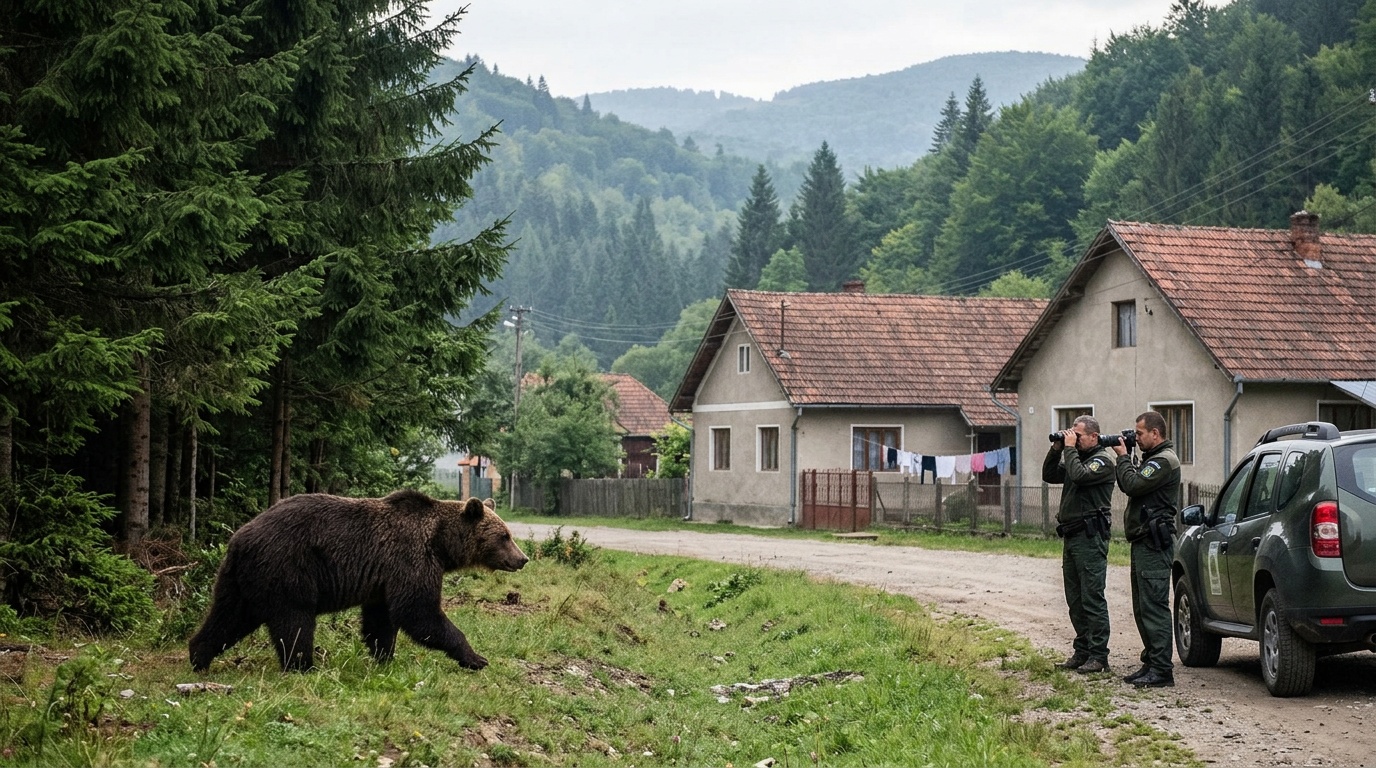
Romania has enacted a new bear management law as encounters increasingly threaten people, livestock, and property. President Klaus Iohannis signed the measure on July 23, 2024, after Parliament accelerated action following another fatal attack. The law expands planned removals while preserving emergency powers against animals entering populated places. Officials describe the policy as a public safety response, not unrestricted trophy hunting. Conservation groups challenge that distinction and argue prevention deserves greater investment. The dispute reflects Romania’s difficult balance between protecting people and conserving Europe’s largest brown bear population outside Russia. That balance now moves from legislation to local enforcement nationwide.
What the new law changes
Law 242/2024 authorized 426 preventive removals and 55 intervention removals, creating a combined ceiling of 481 bears for 2024. Authorities distributed the preventive figure among counties, using reported damage, bear density, and conflict records. The separate intervention allowance covers dangerous animals that require action outside scheduled management. The framework still protects cubs and mothers accompanying dependent young. It also requires managers to report removals and observe established hunting rules. Supporters say these limits replace improvised decisions with a predictable national structure. However, a quota alone cannot prevent bears from approaching communities. Effective enforcement remains essential.
Why lawmakers moved quickly
A nineteen-year-old woman died in July 2024 after a bear attacked her on a popular Carpathian hiking trail. Rescuers later recovered her body near the Jepii Mici route in the Bucegi Mountains. The killing intensified public anger and prompted Parliament to return during its summer recess. Deputies approved the legislation with broad support, although some members criticized its timing and scope. Romania had already recorded repeated deaths, injuries, livestock losses, and property damage involving brown bears. Mountain communities had demanded faster help for years. The tragedy transformed a longstanding rural complaint into an urgent national issue.
Bears near homes and roads
Residents in several Carpathian counties regularly report bears searching through bins, crossing streets, or entering farmyards. Brașov, Harghita, Covasna, Prahova, and Mureș have experienced especially visible conflicts. Authorities send mobile alerts when bears appear near settlements, sometimes repeatedly during summer evenings. Easy food rewards can teach animals to revisit the same neighborhoods. Unsecured rubbish, deliberate feeding, orchards, and livestock carcasses all attract opportunistic bears. Roads and new construction can also fragment movement routes between feeding and resting areas. These pressures explain why removal represents only one part of conflict management. Local prevention must accompany it.
Population estimates remain contested
At the signing, officials commonly cited roughly 8,000 brown bears, though researchers questioned older counting methods. A genetic survey released in 2025 estimated between 10,419 and 12,770 bears nationwide. That range reinforced Romania’s status as the European Union’s largest bear stronghold. Researchers analyzed thousands of hair and scat samples to identify individual animals. However, national abundance cannot show every local risk. Conflict depends on food access, habitat conditions, animal behavior, and human activity. Wide-ranging bears also cross administrative boundaries, complicating county allocations and repeated sightings. Better data can guide targets, but local monitoring remains equally important.
Emergency action remains separate
Romania already allowed mayors to organize immediate responses when bears entered settlements and threatened people. Teams can drive an animal away, tranquilize and relocate it, or kill it when danger persists. Responders should choose progressively stronger measures, although imminent threats can justify lethal action. Police, gendarmes, veterinarians, and authorized hunters may support these operations. The new law does not replace that emergency system. Instead, it adds planned prevention removals where authorities identify sustained pressure. This distinction matters because immediate danger requires a different response from long-term population management. Both require training, records, and rapid public communication.
Government case for controlled removals
Environment officials argue that Romania must protect conservation gains without accepting preventable deaths. They say dense local populations can overwhelm deterrence and relocation programs. Relocation often costs more, requires suitable release sites, and may simply move conflict elsewhere. Some relocated bears travel back or approach another community. Officials also emphasize compensation payments for damaged crops, beehives, animals, and vehicles. Yet compensation addresses losses after an incident, rather than preventing fear or injury. The government therefore presents intervention, prevention, monitoring, and compensation as connected tools. Different Romanian counties will now test that claim through careful implementation.
Conservationists question the approach
Wildlife organizations warn that higher quotas may remove animals without addressing attractants around towns. They argue that poorly secured waste creates predictable feeding opportunities and encourages repeated visits. Activists also seek electric fencing, stronger livestock protection, bear-resistant bins, and firm penalties for feeding. Some critics say political pressure produced a cull before authorities completed robust genetic counting. They fear broad targets could affect stable forests that report fewer serious incidents. Romanian officials reject claims that the law permits uncontrolled killing. Still, transparent selection and reporting will determine whether the public trusts those assurances over coming years.
European rules shape decisions
The European Union’s Habitats Directive gives brown bears strict protection, while allowing limited exceptions under defined conditions. Authorities must justify derogations, show necessity, and avoid harming the species’ favorable conservation status. Romania must therefore document why lethal control serves public safety or prevents serious damage. European law does not require communities to tolerate an immediate threat to human life. However, it expects governments to apply alternatives where those options work. The legal test connects local operations with national monitoring and scientific evidence. That connection may attract scrutiny from courts, researchers, and European institutions throughout its implementation.
Prevention beyond hunting
Long-term safety requires communities to reduce the food rewards that draw bears toward people. Municipalities can install resistant containers, collect rubbish frequently, and clean informal dumping sites. Farmers can use electric fences, guardian dogs, secure feed stores, and rapid carcass removal. Tourism operators can explain safe behavior and stop visitors from feeding roadside animals. Hikers should carry no exposed food, stay alert, and avoid approaching bears for photographs. Officials also need fast response teams before an animal becomes habituated to settlements. These measures cost money, but they can lower conflict without reducing bear numbers in surrounding forests.
What implementation will reveal
The law’s success will depend on accurate data, disciplined enforcement, and measurable reductions in attacks. Authorities must distinguish bold, food-conditioned bears from animals merely passing near a settlement. Careless removals could create vacancies that other bears later occupy. Targeted action should focus resources where evidence shows persistent danger. Meanwhile, published results should list removals, locations, damage trends, and effects on population health. Residents will judge progress through safer streets, farms, and trails, rather than quota completion. Conservationists will examine whether Romania maintains a viable, connected bear population. Those goals can coexist, but both demand steady work.
