

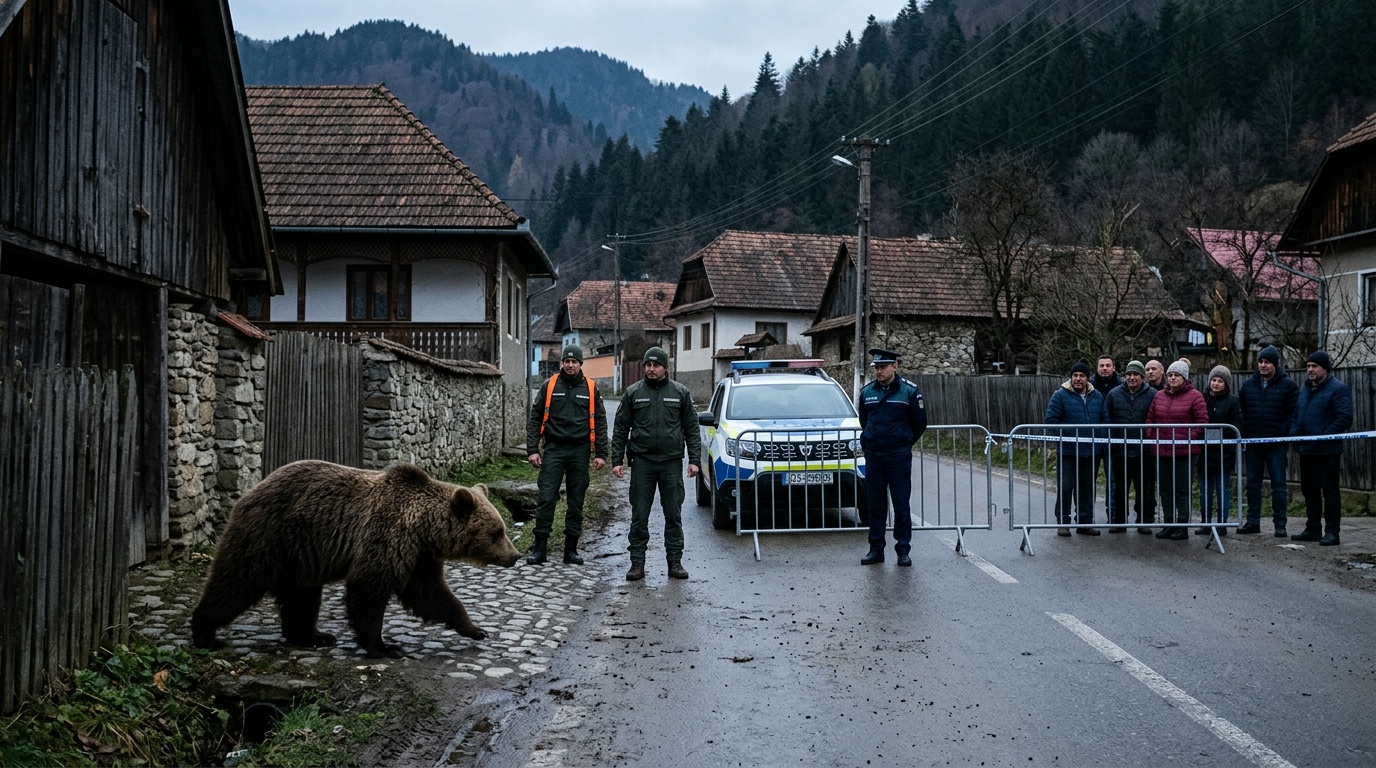
Romania’s president has signed legislation changing how authorities respond when brown bears enter towns and villages. The measure gives local intervention teams greater freedom to remove dangerous animals from populated places. Officials say repeated encounters have exposed weaknesses in slower, step-by-step procedures. The reform seeks faster decisions while retaining legal safeguards for a protected European species.
The public debate intensified after fatal attacks and frequent emergency calls from communities near bear habitat. Residents have reported bears crossing roads, entering gardens, raiding bins, and approaching homes. Such events create immediate risks for people, livestock, pets, and the bears themselves. They also force authorities to balance public safety, conservation duties, and practical response limits.
What the signed law changes
Under the amended framework, teams no longer need to follow one rigid sequence during every incident. They can assess a bear’s behavior, location, condition, and danger before selecting an authorized response. That response may include driving it away, tranquilizing and relocating it, or permanently removing it. Permanent removal means euthanasia or shooting, depending on circumstances and professional judgment.
Previously, the rules emphasized escalating actions, with lethal force generally treated as the final option. That model could delay action when a bear presented an obvious and immediate threat. The change allows responders to match their first action to the danger documented at the scene. It does not require teams to kill every bear found within a settlement.
Who makes emergency decisions
Romania’s system places local authorities at the center of responses after residents call the emergency number, 112. A mayor or deputy mayor normally coordinates an intervention team under the established legal framework. Gendarmes provide security, while authorized wildlife specialists evaluate the animal and carry out technical measures. A veterinarian may support operations involving sedation, relocation, injuries, or euthanasia.
Teams must record the circumstances, chosen method, and outcome, creating an administrative trail for later review. Police and gendarmes can restrict access because crowds often increase danger and obstruct trained responders. Local leadership matters because incidents can develop within minutes, especially around schools, streets, and occupied properties. The amended law therefore emphasizes rapid, documented judgment rather than automatic escalation.
Where the rules apply
The provisions focus on bears entering populated localities, including urban areas and villages administered by communes. They address spaces where people live, work, travel, keep animals, or use public services. Officials still need to determine whether the reported animal remains present and poses a genuine risk. A sighting alone does not automatically justify the most severe intervention.
Context shapes that assessment, because a bear moving away differs from one entering an occupied building. Responders also consider aggressive behavior, repeated returns, access to food, injuries, and nearby crowds. Females with cubs create particularly difficult situations, since separation can endanger dependent young. These variables explain why the law gives trained teams discretion instead of prescribing one response.
Why encounters have become a national issue
Romania contains one of Europe’s largest brown bear populations outside Russia, mostly across the Carpathian Mountains. Population estimates have varied because earlier counts relied heavily on tracks, sightings, and hunting-ground reports. Newer genetic sampling has aimed to reduce duplicate counting and provide a stronger national estimate. However, researchers and officials still debate carrying capacity, distribution, and acceptable management levels.
Bear presence does not alone explain conflicts, because human practices strongly affect animal behavior. Unsecured rubbish, deliberate feeding, livestock carcasses, and accessible crops can reward visits near homes. Roads, holiday properties, forestry, and expanding development also increase contact along habitat edges. Once bears associate settlements with food, repeatedly driving them away may produce only temporary results.
Conservation law still limits lethal action
Brown bears receive strict protection under the European Union’s Habitats Directive and Romanian conservation law. Authorities may use derogations for public safety, but they must satisfy legal conditions. They must consider alternatives and avoid harming the population’s favorable conservation status across its natural range. Consequently, the law creates controlled interventions, not an unrestricted hunting right inside communities.
Romania also uses separate annual quotas for preventive removals and interventions involving problem bears. Parliament approved a 2024 framework covering 426 preventive removals and 55 intervention cases. Those nationwide figures arose through separate legislation after a fatal hiking attack intensified political pressure. The settlement-response law instead governs immediate choices when bears enter places occupied by people.
Supporters emphasize speed and clarity
Supporters argue that responders need flexibility when seconds matter and public safety faces a clear threat. They say mandatory sequencing can become impractical when relocation is unsafe, unavailable, or likely to fail. Suitable release sites may already contain bears, while relocated animals can return or create conflicts elsewhere. Sedation also requires equipment, expertise, correct dosing, and enough space for the drug to work.
A frightened animal can move unpredictably after receiving a tranquilizer, especially near traffic or dense housing. Officials therefore present direct removal as a tool for exceptional danger, rather than routine convenience. Clear authority may also reduce disputes among mayors, police, veterinarians, and wildlife managers during emergencies. That clarity forms the central practical argument behind the signed changes.
Critics warn against a shooting-first culture
Conservation groups worry that broad discretion could normalize lethal responses to manageable sightings. They argue that poor rubbish control and intentional feeding often attract bears before authorities intervene. Removing one animal may leave the same food source available for another bear. Critics therefore demand transparent records, independent oversight, and penalties for preventable attractants.
Prevention remains essential
Municipalities can reduce encounters by securing waste collection points and enforcing bans on feeding wild bears. Farmers can protect beehives and livestock with maintained electric fences, guardian animals, and night enclosures. Tourism operators should manage food waste and warn visitors against approaching bears for photographs. Authorities can map repeated incidents, target attractants, and monitor animals after nonlethal interventions.
Residents should call 112, move indoors, secure pets, and avoid surrounding or filming an animal. People should never feed bears or block their escape route, since either action can trigger defensive behavior. Local campaigns need consistent advice, because sensational videos can encourage risky conduct and confuse visitors. Prevention cannot eliminate every encounter, but it can reduce emergencies requiring difficult choices.
How success will be measured
Success will depend on more than the number of bears removed from settlements. Authorities should publish response times, intervention methods, repeat incidents, injuries, and outcomes for relocated animals. Comparable data can show whether quicker powers actually improve safety.
Romania must track population health and distribution while meeting conservation obligations. The new law addresses operational problems, but prevention, training, and public trust will determine value. Implementation will show whether communities and bears face fewer dangerous encounters.
