

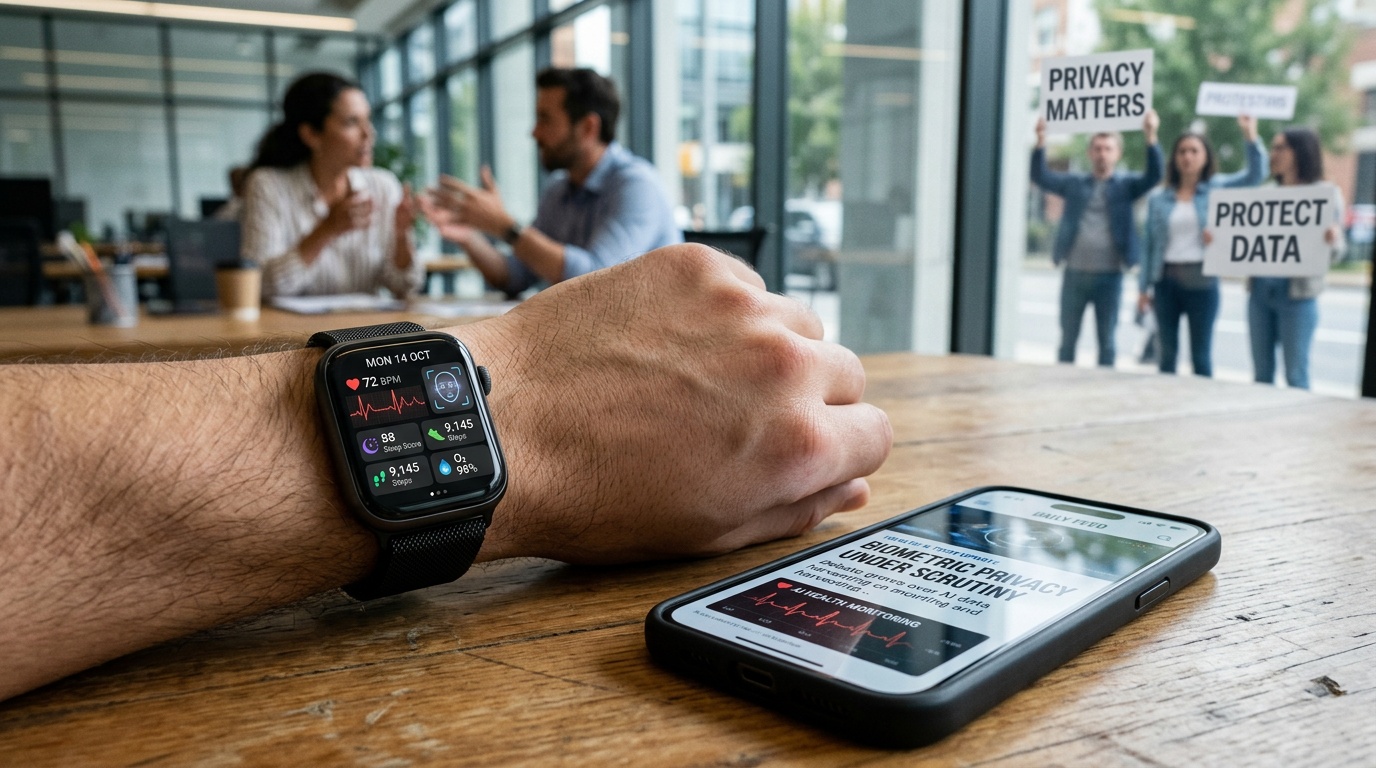
Tech giants add AI health tracking features amid biometric privacy scrutiny
Artificial intelligence is reshaping personal health tracking across mainstream devices. Major platforms now predict trends, flag anomalies, and offer tailored coaching. These capabilities promise earlier detection and more personalized guidance. They also intensify questions about data protection and biometric rights. As features expand, scrutiny from regulators and courts grows. The next phase will test whether innovation and privacy can advance together.
AI-powered health features accelerate on mainstream devices
Apple is expanding AI-driven health insights across Watch, iPhone, and the Health app. watchOS 11 introduces a Vitals app that highlights meaningful deviations. Training Load estimates cardiovascular strain and recommends recovery windows. Cycle Tracking uses wrist temperature trends to refine ovulation estimates. ECG and irregular rhythm notifications remain FDA-cleared capabilities. Together, these tools aim to turn passive metrics into actionable coaching.
Google continues weaving Fitbit intelligence into Pixel devices and Android. Fitbit’s Daily Readiness Score uses machine learning to balance exertion and rest. Sleep Profile summarizes monthly sleep using behavioral clusters and detailed metrics. Irregular Rhythm Notifications received FDA clearance for atrial fibrillation notifications. Health Connect standardizes permissions and data flows across Android health apps. The company emphasizes explainable insights and clear data controls for users.
Samsung is pushing Galaxy AI deeper into wellness features and accessories. A new Energy Score synthesizes sleep, activity, and heart rate variability. The FDA cleared Samsung’s sleep apnea detection feature in 2024. ECG functionality is available where regulators have granted clearance. The forthcoming Galaxy Ring underscores ambitions for continuous, discreet monitoring. Samsung Knox underpins device security and data isolation by design.
Why biometric data raises unique privacy concerns
AI turns raw signals into intimate health inferences. These inferences can reveal stress, pregnancy, or chronic disease risks. Unlike passwords, biometric and physiological signatures are difficult or impossible to change. Linkage with location and context can magnify harms. Misuse can lead to discrimination, targeted advertising, or denial of services. Breaches can expose sensitive histories that persist for life.
Not every physiological signal counts as a biometric identifier legally. Many statutes define fingerprints and face geometry as biometric identifiers. Wearables often gather heart rate, motion, and temperature instead. However, profiles derived from these signals can be deeply identifying. Regulators increasingly target sensitive inferences, not just raw identifiers. This shift places AI models and data pipelines under sharper review.
The evolving legal landscape tightens obligations
United States federal oversight and guidance
Most consumer wearables operate outside HIPAA’s traditional scope. The Federal Trade Commission fills gaps using privacy and security enforcement. The agency finalized updates to the Health Breach Notification Rule in 2024. The changes clarify duties for health apps and connected devices. Companies must notify users after unauthorized disclosures or security breaches. The FTC also polices deceptive claims and undisclosed data sharing.
State health and biometric privacy laws
States are advancing stricter protections for health-adjacent data. Washington’s My Health My Data Act took effect in 2024. It requires explicit consent and bans geofencing near healthcare facilities. Nevada enacted a similar consumer health data privacy law. Illinois’ Biometric Information Privacy Act continues driving significant litigation. Damages can accumulate quickly when consent and retention duties lapse.
Other states add sensitive data safeguards through broader privacy statutes. California’s CPRA treats health and precise location as sensitive data. Controllers must offer limits on sensitive data uses and sharing. Colorado and Connecticut provide similar protections and rights. Texas and Washington restrict commercial capture of biometric identifiers. Penalties and private rights vary, but compliance floors are rising.
Europe and the United Kingdom
Europe maintains stringent baselines through the GDPR. Biometric and health data receive special-category protections and safeguards. Controllers must establish necessity and lawful bases, often explicit consent. Data Protection Impact Assessments are frequently required for profiling. The EU AI Act was adopted in 2024 with phased obligations. It restrains certain biometric uses and mandates risk management for AI.
Company strategies to balance capability and compliance
Technology firms highlight privacy as a product feature. They emphasize on-device processing, encryption, and granular consent controls. They publish validation studies and seek regulatory clearances where applicable. Independent audits and bug bounties supplement internal assurances. User dashboards increasingly centralize data exports and deletions. These moves aim to earn trust while navigating complex rules.
Apple’s privacy architecture for health features
Apple processes many health computations locally on devices. Health data stored in iCloud uses end-to-end encryption. HealthKit permissions gate access on an app-by-app basis. ResearchKit supports informed consent for clinical and academic studies. The company publishes transparency reports and detailed security documentation. These measures align product claims with verifiable protections.
Google and Fitbit’s data controls and separations
Google separates Fitbit health data from Google Ads systems. Users can review, export, and delete Fitbit data in settings. Health Connect centralizes Android permissions for health and fitness data. Pixel devices highlight on-device AI for sensitive processing. Fitbit algorithms disclose validation details for certain features. EU acquisition commitments also shaped internal firewalls and oversight.
Samsung’s platform security and regional compliance
Samsung relies on its Knox platform for security and isolation. The company documents regional availability tied to regulatory clearances. Users can manage Samsung Health permissions within Android settings. Some features require calibration or present clear medical disclaimers. Partnerships with universities support validation and algorithm tuning. Hardware and firmware protections complement software privacy controls.
Enforcement and litigation sharpen the stakes
Courts and regulators are testing claims about anonymization and consent. Prominent settlements have targeted face recognition deployments. Health app cases have punished undisclosed sharing with advertisers. Data brokers face pressure over location and reproductive health inferences. Discovery demands are probing internal model training datasets. Companies now design programs expecting audits, subpoenas, and breach drills.
Practical safeguards for companies and consumers
Practical design patterns can reduce risk without stalling progress. Default to local processing when technically feasible and effective. Minimize retention and rotate identifiers across services and contexts. Present clear, contextual consent with easy revocation and granular scopes. Avoid secondary uses without fresh, specific permission and documentation. Publish validation methods and enable independent, ethical review.
Consumers can take meaningful steps to strengthen protections. Review app permissions and disable unnecessary data sharing. Enable device encryption and two-factor authentication on accounts. Use platform health connectors to centralize permission management. Regularly export and delete historical data you no longer need. Consider regional settings that restrict ad personalization and sensitive inferences.
AI health features will continue expanding across phones, watches, and accessories. Regulators will demand clearer evidence, safeguards, and auditable controls. Interoperability standards will shape data portability and consent experiences. Competitive advantage will favor companies proving value while protecting dignity. Transparent choices can reduce friction and build lasting trust. The balance struck now will define digital health’s next decade.
